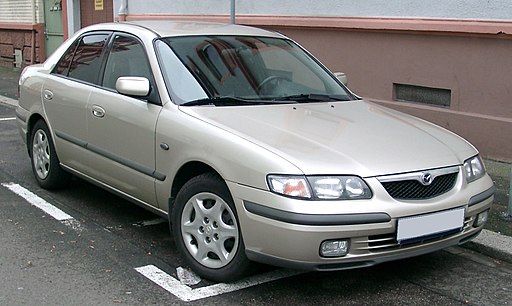
Mazda 626 as a Used Car: An Honest Guide to Buying, Running and Living With One
The Mazda 626 is one of those cars that has quietly disappeared from everyday roads without ever becoming truly forgotten. Produced across several generations and sold in Europe, North America and other markets, the 626 was Mazda’s answer to the established family-car competition of its time. It was never quite as fashionable as a Volkswagen Passat, as ubiquitous as a Ford Mondeo, or as instantly recognizable as a Toyota Camry, but that relative anonymity is part of its appeal today. A well-kept Mazda 626 can offer a surprisingly comfortable, practical and dependable used car experience for very little money, particularly if you are willing to look beyond badge prestige and concentrate on condition. Contemporary used-car reviews have consistently highlighted the model’s durable mechanical components, reasonable running costs and generous equipment, although age-related bodywork, suspension, electrical components and parts availability now matter far more than the car’s original reputation for reliability.
The important thing to understand when shopping for a 626 in 2026 is that you are no longer simply buying a used Mazda; you are buying a 20- to 35-year-old car. That changes the priorities completely. Mileage, for example, is important, but the difference between a 180,000-kilometre car that has been maintained properly and a 130,000-kilometre example that has spent years neglected can be enormous. Rust, cooling-system condition, suspension wear, maintenance history and the availability of replacement parts can determine whether your cheap 626 becomes an enjoyable budget classic or an expensive driveway project.
What Is the Mazda 626?
The Mazda 626 was a mid-size family car positioned between smaller Mazda models and larger executive-oriented cars. Depending on generation and market, buyers could choose from saloon, hatchback and estate body styles, while the engine range included economical four-cylinder petrol engines, larger petrol units and, in some markets, diesel versions. The fifth-generation European 626 arrived in 1997 and remained in production until 2002, when Mazda replaced the 626 nameplate with the Mazda6.
For a used-car buyer, the final-generation 626 is probably the most interesting version because it combines relatively modern equipment with straightforward mechanical engineering. In the late 1990s, the range included a 2.0-litre four-cylinder and a 2.5-litre V6 in some markets, while European cars could also be found with 1.8-litre and diesel engines. The 2.0-litre petrol was available with either a five-speed manual or four-speed automatic in the North American specification, while the 2.5-litre V6 offered considerably more performance.
Why Consider a Mazda 626 as a Used Car?
Reliability Is Still One of Its Biggest Strengths
The strongest argument for buying a 626 is its fundamentally durable mechanical package. Contemporary used-car assessments described the engines and major mechanical components as robust when maintained correctly, while What Car? characterized the 1997–2002 car as a hard-wearing family vehicle capable of providing dependable service. That reputation does not mean every surviving 626 is automatically reliable; rather, it means that a good example has a solid mechanical foundation.
This distinction is particularly important with an old car. A neglected 626 can have worn suspension bushes, tired brakes, leaking seals, electrical faults and cooling-system problems just like any other elderly vehicle. The Mazda badge cannot protect a 25-year-old car from decades of use. Nevertheless, if the previous owners serviced the engine regularly and repaired problems before they became serious, there is still considerable life left in the underlying design.
It Is Comfortable Rather Than Sporty
The 626 was designed primarily as practical transportation, and that philosophy remains obvious behind the wheel. The suspension provides a reasonably comfortable ride, the cabin is spacious enough for family use, and the car is particularly suited to relaxed commuting and longer journeys. Contemporary reviews praised its refinement and described the ride as firm but absorbent, although road and tyre noise can become noticeable on rough surfaces.
Don’t buy a 626 expecting the sharp steering and playful handling of a modern Mazda MX-5. The 626 is a different kind of Mazda. Its appeal comes from covering distance without drama. The car feels most at home when you settle into a steady cruising speed, rather than when you are trying to extract maximum entertainment from every corner.
The Equipment Can Be Surprisingly Good
One of the pleasures of buying an older Japanese family car is discovering how much equipment was included for the money. Depending on year and market, the later 626 could feature air conditioning or climate control, multiple airbags, ABS, traction control, power steering and other equipment that was not necessarily standard on cheaper contemporary European rivals. The facelift introduced around 2000 also brought exterior and interior revisions.
Of course, equipment that was impressive in 1999 does not necessarily feel luxurious today. A factory radio, basic cruise-control system or automatic climate control is hardly revolutionary in 2026. But if you are looking for inexpensive transportation, having a comfortable cabin, working air conditioning and useful safety equipment can make a significant difference to everyday ownership.
Which Mazda 626 Engine Should You Choose?
The 2.0-Litre Petrol Is the Sensible Choice
For most buyers, the four-cylinder 2.0-litre petrol is arguably the best compromise. In the 1998 North American specification it produced 125 hp and 127 lb-ft of torque, with the manual version rated at 26 mpg city and 33 mpg highway under the period EPA system. Later versions received a modest power increase.
Its greatest advantage today is not outright performance but simplicity and suitability. It has enough power for ordinary driving, is considerably less thirsty than the V6 and avoids the extra complexity and fuel consumption associated with choosing the more powerful engine. A manual gearbox also makes the car feel livelier than the specification figures might suggest.
The 2.5-Litre V6 Is the Enthusiast’s Choice
The 2.5-litre V6 is a different proposition. With around 170 hp in the North American-market final-generation car, it gives the 626 considerably more effortless acceleration and a smoother character.
The downside is obvious: you are buying an old V6 rather than an old four-cylinder. Fuel consumption is higher, there are more components under the bonnet, and finding a particularly good example may matter more than saving money on the initial purchase. For someone who wants a slightly unusual Japanese car with a more interesting engine, however, the V6 can be very appealing.
What About the Diesel?
Diesel 626s can make sense for high-mileage drivers, particularly in markets where the diesel was sold in significant numbers. European specifications included a 2.0-litre turbo diesel producing around 99 hp/101 PS and 220 Nm in one 1998 configuration.
The problem is that diesel technology and emissions regulations have changed enormously since the 626 was new. An old diesel may make sense for a specialist buyer, but it is not automatically the best choice simply because it consumes less fuel. The condition of the injection system, turbocharger, cooling system and emissions equipment should be examined carefully, and local clean-air-zone rules may also affect whether an older diesel is practical.
What Problems Should You Look For?
Rust Should Be Your First Inspection
When buying a 626 today, corrosion should arguably be higher on your checklist than engine reliability. What Car? specifically recommends careful inspection of the bodywork and warns that body panels can become expensive.
Look closely at wheel arches, sills, lower door edges, suspension mounting areas, the underside and anywhere previous repairs may have trapped moisture. Do not be distracted by a shiny exterior. Fresh paint can hide corrosion, and an attractive-looking car may require significant structural work underneath. A proper inspection on a lift is worth far more than a detailed walk-around in a seller’s driveway.
Suspension, Brakes and Electrical Systems
Age affects more than the engine. Suspension components, axles, brakes and electrical systems have all been identified as areas worth inspecting on used 626s.
During a test drive, listen for knocking over bumps, vibration under braking, uneven tyre wear and excessive steering play. Check that every electrical function works, including lights, windows, central locking, dashboard illumination, heater controls and air conditioning. A single small electrical fault might be inexpensive, but several simultaneous faults can quickly turn an apparently cheap car into a frustrating ownership proposition.
Listen Carefully to the Engine
A cold start tells you considerably more than a warm engine sitting idling when you arrive. Start the car from cold and listen for unusual rattling, tapping or knocking. The older 626 generations were known to develop start-up rattling associated with hydraulic tappets draining down when a car had been left unused, although that does not mean every noise is harmless.
Check for oil leaks, overheating, coolant contamination and unstable idle. Ask when the timing belt, if applicable to the particular engine, was last replaced and insist on documentation where possible. On a car this old, “I think it was done recently” is not the same thing as having a dated invoice.
What Is the Mazda 626 Like to Drive Today?
The biggest surprise may be how normal it feels. A well-maintained late 626 does not necessarily feel like a museum piece when you drive it. The seating position is conventional, the steering is familiar, the controls are straightforward and the independent suspension provides a comfortable platform. The 626’s age becomes much more obvious in areas such as infotainment, cabin materials, sound insulation and safety technology rather than basic drivability.
That said, expectations need to be realistic. Contemporary reviewers criticized the 626 for being somewhat dull to drive and noted issues such as an imprecise gearshift, sensitive throttle and road and wind noise at higher speeds. For a buyer looking for excitement, those characteristics may be negatives. For someone who simply wants an inexpensive old car for commuting, they are much less important.
The hatchback and estate versions deserve special consideration because they add practical flexibility. The saloon has a conventional boot, while the hatchback offers easier access to larger objects, and the estate is particularly useful for owners who need cargo space. If you are buying on practicality rather than appearance, body style can matter almost as much as engine choice.
Is a Mazda 626 Cheap to Own?
The purchase price can be attractive, but the cheapest 626 is rarely the cheapest 626 to own. The central rule with an old car is simple: condition beats specification. Paying slightly more for a rust-free, documented, mechanically healthy car can save you far more than buying the cheapest example and attempting to restore it.
Routine servicing is generally straightforward, but certain replacement parts can be less convenient to source than parts for a more common European family car. RAC’s historical parts-cost information also noted that some components were not especially cheap. In 2026, this consideration is even more relevant because the car has been out of production for more than two decades.
Before purchasing, check local parts availability for suspension components, exhaust components, body panels, engine-specific parts and electrical components. A mechanic familiar with older Japanese cars can also be an enormous advantage.
What Should You Pay Attention to During a Test Drive?
Start with the car completely cold. Observe how quickly the engine starts and whether the idle stabilizes normally. Then drive slowly over an uneven road and listen for suspension noises. Test the clutch for slipping and judder, check that every gear engages cleanly and make sure an automatic transmission shifts smoothly if fitted.
At higher speeds, pay attention to steering vibration, wheel bearing noise, wind noise and whether the car tracks straight. Test the brakes repeatedly but progressively, and make sure the temperature gauge remains stable. Once you return, inspect underneath the car for fresh leaks.
Most importantly, inspect the maintenance paperwork. An old Mazda with invoices, service records and evidence of regular fluid changes is far more attractive than a low-mileage example with no history. The odometer should be treated as one piece of evidence rather than the definitive measure of condition.
Final Verdict: Is the Mazda 626 a Good Used Car?
The Mazda 626 makes a compelling used-car proposition for a very specific type of buyer: someone who values simplicity, comfort, practicality and low purchase cost more than modern technology or driving excitement. It is not the newest, fastest or most glamorous option, but that is precisely why it can be interesting. The final-generation 626 in particular combines reasonably modern equipment with a durable mechanical foundation, and period reviews consistently recognized its dependability and practical nature.
The biggest challenge is no longer whether Mazda built a good car. It did. The challenge is finding one that has survived decades of use without serious corrosion, neglected maintenance or expensive age-related deterioration. If you find a clean example with a healthy engine, good transmission, solid suspension and documented servicing, the 626 can still be an extremely satisfying budget car.
In other words, buy the condition, not the badge, engine or mileage. A good 626 can be a wonderfully sensible old car, while a neglected one can consume the money you saved at purchase surprisingly quickly. For buyers prepared to inspect carefully and accept the limitations of an older vehicle, however, the Mazda 626 remains an underrated Japanese used car with plenty of life and character left in it.
Mazda 626 Technical Specifications
The table below uses the 1998 final-generation 626 as a representative specification, because specifications varied substantially by generation, market, body style and engine. The 2.0-litre and 2.5-litre figures shown are based on period North American specifications; European versions had additional engine and body-style variations.
| Specification | Mazda 626 2.0 | Mazda 626 2.5 V6 |
|---|---|---|
| Model year represented | 1998 | 1998 |
| Engine | 2.0L DOHC inline-4 | 2.5L DOHC V6 |
| Displacement | 1,998 cc | 2,494 cc |
| Valves | 16 | 24 |
| Fuel | Petrol | Petrol |
| Aspiration | Naturally aspirated | Naturally aspirated |
| Maximum power | 125 hp | 170 hp |
| Maximum torque | 127 lb-ft | 163 lb-ft |
| Transmission | 5-speed manual / 4-speed automatic | 5-speed manual / 4-speed automatic |
| Driven wheels | Front-wheel drive | Front-wheel drive |
| Front suspension | Independent, A-arm | Independent |
| Rear suspension | Independent, twin links | Independent |
| Length | approx. 187 in / 4,750 mm | approx. 187 in / 4,750 mm |
| Wheelbase | 105 in / 2,667 mm | 105 in / 2,667 mm |
| Width | 69 in / 1,753 mm | approx. 69 in / 1,753 mm |
| Fuel tank | approx. 17 US gal / 64 L | approx. 17 US gal / 64 L |
| EPA city/highway, manual | 26 / 33 mpg | 21 / 27 mpg |
| Seating | 5 | 5 |
| Trunk volume | approx. 14 cu ft | approx. 14 cu ft |
| Approx. curb weight | around 2,800 lb | around 3,000 lb |
Bottom line: if you are shopping for a Mazda 626 today, prioritize body condition, service history, cooling system, suspension, brakes and parts availability over low mileage or a desirable trim level. A well-preserved 2.0-litre petrol model with a manual gearbox is probably the strongest all-round choice, while the 2.5 V6 is the more interesting option for buyers willing to accept higher running costs.
