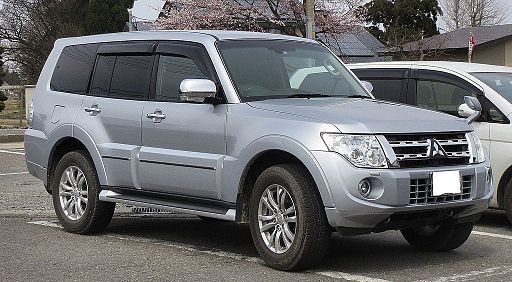
Mitsubishi Pajero as a Used Car: Is This Legendary 4×4 Still Worth Buying?
The Mitsubishi Pajero occupies a special position among used SUVs because it was designed as a genuine off-road vehicle rather than as a family crossover with a fashionable appearance. Its reputation was built through years of rally competition, long-distance expeditions and demanding off-road use, and the production Pajero retained considerably more serious four-wheel-drive hardware than most modern SUVs. That makes it an unusual second-hand proposition: an older Pajero can be extremely capable, durable and useful, but it can also be expensive to maintain if a previous owner neglected the drivetrain or used it hard without appropriate servicing. The fourth-generation Pajero, produced from 2006 into the early 2020s depending on market, is especially relevant to used-car buyers because it combined mature mechanical engineering with improved safety and comfort while retaining the model’s traditional off-road character. In Europe, buyers will most commonly encounter the 3.2 DI-D diesel, while petrol versions such as the 3.8-litre V6 appeared in selected markets.
Why Buy a Mitsubishi Pajero as a Used Car?
It is a real off-road vehicle
The first thing to understand about the Pajero is that it should not be judged by the same criteria as an ordinary urban SUV. Its greatest advantage is the four-wheel-drive system, particularly Mitsubishi’s Super Select system. Unlike many crossover systems that automatically send power to the rear wheels only when the front wheels begin to slip, Super Select was designed to provide the driver with considerably more control over how the vehicle uses its four-wheel drive. Mitsubishi’s later SS4-II system evolved from the earlier Super Select arrangement and allowed different drive modes for road and off-road conditions.
This makes the Pajero particularly attractive to people who genuinely need four-wheel-drive capability. It can be useful for towing, driving on muddy tracks, reaching remote properties, travelling on snow-covered roads or tackling trails where a normal crossover would quickly run out of traction or ground clearance. The important distinction is that the Pajero is not simply an SUV that looks rugged; its mechanical design reflects its off-road purpose. For a buyer who will never leave the tarmac, much of this capability may be unnecessary, but for the right owner it is precisely what makes the Pajero difficult to replace.
It offers impressive towing ability
The combination of a large diesel engine, strong low-speed torque and a substantial four-wheel-drive system also makes the Pajero attractive as a towing vehicle. The 3.2 DI-D is a large four-cylinder turbodiesel that produces substantial torque at relatively low engine speeds. Later versions produced around 147 kW and 441 Nm, giving the Pajero enough pulling power for trailers, caravans and other heavy loads.
However, towing ability should not be confused with low running costs. A Pajero is a large, heavy vehicle, and fuel consumption is inevitably higher than that of a compact diesel crossover. If it is used predominantly for short urban journeys, a large diesel engine and its emissions equipment are not necessarily an ideal combination. The Pajero makes much more sense when its capabilities are actually being used: long-distance travel, towing, outdoor recreation or difficult roads.
Which Pajero Engine Is Best?
The 3.2 DI-D is the main attraction
For many European used-car buyers, the 3.2 DI-D is effectively the engine that defines the later Pajero. The 4M41 four-cylinder diesel was used across multiple generations and evolved substantially during its long production life. Fourth-generation examples were offered with different power outputs depending on model year and market, with later versions reaching approximately 200 hp and 441 Nm. The engine uses a timing chain rather than a conventional timing belt, which removes the need for a routine belt replacement, although the timing-chain system itself still deserves inspection on high-mileage engines.
The 4M41’s greatest strength is its combination of displacement and relatively conservative engineering. It is not a highly stressed small engine producing enormous power from a tiny cylinder capacity; instead, it uses a large 3.2-litre displacement to generate useful torque. Properly maintained examples can cover very high mileages, but that does not mean every used 4M41 is automatically reliable. Fuel-system components, EGR-related carbon deposits, turbocharging equipment, emissions components and timing-chain hardware can all become expensive with age.
Older 4M41 engines need particular attention
When looking at third-generation Pajeros, especially early-2000s examples, the condition of the injection system deserves considerable attention. Reports of injector and injection-pump problems are well documented, and symptoms can include difficult cold starts, rough idling, unusual diesel knock, smoke and hesitation. Fuel quality is particularly important because common-rail and high-pressure injection components are much less tolerant of contamination than older mechanical diesel systems.
This does not mean that an older Pajero should automatically be rejected. A properly maintained example with documented injector or fuel-system work can be preferable to a later car with an unknown history. The important lesson is that the engine code and model year are only part of the story; the service record can tell you much more about whether a particular Pajero is worth buying.
What Problems Should You Check?
Timing chain and engine noises
The timing system is one of the areas that deserves attention on the 4M41. Although a chain is generally more durable than a belt, it is not maintenance-free. Some versions have reported wear involving the upper timing-chain guide, and a metallic rattle from the timing-chain area, particularly during a cold start, should not be ignored. Severe deterioration can potentially allow the chain to jump and cause major engine damage.
A cold start is therefore an important part of the inspection. Do not accept a test drive where the seller has already warmed the engine before you arrive if you can avoid it. A healthy engine should start cleanly and settle into a reasonably stable idle. Persistent rattling, excessive smoke, difficult starting or an uneven idle deserves professional investigation before purchase.
EGR and carbon buildup
The 3.2 DI-D can also suffer from carbon accumulation in the intake system. Exhaust gases recirculated through the EGR system mix with oil vapour from the crankcase ventilation system, gradually producing deposits that can restrict airflow through the intake manifold. Symptoms can include reduced performance, increased smoke and less responsive acceleration.
This is particularly relevant when inspecting a Pajero that has spent much of its life driving short distances. A vehicle used regularly on long journeys and properly maintained may be in considerably better condition internally than an apparently lower-mileage example that spent years making short urban trips. When buying an older diesel SUV, mileage should therefore never be considered in isolation.
Fuel-system components
The suction-control valve, or SCV, on the diesel fuel system is another component worth checking. Reports of SCV problems include loss of performance, surging during acceleration and increased fuel consumption, while contaminated or poor-quality diesel can contribute to premature problems.
Injectors also need consideration on high-mileage vehicles. An engine that starts poorly, produces excessive smoke or sounds unusually harsh at idle may be signalling fuel-system wear rather than simply behaving like an old diesel. Because injection-system repairs can be expensive, a specialist diesel inspection is money well spent before buying a high-mileage Pajero.
The Automatic Gearbox: Good or Bad?
The automatic Pajero can be an excellent choice for towing and off-road driving, but its maintenance history is important. Later fourth-generation examples commonly use a five-speed automatic, while manual versions are also available. An automatic gearbox that shifts smoothly and has received regular fluid changes can be a strong point, but buyers should not assume that an automatic transmission requires no maintenance simply because the vehicle is a rugged 4×4.
Used-car specialists recommend checking when the automatic transmission fluid was last changed, with Czech used-car guidance for the fourth-generation Pajero specifically highlighting an approximately 80,000-kilometre fluid-change interval. The same source points out that off-road use and water crossings can increase the importance of maintaining oils in the transfer case and differentials.
A manual gearbox has its own potential expense: the clutch. A Pajero that has spent years towing a heavy trailer or crawling off-road can put substantial stress on the clutch and dual-mass flywheel. During a test drive, look for clutch slip, vibration when pulling away and difficulty selecting gears. A manual may avoid some automatic-transmission concerns, but it should never be assumed to be mechanically cheap simply because it has three pedals.
Check the Four-Wheel-Drive System Carefully
Super Select should work in every mode
The four-wheel-drive system is arguably the most important mechanical feature of a Pajero, so it should be tested rather than treated as a decorative specification on the sales advertisement. Depending on the version, Super Select provides several modes that allow the vehicle to adapt to different road and off-road conditions. The transfer case, differential locks, sensors and associated electrical or vacuum components must all function correctly.
On a test drive, confirm that the selected modes engage as expected and that the dashboard indicators behave correctly. A Pajero that cannot reliably engage its four-wheel-drive modes is not a bargain simply because the engine runs well. Specialist inspection is particularly important if the seller claims the car has been used heavily off-road.
Look underneath the vehicle
The underside may reveal more about a Pajero’s past than its paintwork. Examine the chassis and suspension for impact damage, corrosion, bent components, leaking differential or transfer-case seals and evidence of serious off-road use. Scratches underneath are not necessarily a reason to walk away—an off-road vehicle is supposed to be used—but severe dents or poorly repaired damage can indicate that the vehicle has experienced considerably more abuse than the seller suggests.
Also inspect the tow bar. A Pajero equipped with a tow hitch may have spent much of its life pulling a heavy trailer, caravan or boat. Again, this is not automatically negative, but it increases the importance of checking the clutch, automatic gearbox, cooling system, suspension and drivetrain.
Is the Pajero Comfortable Enough for Everyday Driving?
Despite its serious off-road credentials, the fourth-generation Pajero is considerably more civilized than its reputation might suggest. It can serve as a perfectly usable family vehicle, with a spacious cabin, comfortable seating and good visibility. Five-door versions provide considerably more practicality than the short-wheelbase models, while selected versions offer seven seats.
Nevertheless, buyers should not expect the refinement of a modern premium SUV. The Pajero’s driving position, suspension and drivetrain retain the character of a vehicle engineered to cope with difficult surfaces. Road noise and diesel noise are more noticeable than in newer crossovers, while fuel consumption can be substantial. Its appeal comes from versatility and durability rather than luxury.
What Should You Look for Before Buying?
The ideal Pajero inspection begins with the service history. Look for evidence of regular engine-oil changes, automatic-transmission servicing, differential and transfer-case maintenance and repairs to the fuel or timing systems where applicable. If the vehicle has been used off-road, ask directly about water crossings, mud, towing and recovery work. A seller who can explain the vehicle’s history in detail is generally more reassuring than one who only points to a clean body and low advertised mileage.
A cold-start inspection should be followed by a long test drive. Check the engine for smoke, rattles and uneven running, then assess the gearbox, clutch, steering, brakes and suspension. Test every four-wheel-drive mode and inspect the underside. Finally, have the car examined by a workshop familiar with Mitsubishi four-wheel-drive vehicles before exchanging money. On a Pajero, spending money on an inspection is particularly sensible because a single major drivetrain repair can easily outweigh the cost of the inspection many times over.
Mitsubishi Pajero as a Used Car: Final Verdict
The Mitsubishi Pajero remains an unusually capable used SUV because it offers something that most modern crossovers have abandoned: genuine off-road engineering. Its Super Select four-wheel-drive system, strong diesel engine, substantial drivetrain and towing ability make it an excellent choice for people who actually need a serious 4×4. Mitsubishi’s own history of the model highlights the evolution of the Super Select system and the transition to the monocoque construction used from the third generation onward, while the fourth generation continued the formula for an exceptionally long production run.
The catch is that the Pajero’s strengths can also become its weaknesses on the used market. A vehicle capable of towing heavy trailers and crossing difficult terrain may have been subjected to considerably more stress than an ordinary family SUV. Diesel fuel systems, timing-chain components, EGR systems, transmissions, clutches, transfer cases and differentials all deserve careful inspection. The best example is therefore not necessarily the newest or cheapest Pajero but the one with the most convincing history and evidence of proper maintenance.
For most European buyers, a later 3.2 DI-D with a well-documented history is an appealing choice, particularly if it has been used for long-distance driving and maintained correctly. A manual version can be attractive for simplicity, while a properly serviced automatic can be excellent for towing and relaxed travel. Whichever version you choose, the Pajero rewards careful buying. Find a sound example and it can remain an exceptionally useful vehicle long after many fashionable crossovers have become ordinary used cars.
Mitsubishi Pajero Technical Specifications
| Specification | Typical Mitsubishi Pajero IV 3.2 DI-D |
|---|---|
| Generation | Fourth generation (V80/V90) |
| Production period | Approximately 2006–2021, depending on market |
| Body styles | 3-door short wheelbase / 5-door long wheelbase |
| Seating capacity | 5 or 7, depending on version |
| Engine | 3.2 DI-D 4M41 turbocharged diesel |
| Engine configuration | 4-cylinder inline, DOHC, 16 valves |
| Displacement | 3,200 cc |
| Fuel system | Common-rail direct injection |
| Turbocharger | Turbocharged, intercooler |
| Typical power | Approximately 160–200 hp, depending on year and market |
| Typical torque | Up to approximately 441 Nm on later versions |
| Transmission | 5-speed manual or 5-speed automatic, depending on version |
| Four-wheel drive | Mitsubishi Super Select / Super Select II |
| Timing system | Timing chain |
| Front suspension | Independent suspension |
| Rear suspension | Independent multi-link suspension |
| Primary strengths | Off-road ability, towing, drivetrain durability, versatility |
| Main concerns | Timing-chain guide, injectors, EGR/intake deposits, SCV, DPF on applicable versions, drivetrain wear and corrosion |
| Best used-car choice | Well-maintained 3.2 DI-D with documented drivetrain servicing |
| Ideal usage | Long-distance travel, towing, winter driving and genuine off-road use |
*Specifications vary according to model year, market, body style, transmission and engine calibration. The figures above describe the commonly encountered fourth-generation 3.2 DI-D rather than every Pajero version. Later 3.2 DI-D variants produced around 147 kW (197–200 hp) and 441 Nm, while earlier versions had lower outputs. *
