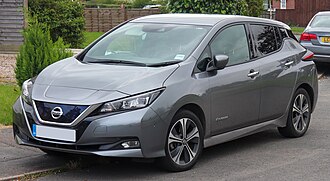
The Nissan Leaf is one of the most important electric cars in modern motoring history. When it arrived in 2010, it helped make battery-powered driving accessible to ordinary households, offering a practical five-door body, straightforward controls and the promise of lower everyday running costs without requiring drivers to buy an expensive luxury vehicle. Today, the Leaf is an established presence in the used-car market, and it can be an appealing choice for anyone looking for an affordable electric vehicle for commuting, school runs, shopping and other routine journeys. Its relatively simple driving experience, comfortable cabin and wide availability make it less intimidating than some newer electric vehicles, while the range of battery capacities means buyers can choose between very inexpensive early examples and newer cars that are much more capable of longer journeys.
However, buying a used Nissan Leaf requires a different approach from buying a petrol or diesel hatchback. The most important component is not an engine or gearbox but the high-voltage battery, whose remaining capacity determines how far the car can travel before needing to recharge. Battery condition varies from one vehicle to another, even among cars of similar age and mileage, because temperature exposure, charging habits, usage patterns and battery chemistry all influence long-term degradation. The Leaf’s charging technology also deserves attention: earlier generations use the CHAdeMO connector for DC rapid charging, and the battery thermal-management design differs from that of many newer electric cars. A used Leaf can therefore be an excellent purchase when its battery health, charging capability and price match the buyer’s needs, but a cheap example with a heavily degraded battery may offer considerably less value than its advertised range suggests.
The key to choosing the right Leaf is to match the vehicle to your real driving routine rather than buying based solely on its age, mileage or original advertised range. A first-generation car with a smaller battery might still make sense for short local journeys if it is inexpensive and its battery remains healthy enough for those distances. A second-generation Leaf with a 40 kWh battery is generally a more versatile option for everyday use, while the 62 kWh e+ version offers a greater range buffer for drivers who travel farther. For anyone who can charge at home and rarely needs repeated rapid charging on long journeys, the Leaf remains a sensible used electric-car candidate. The following guide explains its generations, battery options, reliability, running costs, common problems and the checks worth completing before buying.
The History of the Nissan Leaf
First generation: ZE0 and AZE0, 2011–2017
The first-generation Nissan Leaf introduced a new type of family car to a mass audience. Rather than adapting a conventional petrol hatchback to electric power, Nissan developed a vehicle built around an electric drivetrain and a battery pack positioned beneath the passenger compartment. This helped create a low centre of gravity and a spacious cabin without a conventional engine or transmission occupying the front of the vehicle. Early models used a 24 kWh battery, which provided a useful range for commuting and local journeys when new but now requires particularly careful evaluation because even moderate degradation can have a substantial effect on the distance available between charges. The first generation received updates during its production life, including changes to equipment and powertrain efficiency, and a 30 kWh battery became available for later examples. These differences mean that the model year alone is not always enough to identify the battery fitted to a particular car.
The original Leaf’s age and relatively small battery make it important to set realistic expectations. Many early examples are now affordable enough to appeal to buyers who want an inexpensive second car, a short-distance commuter or a vehicle for predictable journeys around town. Yet the battery condition of an older Leaf can be more important than the odometer reading, because the car’s usable range depends heavily on the capacity that remains. Early batteries also lacked active liquid cooling, so prolonged exposure to high temperatures and repeated rapid charging can contribute to capacity loss. Revised battery chemistry was introduced during the first generation, but buyers should not assume that all 24 kWh packs have identical degradation characteristics. An independent battery-health assessment is therefore especially valuable when considering a first-generation Leaf.
Second generation: ZE1, 2018–2024 in many markets
The second-generation Nissan Leaf arrived for the 2018 model year with a more conventional-looking exterior, a more modern cabin and a significantly larger standard battery. Its 40 kWh pack made the car much more versatile than the original 24 kWh model, improving its suitability for daily commuting and regional travel. Nissan also offered the Leaf e+, commonly referred to in some markets as the Leaf Plus, with a larger battery of approximately 62 kWh and a more powerful electric motor. This version provides a substantially greater range buffer and is better suited to drivers who need to cover longer distances regularly. Equipment, power ratings and official range figures vary by market and model year, so buyers should confirm the precise specification of the vehicle rather than relying on a generic description of the generation.
For many second-hand buyers, the second-generation Leaf is the most attractive place to start. It combines the straightforward driving experience of the original with a larger battery, improved performance and more contemporary safety and convenience equipment. The 40 kWh version is often sufficient for commuting and family errands, particularly if the car can be charged overnight at home, while the e+ version offers greater flexibility for longer journeys. However, the second generation still uses passive battery cooling rather than the liquid-cooling systems found in many newer electric vehicles. Repeated rapid charging can therefore lead to high battery temperatures and reduced charging speed, a behaviour commonly associated with the term “Rapidgate”. This matters most to drivers who expect to complete several rapid-charge sessions during a long journey, rather than those who mainly charge at home.
The newer Leaf and what it means for used buyers
The Leaf name continues into a newer generation with a substantially different design and technology, but buyers shopping for a budget used hatchback will generally be comparing the earlier ZE0/AZE0 and ZE1 cars. As newer electric vehicles enter the market, older Leafs may become more affordable, giving second-hand shoppers a chance to buy a practical electric car for considerably less than the cost of a new model. At the same time, the age of the vehicle, remaining battery warranty and long-term availability of charging infrastructure become increasingly important. Buyers should distinguish between the established hatchback generations covered in most used-car listings and any newer vehicle that uses the same name but has a different body style, battery specification or charging system.
For a used-car purchase, the most useful question is not whether the Leaf was a breakthrough when new, but whether a particular example still fits your daily routine today. Consider how far you travel, whether you can charge at home, whether public rapid charging is essential and how much range you need in winter. A car that is ideal for a 25-kilometre commute may be unsuitable for frequent motorway trips, even if both vehicles have the same badge. The Leaf’s history provides a wide range of used options, but that variety makes careful identification of the battery and charging equipment essential.
Nissan Leaf Battery Options and Real-World Range
The 24 kWh battery: only for short journeys
The original 24 kWh Nissan Leaf is best viewed as a low-cost electric runabout rather than a universal replacement for a modern petrol family car. When new, it was designed around the idea that many daily journeys are relatively short and that drivers can recharge at home instead of making regular visits to a petrol station. That basic idea still works well today, provided the battery has enough remaining capacity to cover the journeys you need to make. A healthy example may be perfectly adequate for commuting, shopping and local appointments, but an older battery can have considerably less usable energy than it had when the car left the factory. As a result, a used 24 kWh Leaf should be bought only after carefully evaluating its present range rather than assuming it will still deliver its original advertised figure.
The smaller battery also leaves less flexibility for unexpected detours, cold weather or motorway driving. Heating the cabin in winter consumes energy, and travelling at sustained high speeds generally reduces range compared with driving around town at moderate speeds. If the car is expected to cover a predictable distance each day and can be recharged overnight, those limitations may be manageable. If the driver frequently needs to travel between towns, has no convenient charging access or wants a comfortable reserve of range, a larger-battery version is usually the better choice. The purchase price of an early Leaf may look attractive, but the value depends on how much useful range remains and whether that range will still be sufficient throughout the ownership period.
The 30 kWh battery: a little more flexibility, but check health carefully
The 30 kWh battery appeared in later first-generation Leaf models and increased the amount of energy available compared with the original 24 kWh version. This made the car more usable for drivers whose journeys were slightly longer or less predictable, although it did not transform the Leaf into a long-distance electric vehicle by modern standards. The 30 kWh models have also attracted attention because battery degradation can be significant on some examples, making a proper state-of-health assessment particularly important. Buyers should confirm the exact battery specification and production details, since registration year alone may not reliably identify which pack is installed.
A 30 kWh Leaf can still make sense if its price is low, its battery is in good condition and its remaining range comfortably covers your normal routine. It should not automatically be considered a better purchase than a 24 kWh car, because the condition of the individual battery matters more than the nominal capacity printed in an advertisement. A well-preserved 24 kWh model might be more suitable than a degraded 30 kWh example, particularly if the buyer has only modest daily range requirements. Before deciding, compare the battery-health readings, charging equipment, service records and price of both cars, then consider how much range reserve each vehicle would provide on the coldest days of the year.
The 40 kWh battery: the all-rounder for many used buyers
The 40 kWh second-generation Leaf is a strong option for buyers who want an affordable electric hatchback for daily use without moving into a much larger or more expensive vehicle. Its greater capacity gives it considerably more flexibility than the original small-battery models, while the car remains relatively straightforward to drive and park. For commuting, school runs, shopping and regional journeys, a healthy 40 kWh Leaf may be entirely sufficient, especially when most charging takes place at home. The second-generation body also brings a more contemporary appearance and a more modern interior, making it an appealing choice for buyers who want an electric car that feels less dated than the original Leaf.
The 40 kWh model is not free from compromises. Its battery still lacks active liquid cooling, and repeated rapid charging can cause battery temperature to rise and charging power to be reduced. This behaviour can be inconvenient if you need to cover long motorway distances with several rapid-charging stops, but it is much less important for an owner who normally charges overnight and rarely needs DC charging. In choosing a used example, pay close attention to battery health, charging performance and the availability of the equipment you need. A well-maintained 40 kWh car with a healthy battery is generally a more balanced proposition than a very cheap early Leaf whose remaining range is marginal for your daily routine.
The 62 kWh Leaf e+: best for drivers who need more range
The Leaf e+, also known as the Leaf Plus in some markets, uses a larger battery of approximately 62 kWh and a more powerful motor than the standard 40 kWh version. Its additional energy capacity makes it much more versatile for drivers who travel longer distances, commute from outside a city or want a larger margin of safety when driving in winter. The stronger motor also gives the e+ more decisive acceleration, particularly when joining faster roads or overtaking. Although it remains a front-wheel-drive hatchback rather than a dedicated long-distance touring car, the larger-battery model can be a compelling option for households that want to use an electric car as their main vehicle.
The larger battery does not eliminate the Leaf’s charging limitations. The e+ still uses CHAdeMO for DC rapid charging in the relevant markets and relies on passive battery cooling, so repeated high-power charging sessions can reduce charging speed as the battery warms up. Buyers should therefore consider not only the maximum range but also the type of journeys they regularly undertake. If you mostly drive locally and charge at home, the extra capacity may not justify the additional purchase cost. If you regularly travel between cities and want fewer charging stops, the e+ may be worth the premium. In either case, the battery’s actual state of health should be checked before buying, because a large battery with significant degradation may offer less useful range than expected.
What real-world range can you expect?
Real-world range depends on the battery size, battery health, driving speed, outside temperature, terrain, tyre pressure, passenger load and use of heating or air conditioning. Official test-cycle figures are useful for comparing models under standardised conditions, but they should not be treated as a guaranteed distance on every journey. In cold weather, energy consumption can rise and the available range can fall, particularly when the vehicle is used for repeated short trips with a cold cabin. Motorway driving at sustained high speeds generally uses more energy than moderate-speed urban or regional driving, while stop-start traffic can sometimes be relatively efficient because regenerative braking recovers some energy during deceleration.
For a used Leaf, it is best to assess range conservatively. Check the battery-health information, look at the vehicle’s recent energy consumption and test-drive it on roads similar to those you normally use. Do not judge battery condition solely by the dashboard range estimate, which is sometimes called the “guess-o-meter” because it adjusts according to recent driving patterns. A low estimate may reflect cold weather or a previous driver’s inefficient journey rather than battery damage, while a high estimate after gentle urban driving does not guarantee the same range on a motorway. Instead, use a battery-health report alongside the car’s charging behaviour and your own expected journey lengths. The most suitable Leaf is the one that provides a comfortable range reserve in your real driving conditions, not merely the one with the largest advertised number.
Battery Health and Degradation: The Most Important Used-Car Check
Understanding the battery capacity bars
The Leaf’s dashboard includes battery capacity bars that provide a quick indication of the battery’s remaining capacity. These are different from the ordinary charge-level display, which tells you how much energy is currently available. The capacity bars represent a broad indication of long-term battery health, and the loss of bars generally reflects capacity degradation rather than simply a low state of charge. However, the display is not a precise percentage measurement, so buyers should not rely on it as the only battery assessment. Two cars with the same number of bars may have different underlying battery-health readings, and the dashboard alone does not tell you everything about battery performance under load or at different temperatures.
A more detailed check can be performed using suitable diagnostic equipment. Leaf-specific tools such as LeafSpy, used with a compatible OBD-II adapter, can display battery data including estimated state of health and information about individual cell voltages, depending on the vehicle and software version. A specialist may also be able to read relevant diagnostic data and assess whether the battery is behaving as expected. This can help identify a pack that has lost more capacity than would be reasonable for its age and usage, or a battery with signs of imbalance that deserves further investigation. Because the battery is the most important factor in the Leaf’s usefulness as a used car, spending money on a proper health check is often more valuable than paying for a cosmetic inspection alone.
What causes battery degradation?
Battery degradation is a normal process in lithium-ion batteries, but its rate varies considerably between vehicles. High temperatures can accelerate chemical ageing, while frequent high-power charging can generate additional heat. The Leaf’s earlier battery designs use passive thermal management rather than a liquid-cooling system, so they cannot actively regulate pack temperature in the same way as many newer electric vehicles. This is particularly relevant for cars that have spent years in hot climates or have regularly undertaken repeated rapid-charging sessions. Later battery revisions improved aspects of durability, but they did not remove the importance of temperature history and usage patterns.
Mileage alone is therefore an incomplete indicator of battery health. A high-mileage car that has been driven gently in a mild climate and charged mainly at home may retain useful capacity, while a lower-mileage vehicle exposed to high temperatures and frequent rapid charging may have lost more range. Buyers should ask about the vehicle’s history, but they should also recognise that a seller may not know how the car was used by previous owners. A diagnostic report and a practical assessment of the remaining range are more useful than trying to infer battery condition from the odometer alone. If the battery’s state of health is much lower than expected for the car’s age, ask a specialist to interpret the readings and determine whether further investigation is necessary.
Battery warranty: what should you confirm?
Battery warranties vary according to model year, market and the original terms under which the car was sold. Some Leaf models were supplied with capacity-related battery coverage subject to a specified period, mileage limit and capacity threshold, but the details are not identical across all generations and countries. It is essential to establish whether the particular vehicle remains covered, whether the warranty transfers to a subsequent owner and what conditions must be met for a claim. A capacity warranty should not be assumed to cover every type of battery fault, nor does it necessarily guarantee that Nissan will replace the complete battery pack if capacity falls below a certain level. The remedy depends on the warranty terms and the diagnosis.
Before buying, contact a Nissan dealer or authorised service centre with the vehicle identification number and ask for confirmation of the original in-service date, remaining battery warranty and any applicable conditions. Request documentation of previous battery repairs or warranty claims, and establish whether any software updates or service campaigns remain outstanding. For an older Leaf, the original battery warranty may already have expired, so the purchase price should reflect the absence of that protection. A car with a healthy battery and a clear diagnostic report can still be a good purchase outside warranty, but the buyer should understand the financial risk before committing.
Charging a Used Nissan Leaf
Home charging: the Leaf’s biggest ownership advantage
The Leaf is at its most convenient when it can be charged at home. Plugging the car in overnight means that much of the energy used during the day can be replenished while the vehicle is parked, reducing the need to make dedicated charging stops. For someone who drives a predictable distance to work and back, this can make electric ownership remarkably straightforward. A dedicated home wallbox can offer greater convenience and charging power than a standard domestic socket, although installation costs, electrical capacity and local regulations need to be considered. The car’s maximum AC charging rate depends on its model year and specification, so buyers should check whether the onboard charger supports the rate they intend to use.
If you live in a flat, rent your property or rely on street parking, investigate charging options before purchasing. A Leaf may still work well with workplace charging or nearby public AC chargers, but the routine will be less convenient if every charge requires a separate trip. Also check the condition and compatibility of the charging cable supplied with the car. A vehicle that is inexpensive to buy can become frustrating if it does not fit the charging arrangements available to you. For many used buyers, access to reliable home or workplace charging is a more important factor than choosing between two closely priced trim levels.
CHAdeMO rapid charging: a limitation to understand
Most earlier Nissan Leafs use the CHAdeMO connector for DC rapid charging. This was an established rapid-charging standard when the Leaf was introduced, but many newer electric vehicles in Europe have moved towards CCS, and the availability of CHAdeMO connectors varies by country and charging network. Buyers should therefore check the public charging infrastructure in the areas where they actually travel rather than assuming that every rapid-charging station will support the Leaf. The car’s rapid-charging socket is separate from its AC charging connection, and the exact equipment should be confirmed for the market and model year.
CHAdeMO does not make the Leaf unusable, especially if most charging takes place at home, but it can reduce flexibility on longer journeys. Some charging sites still offer CHAdeMO connectors, while others may have limited availability or no compatible connection at all. Before buying, use charging-network maps to identify suitable stations along your normal routes and check whether they have a compatible connector. Consider how often you would need rapid charging, how far you normally travel and whether you have an alternative vehicle for occasional long-distance journeys. If you frequently drive hundreds of kilometres in a day, a used Leaf may be less convenient than an electric vehicle with a larger battery, active thermal management and more widely supported rapid-charging hardware.
Rapidgate and charging speed
Rapidgate is the term commonly used to describe reduced DC rapid-charging speeds on certain Leaf models after repeated fast-charging sessions. Because the battery is not actively liquid-cooled, repeated rapid charging can cause pack temperature to rise, prompting the vehicle to reduce charging power to protect the battery. The result is that a car may charge at a reasonable rate during the first session but take longer during subsequent stops on a long trip. The severity depends on the conditions, state of charge, battery temperature and vehicle version, so it is not a problem that appears identically on every journey.
For a buyer who mainly drives locally and charges overnight, this limitation may have little practical impact. For someone who regularly undertakes long motorway journeys and relies on multiple rapid charges in one day, it can be a significant disadvantage. If possible, discuss the intended use with a Leaf specialist and consider a realistic journey simulation before buying. Do not assume that the advertised maximum DC charging power will be maintained throughout every charging session. The Leaf can still be an economical and practical used car, but its charging behaviour is best suited to owners whose routine does not depend on repeated high-speed charging.
Reliability: Is the Nissan Leaf Reliable as a Used Car?
Electric drivetrain and mechanical simplicity
One of the Leaf’s biggest advantages is the relative simplicity of its electric drivetrain. It does not have a conventional petrol engine, exhaust system, clutch or multi-speed gearbox, which removes several common sources of maintenance and repair costs associated with combustion-engine vehicles. The electric motor delivers power smoothly, and the single-speed reduction gear means there are fewer moving transmission components than in a conventional automatic car. Regenerative braking also allows the motor to recover some energy during deceleration, potentially reducing the amount of work done by the conventional brakes in everyday driving. These characteristics can make the Leaf an appealing option for drivers who want predictable commuting costs and a straightforward ownership experience.
However, simplicity does not mean that the car is immune to faults. The high-voltage battery is expensive and important to the vehicle’s usefulness, while the charging system, onboard charger, power electronics and low-voltage electrical system still need to operate correctly. Suspension components, wheel bearings, tyres, brakes, air conditioning and cabin heating can also wear or fail with age. A used Leaf should therefore be inspected like any other car, with particular emphasis on battery health and charging performance. A well-maintained example can be very dependable, but a neglected car with an unhealthy battery or unexplained electrical faults may not be economical to repair.
The 12-volt battery and electrical systems
Like most electric vehicles, the Nissan Leaf has a conventional 12-volt battery in addition to its high-voltage traction battery. The low-voltage battery powers various control systems and helps the vehicle start its high-voltage systems correctly. If it becomes weak, the Leaf may display warning messages or fail to start even when the main battery has plenty of charge. During a used-car inspection, check the age and condition of the 12-volt battery and look for evidence of repeated starting problems, jump-starting or unexplained electrical resets. A battery test is relatively straightforward and can help rule out a common source of avoidable inconvenience.
The rest of the electrical equipment should be tested methodically. Check the dashboard displays, touchscreen, audio system, navigation, windows, central locking, lights, climate controls, reversing camera and any driver-assistance features fitted to the vehicle. On later cars, make sure the e-Pedal and other driving modes operate correctly, and verify that no persistent warning lights remain illuminated. A fault in a convenience feature may be manageable, but warning messages related to the traction battery, charging system or power electronics should be diagnosed by a qualified technician before purchase. Do not accept a seller’s explanation that an EV warning is merely a software glitch unless there is evidence that the cause has been identified and resolved.
Brakes, suspension and age-related problems
The Leaf’s regenerative braking system can reduce reliance on conventional friction brakes during ordinary driving, but this does not mean the brakes can be ignored. Cars that are driven gently or spend long periods parked may develop corrosion on brake discs, and the discs and pads still need to be inspected for wear and safe operation. During the test drive, listen for grinding noises, check for vibration when braking and make sure the vehicle stops smoothly without pulling to one side. The suspension should also be checked over uneven surfaces for knocking sounds, excessive movement or signs of worn bushes, dampers and joints. These are normal used-car concerns, but they can become more noticeable as a Leaf ages.
Inspect the tyres for uneven wear, damage and correct specification, and look beneath the vehicle for corrosion or damage caused by road debris. The battery pack sits under the floor, so any significant impact to the underside deserves careful investigation. Check for signs of previous collision repairs, damaged undertrays or poorly repaired battery protection panels. The absence of an engine does not make a used electric car immune to expensive accident damage. If the car has been involved in a substantial impact, ask for evidence that the high-voltage system and battery enclosure were inspected and repaired correctly.
Interior, Comfort and Practicality
A simple and spacious family hatchback
The Nissan Leaf was designed as an everyday family car rather than a specialist electric vehicle for enthusiasts, and this is one of the reasons it remains attractive in the used market. Its five-door body makes access easy, the cabin is generally straightforward to understand and the driving position suits everyday commuting. The electric drivetrain is quiet at low speeds, while the absence of conventional gear changes helps make urban driving relaxed. For drivers who want a practical second car or a main vehicle for short-to-medium daily journeys, the Leaf can provide much of the convenience of a conventional hatchback without requiring petrol or diesel fuel.
The first and second generations differ in appearance, interior design and equipment, so buyers should test the exact version they intend to purchase. The second generation has a more contemporary cabin and additional features on many trims, while the original model may feel dated but can offer excellent value if its battery is healthy. Check seat comfort, visibility, steering-wheel adjustment, storage areas and rear-seat access during the viewing. If the car will carry children, bring the relevant child seats and make sure they fit properly. The Leaf’s practical appeal is strongest when its range, charging routine and cabin space match the owner’s everyday needs.
Boot space and family use
The Leaf offers useful hatchback practicality, with a rear boot suitable for shopping, luggage and everyday equipment. The precise boot capacity and layout vary by generation and equipment, so check the vehicle’s official specification and assess it in person. Bring a typical suitcase, pushchair or work bag if you regularly carry bulky items. Check the loading lip, boot-floor arrangement and ease of folding the rear seats, as these details can make a noticeable difference in everyday use. A used Leaf can work well as a family commuter, but it should not be assumed to have the same cargo capacity as a larger electric SUV.
Heating, air conditioning and winter use
Climate control deserves particular attention when inspecting an electric car because it affects both comfort and range. Some Leaf versions offer a heat pump or more efficient heating arrangements, depending on the model year, market and trim. These systems can reduce the energy required to warm the cabin compared with a conventional resistive heater in some conditions, although actual performance depends on the temperature and equipment fitted. Test the heating and air conditioning fully, including the fan speeds, temperature adjustment and any heated seats or steering wheel. A climate-control fault can be expensive to diagnose and may make winter driving much less pleasant.
Cold weather can also reduce battery performance and increase energy consumption. A Leaf that provides adequate range during summer may have a noticeably smaller usable range during winter, particularly on short journeys with frequent cabin heating. This is especially important for older cars with smaller or degraded batteries, where the available range reserve is already limited. Before buying, calculate your normal winter commute and make sure the car can cover it with a comfortable margin. If the vehicle will be used in a cold climate, a version with efficient heating equipment and a healthy battery is generally preferable to the cheapest example available.
Running Costs: Is a Used Nissan Leaf Cheap to Own?
Electricity costs versus petrol
The Leaf can be inexpensive to run if most charging takes place at home and the electricity tariff is competitive. The actual saving depends on the price paid per kilowatt-hour, the car’s energy consumption, charging losses and how much the owner would otherwise spend on petrol or diesel. As an illustration, a Leaf consuming 18 kWh per 100 km at an electricity price of €0.25 per kWh would use electricity costing approximately €4.50 per 100 km, before charging losses and any additional fees. At €0.50 per kWh, the same consumption would cost approximately €9 per 100 km. These are example prices rather than current local tariffs, and actual consumption will vary with weather, speed, battery condition and driving style.
The difference between home charging and public rapid charging can be substantial. Public charging prices vary by network and location, and relying exclusively on rapid chargers may reduce the financial advantage compared with charging at home. For a realistic estimate, work out how many kilometres you drive annually and what proportion of your charging will take place at home, at work or at public stations. Then compare the resulting electricity cost with the fuel cost of a similar petrol hatchback. Include the cost of installing a home wallbox if one is needed, because that can influence the financial benefit during the first years of ownership.
Servicing and maintenance
The Leaf generally requires less routine powertrain maintenance than a comparable petrol car. There is no engine oil to change, no conventional exhaust system and no clutch or multi-speed automatic transmission to maintain. However, it still requires inspections and scheduled servicing, including attention to the brakes, tyres, suspension, cabin filters, cooling systems where applicable and low-voltage electrical equipment. Maintenance requirements vary by model year and market, so the correct schedule should be confirmed with Nissan or the vehicle’s documentation. A complete service history is still valuable, even if the vehicle has fewer routine service items than a combustion-engine car.
Buyers should also consider the possible cost of repairing the charging system or high-voltage battery. A low purchase price can be misleading if the car needs a major battery repair or has a charging fault that has not been diagnosed. This is why a battery-health report and a specialist inspection can be more important than a small difference in mileage. If you are comparing two Leafs, the one with a documented battery assessment, functioning charging equipment and a clear service history may offer better long-term value even if its asking price is slightly higher.
Tyres, brakes and insurance
Tyres are a routine expense, and the Leaf’s weight and instant electric torque can contribute to wear depending on driving style and tyre choice. Check the tread depth, tyre age and condition, and make sure the car has suitable tyres fitted to the correct specification. Brakes should be inspected for corrosion and wear, while the suspension and wheel bearings should be checked for noises or play. Insurance costs vary by country, driver profile and vehicle specification, so obtain a quotation for the exact model before buying. If you are purchasing a car with a larger battery or higher output, do not assume its insurance premium will be identical to that of an earlier version.
Which Used Nissan Leaf Should You Buy?
The best budget choice: an early Leaf with a healthy battery
An early 24 kWh Leaf can make sense for buyers who need a low-cost vehicle for short journeys and have reliable access to home charging. The key is to buy according to the battery’s remaining capacity, not simply the lowest asking price. A car that has lost a significant amount of range may be unsuitable even for commuting if the journey involves cold weather, motorway speeds or an unpredictable schedule. Before choosing an early Leaf, check the battery-health bars, obtain a diagnostic assessment if possible and test whether the car can comfortably cover your normal routine. If the remaining range is marginal, it is usually better to spend more on a healthier example or a larger-battery model.
The best all-round choice: a second-generation 40 kWh Leaf
For many used buyers, the 40 kWh second-generation Leaf offers a good balance between price, range and everyday usability. It is more versatile than the older small-battery versions and often has a more modern interior and equipment package. It suits commuters and households that can charge at home and do not regularly need multiple rapid-charge stops on long journeys. When shopping, prioritise battery health, charging performance, service history and the condition of the car over small differences in trim or mileage. A healthy 40 kWh example is often a sensible starting point for someone buying their first electric car.
The best long-range option: Leaf e+ 62 kWh
The 62 kWh Leaf e+ is the more suitable choice for drivers who need greater range and stronger performance. Its larger battery provides more flexibility for regional travel and can make winter journeys less stressful by giving the driver a larger energy reserve. It is usually more expensive to buy than the 40 kWh version, so consider whether you genuinely need the extra capacity. If most journeys are short and the car will be charged overnight, the smaller-battery model may provide better value. If the Leaf will be the household’s main car and regular longer trips are part of the routine, the e+ can be worth the premium, provided the battery is healthy and the charging limitations are acceptable.
Nissan Leaf vs Other Used Electric Cars
The Leaf competes with a growing range of used electric hatchbacks and compact cars. The Renault Zoe is another compact EV worth considering, although its battery ownership and charging arrangements vary by model and market. The BMW i3 offers a distinctive lightweight design and compact dimensions, while the Hyundai Kona Electric and Kia e-Niro may appeal to buyers who want more range and a different charging and thermal-management setup. The Volkswagen e-Golf is also worth comparing if a conventional hatchback layout and familiar interior are priorities.
The Leaf’s main advantages are its straightforward driving experience, practical hatchback body, broad used-car availability and the possibility of finding an inexpensive example. Its main disadvantages are the battery’s lack of active liquid cooling in earlier generations and the use of CHAdeMO for DC rapid charging, which can limit convenience on long journeys.
A competitor may offer better long-distance charging performance or a longer range, but it may also cost more to buy. The best choice depends on your budget, charging access, normal daily distance and the condition of the specific cars available. Compare real battery health and charging compatibility rather than choosing solely by brand or official range.
How to Inspect a Used Nissan Leaf Before Buying
Check the battery before anything else
Begin the inspection by confirming which battery the vehicle has and assessing its remaining capacity. Check the dashboard capacity bars, ask for any previous battery-health reports and, where possible, arrange a diagnostic assessment using Leaf-compatible equipment. A test drive should include enough distance to observe energy consumption, although the dashboard range estimate alone cannot prove that a battery is healthy. If the battery has lost several capacity bars or the diagnostic readings seem unusually low for the vehicle’s age, have the results interpreted by a specialist before agreeing on a price.
Test every charging function
Check the AC charging connection, charging flap, supplied cable and locking mechanism. If possible, connect the car to a compatible charger and verify that charging begins normally. If the vehicle has a CHAdeMO rapid-charge socket, inspect the connector and test DC charging where practical. Ask whether the car has a history of charging interruptions or electrical warnings, and establish whether any relevant repairs have been completed. A Leaf that drives normally but cannot charge reliably is not a good purchase, so unresolved charging faults should be treated seriously.
Inspect the car like any other used vehicle
Check the bodywork for previous accident repairs, examine the tyres and brakes, listen for suspension noises and inspect the underside for damage. Test the climate control, windows, lights, displays, central locking and other electrical equipment. Confirm the service history, verify the VIN and registration documents, and ask about outstanding recalls. If you are considering an imported vehicle, make sure its charging equipment and warranty are compatible with your market. A professional inspection is especially worthwhile if the battery-health report is unavailable or the seller cannot explain the vehicle’s history.
Final Verdict: Is the Nissan Leaf a Good Used Car?
The Nissan Leaf remains a worthwhile used-car option for drivers who want an affordable, practical electric vehicle and understand its limitations. Its smooth electric drivetrain, simple controls and useful hatchback body make it particularly well suited to commuting, shopping and everyday family journeys. Buyers with home charging and predictable daily mileage can often enjoy a convenient ownership experience, while those who need more flexibility should focus on the larger-battery versions. The 40 kWh second-generation Leaf is a sensible starting point for many shoppers, and the 62 kWh e+ is worth considering if longer journeys are part of the normal routine.
The biggest mistake is buying a Leaf based only on its advertised price, mileage or original range. Battery health matters more than almost any other single factor, particularly on older 24 kWh and 30 kWh cars. Charging compatibility and the limitations of CHAdeMO should also be considered, especially if you regularly travel long distances and rely on public rapid chargers. Before buying, verify the battery condition, test the charging system, check the 12-volt battery and electrical equipment, review the service history and confirm any remaining warranty. A healthy, correctly priced Nissan Leaf can be an excellent used electric car; a degraded battery or unresolved charging fault can turn a bargain into an expensive mistake.
Nissan Leaf Technical Specifications: Summary Table
The figures below cover the main used-car generations commonly found on the market. Exact specifications and official range figures vary by year, trim and country. Battery capacity figures are rounded, and the range figures are indicative rather than guaranteed real-world distances.
| Specification | First generation ZE0/AZE0 | Second generation ZE1 |
|---|---|---|
| Approximate model years | 2011–2017 | 2018–2024 in many markets |
| Body style | Five-door electric hatchback | Five-door electric hatchback |
| Powertrain | Fully electric | Fully electric |
| Battery options | 24 kWh, 30 kWh | 40 kWh, 62 kWh e+ |
| Approximate usable battery capacity when new | 21 kWh (24 kWh pack); 27 kWh (30 kWh pack) | 37 kWh (40 kWh pack); 56 kWh (62 kWh pack) |
| Electric motor | Front-mounted | Front-mounted |
| Drive | Front-wheel drive | Front-wheel drive |
| Transmission | Single-speed reduction gear | Single-speed reduction gear |
| Approximate motor output | Around 80 kW for many early versions; varies by year | Around 110 kW for 40 kWh; around 160 kW for 62 kWh e+ |
| Maximum torque | Approximately 254 Nm on early versions; varies by year | Approximately 320 Nm for 40 kWh; approximately 340 Nm for e+ |
| Official range when new | Varies by battery and test cycle; early models had shorter range | Approximately 270 km WLTP for 40 kWh; up to around 385 km WLTP for 62 kWh in applicable versions |
| Typical real-world range | Highly dependent on remaining battery health; usually best suited to shorter journeys | Depends on battery health and conditions; the 62 kWh version generally offers substantially more range |
| AC charging | Approximately 3.3–6.6 kW, depending on specification | Commonly up to 6.6 kW, depending on market and version |
| DC rapid charging | CHAdeMO, where fitted | CHAdeMO |
| Battery thermal management | Passive; no active liquid cooling | Passive; no active liquid cooling |
| Regenerative braking | Yes | Yes; e-Pedal available on applicable versions |
| Seating | 5 | 5 |
| Main strengths | Low purchase cost, simple driving, practical for local journeys | Better range, newer cabin, stronger performance and greater versatility |
| Main used-car concerns | Battery degradation, limited range, age-related wear | Battery health, CHAdeMO availability, reduced rapid-charging speed after repeated sessions |
| Best suited to | Short commutes and local driving | Daily commuting, regional journeys and, with the e+, longer trips |
Technical note: the battery-capacity and range figures are approximate. Official range depends on the applicable test cycle, and real-world range depends on battery condition, weather, speed, terrain and use of heating or air conditioning.
.jpg)