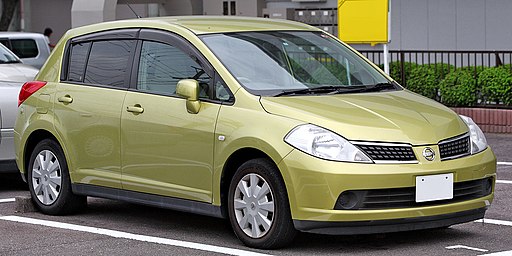
Nissan Tiida as a used car: a practical, spacious and affordable compact
The Nissan Tiida is not a car that usually attracts attention with sporty styling, impressive performance or cutting-edge technology. Its strengths are rather different: a surprisingly spacious cabin, comfortable suspension, straightforward mechanical design and generally sensible running costs. Although it never became one of the most fashionable models in the compact-car segment, that lack of popularity can work in favour of used-car buyers. A well-maintained Tiida can offer plenty of everyday practicality for relatively little money, especially to drivers who value comfort and reliability more than appearance or driving excitement.
The Tiida was introduced in 2004 and reached several European markets from 2007. Depending on the country, it was sold as a five-door hatchback or a four-door saloon, and in some markets it was closely related to the Nissan Versa or Nissan Latio. Its design was developed around the idea of providing more passenger space than a typical small family car, without making the vehicle excessively large or difficult to drive in town. Today, most examples are old enough that their condition and maintenance history matter considerably more than their original equipment level or mileage shown on the dashboard. Before buying one, it is therefore worth understanding the available engines, transmissions, common age-related faults and the areas that deserve particular attention during an inspection.
Nissan Tiida: model history and body styles
The Nissan Tiida belongs to the C11 generation, which was introduced in Japan in 2004. It was designed as a global compact car and was intended to appeal to customers looking for a comfortable, uncomplicated vehicle with a generous amount of interior space. In Europe, the model arrived later and was positioned as a practical alternative to more established compact cars. Its proportions were unusual: the relatively tall roofline, large windows and long wheelbase gave it a roomier feel than its exterior dimensions might suggest. The Tiida was not intended to replace a sports hatchback or a premium family car; instead, it focused on making ordinary journeys easier and more comfortable.
The model was available in two main body styles. The five-door hatchback is likely to be the more versatile choice for buyers who regularly carry shopping, luggage, bicycles or other bulky items. The four-door saloon has a separate luggage compartment and may appeal to drivers who prefer a traditional boot, although loading particularly large objects is less convenient. Equipment and engine availability varied by market, so buyers should not assume that every Tiida has the same specification simply because it carries the same model name. Imported examples can differ in engine, transmission, safety equipment and trim from cars originally sold through local dealerships.
Exterior design and build quality
The Tiida’s appearance is one of its most divisive characteristics. Its rounded front end, relatively tall body and conservative proportions make it look more functional than stylish. Some buyers may find the design dated, especially when comparing it with more modern compact hatchbacks, but the simple shape has practical advantages. Large windows help create a bright cabin, the upright seating position makes it easier to get in and out, and the relatively compact body is manageable in crowded streets and car parks. The Tiida is not particularly aerodynamic-looking, but its exterior design was clearly influenced by the need to maximise usable space rather than create a dramatic visual impression.
When inspecting an older example, the condition of the bodywork deserves careful attention. Look for corrosion around the wheel arches, lower edges of the doors, sills, floor panels and suspension mounting points, paying particular attention to areas that may have been exposed to road salt. Check the underside rather than judging the car only by its paintwork, because fresh underseal or recently applied paint can sometimes conceal deterioration. Also inspect the panel gaps and paint colour for signs of previous accident repairs. A car with uneven gaps, overspray or poorly aligned bumpers may have been repaired after a collision. These checks are important on any older used vehicle, but they are especially worthwhile when buying an imported car with an incomplete service or repair history.
Interior space, comfort and practicality
The Tiida’s cabin is arguably its strongest selling point. Although it is classified as a compact car, its tall body and generous wheelbase provide a useful amount of headroom and legroom. Front passengers benefit from relatively large seats and an upright driving position, while rear passengers generally have more room than they might expect from a car of this size. This makes the Tiida suitable for small families, older drivers and anyone who regularly carries adult passengers. The high roofline also makes entry and exit easier, which can be an important consideration for people who dislike the low seating positions found in some modern hatchbacks.
The dashboard is straightforward rather than luxurious. Most controls are positioned within easy reach, and the overall layout is designed to be understandable without a lengthy learning process. Depending on the trim level and market, equipment may include air conditioning, electric windows, remote central locking, alloy wheels, cruise control or a more sophisticated audio system. However, the exact specification varies considerably between versions, and some imported vehicles may have features that were not offered on locally sold models. Buyers should test every switch, button and electrical function rather than relying on the equipment list in an advertisement.
The boot is adequate for everyday shopping and ordinary family use, although it is not necessarily class-leading. The hatchback offers a practical opening and a useful luggage area, while the saloon provides a conventional separate boot. One disadvantage of some Tiida configurations is the relatively high loading edge, which can make lifting heavy suitcases or shopping bags less convenient. If luggage capacity is important, inspect the exact body style rather than relying on general descriptions of the model. Fold the rear seats, check that the mechanisms operate correctly and look for signs of water ingress, damaged trim or heavy use.
Interior wear in older examples
The cabin materials are generally functional, but age and intensive use can take their toll. Inspect the driver’s seat carefully, particularly the outer side bolster and the edges of the seat cushion, because these areas experience the most wear when occupants get in and out. Check the steering wheel, gear knob, pedals and door handles for wear that appears inconsistent with the claimed mileage. A heavily polished steering wheel or badly worn driver’s seat in a supposedly low-mileage car should prompt further questions about its history.
Also examine the centre console, storage compartments, door trims and headlining. On higher-specification versions, leather or part-leather upholstery may look attractive in photographs but can become cracked or split over time. Make sure the air conditioning works properly, all windows move smoothly and the central locking responds consistently. These may seem like minor details, but repairing several small electrical or interior faults after purchase can quickly reduce the financial appeal of an inexpensive used car.
Engines available in the Nissan Tiida
Engine availability depends on the country in which the vehicle was originally sold. European-market examples commonly include petrol engines and the 1.5-litre dCi diesel, while imported cars may have different petrol units, including 1.5- and 1.8-litre versions. The most sensible choice depends on the type of journeys the car will be expected to perform. A petrol engine is usually the simpler option for drivers who mainly travel short distances, while a diesel may be more economical for regular longer journeys. With a car of this age, however, a documented maintenance history is more important than choosing an engine solely on the basis of its official fuel-consumption figures.
1.6-litre petrol engine
The 1.6-litre petrol engine is one of the relevant choices in European-market Tiidas. It offers a reasonable balance between performance, mechanical simplicity and everyday running costs. It is not a particularly powerful engine by modern standards, but it is generally adequate for commuting, urban driving and occasional motorway journeys. Its naturally aspirated design avoids some of the additional complexity associated with turbocharged petrol engines, making it an appealing choice for buyers who want a relatively straightforward used car.
When inspecting a 1.6-litre petrol Tiida, listen carefully during a cold start and check that the engine settles into a stable idle. Look for oil leaks, excessive smoke, unusual mechanical noises and signs of neglected servicing. A timing chain is used on relevant Tiida engine versions, so there is no conventional timing-belt replacement interval in the same sense as on a belt-driven engine. However, a chain is not guaranteed to last forever: poor oil maintenance, low oil levels or neglected servicing can contribute to wear. A rattling noise from the engine, particularly during starting, should be investigated rather than dismissed as normal behaviour.
1.5 dCi diesel engine
The 1.5 dCi diesel is attractive to drivers who cover longer distances and want lower fuel consumption. It provides useful torque at low engine speeds, which makes it comfortable on country roads and motorways. In suitable conditions, it can be more economical than the petrol alternatives, particularly when driven steadily over longer journeys. Its appeal is strongest for people who use their cars regularly rather than leaving them parked for long periods or making only very short trips.
A used diesel needs a more careful inspection than a simple petrol version. Check for smoke under acceleration, uneven running, difficult cold starts and warning lights. Ask about the history of the fuel system, turbocharger, exhaust emissions equipment and regular oil changes. Diesel particulate filters, where fitted, can become problematic when a car is used mainly for short urban journeys because the engine may not regularly reach the conditions needed for successful regeneration. Exhaust gas recirculation components and other emissions-related systems can also require attention as mileage and age increase. A diesel Tiida can be a sensible purchase, but it is not automatically the cheapest option for someone who drives only a few kilometres at a time.
1.8-litre petrol engine
Some markets received a 1.8-litre petrol version, including imported examples. This engine provides stronger performance than the smaller petrol units and can make the Tiida feel more relaxed when accelerating, climbing hills or carrying several passengers. It is a reasonable choice for drivers who want a little more flexibility without buying a performance-oriented car. The trade-off is generally higher fuel consumption, particularly in stop-start traffic or when driven enthusiastically.
The 1.8-litre engine is also worth considering from the perspective of maintenance history. Check for smooth running, oil leaks, abnormal noises and evidence of regular servicing. Do not assume that a larger engine is automatically more reliable or more expensive to maintain; the condition of the individual vehicle and the availability of parts in your market are more important. Imported versions should be checked carefully against their registration documents and engine identification, as specifications can differ between regions.
Gearboxes and driving characteristics
The Tiida was offered with different manual and automatic transmissions depending on the market and engine. Some versions use a six-speed manual gearbox, while others have a conventional four-speed automatic or a continuously variable transmission. This distinction is important because the driving feel and maintenance requirements are not identical. A manual gearbox is often the simplest choice for buyers who want to minimise the risk of expensive transmission repairs, although clutch wear should always be assessed during a test drive.
A manual Tiida should select every gear smoothly, without excessive resistance, grinding or unusual noises. Pay attention to the clutch pedal and the point at which the clutch engages. If the engine speed rises without a corresponding increase in road speed during acceleration, the clutch may be slipping. Also listen for clunks when changing gear or accelerating and decelerating. Some reports describe a rather mechanical or noisy gearshift feel, so it is important to distinguish the normal characteristics of the model from symptoms of excessive wear.
Automatic versions require particular care. A conventional four-speed automatic should engage drive and reverse without a significant delay and should change gears without harsh jolts. A CVT-equipped import should be checked by someone familiar with that transmission type, and the service history should show that the correct fluid and maintenance procedures have been used. A transmission that judders, whines excessively, hesitates or behaves inconsistently may require expensive work. Never assume that an automatic gearbox is maintenance-free simply because a seller describes it as sealed for life.
Reliability and common problems
The Nissan Tiida has a reputation for being a relatively uncomplicated and generally dependable car when properly maintained. Its conventional layout, established mechanical components and modest performance can make it less demanding than some more complicated alternatives. Used-car reviews have noted that many examples provide dependable everyday service, although this should not be confused with a guarantee that every old Tiida will be trouble-free. At this age, rubber components, suspension parts, electrical connections, exhaust systems and corrosion can become more important than the original design of the engine.
Engine maintenance and oil-related issues
Regular oil changes are essential, even when the engine uses a timing chain rather than a timing belt. Poor-quality oil or excessively long service intervals can contribute to sludge formation and accelerated wear. Check the service records for evidence of consistent maintenance, and inspect the oil filler cap and accessible engine areas for signs of neglect. During a test drive, watch for warning lights, smoke and changes in engine noise. A rattling sound from the lower part of the engine or signs of delayed oil pressure deserve professional investigation before purchase.
Suspension, steering and brakes
The suspension should be checked carefully because worn bushes, shock absorbers, strut bearings and other joints can produce knocking noises over uneven roads. During the test drive, listen for clunks when crossing speed bumps or turning at low speed. The car should travel in a straight line without excessive vibration or pulling to one side. Uneven tyre wear may indicate alignment problems, worn suspension components or previous accident damage. A Tiida that feels loose or unsettled over bumps may need more than a simple wheel alignment.
The brakes should operate smoothly and predictably. Check for vibration through the steering wheel or brake pedal, pulling under braking, grinding noises and excessive corrosion on the discs. On an older car, brake pipes and flexible hoses also deserve inspection, particularly in regions where winter road salt is used. Corrosion in these areas can become a safety issue rather than merely an inconvenience. A professional inspection of the braking system is worthwhile even if the car has a recent roadworthiness certificate.
Corrosion and underbody condition
Rust deserves particular attention on older Tiidas. Examine the sills, wheel arches, floor, subframes, suspension mounting points and the underside of the vehicle. Look for bubbling paint, flaking metal, poorly applied repairs and fresh underseal that might hide corrosion. A car that has spent much of its life in a dry climate may be in better condition than one exposed to several winters of salted roads, but the only reliable way to judge this is to inspect the actual vehicle. Structural corrosion can make an otherwise inexpensive car uneconomical or unsafe to repair.
Electrical equipment and cabin features
Electrical faults are not necessarily a defining weakness of the Tiida, but age-related problems can affect almost any used example. Test the air conditioning, heater fan, electric windows, mirrors, central locking, dashboard warning lights, audio system and exterior lighting. If the vehicle has keyless entry, cruise control or a reversing camera, make sure those systems work as intended. Intermittent faults can be difficult to diagnose, so it is better to identify them before agreeing on a price.
Fuel consumption and everyday running costs
Fuel consumption depends on the engine, transmission, body style, driving conditions and maintenance. A petrol Tiida will generally use more fuel in heavy urban traffic than on a steady motorway journey, while a diesel can offer an advantage when driven over longer distances. Official figures from the period should be treated as laboratory measurements rather than promises about real-world economy. Tyre condition, wheel alignment, engine temperature, driving style and the condition of the fuel and exhaust systems all influence the amount of fuel a particular car uses.
The Tiida’s modest performance and relatively simple mechanical layout can help keep routine ownership costs reasonable. However, an inexpensive purchase price should not be mistaken for a low total cost of ownership. A neglected example may need tyres, brakes, suspension work, a battery, exhaust repairs or attention to the air conditioning soon after purchase. Before buying, obtain a quote for the parts and labour that are likely to be required locally. It is also sensible to check whether replacement body panels, transmission components and engine-specific parts are readily available for the particular version being considered.
Safety and equipment
Safety equipment varies by market, model year and trim level. Some Tiidas have front airbags and anti-lock braking, while higher-specification or later versions may include additional airbags and electronic stability control. Buyers should verify the equipment fitted to the individual car rather than relying on a general specification for the model range. This is especially important with imports, because vehicles built for different markets may have different safety packages.
The Tiida’s tall cabin and relatively large windows can provide good outward visibility, although the rear pillars may make some parking manoeuvres more difficult. Parking sensors or a reversing camera, if fitted, can be useful additions, but they should not replace checking the vehicle’s mirrors and blind spots. Families should also confirm the availability and location of child-seat anchor points and check that the rear seat belts are suitable for their needs. Safety equipment should be assessed as part of the actual vehicle inspection, not assumed from the model name.
What to check before buying a used Nissan Tiida
A careful inspection is more valuable than choosing a particular year or trim level based on reputation alone. Many Tiidas are now older vehicles, and two cars of the same year can be in very different condition depending on how they were driven, serviced and stored. A full service history is desirable, but invoices and inspection records can also provide useful evidence when a complete stamped book is unavailable. Check that the mileage is consistent with the vehicle’s condition and any available records.
Start by examining the car when the engine is cold. It should start without excessive cranking, settle into a stable idle and show no persistent warning lights. Listen for rattles, knocking or unusual whistling, and look for visible oil or coolant leaks. During the test drive, check acceleration, steering response, braking, clutch operation and gearbox behaviour. Drive over a rough surface if possible, because worn suspension components may be difficult to identify on a smooth road. After the drive, inspect the engine bay again and look for fresh leaks or signs of overheating.
The bodywork and underside should be checked in daylight, ideally with the vehicle raised on a lift. Inspect the sills, floor, subframes, brake pipes and suspension mounting points. Check tyre wear and make sure all four tyres are of a suitable type and condition. Finally, verify the vehicle identification number, registration documents, import paperwork where applicable, recorded mileage and any outstanding recall work. A professional pre-purchase inspection is particularly worthwhile if the seller cannot provide convincing maintenance records or if the car has an automatic transmission.
Which Nissan Tiida is the best used-car choice?
For buyers who mainly drive around town, a well-maintained petrol version is usually the most straightforward choice. The 1.6-litre petrol engine is a sensible option in markets where it was sold, offering adequate performance without the additional emissions-system complexity associated with many older diesels. It is particularly suitable for people who make short journeys, drive moderate annual mileages and want a car that is easy to use in everyday conditions.
The 1.5 dCi diesel makes more sense for drivers who regularly cover longer distances and can benefit from its fuel economy. It should be chosen only after checking its service history and condition, especially the turbocharger and emissions-related equipment where fitted. A diesel that has spent most of its life on short urban trips may not be as attractive as its fuel-consumption figures suggest. The 1.8-litre petrol version can be a good alternative for buyers who want more performance, provided they are comfortable with potentially higher fuel costs and have confirmed that parts and servicing are practical in their area.
Transmission choice also matters. A manual version with a healthy clutch and gearbox is often the conservative option. Conventional automatic versions can be comfortable, but they should be checked for smooth operation and evidence of appropriate maintenance. CVT-equipped imports require particular care because repair costs can outweigh the apparent saving on the purchase price. In every case, condition, documented servicing and a clean inspection should take priority over trim level, engine size or a low advertised mileage.
Advantages and disadvantages of the Nissan Tiida
The Tiida’s main advantage is its practicality. It offers a spacious cabin, comfortable seating and a relaxed driving experience, making it well suited to everyday journeys. Its controls are relatively simple, its engines are not designed for high performance, and a properly maintained example can provide dependable transport without requiring the owner to spend money on unnecessary luxury features. The model’s lack of popularity can also make it an interesting option for buyers who are willing to consider something less fashionable than a Volkswagen Golf, Ford Focus or Toyota Corolla.
Its disadvantages are equally clear. The styling is conservative, the driving experience is not particularly engaging and the interior may feel dated compared with newer compact cars. Some versions have limited safety equipment by modern standards, while automatic transmission variants need careful evaluation. The age of the model means that corrosion, worn suspension, neglected maintenance and deteriorating interior materials may be more significant than any single model-specific mechanical fault. Buyers who want modern driver-assistance systems, contemporary infotainment or strong resale demand may find the Tiida less appealing.
Nissan Tiida compared with its rivals
The Tiida competes in the same broad used-car category as models such as the Toyota Corolla, Honda Civic, Ford Focus, Mazda 3 and Hyundai i30. The Toyota Corolla has a stronger reputation and often enjoys higher demand, but a comparable Tiida may offer better value if purchase price is the main priority. The Honda Civic can be more distinctive and engaging to drive, while the Ford Focus generally offers sharper handling. The Mazda 3 is another appealing alternative for buyers who value steering feel and styling.
The Tiida’s strongest argument is its interior space and straightforward approach to transport. It may not be the most exciting car in the group, but it can be comfortable and practical for passengers who appreciate a high roofline and generous room. When comparing examples, avoid making the decision purely on the basis of brand reputation. A well-maintained Tiida can be a better purchase than a neglected Corolla or Civic, just as a clean rival model may be preferable to a Tiida with corrosion or transmission problems. Compare the condition, service history, safety equipment and likely repair costs of the actual cars available.
Final verdict: is the Nissan Tiida worth buying?
The Nissan Tiida can be a sensible used-car purchase for someone who wants affordable, uncomplicated transport and places more importance on comfort and interior space than on appearance or sporty handling. Its cabin is one of its most convincing features, and its practical design makes it suitable for commuting, shopping and family use. The petrol versions are particularly worth considering for drivers who mainly make short and medium-length journeys, while the diesel can be attractive to people who regularly travel longer distances and find a well-maintained example.
However, the Tiida should not be bought simply because it is inexpensive. Most examples are now old enough for corrosion, suspension wear, neglected servicing and transmission condition to have a major influence on their value. A thorough inspection and a convincing maintenance history are essential. If the car starts cleanly, drives smoothly, has a sound underside and shows evidence of regular servicing, it can be a practical and economical alternative to more fashionable compact cars. The best Nissan Tiida is not necessarily the newest or most highly equipped one, but the example that has been looked after properly and can be bought without expensive repairs waiting around the corner.
Nissan Tiida technical specifications: summary
The following figures are representative of the C11 generation. Exact specifications vary according to the original sales market, model year, body style and engine version, so the vehicle registration documents and manufacturer data should be checked before purchase.
| Specification | 1.6 petrol | 1.5 dCi diesel | 1.8 petrol |
|---|---|---|---|
| Engine type | 4-cylinder petrol | 4-cylinder turbo diesel | 4-cylinder petrol |
| Displacement | 1,598 cc | 1,461 cc | 1,798 cc |
| Approx. maximum power | 110 hp | 105 hp | 126 hp |
| Approx. maximum torque | 153 Nm | 240 Nm | 173 Nm |
| Fuel | Petrol | Diesel | Petrol |
| Transmission | 5-speed manual or market-dependent automatic | 6-speed manual, market-dependent | 6-speed manual or 4-speed automatic |
| Drive | Front-wheel drive | Front-wheel drive | Front-wheel drive |
| Timing system | Chain | Chain | Chain |
| Seating capacity | 5 | 5 | 5 |
| General specification | Nissan Tiida C11 |
|---|---|
| Body styles | 5-door hatchback, 4-door saloon |
| Length | Approx. 4,200–4,470 mm, depending on body style and market |
| Width | Approx. 1,695–1,700 mm |
| Height | Approx. 1,535–1,540 mm |
| Wheelbase | Approx. 2,600 mm |
| Fuel tank | Approx. 52 litres |
| Luggage capacity | Varies by body style and market |
| Driven wheels | Front |
