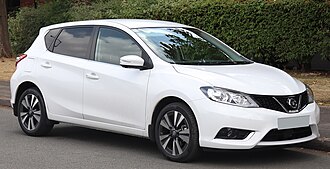
Is the Nissan Pulsar a Good Used Car?
The Nissan Pulsar is an interesting and somewhat underrated choice on the second-hand car market. Although it never achieved the same popularity as competitors such as the Volkswagen Golf, Ford Focus or Škoda Octavia, this compact Japanese family hatchback has several qualities that make it worth considering today. Its biggest strengths include a surprisingly spacious interior, comfortable suspension, economical engine options and generally generous equipment. It was designed for drivers who wanted a conventional five-door family car rather than another crossover or SUV, and it offers a practical alternative for people who value passenger comfort and everyday usability over sporty styling or an exciting driving experience.
The European Nissan Pulsar discussed in this article is the C13 generation, introduced in 2014 and discontinued in 2018. It marked Nissan’s return to the traditional compact hatchback segment after the company had concentrated much of its attention on popular crossover models such as the Qashqai and Juke. The Pulsar was intended to compete directly with established family cars, using a combination of modern engines, relatively advanced safety equipment and generous interior dimensions. Despite these advantages, it struggled to attract enough customers in a highly competitive market, and its relatively short production period means that it is considerably less common than many of its rivals.
Today, this limited popularity can work in favour of second-hand buyers. Used Nissan Pulsar models can offer a lot of space and equipment for a relatively reasonable purchase price, and the vehicle is often overlooked by people searching for a compact family car. However, there are important considerations before buying one. The 1.2 DIG-T petrol engine deserves particular attention because of reported oil-consumption and timing-chain concerns, while diesel versions require the usual checks associated with modern emissions-control systems. The automatic Xtronic transmission also needs to be assessed carefully, and buyers should not overlook the condition of the suspension, brakes and electrical equipment.
The Pulsar is not a perfect used car, but it can be a sensible purchase for someone looking for an affordable, spacious and comfortable hatchback. Its biggest advantage is the amount of passenger room it offers relative to its exterior dimensions, while its main disadvantages are relatively anonymous styling, modest driving excitement and the need to select the right engine carefully. This guide examines the model’s development, engines, transmission options, reliability, common problems, fuel consumption, maintenance requirements and the most important things to check before buying a used Nissan Pulsar.
Nissan Pulsar C13: Model History and Development
The Return of Nissan to the Compact Hatchback Segment
The Nissan Pulsar returned to the European market in 2014 as a conventional five-door family hatchback. The model was designed to fill the space between smaller Nissan passenger cars and the larger crossover range, offering an alternative to popular vehicles in the C-segment. Its development was closely related to Nissan’s broader compact-car architecture, and it shared important technical components and engineering solutions with other vehicles from the Renault-Nissan alliance, including the second-generation Qashqai.
At the time of its introduction, the Pulsar was an attempt to attract customers who were not interested in the increasingly popular SUV and crossover trend. Nissan recognised that many drivers still preferred traditional hatchbacks because they were easier to park, generally lighter and often more economical than larger crossovers. The Pulsar was therefore designed around practical family requirements, with a spacious cabin, a comfortable driving position and a useful boot.
The car’s styling was relatively conservative. Unlike the more expressive Qashqai and Juke, the Pulsar had a straightforward five-door hatchback body with familiar Nissan design elements. Its appearance was not particularly adventurous, but this approach was consistent with its intended role as a practical family vehicle. The interior was similarly focused on functionality, with a conventional dashboard layout, easy-to-understand controls and enough storage space for everyday items.
Despite its sensible design, the Pulsar did not achieve the sales success Nissan had hoped for. The compact hatchback market was dominated by well-established competitors with strong customer loyalty, including the Volkswagen Golf, Ford Focus, Škoda Octavia, Opel Astra and Hyundai i30. Nissan also faced competition from its own Qashqai, which attracted buyers looking for a more fashionable and elevated driving position. Production for the European market ended in 2018, leaving the Pulsar as a relatively short-lived model.
Model Years and Available Versions
The European Nissan Pulsar was sold from 2014 until 2018, with the first examples reaching customers towards the end of 2014. Rather than undergoing a complete generational redesign, the model received relatively limited changes during its production life. The most important differences between individual examples are therefore related to engine choice, trim level, optional equipment and model year.
The initial engine range included the 1.2 DIG-T turbocharged petrol engine and the 1.5 dCi diesel. In 2015, Nissan introduced the more powerful 1.6 DIG-T petrol engine, which provided substantially stronger performance and gave the Pulsar a more interesting character. However, this version was relatively rare compared with the smaller petrol and diesel models.
The trim range included Visia, Acenta, n-tec and Tekna versions, although exact equipment combinations varied according to market and production year. Higher-specification models could feature navigation, improved infotainment, parking assistance, LED lighting and additional safety systems. When buying a used Pulsar, it is worth comparing the equipment of individual vehicles because two examples with identical engines and registration years can have noticeably different levels of comfort and technology.
Exterior Design and Build Quality
The Nissan Pulsar has a relatively conventional appearance, which is one reason why it has sometimes been overlooked in the used-car market. Its front end features Nissan’s characteristic grille and headlights, while the side profile is dominated by a long roofline and relatively generous passenger compartment. The rear design is simple and practical rather than particularly distinctive.
The body proportions are important because they help explain the Pulsar’s spacious interior. Nissan made effective use of the wheelbase and available cabin length, creating a vehicle that offers particularly good rear-seat accommodation. The exterior dimensions remain manageable for everyday driving, making it easier to park and manoeuvre than a larger family estate or SUV.
Build quality is generally reasonable, although the interior does not always feel as premium as some competing models. Certain dashboard surfaces and door panels use hard plastics, particularly in lower trim levels. These materials are not necessarily a reliability problem, but they can show scratches and signs of wear after years of family use. Buyers should inspect the condition of the steering wheel, seats, door handles and centre console to establish whether the vehicle has been treated carefully.
The exterior should be checked for the usual signs of accident damage, including uneven panel gaps, differences in paint colour, poorly repaired bumpers and corrosion around damaged areas. The Pulsar is not particularly famous for serious bodywork problems, but age, road salt and previous repairs can affect any used vehicle. The condition of the wheels, tyres, lights and glass should also be included in a pre-purchase inspection.
Interior Space and Everyday Practicality
Passenger Comfort and Rear Legroom
One of the strongest reasons to consider a used Nissan Pulsar is its spacious interior. The car offers an unusually generous amount of rear passenger legroom for a conventional compact hatchback, making it particularly attractive to families and drivers who regularly carry adult passengers. The long wheelbase helps create a cabin that feels larger than the exterior dimensions might suggest, while the relatively upright seating arrangement contributes to a comfortable environment on longer journeys.
Front passengers also benefit from a practical layout and comfortable seats. The driving position is conventional, with good visibility and straightforward controls. The dashboard is not particularly exciting, but its layout is easy to understand and does not require a long adjustment period. This can be an advantage for drivers who want a simple everyday car without an unnecessarily complicated interior.
The rear bench is suitable for adults, and the Pulsar is particularly comfortable when transporting two rear passengers. Three adults can fit across the back, although the middle position is naturally less comfortable on longer journeys. The generous legroom is one of the model’s most important selling points and makes it worth considering for families with teenagers or people who frequently travel with adult passengers.
Boot Capacity and Luggage Space
The Nissan Pulsar offers a boot capacity of approximately 385 litres, depending on the measurement standard and configuration. This is sufficient for ordinary shopping, several travel bags or a family’s everyday luggage. Folding the rear seats expands the available carrying space, allowing the car to transport larger objects when necessary.
Although the boot is practical, it is not the largest in the compact hatchback class. Some competitors, particularly the Škoda Octavia, offer greater luggage capacity and a more versatile load compartment. Nevertheless, the Pulsar’s boot should be adequate for most ordinary family requirements, especially when combined with its generous passenger space.
When inspecting a used example, check the condition of the boot floor, side trim and rear seat mechanisms. Make sure that the rear seats fold correctly and that the luggage compartment is free from signs of water leaks. A damaged boot floor or unusually damp carpeting may indicate previous accident repairs or problems with the rear seals.
Engines: Which Nissan Pulsar Engine Is the Best Choice?
The European Nissan Pulsar was offered with three main turbocharged engine options: the 1.2 DIG-T petrol, 1.5 dCi diesel and 1.6 DIG-T petrol. Each engine has different characteristics and is suitable for a different type of driver. The choice should be based on annual mileage, driving conditions, maintenance history and the amount of performance required.
1.2 DIG-T 115 Petrol Engine
The 1.2 DIG-T is the smallest petrol engine available in the Nissan Pulsar range and produces approximately 115 PS. It is a turbocharged four-cylinder unit designed to provide reasonable performance while keeping fuel consumption relatively low. On paper, it is an attractive option for drivers who mainly use their car for commuting, family transport and occasional longer journeys.
The engine provides sufficient performance for normal driving, although it does not make the Pulsar particularly quick. Acceleration is adequate, and the turbocharger helps provide useful torque at lower engine speeds. For everyday urban and regional driving, the 1.2 DIG-T can feel perfectly acceptable, but drivers who regularly travel with a full load or prefer stronger acceleration may find it less impressive.
The most important issue associated with this engine is the potential for excessive oil consumption in certain examples. Reports have highlighted problems involving piston rings, which can allow increased oil consumption and potentially lead to further engine damage if the issue is ignored. Insufficient lubrication can contribute to premature wear, while neglected timing-chain problems can create additional repair costs.
For this reason, buying a used Pulsar with the 1.2 DIG-T requires particular caution. A complete service history is essential, and the seller should be able to explain whether the vehicle has ever required oil-consumption checks, engine repairs or relevant technical updates. Check the oil level before starting the engine and look for evidence of frequent top-ups. Blue exhaust smoke, unusual engine noises and a rattling timing chain during a cold start should be treated as warning signs.
It is important not to assume that every 1.2 DIG-T engine will suffer from these problems. However, the potential consequences are serious enough that a buyer should not purchase one without a careful inspection and convincing maintenance documentation. A cheap example with incomplete service records can quickly become an expensive mistake.
1.5 dCi 110 Diesel Engine
The 1.5 dCi diesel is one of the most attractive engine options for drivers who regularly cover long distances. It produces approximately 110 PS and offers around 260 Nm of torque, providing useful pulling power at low and medium engine speeds. The engine is known from several Renault and Nissan models, and its widespread use means that many independent workshops are familiar with its general mechanical design.
The biggest advantage of the 1.5 dCi is fuel economy. The Pulsar is relatively lightweight compared with larger SUVs, and the diesel engine can provide very economical motorway and regional driving. It is particularly suitable for commuters who travel significant distances each year and want to keep fuel expenses under control.
The engine’s performance is adequate rather than sporty. It provides sufficient torque for everyday overtaking and motorway cruising, but it does not offer the same acceleration as the 1.6 DIG-T petrol version. The diesel is best appreciated when driven smoothly and allowed to operate at an appropriate engine temperature.
As with any modern diesel engine, the 1.5 dCi has components that require attention. The diesel particulate filter can become blocked if the vehicle is used mainly for short journeys, while the EGR valve can accumulate deposits over time. The turbocharger, injectors and fuel system should also be checked, particularly on vehicles with high mileage or incomplete service histories.
The 1.5 dCi is generally a sensible choice for drivers who regularly travel on motorways and open roads. It is less suitable for people who use their car almost exclusively for short urban journeys, where the DPF may struggle to regenerate correctly. Before buying, check the service records, examine the exhaust system and request a diagnostic scan to identify any stored emissions-related faults.
1.6 DIG-T 190 Petrol Engine
The 1.6 DIG-T is the most powerful engine offered in the European Pulsar range and produces approximately 190 PS and 240 Nm of torque. It was introduced after the initial launch and is considerably less common on the used market than the smaller petrol and diesel versions. For buyers who want a more responsive and entertaining hatchback, it is undoubtedly the most interesting engine option.
The additional power transforms the driving experience. Acceleration is noticeably stronger, overtaking is easier and the engine provides considerably more flexibility at higher speeds. Unlike the 1.2 DIG-T, which is primarily intended for economical everyday transport, the 1.6 DIG-T gives the Pulsar a performance-oriented character.
Nissan also made chassis and suspension revisions for the more powerful version, giving it a somewhat sharper driving feel. However, the Pulsar was never developed as a full performance hatchback, so buyers should not expect the same handling character as a Volkswagen Golf GTI or Ford Focus ST.
The main disadvantage is higher fuel consumption. The stronger engine is less economical when driven enthusiastically, and insurance and maintenance costs may also be higher depending on the market. As with any turbocharged petrol engine, correct lubrication and regular servicing are important. Buyers should check the timing-chain operation, engine response, turbocharger condition and evidence of consistent oil changes.
The 1.6 DIG-T is a relatively rare version, which can make finding a good example more difficult. However, it may be an attractive purchase for someone who wants an unusual and powerful family hatchback without moving into a much more expensive performance-car category.
Transmission Options: Manual or Xtronic Automatic?
The Nissan Pulsar was mainly offered with a six-speed manual gearbox. The 1.2 DIG-T petrol could also be equipped with Nissan’s Xtronic continuously variable automatic transmission. The 1.6 DIG-T and 1.5 dCi were generally associated with manual transmission in the European range.
Six-Speed Manual Gearbox
The manual gearbox is a straightforward option and is likely to appeal to drivers who prefer conventional mechanical construction. It offers six ratios, allowing the engine to operate at relatively low revolutions during motorway driving. Gear selection should be smooth and precise, and the clutch should engage progressively without slipping or vibration.
When inspecting a used Pulsar, check for difficulty selecting first or reverse gear, unusual noises during acceleration and any vibration when pulling away. The clutch can wear with age, particularly on vehicles that have spent considerable time in urban traffic. A worn clutch may slip under load or engage unusually high in the pedal’s travel.
The diesel version should receive particular attention because its stronger torque output can place additional demands on the clutch and associated components, especially if the vehicle has regularly been driven with a full passenger load.
Xtronic CVT Automatic Transmission
The Xtronic CVT is available with the 1.2 DIG-T petrol engine and offers a smoother alternative to the manual gearbox in everyday traffic. Unlike a conventional automatic transmission with fixed gear ratios, a continuously variable transmission changes its effective ratio continuously to keep the engine operating at an appropriate speed.
In normal driving, this can make the Pulsar comfortable and easy to operate. Acceleration is generally smooth, although the engine speed may remain relatively high under strong acceleration. Some drivers find this behaviour unusual compared with conventional automatic gearboxes.
A used Xtronic-equipped Pulsar should be tested carefully. Pay attention to hesitation when selecting drive, juddering, unusual whining noises and inconsistent acceleration. The transmission should operate smoothly both when cold and after it has warmed up. Check the maintenance requirements and ask for any available evidence of transmission-fluid servicing.
An automatic gearbox can be an excellent convenience feature, but an example with unexplained transmission symptoms should be avoided unless a specialist has identified the cause and provided a clear repair estimate.
Reliability: How Reliable Is the Nissan Pulsar?
The Nissan Pulsar can provide dependable everyday transport, but its reliability depends heavily on engine choice, maintenance and the condition of the individual vehicle. It is not a model that should automatically be dismissed, but neither should it be purchased without careful inspection. Its short production period and relatively limited sales mean that there is less extensive long-term ownership data than for more popular competitors.
The 1.2 DIG-T petrol deserves the greatest attention because of reported oil-consumption problems. Buyers should also check the timing-chain system and look for evidence of correct servicing. The diesel version has a more familiar set of potential issues involving the DPF, EGR, turbocharger and fuel system, particularly when used for frequent short journeys.
Other areas worth checking include the air-conditioning system, stop/start functionality, battery condition, brakes, suspension and electrical equipment. Some owners have reported relatively minor problems involving trim, seat-belt components and brake operation, although these should not be interpreted as guaranteed faults affecting every Pulsar.
The model has also been subject to recall campaigns during its production life. These have included issues involving headlight self-levelling, rear oxygen-sensor software and, for certain production batches, rear child-lock mechanisms. Buyers should check the vehicle identification number with Nissan or an authorised dealer to establish whether all applicable recall work has been completed.
The most sensible approach is to buy a Pulsar with a complete maintenance history and have it inspected independently before paying a deposit. A well-maintained vehicle with documented repairs is generally a better choice than a cheaper example with unexplained warning lights, missing service records or evidence of excessive oil consumption.
Common Nissan Pulsar Problems to Look Out For
Excessive Oil Consumption on the 1.2 DIG-T
Oil consumption is one of the most important issues to investigate when considering a used Nissan Pulsar with the 1.2 DIG-T engine. Certain examples have been reported to consume excessive amounts of engine oil, with piston-ring problems identified in some cases. If the oil level is allowed to fall too low, engine lubrication can be compromised and serious mechanical damage may follow.
Before buying, check the oil level and ask the seller whether the vehicle has required frequent oil top-ups. Look for maintenance invoices, technical assessments or evidence of previous engine repairs. If possible, have the engine examined by a specialist who can assess its condition and investigate any signs of abnormal oil consumption.
Do not accept vague explanations such as the engine simply needing a little oil between services without establishing the actual consumption rate. A vehicle that regularly needs substantial quantities of additional oil should be treated with caution.
Timing-Chain Noise
The petrol DIG-T engines use a timing chain rather than a conventional timing belt. Although a chain is often expected to last a long time, it can still stretch or develop problems with its tensioning components.
A rattling noise during a cold start is one of the symptoms that should be investigated. Other warning signs can include irregular engine operation, diagnostic fault codes and poor performance. Timing-chain problems should be diagnosed by a qualified technician because similar noises can have other causes.
Ask whether the timing chain has ever been replaced and whether the engine has received any relevant technical updates. A documented repair is not necessarily a reason to reject the vehicle, but the quality and scope of the work should be verified.
Diesel Particulate Filter Problems
The 1.5 dCi diesel is equipped with emissions-control technology that requires suitable driving conditions. The diesel particulate filter collects soot and periodically regenerates to burn off accumulated particles. Frequent short trips and repeated cold starts can interrupt this process, potentially causing the filter to become overloaded.
Symptoms may include warning lights, reduced engine performance, increased fuel consumption and unsuccessful regeneration attempts. In more serious cases, professional cleaning or replacement may be required.
If you are considering a diesel Pulsar, ask about the previous owner’s driving habits. A car used mainly for motorway journeys may be a more suitable purchase than one that has spent its entire life making short trips through congested city traffic.
EGR Valve and Turbocharger Problems
The EGR system helps reduce emissions by recirculating a portion of the exhaust gases. Over time, deposits can accumulate and interfere with correct operation. This can result in hesitation, rough running or warning lights.
The turbocharger also deserves attention, especially on high-mileage diesel models. Unusual whistling noises, excessive smoke, oil leaks and a noticeable reduction in power should be investigated. Correct engine-oil servicing is important because the turbocharger relies on proper lubrication.
Start/Stop System and Battery Issues
The Pulsar’s automatic start/stop system can occasionally behave inconsistently. Battery condition is particularly important because the system depends on suitable electrical capacity and correct battery-management operation.
If the start/stop function does not work, it does not automatically mean that the system is defective. The battery may be weak, the engine may not have reached the required temperature or other operating conditions may not be satisfied. However, persistent problems should be investigated rather than dismissed as normal behaviour.
When inspecting a used Pulsar, check the battery’s condition, charging system and all dashboard warning messages. A battery replacement may be relatively straightforward, but electrical faults can require additional diagnosis.
Air Conditioning and Interior Components
Check that the air conditioning produces sufficiently cold air and that the climate controls operate correctly. A system that does not cool properly may require more than a simple refrigerant refill, and some refrigerants used in newer vehicles can make servicing relatively expensive.
Inspect the seat-belt buckles, windscreen trim, dashboard surfaces and door panels. Minor problems with interior components are not necessarily serious, but they can indicate previous neglect or poor-quality repairs.
Brakes, Suspension and Steering
During the test drive, listen for knocking noises over bumps and check that the vehicle remains stable when braking. Worn suspension bushes, shock absorbers, wheel bearings and stabiliser links can affect comfort and handling.
The brakes should operate progressively without grinding, vibration or pulling to one side. Check the condition of the discs and pads and look for signs of corrosion. Any unusual braking behaviour should be investigated before purchase because safety-related repairs should never be postponed.
Driving Experience: Comfort, Handling and Performance
The Nissan Pulsar was developed primarily as a comfortable family hatchback, and its driving characteristics reflect this intention. It is not particularly sporty or exciting, but it provides predictable handling, relatively light steering and a suspension setup that is well suited to everyday use. Drivers who spend most of their time commuting, travelling with family or covering longer distances will probably appreciate its comfortable character more than those looking for sharp steering responses and enthusiastic cornering.
Ride Comfort and Suspension
The suspension is designed to absorb ordinary road imperfections without transmitting excessive vibration into the cabin. On reasonably maintained roads, the Pulsar offers a pleasant ride, and its relatively long wheelbase contributes to stability at higher speeds. The seats are comfortable enough for longer journeys, and the generous cabin dimensions make the car feel less cramped than some compact hatchbacks.
On rougher roads, the suspension can produce more noticeable impacts, particularly if the vehicle has larger alloy wheels or worn shock absorbers. This is why the condition of the suspension is important when buying a used example. A healthy Pulsar should not produce persistent knocking noises when driving over potholes or uneven surfaces.
Handling and Road Stability
The Pulsar is easy to drive and behaves predictably in normal conditions. Its steering is light, making manoeuvring and parking relatively straightforward, although it does not provide particularly detailed feedback. Body movement is noticeable when cornering quickly, and the standard versions are not designed to encourage aggressive driving.
The 1.6 DIG-T version is somewhat more engaging because of its stronger engine and revised suspension characteristics. Nevertheless, even this model is better understood as a powerful family hatchback than a genuine hot hatch. Its main purpose is to provide comfortable everyday transport with the ability to accelerate confidently when required.
Motorway Driving
Motorway driving is one of the areas where the Pulsar performs particularly well. The cabin is reasonably quiet, the seating position is comfortable and the car remains stable at normal cruising speeds. The diesel engine is particularly suitable for long-distance journeys because of its strong low-speed torque and economical operation.
The petrol versions are also comfortable on motorways, although the smaller 1.2 DIG-T may require more frequent downshifts when overtaking or travelling with a full load. The 1.6 DIG-T offers substantially more performance but naturally comes with higher fuel consumption.
Fuel Consumption and Running Costs
The Nissan Pulsar was designed as an economical family car, and its relatively lightweight construction and small turbocharged engines help keep fuel consumption under control. Nevertheless, actual running costs depend on engine choice, transmission, driving style, vehicle condition and the type of journeys undertaken.
1.2 DIG-T Petrol Fuel Consumption
The 1.2 DIG-T is a reasonable choice for drivers who cover moderate annual mileage and do not regularly undertake long motorway journeys. Its official combined fuel consumption was approximately 5.0 litres per 100 kilometres for certain manual versions, although real-world figures can be higher, particularly in urban traffic.
The Xtronic automatic version has slightly different consumption characteristics. Frequent acceleration, short journeys and driving with several passengers can all increase fuel consumption. The engine’s relatively small displacement should not be interpreted as a guarantee of exceptionally low running costs.
It is also important to consider potential oil consumption and engine maintenance when calculating ownership expenses. A vehicle that uses excessive oil or has an unresolved timing-chain problem can quickly become much more expensive than a slightly thirstier but mechanically healthy alternative.
1.5 dCi Diesel Fuel Consumption
The 1.5 dCi is generally the most economical engine in the Pulsar range. Its official combined consumption was approximately 3.6 litres per 100 kilometres in certain European specifications, although real-world consumption depends on driving conditions and vehicle maintenance.
The diesel is particularly efficient on motorways and open roads, where the engine can operate at relatively low revolutions. It is therefore attractive to commuters and drivers who regularly travel between towns and cities.
However, the potential cost of DPF, EGR and turbocharger repairs should be included in any assessment of long-term ownership expenses. Choosing a diesel solely because of its official fuel-consumption figure may not be sensible if the car will spend most of its life travelling short distances.
1.6 DIG-T Petrol Fuel Consumption
The more powerful 1.6 DIG-T is designed to deliver performance rather than maximum fuel economy. Its official combined consumption was approximately 5.7 litres per 100 kilometres in selected manual configurations, but real-world figures can increase significantly when the engine is used enthusiastically.
For buyers who want a practical hatchback with stronger acceleration, the additional fuel expense may be acceptable. However, anyone prioritising low running costs will generally be better served by a carefully maintained diesel or a suitable smaller petrol version.
Maintenance, Insurance and Replacement Parts
Routine servicing is relatively straightforward, and the Pulsar shares some mechanical components with other Nissan and Renault-Nissan alliance models. This can be helpful when sourcing filters, brake components, engine parts and other common service items.
Nevertheless, the Pulsar is relatively uncommon, and certain body panels, interior components and model-specific electronic parts may be more difficult to find than components for a Volkswagen Golf or Ford Focus. This is worth considering if the car has been involved in an accident or requires unusual repairs.
Insurance costs depend on the engine, driver profile, country and vehicle specification. The 1.6 DIG-T may be more expensive to insure than the smaller engines, while the 1.5 dCi can be attractive to drivers who cover higher annual mileage. Before buying, compare insurance quotations and obtain estimates for any repairs that may be required immediately after purchase.
Safety and Equipment
The Nissan Pulsar was relatively well equipped for its time, particularly in higher trim levels. Depending on the market and specification, it could be fitted with several driver-assistance features designed to improve safety and reduce the risk of accidents.
The model received a five-star Euro NCAP safety rating under the assessment protocol applicable at the time of testing. Standard and optional safety equipment varied according to trim level, so it is important to check the actual specification rather than assuming that every Pulsar has the same systems.
Nissan Safety Shield
Selected versions feature Nissan’s Safety Shield technology, which can include systems such as lane-departure warning, blind-spot monitoring and moving-object detection. These features were relatively advanced for a mainstream compact hatchback when the Pulsar was introduced.
Higher-specification vehicles may also include a 360-degree Around View Monitor, parking assistance and additional camera-based features. These systems can make everyday driving and parking easier, particularly for drivers who regularly use busy urban streets.
However, buyers should check that all safety equipment works correctly. Cameras, radar sensors and electronic driver-assistance systems can be expensive to diagnose or repair if damaged. Warning messages should never be ignored, particularly when they relate to braking, airbags or other important safety systems.
Trim Levels: Visia, Acenta, n-tec and Tekna
The Pulsar was offered in several trim levels, with equipment becoming progressively more comprehensive as buyers moved up the range.
-
Visia: The entry-level specification, providing the essential equipment required for everyday driving.
-
Acenta: A more attractive mid-range version with additional comfort and convenience features.
-
n-tec: A higher specification that can include navigation, improved lighting and additional technology.
-
Tekna: The range-topping version, generally offering the most comprehensive comfort, safety and driver-assistance equipment.
The exact equipment varies by production year and market. A well-equipped Acenta or n-tec can be a better purchase than a more expensive Tekna with poor maintenance records, so condition should always take priority over trim level.
What to Check Before Buying a Used Nissan Pulsar
Buying a used Pulsar should involve more than checking the mileage and taking a short test drive. The car is now several years old, and individual examples may have experienced very different ownership conditions. A comprehensive inspection is particularly important because certain engine-related problems can lead to expensive repairs.
Service History and Mileage
Start by requesting the complete service history, including invoices and records of previous repairs. Regular oil changes are particularly important for the petrol DIG-T engines, while diesel versions should have evidence of appropriate servicing and emissions-system maintenance.
Do not automatically assume that a low-mileage example is the best purchase. A vehicle with a higher recorded mileage but consistent servicing and mainly motorway use may be in better condition than a low-mileage car that has spent years making short journeys.
Check that the mileage is consistent with previous inspection records and ownership documents. Look for gaps in the service history and ask about any periods when the vehicle was not regularly used.
Engine Condition
The petrol engine should be started from cold and allowed to idle until it reaches normal operating temperature. Listen for rattling noises, irregular running and unusual mechanical sounds. Check the engine oil level, coolant level and visible areas around the engine for leaks.
On the 1.2 DIG-T, pay particular attention to excessive oil consumption and timing-chain noise. Ask the seller whether the engine has ever required additional oil between services and whether any technical investigations or repairs have been carried out.
On diesel versions, check for smoke, hesitation, turbocharger noises and warning lights. A diagnostic scan can help identify faults involving the DPF, EGR system and other emissions-related components.
Gearbox and Clutch
The manual gearbox should select every gear smoothly, without grinding or excessive resistance. Test the clutch under acceleration and check that it does not slip when the engine is under load.
On the Xtronic automatic version, pay attention to smoothness when moving away and accelerating. There should be no persistent juddering, unusual whining or delayed engagement. A specialist inspection is advisable if the gearbox behaves inconsistently.
Brakes and Suspension
Check the brake discs and pads for wear and corrosion. During the test drive, the car should brake smoothly without vibration or pulling to one side. The handbrake should also operate correctly and hold the vehicle securely.
The suspension should be inspected for worn bushes, damaged shock absorbers, broken springs and wheel-bearing problems. Drive over a variety of road surfaces and listen for knocking noises. Uneven tyre wear may indicate suspension or wheel-alignment problems.
Electrical Equipment and Air Conditioning
Test all the electrical equipment, including windows, mirrors, central locking, infotainment, lights, parking sensors and dashboard controls. Check that the start/stop system works under suitable operating conditions and that no unexplained warning lights remain illuminated.
The air conditioning should produce cold air within a reasonable period. If it does not work, establish whether the problem is caused by low refrigerant, a leaking component, a compressor fault or an electrical issue. Do not automatically accept the seller’s claim that the system only needs regassing.
Bodywork and Interior
Inspect the bodywork for accident repairs, damaged paint, uneven panel gaps and corrosion around repaired areas. Pay particular attention to the front and rear bumpers, wheel arches, door edges and underside.
Inside the vehicle, check the seats, steering wheel, pedals, gear lever and door trims for wear. These areas can provide useful clues about how the car has been used. Make sure that the rear seats fold properly and that the boot is dry and free from damage.
Check Recalls and Vehicle Documents
Before completing the purchase, check whether the vehicle has been affected by any recall campaigns and whether the necessary repairs have been completed. Nissan or an authorised dealer can generally confirm outstanding recall work using the vehicle identification number.
Also check the vehicle’s legal status, ownership documents, inspection history and recorded mileage. Depending on the country, an independent vehicle-history report can help identify previous accident damage, outstanding finance or inconsistencies in the ownership record.
Nissan Pulsar Compared with Its Main Competitors
The compact hatchback market is extremely competitive, and the Nissan Pulsar faces several well-established alternatives on the used-car market. Although it may not be the most exciting car in its class, its spacious interior and comfortable ride give it some distinctive advantages.
Nissan Pulsar vs Volkswagen Golf
The Volkswagen Golf is one of the most popular alternatives and has a much stronger reputation in the European compact-car segment. It offers a broad engine range, good interior quality, a refined driving experience and an extensive used-car market.
The Pulsar’s biggest advantage is rear passenger space, where it can be particularly impressive. It may also offer good value for money because it is less sought after. However, the Golf has a broader range of body styles, engines and equipment, making it easier to find a configuration that suits individual requirements.
Nissan Pulsar vs Ford Focus
The Ford Focus is generally more enjoyable to drive and offers sharper handling. Its steering and chassis characteristics make it attractive to drivers who value an engaging experience behind the wheel.
The Pulsar, however, is more focused on passenger comfort and interior space. It can be a better option for families who regularly carry rear passengers and do not prioritise sporty handling.
Nissan Pulsar vs Škoda Octavia
The Škoda Octavia is particularly attractive for buyers who need maximum luggage capacity and practicality. Its boot is substantially larger than the Pulsar’s, especially in estate form, and the interior offers plenty of space.
The Nissan can nevertheless be an interesting alternative when purchase price is important. A well-maintained Pulsar may provide a spacious and comfortable family car without the additional cost sometimes associated with an equivalent Octavia.
Nissan Pulsar vs Hyundai i30 and Kia Ceed
The Hyundai i30 and Kia Ceed are strong alternatives because they offer practical interiors, a wide selection of engines and a good balance of equipment and running costs. Their popularity also means that buyers can usually find a larger selection of used examples.
The Pulsar’s advantage is its generous rear legroom and potentially attractive second-hand price. However, the Hyundai and Kia models may be easier to resell, depending on local market conditions.
Advantages and Disadvantages of the Nissan Pulsar
The Nissan Pulsar has a clear set of strengths and weaknesses. Understanding them helps determine whether it is suitable for a particular buyer.
Main Advantages
-
Excellent rear passenger space: The Pulsar offers generous legroom for a compact hatchback.
-
Comfortable ride: Its suspension is designed for relaxed everyday driving.
-
Practical five-door body: Easy access to the cabin and useful luggage space.
-
Economical diesel engine: The 1.5 dCi can provide very low fuel consumption on longer journeys.
-
Powerful petrol option: The 1.6 DIG-T offers 190 PS for buyers who want stronger performance.
-
Good equipment: Higher trim levels can include navigation, cameras and useful safety systems.
-
Attractive used-car value: Its relatively low popularity can make it affordable compared with more sought-after competitors.
-
Straightforward everyday operation: Conventional controls and a familiar driving experience.
Main Disadvantages
-
1.2 DIG-T oil-consumption concerns: Certain engines have reported piston-ring-related problems.
-
Potential timing-chain issues: Petrol DIG-T versions deserve careful inspection for chain noise.
-
Limited production period: The European model was sold for only a few years.
-
Unexciting styling: The conservative exterior design may not appeal to everyone.
-
Average interior materials: Some cabin plastics feel inexpensive.
-
Less boot space than certain rivals: The Škoda Octavia offers greater luggage capacity.
-
Limited availability: Finding a well-maintained example with the desired engine and equipment can take time.
-
Diesel emissions-system risks: DPF and EGR problems are possible on cars used mainly for short journeys.
Which Nissan Pulsar Should You Buy?
Choosing the right used Pulsar depends on your driving habits and budget. The 1.5 dCi is an attractive option for drivers who regularly travel long distances and prioritise fuel economy. Its torque and low consumption make it suitable for motorway commuting, but it is less appropriate for drivers who spend most of their time in urban traffic.
The 1.2 DIG-T may initially appear to be the most logical petrol choice because of its reasonable performance and relatively low fuel consumption. However, its reported oil-consumption problems mean that buyers should be especially selective. A vehicle with convincing maintenance records and a satisfactory specialist inspection is essential. If the seller cannot provide clear answers about oil consumption or the engine’s history, it is better to consider another example.
The 1.6 DIG-T is the most appealing option for drivers who want performance as well as practicality. Its 190 PS engine provides substantially stronger acceleration and makes the Pulsar more interesting to drive. The downside is that it is relatively rare and consumes more fuel than the smaller engines.
In terms of equipment, Acenta and n-tec models can offer a good balance between price and comfort, while Tekna versions are attractive for buyers who want the most comprehensive specification. However, it is better to purchase a mechanically healthy lower-specification vehicle than a neglected top-of-the-range model.
Final Verdict: Is the Nissan Pulsar Worth Buying?
The Nissan Pulsar is an underrated used family hatchback that deserves more attention than it usually receives. Its spacious interior, generous rear legroom, comfortable suspension and practical five-door body make it a sensible alternative to more popular compact cars. It is particularly attractive for families who need plenty of passenger space but do not want to buy a larger estate car or SUV.
Its relatively short production period and limited popularity mean that it can offer good value on the used market. However, buyers need to be selective. The 1.2 DIG-T petrol engine requires particular attention because of reported oil-consumption and timing-chain concerns, while the 1.5 dCi should be inspected for the usual diesel emissions-system issues. The 1.6 DIG-T is a more powerful and interesting alternative, although it is less common and more expensive to run.
A complete service history, a careful test drive and an independent mechanical inspection are the most important parts of the buying process. Do not choose a Pulsar simply because it is inexpensive or has low recorded mileage. Instead, focus on the engine’s condition, maintenance history, transmission operation and the overall quality of the vehicle.
Ultimately, the Nissan Pulsar can be a very sensible used-car purchase for drivers who value comfort, space and practicality more than fashionable styling or sporty handling. A carefully selected example can provide dependable everyday transport and excellent passenger accommodation at a competitive price. The key is to avoid neglected engines and concentrate on finding a vehicle whose history demonstrates that it has been maintained properly.
Nissan Pulsar: Summary of Technical Specifications
The following table summarises the main technical specifications of the European Nissan Pulsar C13 (2014–2018). Figures may vary slightly depending on model year, trim level, transmission and wheel size.
| Specification | 1.2 DIG-T | 1.5 dCi | 1.6 DIG-T |
|---|---|---|---|
| Production years | 2014–2018 | 2014–2018 | 2015–2018 |
| Engine type | Turbo petrol | Turbo diesel | Turbo petrol |
| Engine displacement | 1,197 cc | 1,461 cc | 1,618 cc |
| Number of cylinders | 4 | 4 | 4 |
| Maximum power | 115 PS | 110 PS | 190 PS |
| Maximum torque | 190 Nm (manual) | 260 Nm | 240 Nm |
| Transmission | 6-speed manual / CVT | 6-speed manual | 6-speed manual |
| Drivetrain | Front-wheel drive | Front-wheel drive | Front-wheel drive |
| Body style | 5-door hatchback | 5-door hatchback | 5-door hatchback |
| Length | 4,387 mm | 4,387 mm | 4,387 mm |
| Width | 1,768 mm | 1,768 mm | 1,768 mm |
| Height | Approx. 1,520 mm | Approx. 1,520 mm | Approx. 1,520 mm |
| Wheelbase | 2,700 mm | 2,700 mm | 2,700 mm |
| Boot capacity | Approx. 385 litres | Approx. 385 litres | Approx. 385 litres |
| Seating capacity | 5 | 5 | 5 |
| Official combined consumption | Approx. 5.0 l/100 km | Approx. 3.6 l/100 km | Approx. 5.7 l/100 km |
| Fuel tank capacity | Approx. 46 litres | Approx. 46 litres | Approx. 46 litres |
