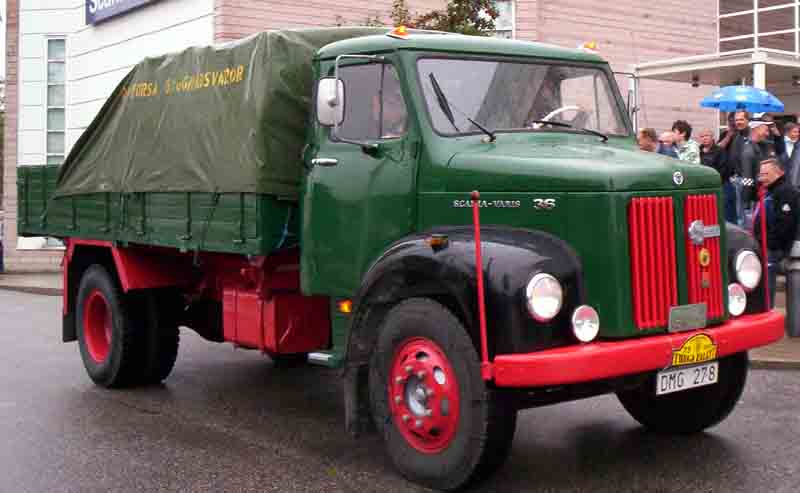
Scania-Vabis L36
The Scania-Vabis L36 stands as a testament to Scandinavian engineering prowess, embodying the legacy of quality and reliability associated with the renowned truck manufacturer. Introduced in the mid-1930s, the L36 marked a significant advancement in transportation technology, boasting robust construction and innovative design elements. At its core, the L36 was built to endure the demanding conditions of long-haul transportation, delivering exceptional performance across various terrains and climates.
One of the distinguishing features of the Scania-Vabis L36 was its powerful engine, which set new standards for efficiency and durability in the trucking industry. Equipped with a potent inline-six powerplant, the L36 offered ample horsepower and torque, ensuring effortless acceleration and formidable towing capabilities. This formidable engine, combined with advanced engineering and meticulous craftsmanship, made the L36 a preferred choice among drivers and fleet operators seeking reliability and performance in their vehicles.
Beyond its mechanical prowess, the Scania-Vabis L36 also boasted a comfortable and ergonomic cabin, prioritizing driver comfort and safety during long journeys. With its spacious interior and well-designed controls, the L36 provided a pleasant working environment for drivers, enhancing productivity and reducing fatigue on extended trips. Additionally, its sturdy chassis and suspension system offered exceptional stability and maneuverability, allowing drivers to navigate challenging road conditions with confidence. In essence, the Scania-Vabis L36 represented the pinnacle of Scandinavian trucking excellence, setting the standard for generations of vehicles to come.
Scania-Vabis L36 parameters
The Scania-Vabis L36 was a truck model produced by the Swedish manufacturer Scania-Vabis during the mid-20th century. While specific technical parameters may vary depending on the year of production and model specifications, here are some general parameters for the Scania-Vabis L36:
- Engine: Inline 6-cylinder, diesel
- Displacement: Approximately 8.3 liters (based on historical data for similar engines)
- Power: Typically around 110 horsepower (82 kW) at the time of production
- Transmission: Manual transmission, typically with 4 or 5 gears
- Wheelbase: Varies depending on the specific configuration and model variant
- Gross Vehicle Weight (GVW): Depending on the configuration, GVW could range from 10 to 15 metric tons.
- Payload Capacity: Depending on the GVW and configuration, payload capacity could range from 5 to 10 metric tons.
- Dimensions: Overall length, width, and height varied based on the specific configuration, including options for different cab styles and wheelbase lengths.
- Brakes: Hydraulic brakes, typically with drum brakes on all wheels.
- Suspension: Leaf spring suspension on both front and rear axles.
- Fuel Tank Capacity: Varies depending on the configuration, typically between 100 to 200 liters.
- Top Speed: Typically around 70 to 80 km/h (43 to 50 mph) depending on load and road conditions.
- Tires: Standard truck tires for the era, typically with sizes around 9.00-20 or similar dimensions.
Please note that these parameters are generalizations based on historical data and the typical specifications of trucks from that era. Actual specifications may vary depending on the specific model year, market requirements, and optional features chosen by customers.
