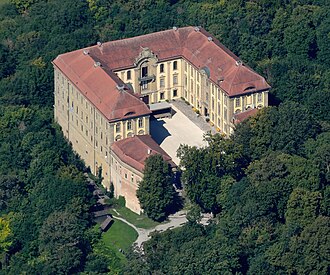
Schloss Schillingsfürst: The Baroque Crown of Franconia and the Timeless Spirit of German Aristocratic Heritage
There are castles that impress through military severity, and there are palaces that astonish through extravagant luxury. Then there are places like Schloss Schillingsfürst, where elegance, history, landscape, and dynastic continuity combine into something more subtle and enduring. Rising above the rolling hills of Franconia in Bavaria, Schloss Schillingsfürst is not merely a historical structure. It is a cultural statement carved into the German countryside — a monument to noble ambition, Baroque aesthetics, political adaptation, and centuries of aristocratic life.
Unlike isolated medieval fortresses perched upon inaccessible mountain peaks, Schloss Schillingsfürst occupies a commanding yet harmonious position within the Franconian landscape. It dominates the surrounding area without appearing disconnected from it. The palace and the town beneath it exist in dialogue with one another, shaped by the same regional traditions and historical rhythms that influenced Central Europe for centuries.
For modern travelers, Schloss Schillingsfürst offers a rare experience. It is grand without becoming cold. Historical without feeling frozen. Refined without losing authenticity. Many famous European castles today struggle under the weight of mass tourism, souvenir commercialization, and spectacle-driven presentation. Schloss Schillingsfürst retains something quieter and more intimate. Visitors do not simply observe the palace; they feel immersed in a living historical atmosphere where architecture, memory, and landscape remain deeply connected.
The castle’s long history reflects the broader story of Germany itself. Medieval foundations gave way to Baroque transformation. Noble dynasties adapted to changing political systems. Wars reshaped the surrounding world. Industrialization altered society. Yet through all these changes, Schloss Schillingsfürst survived as a symbol of continuity.
The palace also reveals the complexity of aristocratic culture. European nobility was never solely about luxury and privilege. Castles functioned simultaneously as political centers, economic headquarters, cultural institutions, family archives, and symbolic expressions of authority. Schloss Schillingsfürst embodies all these dimensions. Its halls and gardens preserve traces of political negotiations, artistic patronage, family traditions, social hierarchy, and regional identity.
To walk through Schloss Schillingsfürst today is to encounter more than architecture. It is to encounter layers of time. Every corridor suggests generations of footsteps. Every room reflects changing tastes and priorities. Every window frames a landscape that has witnessed centuries of transformation.
This article explores Schloss Schillingsfürst in depth — its history, architecture, cultural meaning, relationship with Franconia, and continuing relevance in the modern world. More importantly, it examines why castles like this continue to fascinate contemporary audiences despite the disappearance of the social systems that created them.
Schloss Schillingsfürst remains one of Franconia’s most remarkable treasures not because it dominates history books, but because it preserves something increasingly rare: authenticity shaped by time rather than performance.
The Franconian World: Understanding the Region Behind the Palace
Franconia as a Cultural Landscape
Before understanding Schloss Schillingsfürst itself, one must first understand Franconia. This historic region in northern Bavaria possesses a cultural identity distinct from many stereotypical images associated with Germany. Franconia is not primarily a land of Alpine peaks and royal mountain castles. Instead, it is a region of rolling countryside, vineyards, forests, market towns, medieval architecture, and deeply rooted local traditions.
Historically, Franconia developed through political fragmentation. Instead of centralized rule, the region consisted of bishoprics, noble territories, free imperial cities, and small principalities. This fragmented political structure encouraged the construction of numerous castles, manor houses, and aristocratic estates. Every noble family sought to establish visible authority through architecture and landownership.
Schloss Schillingsfürst emerged directly from this environment. It was not merely built within Franconia; it embodies Franconian aristocratic culture. The palace reflects regional preferences for architectural harmony, landscape integration, and dynastic continuity.
Franconia’s geography also shaped its political importance. Positioned between larger European powers and connected through trade routes, the region became an arena of negotiation, competition, and cultural exchange. Noble families in Franconia often balanced local autonomy with broader imperial loyalties.
The result was a distinctive aristocratic culture that valued refinement without abandoning regional rootedness. Schloss Schillingsfürst represents this balance perfectly.
The Strategic Position of Schillingsfürst
The town and palace of Schillingsfürst occupy an elevated position overlooking the surrounding countryside. Geography played a central role in castle construction throughout Europe, and this site was chosen carefully.
Elevation provided practical advantages. Visibility across the landscape enhanced security and symbolic dominance. Roads and trade routes could be monitored effectively. The surrounding terrain also reinforced the prestige of the ruling family.
Yet the position of Schloss Schillingsfürst is not aggressively defensive in the style of earlier medieval fortresses. Instead, it reflects the evolving priorities of aristocratic architecture. By the time the palace reached its mature form, visual magnificence and representational power had become more important than pure military defense.
The palace therefore communicates authority through elegance rather than intimidation.
The Origins of Schloss Schillingsfürst
Medieval Foundations and Noble Ambition
Like many European castles, Schloss Schillingsfürst did not emerge fully formed in a single historical moment. Its origins lie in the medieval period, when noble families established fortified residences to secure territory and demonstrate power.
Early structures on the site were likely more defensive in character than the present palace. Medieval Europe was shaped by instability, territorial disputes, feudal rivalries, and shifting political alliances. Castles served as centers of administration and protection during uncertain times.
The ruling family associated with Schillingsfürst gradually expanded its influence over the region. Architecture became an essential instrument of legitimacy. Building in stone signaled permanence. Large estates demonstrated wealth and organizational capacity.
Over generations, the site evolved alongside changing political realities. Defensive concerns diminished relative to representational and residential priorities. What began as a fortified stronghold slowly transformed into a sophisticated aristocratic residence.
This evolution reflects a broader European transition from feudal militarization toward courtly culture and centralized governance.
The House of Hohenlohe
The history of Schloss Schillingsfürst is deeply connected to the noble House of Hohenlohe, one of the most important aristocratic dynasties in the region. Like many German noble families, the Hohenlohe lineage extended across centuries, adapting continually to political transformations while maintaining regional influence.
Dynastic continuity shaped the palace profoundly. Each generation inherited not only buildings but also responsibility for preserving prestige, property, and family identity. Architectural additions and renovations therefore carried symbolic meaning beyond practical utility.
The Hohenlohe family participated actively in the political and cultural life of the Holy Roman Empire. Their status required representation through architecture, patronage, and ceremonial culture. Schloss Schillingsfürst became both family residence and political statement.
Unlike modern buildings often designed for short-term functionality, aristocratic estates were conceived with centuries in mind. The palace embodied lineage itself.
The Baroque Transformation
From Castle to Palace
One of the defining chapters in the history of Schloss Schillingsfürst was its transformation into a Baroque residence. Across Europe during the seventeenth and eighteenth centuries, aristocratic architecture underwent dramatic changes influenced by new aesthetic ideals emphasizing symmetry, grandeur, theatricality, and refined spatial organization.
The Baroque era reshaped how power was displayed architecturally. Medieval fortresses emphasized defense and survival. Baroque palaces emphasized culture, order, and magnificence.
At Schloss Schillingsfürst, this transformation altered not only the building’s appearance but its entire atmosphere. Large windows replaced narrow defensive openings. Decorative elements expanded. Interior spaces became more ceremonial and comfortable. Gardens and visual perspectives gained importance.
The palace’s design expressed confidence and sophistication rather than anxiety and militarization.
Architectural Harmony and Grandeur
Baroque architecture often sought to create emotional impact through scale, symmetry, and movement. Schloss Schillingsfürst demonstrates these principles while maintaining a distinctly Franconian restraint compared with the more extravagant palaces of Vienna or Versailles.
Its elegance lies in proportion and balance. The palace dominates the landscape gracefully rather than aggressively. Long façades, carefully arranged windows, and harmonious courtyards create visual rhythm.
Architectural details reveal extraordinary craftsmanship. Stonework, rooflines, staircases, and decorative interiors all communicate refinement shaped by generations of artistic expertise.
Unlike purely decorative modern luxury architecture, Baroque palaces integrated symbolism deeply into design. Every spatial arrangement reflected assumptions about hierarchy, authority, and social order.
Schloss Schillingsfürst therefore functions as a visual language of aristocratic culture.
Interior Spaces and Courtly Life
The Grand Halls
The interior halls of Schloss Schillingsfürst reveal how architecture structured aristocratic society. Reception rooms, ceremonial spaces, and dining halls were designed not merely for practicality but for social performance.
Courtly life revolved around visibility and etiquette. Noble identity depended heavily upon ceremony, hospitality, and representation. Grand halls provided settings where status relationships became physically visible through seating arrangements, processions, clothing, and ritualized interaction.
Decorative programs reinforced these values. Paintings, stucco work, chandeliers, tapestries, and furniture all contributed to a carefully orchestrated atmosphere of refinement.
Walking through such spaces today, visitors can still sense the social choreography that once unfolded there.
Private Apartments and Domestic Life
Behind the ceremonial façade existed a more intimate world of family life, personal relationships, and daily routine. Aristocratic households balanced public representation with private existence.
Private apartments within Schloss Schillingsfürst offered comfort increasingly valued during the early modern period. Heating systems improved. Furniture became more specialized. Decorative styles reflected changing tastes and international influences.
Yet even private spaces retained hierarchical structure. Servants moved continuously through hidden corridors and service areas supporting aristocratic comfort.
The palace therefore functioned simultaneously as home, institution, and symbol.
Libraries, Music, and Intellectual Culture
European aristocracy often cultivated intellectual and artistic interests as part of elite identity. Schloss Schillingsfürst likely hosted collections of books, artworks, musical performances, and political discussions reflecting broader European cultural trends.
Libraries represented education and prestige. Music formed an essential component of courtly entertainment. Noble patronage supported artists, craftsmen, and composers across Europe.
The palace was therefore not merely an architectural object but a center of cultural transmission.
The Palace and the Landscape
Gardens as Expressions of Power
The gardens surrounding Schloss Schillingsfürst are essential to understanding the estate’s overall design philosophy. In Baroque culture, landscape architecture expressed control, order, and sophistication.
Gardens were carefully planned extensions of the palace itself. Paths, terraces, fountains, and tree alignments shaped movement and perspective. Nature became organized according to human intention.
This controlled landscape symbolized enlightened authority. Aristocratic power extended outward from the palace into the surrounding environment.
Yet the beauty of Schloss Schillingsfürst lies partly in how naturally these designed spaces blend with the Franconian countryside.
Seasonal Transformation
One of the most remarkable qualities of Schloss Schillingsfürst is the way changing seasons alter its atmosphere. Spring fills the grounds with renewal and softness. Summer emphasizes grandeur beneath bright skies. Autumn creates melancholy beauty through fog and color. Winter reveals the palace’s geometry more starkly against snow-covered terrain.
This seasonal transformation deepens emotional engagement with the site. The palace never appears static.
Architecture interacts continuously with weather, light, vegetation, and time itself.
Religion and Spiritual Identity
Faith in Aristocratic Society
Religion shaped aristocratic life profoundly throughout European history. Schloss Schillingsfürst reflects this reality through its chapels, religious symbolism, and ceremonial traditions.
Noble families viewed spiritual responsibility as part of legitimate rule. Religious patronage reinforced moral authority while connecting dynastic identity to broader Christian civilization.
Ceremonies such as baptisms, marriages, funerals, and feast days structured palace life. Chapels within aristocratic residences provided spaces for devotion and continuity.
Religious Conflict and Historical Change
The history of Germany includes periods of profound religious tension, especially during and after the Reformation. Franconia itself experienced significant political and confessional complexity.
Castles and noble families often became deeply involved in these transformations. Religious affiliation influenced alliances, governance, and regional identity.
Schloss Schillingsfürst therefore existed not only within political history but also within the spiritual conflicts shaping Europe.
Hunting Traditions and Aristocratic Identity
The Culture of the Hunt
Hunting occupied a central role in aristocratic life for centuries. Schloss Schillingsfürst became closely associated with hunting traditions reflecting noble identity, landownership, and social hierarchy.
Hunting was not merely recreation. It demonstrated mastery over territory, physical skill, and aristocratic privilege. Forests surrounding the palace formed part of this cultural landscape.
Ceremonial aspects of hunting were equally important. Gatherings, banquets, specialized clothing, horses, and weaponry all reinforced elite culture.
Falconry and Noble Symbolism
Schloss Schillingsfürst is particularly known for connections to falconry traditions. Birds of prey historically symbolized nobility, discipline, and mastery.
Falconry combined practicality with spectacle. It reflected deep knowledge of animals, training methods, and aristocratic ritual.
These traditions continue contributing to the palace’s cultural identity today.
War and Political Upheaval
The Thirty Years’ War and Regional Turmoil
No European castle survived centuries without confronting war. Schloss Schillingsfürst existed during periods of immense instability, including the devastating Thirty Years’ War that transformed much of Central Europe.
Wars threatened noble estates economically, politically, and physically. Armies moved through territories demanding supplies and imposing destruction. Population decline and agricultural disruption affected regional stability profoundly.
The survival and reconstruction of aristocratic estates after such crises demonstrated resilience and adaptability.
Napoleonic Europe and the End of Old Orders
The Napoleonic era fundamentally altered German political structures. The Holy Roman Empire collapsed. Territorial boundaries shifted dramatically. Aristocratic privileges faced new pressures.
Families associated with Schloss Schillingsfürst adapted to these changes while preserving continuity where possible.
The palace thus became a witness to the transition from medieval and early modern Europe toward the modern political world.
Schloss Schillingsfürst in the Modern Era
Survival Through the Twentieth Century
The twentieth century brought unprecedented challenges to European aristocratic estates. World wars, economic crises, political extremism, and social transformation threatened historical continuity.
Many castles disappeared through destruction, neglect, or financial collapse. Schloss Schillingsfürst survived because of sustained preservation efforts and cultural significance.
Survival itself became part of the palace’s historical narrative.
Preservation and Restoration
Maintaining a historical palace requires constant care. Stone deteriorates. Roofs require replacement. Interiors demand conservation. Historical authenticity must be balanced with accessibility and safety.
Restoration specialists face difficult decisions constantly. How much modernization is acceptable? Which historical period should guide restoration priorities? How can preservation remain financially sustainable?
Schloss Schillingsfürst represents the broader European challenge of protecting heritage within contemporary society.
Tourism and Cultural Memory
Authenticity in Historical Travel
Modern travelers increasingly seek authentic experiences rather than superficial spectacle. Schloss Schillingsfürst appeals because it preserves atmosphere and historical integrity.
Visitors experience not only architecture but emotional continuity. The palace still feels connected to the landscape and traditions surrounding it.
Such authenticity is increasingly rare in global tourism culture.
Educational Importance
Historical sites teach more effectively than textbooks alone. Schloss Schillingsfürst allows visitors to understand aristocratic culture, Baroque aesthetics, regional history, and social hierarchy through direct experience.
Architecture makes history tangible.
The palace therefore functions as a bridge between academic knowledge and lived emotional understanding.
Photography, Art, and Imagination
The Visual Drama of Schloss Schillingsfürst
Few architectural forms possess the visual power of Baroque palaces. Schloss Schillingsfürst’s façades, towers, courtyards, and gardens create endlessly changing compositions influenced by weather and light.
Photographers are drawn not merely to beauty but to atmosphere. Mist across the hills, evening sunlight on stone, and seasonal transformations all contribute to the palace’s emotional resonance.
Inspiration Across Generations
Artists and writers have long been fascinated by castles because they symbolize permanence, memory, authority, and mystery simultaneously.
Schloss Schillingsfürst belongs naturally within this imaginative tradition. It invites storytelling.
Even visitors unfamiliar with German history often feel emotionally connected to the palace because its architectural language resonates universally.
The Emotional Meaning of Historical Palaces
Why Castles Continue to Fascinate Us
Modern society changes rapidly. Technologies evolve constantly. Urban landscapes transform within decades. Against this background, historical places like Schloss Schillingsfürst offer continuity.
They remind us that human civilization extends far beyond contemporary concerns.
The palace survives as evidence of earlier generations’ ambitions, fears, achievements, and cultural values.
Silence, Memory, and Reflection
One of the most powerful aspects of Schloss Schillingsfürst is the atmosphere of reflective silence surrounding it. Visitors often become unusually aware of footsteps, echoes, weather, and space.
Historical environments slow perception.
This psychological dimension explains why castles remain emotionally compelling even in an age dominated by digital experience.
Schloss Schillingsfürst as a Symbol of Franconia
Regional Identity and Cultural Continuity
Schloss Schillingsfürst represents more than aristocratic history. It embodies Franconian regional identity itself.
In a globalized world where local distinctions often fade, historical architecture preserves cultural uniqueness. The palace reflects Franconia’s particular relationship between landscape, nobility, agriculture, and artistic tradition.
A Living Historical Presence
Some monuments feel disconnected from contemporary life, existing only as museum objects. Schloss Schillingsfürst feels alive because it remains integrated into its region’s cultural and visual landscape.
The palace continues participating in local identity rather than merely commemorating it.
Conclusion: Schloss Schillingsfürst and the Enduring Dialogue Between Past and Present
Schloss Schillingsfürst is far more than a beautiful Baroque palace overlooking the Franconian hills. It is a living historical organism shaped by centuries of political transformation, aristocratic culture, artistic ambition, and regional continuity. Every stone reflects human effort across generations. Every hall preserves traces of ceremony, conversation, conflict, and memory.
What makes the palace truly extraordinary is its balance. It is grand yet intimate, elegant yet authentic, historically significant yet emotionally accessible. Visitors do not simply admire Schloss Schillingsfürst from a distance; they experience it as an atmosphere — a dialogue between architecture, landscape, and time.
The palace also reminds us that castles were never merely decorative luxuries. They were centers of administration, symbols of legitimacy, cultural institutions, and reflections of broader European civilization. Through wars, political upheavals, social revolutions, and modernization, Schloss Schillingsfürst adapted while preserving continuity.
In many ways, the palace represents the broader story of Europe itself. Medieval origins evolved into Baroque sophistication. Feudal structures gave way to modern nation-states. Aristocratic privilege transformed into cultural heritage. Yet through all these changes, the physical presence of the palace endured.
For modern audiences, Schloss Schillingsfürst offers something increasingly valuable: connection. It connects visitors with regional identity, architectural craftsmanship, historical memory, and the slower rhythms of pre-industrial life. It encourages reflection rather than distraction. Curiosity rather than consumption.
Standing before Schloss Schillingsfürst today, one senses both the fragility and endurance of human achievement. Political systems disappear. Empires collapse. Social hierarchies change. Yet meaningful places survive, carrying fragments of earlier worlds into the present.
That may be the palace’s greatest legacy. Schloss Schillingsfürst is not merely a relic of history. It is proof that architecture can preserve memory across centuries, allowing modern humanity to encounter the past not as abstraction, but as living presence.
And as long as the palace continues overlooking the Franconian countryside, its story — and the story of the world that created it — will continue inspiring future generations.
.jpg)