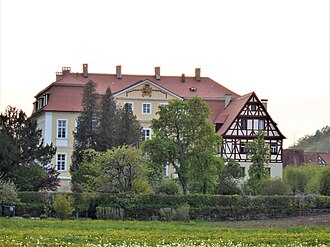
Schloss Rügland: A Hidden Jewel of Franconia and the Quiet Majesty of German Castle Culture
Germany is a country filled with castles, palaces, manor houses, and aristocratic estates that seem to emerge naturally from forests, valleys, and hilltops. Some are globally famous, appearing endlessly in travel magazines and cinematic imagery, while others remain quietly woven into the regional landscapes that shaped them over centuries. Schloss Rügland belongs to the second category. It is not a palace overwhelmed by mass tourism or transformed into a theatrical monument detached from everyday reality. Instead, it stands as a deeply authentic expression of Franconian history, aristocratic culture, architectural continuity, and rural German identity.
Located in the peaceful Franconian countryside of Bavaria, Schloss Rügland possesses a type of beauty that unfolds slowly. It does not depend solely on monumental scale or overwhelming extravagance. Rather, its charm emerges through atmosphere, historical depth, proportion, landscape, and continuity. The castle reflects centuries of political transformation, noble traditions, social hierarchy, religious influence, agricultural life, and regional craftsmanship. Every façade, courtyard, tower, garden path, and surrounding field contributes to a larger story about Central Europe and the evolution of aristocratic estates across the German-speaking world.
To truly appreciate Schloss Rügland, one must understand that castles were never simply luxurious residences. They were centers of administration, symbols of authority, defensive structures, economic hubs, and cultural statements. They represented the intersection of politics and landscape. Even when military importance faded, castles continued functioning as expressions of family legacy, regional influence, and social prestige.
Today, Schloss Rügland exists in a fascinating position between past and present. It carries the weight of centuries while remaining part of a living region rather than a frozen museum detached from contemporary life. Visitors encounter not only architecture but also memory, continuity, and the subtle rhythms of rural Bavaria. Unlike heavily commercialized landmarks where history sometimes feels staged, Schloss Rügland retains an atmosphere of sincerity. The silence of its courtyards, the surrounding greenery, and the harmony between building and landscape create a deeply reflective experience.
This article explores Schloss Rügland not merely as a physical structure but as a cultural world. Its history reveals changing forms of power. Its architecture reflects evolving artistic and defensive priorities. Its gardens and surroundings demonstrate the relationship between aristocratic life and the land itself. Most importantly, the castle helps modern audiences understand how regional history survives through architecture long after the political systems that created it have disappeared.
Schloss Rügland is therefore more than an old Bavarian castle. It is a living fragment of European civilization.
The Franconian Landscape and the Importance of Place
Franconia: A Region of Quiet Historical Richness
To understand Schloss Rügland, one must first understand Franconia itself. Franconia, or Franken in German, is one of the most culturally distinctive regions of Bavaria. Unlike the Alpine imagery often associated with southern Germany, Franconia possesses its own atmosphere shaped by rolling hills, vineyards, medieval towns, forests, agricultural land, and centuries of regional independence.
Franconia’s identity is deeply historical. The region developed through fragmented territories governed by bishops, noble families, imperial cities, and local rulers. This political fragmentation encouraged the construction of castles, fortified estates, and administrative residences across the countryside. As a result, the Franconian landscape became filled with noble architecture integrated into village life and agricultural systems.
Schloss Rügland emerged within this environment. It was not isolated from the region but fundamentally shaped by it. The castle reflects Franconia’s traditions of rural aristocracy, localized political authority, and architectural refinement balanced with practicality.
The surrounding countryside contributes enormously to the castle’s atmosphere. Fields, forests, streams, and village roads create a sense of continuity between architecture and nature. Unlike urban palaces designed to dominate city skylines, Schloss Rügland belongs organically to its environment. The castle feels rooted rather than imposed.
This connection between structure and landscape is one of the defining characteristics of many Franconian estates. Their beauty lies not only in the buildings themselves but in how naturally they inhabit the land around them.
Geography and Strategic Position
Although Schloss Rügland eventually developed into a refined aristocratic residence, its origins were connected to strategic considerations common to medieval and early modern Europe. Noble estates were often positioned carefully to oversee agricultural resources, transportation routes, and local settlements.
The location offered practical advantages. Elevated terrain improved visibility. Nearby water sources supported agriculture and domestic life. Access to roads facilitated communication and trade. Productive surrounding land ensured economic sustainability.
In pre-modern Europe, controlling land meant controlling wealth. Castles therefore functioned not merely as homes but as administrative centers overseeing farming operations, taxation, labor obligations, and regional governance.
Schloss Rügland’s placement within the Franconian countryside demonstrates how aristocratic architecture was designed in dialogue with geography. The estate represented authority embedded directly within the landscape itself.
The Origins of Schloss Rügland
Medieval Beginnings
Like many German castles, Schloss Rügland likely evolved gradually over centuries rather than appearing suddenly in a single completed form. Early medieval fortifications often began as modest defensive structures before later generations expanded and transformed them according to changing political, military, and cultural conditions.
The earliest phase of the site may have included a fortified manor or defensive residence constructed primarily for protection during unstable times. Medieval Europe experienced recurring conflicts involving territorial disputes, feudal rivalries, raids, and shifting alliances. Noble families required secure residences capable of functioning as both homes and defensive strongholds.
Stone construction represented permanence and legitimacy. Building a castle was not simply practical; it was symbolic. Noble families demonstrated status and authority through architecture. The ability to mobilize labor, materials, and skilled craftsmen reflected political power itself.
Over time, as military technologies evolved and regional stability increased, many castles transitioned from purely defensive structures into more sophisticated residential estates. Schloss Rügland appears to embody this transformation beautifully. While traces of defensive logic remain visible, later architectural developments emphasized elegance, comfort, and representation.
Noble Families and Dynastic Continuity
The history of Schloss Rügland is inseparable from the noble families who inhabited and shaped it. Across Europe, castles functioned as dynastic centers where lineage, inheritance, and social identity were materially expressed through architecture.
Generations of aristocrats left their mark upon the estate. Some expanded buildings. Others redesigned interiors, commissioned artistic additions, improved gardens, or modernized residential spaces according to contemporary tastes. Every generation inherited not merely property but responsibility for maintaining family prestige and continuity.
This continuity created a unique relationship between architecture and memory. Schloss Rügland became a repository of family history. Portraits, documents, furniture, chapels, and ceremonial spaces preserved narratives extending across centuries.
The castle therefore functioned simultaneously as residence, archive, symbol, and institution.
Architectural Evolution of Schloss Rügland
From Fortress to Residence
One of the most fascinating aspects of European castle history is the gradual transition from military architecture to aristocratic domesticity. Schloss Rügland illustrates this transformation particularly well.
Early castles prioritized defense. Thick walls, narrow windows, fortified entrances, towers, and enclosed courtyards reflected a world shaped by insecurity. Comfort remained secondary to survival.
As political conditions stabilized and centralized states emerged, aristocratic priorities changed. Noble families increasingly desired residences that reflected education, refinement, wealth, and participation in broader European cultural trends. Castles evolved accordingly.
At Schloss Rügland, later renovations likely introduced larger windows, decorative façades, elegant halls, improved residential chambers, and landscaped surroundings. These changes reflected shifting conceptions of aristocratic identity. Nobility no longer needed merely to defend territory; they also needed to display sophistication.
This architectural evolution tells a larger European story about changing power structures. As warfare transformed and centralized governments expanded, castles adapted from fortresses into symbols of culture and prestige.
Franconian Architectural Character
Franconian castle architecture possesses distinctive regional characteristics. Compared with some of the more flamboyant palaces of southern Germany or Austria, Franconian estates often display restrained elegance rooted in proportion, craftsmanship, and harmony with the landscape.
Schloss Rügland embodies this aesthetic beautifully. Its architectural language emphasizes balance rather than overwhelming grandeur. The result feels deeply authentic and regionally grounded.
Materials play an essential role in this atmosphere. Local stone, timber, roofing styles, and construction techniques connect the castle directly to Franconian traditions. The building appears as though it emerged naturally from the region itself.
Architectural details also reveal changing stylistic influences across centuries. Medieval foundations may coexist with Renaissance additions, Baroque refinements, and later restorations. This layering creates historical depth visible directly in the structure’s physical form.
Rather than presenting a single architectural moment frozen in time, Schloss Rügland represents centuries of adaptation and continuity.
Courtyards, Towers, and Interior Spaces
The spatial organization of Schloss Rügland reflects both practical and symbolic considerations. Courtyards created protected internal spaces where daily life unfolded. Towers provided visibility and prestige. Residential chambers balanced privacy with ceremonial function.
Interior spaces within aristocratic estates were carefully organized according to hierarchy and etiquette. Reception halls demonstrated status and hospitality. Private apartments reflected family life. Chapels emphasized religious devotion. Service areas supported domestic operations behind the scenes.
The arrangement of rooms communicated social order. Architecture itself reinforced hierarchy.
Walking through such spaces today allows modern visitors to experience history physically rather than abstractly. Ceiling heights, corridor layouts, decorative details, and window placements all reveal assumptions about authority, beauty, and social interaction.
Schloss Rügland and the Rural World
The Castle as an Agricultural Center
Modern audiences often imagine castles primarily as romantic residences or historical monuments, but aristocratic estates were deeply connected to agriculture. The economic foundation of noble life depended heavily upon land management.
Schloss Rügland oversaw not merely architecture but territory. Fields, forests, livestock, mills, and tenant farms contributed to the estate’s sustainability and wealth. The castle therefore functioned as the administrative heart of a broader rural system.
Estate management required organization and expertise. Agricultural production, labor arrangements, taxation, maintenance, and trade all demanded careful supervision. Aristocratic households often employed numerous workers, including administrators, gardeners, stable workers, cooks, craftsmen, and servants.
The surrounding landscape was therefore not decorative alone. It represented economic infrastructure.
Village Life and Aristocratic Authority
The relationship between castles and nearby villages shaped rural European society for centuries. Schloss Rügland likely played a central role in local governance, economic organization, and cultural life.
Villagers depended upon the estate in various ways. Some worked directly for the castle. Others farmed estate land or provided specialized services. Religious festivals, seasonal celebrations, and regional customs often connected village and castle communities together.
At the same time, social hierarchy remained deeply unequal. Aristocratic privilege structured political and economic relationships throughout much of European history.
Yet the relationship between nobility and rural populations was often more complex than simple domination. Local identity developed through long-term interaction between estate culture and village traditions. Schloss Rügland became part of the region’s collective memory.
Gardens and Landscape Design
The Art of Controlled Nature
European aristocratic estates frequently expressed power not only through architecture but also through landscape design. Gardens represented human order imposed upon nature. They demonstrated wealth, education, aesthetic taste, and cultural sophistication.
The grounds surrounding Schloss Rügland likely evolved significantly over time. Medieval practicality gradually gave way to more decorative and symbolic approaches influenced by Renaissance and Baroque traditions.
Gardens created transitional spaces between architecture and wilderness. Paths, ponds, trees, flowerbeds, and carefully planned vistas shaped how visitors experienced the estate.
Landscape design was never accidental. Every line, perspective, and arrangement reflected cultural values.
Seasonal Beauty and Atmosphere
One reason Schloss Rügland remains emotionally powerful is the way changing seasons transform its appearance. Spring introduces renewal through blossoms and greenery. Summer emphasizes tranquility and abundance. Autumn fills the landscape with color and nostalgia. Winter reveals the castle’s architectural structure more starkly beneath snow and bare branches.
This seasonal variation creates a dynamic relationship between the castle and time itself. The estate never appears exactly the same twice.
Such environmental transformation deepens emotional engagement with historical places. Visitors experience not merely architecture but atmosphere.
Religion and Spiritual Identity
Faith in Aristocratic Life
Religion played a central role in European aristocratic culture for centuries. Schloss Rügland likely contained or was closely connected to sacred spaces where religious ceremonies structured family and community life.
Chapels within castles served multiple purposes. They expressed piety, reinforced legitimacy, and provided spiritual continuity across generations. Baptisms, weddings, funerals, and daily prayers all occurred within these environments.
Religious symbolism also appeared in decorative programs, artwork, inscriptions, and architectural orientation. Christianity profoundly shaped European castle culture.
The Moral Dimension of Nobility
Aristocratic identity historically involved moral and religious expectations alongside privilege. Noble families often viewed themselves as custodians responsible for protecting local communities, supporting churches, and preserving social order.
While historical reality rarely matched idealized rhetoric perfectly, these values nevertheless influenced estate culture.
Schloss Rügland therefore represented not only wealth and authority but also participation in broader moral and spiritual frameworks shaping European civilization.
War, Crisis, and Survival
The Impact of European Conflict
No historical castle survives centuries without encountering periods of crisis. Wars, political upheavals, economic difficulties, and social transformations repeatedly reshaped European aristocratic life.
Schloss Rügland existed through eras marked by major conflicts, including regional feuds, dynastic struggles, religious wars, Napoleonic upheaval, and eventually the immense disruptions of the modern age.
Each conflict threatened estates differently. Some castles suffered physical damage. Others experienced economic decline or political marginalization. Noble families adapted continually to changing realities.
The survival of Schloss Rügland itself is therefore remarkable. The estate endured because generations invested effort into preservation and adaptation.
Changing Political Systems
The decline of feudal structures and the rise of modern nation-states transformed aristocratic estates fundamentally. Noble privileges diminished gradually across Europe during the nineteenth and twentieth centuries.
Castles that once functioned as centers of local authority increasingly became cultural and historical properties rather than political institutions.
This transition altered the meaning of Schloss Rügland. The castle survived, but the world that originally created it disappeared.
Yet architecture preserves memory even when social systems change completely.
Interior Culture and Daily Life
Aristocratic Routine
Daily life within Schloss Rügland likely balanced ceremony with routine. Noble households operated according to structured schedules shaped by etiquette, religious observance, estate management, and seasonal rhythms.
Meals held social importance. Hunting excursions reinforced aristocratic identity. Music, literature, and conversation reflected education and refinement. Guests arrived regularly, making hospitality central to castle culture.
At the same time, domestic life depended heavily upon invisible labor. Servants maintained rooms, prepared food, cleaned spaces, cared for clothing, and supported every aspect of aristocratic comfort.
The castle therefore functioned as a complex social organism rather than a static monument.
Education and Cultural Refinement
European aristocracy historically valued education as part of elite identity. Libraries, artworks, correspondence, and musical traditions often flourished within castle environments.
Schloss Rügland may have hosted intellectual and cultural activities reflecting broader European trends. Noble families frequently participated in artistic patronage, political discussion, and cultural exchange.
This dimension complicates simplistic perceptions of castles as merely defensive or luxurious. Estates were also centers of cultural transmission.
Schloss Rügland in the Modern Era
Preservation and Restoration
Historical preservation is never simple. Maintaining centuries-old architecture requires continuous investment, technical expertise, and difficult decisions about authenticity.
Restoration efforts at Schloss Rügland likely balanced historical integrity with practical realities. Structural stabilization, conservation of materials, environmental protection, and public accessibility all require careful planning.
Preservation is ultimately an act of cultural respect. It reflects recognition that historical structures possess value beyond immediate economic utility.
Tourism and Authentic Experience
Modern travelers increasingly seek meaningful destinations beyond mass tourism circuits. Schloss Rügland appeals precisely because it retains authenticity and regional character.
Visitors experience something increasingly rare: historical atmosphere unburdened by excessive commercialization. The castle encourages slow exploration and contemplation rather than hurried consumption.
Such places remind travelers that cultural heritage is most powerful when connected genuinely to local identity and landscape.
Photography and the Visual Power of Schloss Rügland
A Castle Made for Light and Shadow
Schloss Rügland possesses extraordinary photographic qualities because its architecture interacts beautifully with natural light. Morning mist, afternoon sunlight, autumn fog, and winter snow each reveal different emotional dimensions of the estate.
Stone textures, rooflines, towers, and garden paths create endlessly changing visual compositions.
Photographers are drawn not merely to historical significance but to atmosphere. The castle evokes mood.
Artistic Interpretation
Artists, writers, and filmmakers remain fascinated by castles because they symbolize timeless themes: memory, continuity, decline, authority, romance, and mystery.
Schloss Rügland fits naturally into this imaginative tradition. It invites storytelling.
Even modern audiences with limited knowledge of European history often feel emotionally connected to castle environments because such spaces resonate deeply within cultural imagination.
The Emotional Meaning of Historical Places
Why Castles Continue to Matter
In a technological age dominated by speed, digital communication, and urban expansion, historical places offer something profoundly valuable: continuity.
Schloss Rügland connects modern visitors directly to centuries of human experience. The same walls seen today were once seen by medieval nobles, servants, travelers, soldiers, and villagers. This continuity creates emotional depth impossible to replicate artificially.
Historical architecture reminds us that civilization is cumulative. The present emerges from countless previous generations whose traces remain embedded within landscapes and buildings.
Silence and Reflection
One of the most powerful aspects of Schloss Rügland is its atmosphere of quiet reflection. Unlike crowded tourist landmarks where constant movement dominates the experience, the castle encourages stillness.
Walking through historical courtyards or gardens changes perception of time. Modern urgency fades temporarily. Visitors become more attentive to texture, sound, weather, and space.
Such experiences explain why historical travel remains deeply meaningful despite technological transformation.
Nature and the Castle
Harmony Rather Than Domination
Some monumental architecture attempts to overpower nature entirely. Schloss Rügland instead exists in remarkable harmony with its environment.
Trees, fields, seasonal vegetation, and surrounding countryside enhance rather than diminish the estate’s beauty. The castle feels integrated into the landscape.
This harmony reflects broader Franconian cultural traditions emphasizing balance between human construction and rural environment.
Ecological Dimensions
Historical estates often become important ecological spaces as well as cultural landmarks. Old trees, gardens, ponds, and stone structures create habitats supporting biodiversity.
Modern preservation increasingly recognizes this ecological value.
Protecting Schloss Rügland therefore supports both historical memory and environmental continuity.
The Symbolism of Schloss Rügland
Permanence and Fragility
Castles symbolize permanence because they survive centuries. Yet they also reveal fragility because history inevitably transforms their meaning and function.
Schloss Rügland once represented active political and social authority. Today it represents heritage, memory, and cultural continuity instead.
This transformation illustrates the changing nature of power itself.
Regional Identity
Schloss Rügland remains deeply important because it embodies Franconian identity. Architecture preserves regional distinctiveness in a globalized world increasingly characterized by uniformity.
The castle reminds visitors that Europe’s cultural richness emerged through local histories, landscapes, and traditions rather than centralized homogeneity.
Conclusion: Schloss Rügland and the Enduring Beauty of Historical Memory
Schloss Rügland is far more than an old Bavarian castle hidden within the Franconian countryside. It is a living expression of European historical continuity. Its walls preserve traces of medieval insecurity, aristocratic ambition, artistic refinement, agricultural tradition, religious culture, political transformation, and regional identity. Every architectural detail reflects centuries of human effort shaped by changing historical realities.
What makes Schloss Rügland especially remarkable is its authenticity. The castle does not rely upon theatrical spectacle to create emotional impact. Its power emerges naturally through atmosphere, landscape, proportion, and historical depth. Visitors sense that the estate remains connected to the land and cultural traditions that created it.
The castle also reveals how architecture can outlive political systems while preserving memory. The feudal world that once defined Schloss Rügland has disappeared, yet the structure continues carrying fragments of that world into the present. Through preservation, restoration, and cultural appreciation, modern society maintains a dialogue with earlier generations.
In many ways, Schloss Rügland represents the best qualities of historical travel. It encourages slowness rather than haste. Reflection rather than distraction. Curiosity rather than consumption. It reminds visitors that beauty often exists quietly, away from crowded tourist centers and commercial spectacle.
Most importantly, Schloss Rügland demonstrates that history is not dead. It survives physically in stone, landscape, craftsmanship, and atmosphere. Every surviving castle across Europe carries stories that continue shaping cultural identity long after the events themselves have faded into the past.
Standing before Schloss Rügland today, one experiences more than architecture. One experiences continuity. The castle remains a bridge between centuries, connecting modern visitors with the enduring rhythms of Franconian history and the broader human desire to create places capable of surviving time itself.
And perhaps that is the greatest lesson Schloss Rügland offers. Human civilizations change constantly, yet meaningful places endure. They gather memory, preserve identity, and remind us that history is not merely something we read about. Sometimes, history still stands quietly in the landscape, waiting to be rediscovered.
