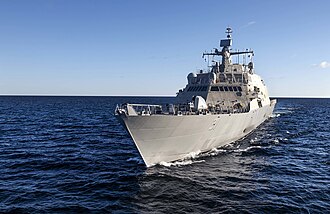
USS Cleveland (LCS-31): A New Generation of Agile Naval Power
The USS Cleveland (LCS-31) represents one of the newest additions to the United States Navy’s Freedom-class Littoral Combat Ship (LCS) program, a class of highly maneuverable surface combatants developed to meet the evolving challenges of modern naval warfare. Named after the city of Cleveland, Ohio, a community with a proud industrial heritage and a long-standing connection to American military service, USS Cleveland carries forward a distinguished naval tradition while embracing advanced technologies designed for operations in the world’s coastal waters. Unlike large destroyers or cruisers built primarily for blue-water warfare, the Littoral Combat Ship was conceived as a fast, flexible, and modular platform capable of operating effectively in congested coastal regions where conventional warships often face increased operational risks. As maritime competition expands and new threats emerge across the globe, ships such as USS Cleveland are expected to play an increasingly important role in maintaining freedom of navigation, supporting allies, conducting maritime security missions, and responding rapidly to regional crises.
Modern naval warfare extends far beyond traditional fleet engagements on the open ocean. Today’s naval forces must be prepared to combat piracy, protect commercial shipping, counter mines, monitor maritime traffic, intercept illicit smuggling operations, support humanitarian missions, and operate in environments where hostile missiles, unmanned systems, and fast attack craft present significant challenges. The Littoral Combat Ship program was created specifically to address these complex mission requirements. USS Cleveland embodies this philosophy by combining high speed, shallow draft, advanced automation, sophisticated communications systems, and mission flexibility into a single platform capable of adapting to a wide variety of operational scenarios. While the LCS program has evolved significantly since its inception, the core objective remains unchanged: providing the Navy with a highly deployable ship capable of responding quickly to changing maritime conditions.
USS Cleveland is part of the Freedom-class variant of the Littoral Combat Ship family. Freedom-class vessels feature a conventional monohull steel design with an aluminum superstructure, emphasizing survivability, speed, and operational flexibility. These ships are capable of carrying mission packages tailored to specialized tasks such as anti-surface warfare, mine countermeasures, or anti-submarine warfare. This modular concept allows the Navy to adapt each vessel for different missions without constructing entirely new classes of warships. Although operational concepts surrounding the Littoral Combat Ship have evolved over time, USS Cleveland remains an important example of the Navy’s effort to create adaptable platforms capable of addressing twenty-first-century maritime challenges.
The Legacy Behind the Name Cleveland
The name Cleveland occupies a respected place within the history of the United States Navy. Previous warships bearing the name served with distinction during some of the most significant periods in American naval history. Perhaps the best-known predecessor was USS Cleveland (CL-55), the lead ship of the Cleveland-class light cruisers that served extensively during World War II. Commissioned in 1942, CL-55 participated in numerous Pacific campaigns, providing anti-aircraft protection, shore bombardment, and fleet escort services. The Cleveland-class cruisers became some of the most successful and widely produced cruiser designs of the Second World War, earning an enduring reputation for reliability, firepower, and operational versatility.
Naming LCS-31 after Cleveland continues this longstanding naval tradition while recognizing the city’s remarkable contributions to American industry, manufacturing, and military production. Throughout the twentieth century, Cleveland became one of the nation’s major industrial centers, producing steel, machinery, vehicles, and countless components essential to both civilian and military development. During World War II, factories throughout the region played an indispensable role in supporting Allied victory, manufacturing equipment that supplied forces across multiple theaters of operation. The city’s history of innovation, engineering excellence, and patriotic service makes it a fitting namesake for one of the Navy’s most technologically advanced surface combatants.
The Littoral Combat Ship Program
During the closing years of the twentieth century and the beginning of the twenty-first century, naval planners recognized that many future operations would occur not in the deep waters of the open ocean but within littoral regions where coastlines, narrow waterways, and dense maritime traffic create unique operational challenges. Conventional destroyers and cruisers remain exceptionally capable warships, yet their size and mission focus make them less suited for certain coastal operations. In response, the United States Navy launched the Littoral Combat Ship program with the objective of creating a new class of relatively small, highly maneuverable vessels capable of operating close to shore while maintaining sufficient endurance for worldwide deployment.
The program ultimately produced two distinct variants. The Freedom class, to which USS Cleveland belongs, features a traditional monohull configuration built by Lockheed Martin and Fincantieri Marinette Marine. The Independence class employs a trimaran hull built by Austal USA. Although differing in appearance and construction, both variants were designed around the same operational concept of modular mission systems, allowing each ship to be configured for different operational requirements. This represented a significant departure from previous naval design philosophies in which individual ship classes generally possessed fixed capabilities throughout their service lives.
USS Cleveland entered the program during a period when lessons learned from earlier Freedom-class ships had already resulted in numerous engineering improvements. These included strengthened structural components, updated combat systems, improved maintenance procedures, enhanced cybersecurity protections, and refinements intended to improve operational reliability. Consequently, LCS-31 benefits from years of operational experience accumulated across the Freedom-class fleet.
Construction of USS Cleveland (LCS-31)
The construction of USS Cleveland demonstrates the remarkable complexity involved in building a modern naval combatant. Freedom-class ships are assembled using modular construction techniques in which major hull sections are fabricated separately before being joined together during final assembly. This approach improves efficiency while allowing multiple construction activities to proceed simultaneously. Thousands of engineers, naval architects, welders, electricians, software specialists, pipefitters, machinists, and quality assurance inspectors contribute to every stage of the shipbuilding process.
Beyond the physical assembly of the hull, constructing a Littoral Combat Ship requires integrating sophisticated combat management systems, radar arrays, propulsion equipment, communication networks, navigation systems, aviation facilities, and electronic warfare equipment. Each subsystem must operate seamlessly with every other component, creating an integrated platform capable of responding rapidly during complex naval operations. Extensive dockside testing, sea trials, and systems evaluations ensure that the ship meets demanding Navy standards before entering operational service.
Design Philosophy
USS Cleveland was designed around three primary principles: speed, flexibility, and networked operations. Unlike heavily armored warships designed primarily for sustained fleet engagements, the Freedom-class emphasizes mobility and mission adaptability. The ship’s streamlined hull, powerful propulsion system, and advanced automation enable it to reach high speeds while requiring a comparatively smaller crew than many traditional surface combatants. Reduced crew size lowers operating costs while allowing greater onboard space for mission equipment and aviation facilities.
One of the defining characteristics of the design is its modular mission capability. Instead of permanently installing specialized equipment for every possible mission, the Navy developed interchangeable mission packages that could theoretically be exchanged according to operational requirements. Although implementation has evolved over time, this modular philosophy remains an important feature of the Freedom-class concept and reflects broader trends toward adaptable military technology capable of responding to rapidly changing threats.
Hull Design and Survivability
The Freedom-class monohull provides excellent stability while maintaining relatively shallow draft characteristics that enable operations in coastal waters inaccessible to many larger combatants. The steel hull offers structural strength, while the aluminum superstructure reduces overall weight and contributes to improved speed and fuel efficiency. Survivability is enhanced through redundant systems, compartmentalization, advanced firefighting equipment, automated damage control technologies, and comprehensive monitoring systems capable of rapidly identifying equipment failures or battle damage. Designers sought to balance operational performance with practical maintenance considerations, ensuring that the vessel could remain deployable despite demanding operational environments.
Propulsion and High-Speed Performance
Perhaps the most impressive characteristic of USS Cleveland is its exceptional speed. The Freedom-class propulsion system combines diesel engines with powerful gas turbines driving waterjets through sophisticated combining gear arrangements. This configuration enables rapid acceleration and sustained high-speed transit, allowing the ship to reposition quickly across operational theaters. High speed provides important tactical advantages during maritime interdiction operations, escort missions, search-and-rescue activities, and responses to emerging security threats. The waterjet propulsion system also improves maneuverability in confined waterways while reducing certain maintenance requirements compared with traditional propeller systems.
Mission Flexibility and Operational Roles
USS Cleveland was conceived as a multi-mission platform capable of performing a remarkably diverse range of naval tasks. Depending upon operational requirements, the ship can participate in maritime security patrols, anti-piracy operations, counter-smuggling enforcement, freedom of navigation missions, intelligence collection, special operations support, humanitarian assistance, disaster relief, theater security cooperation, and multinational naval exercises. Its combination of speed, communications capability, aviation support, and shallow draft allows commanders to employ the vessel across a broad spectrum of peacetime and contingency operations. Rather than replacing larger combatants, USS Cleveland complements the broader fleet by performing missions that emphasize agility, rapid deployment, and operational flexibility in challenging coastal environments.
Combat Systems and Mission Packages
One of the defining innovations of the Freedom-class Littoral Combat Ship is its modular mission package concept. Rather than permanently equipping every vessel with specialized systems for every possible combat role, the Navy designed the LCS to accept interchangeable mission modules that could be installed according to operational requirements. USS Cleveland (LCS-31) benefits from this philosophy by offering commanders a flexible platform capable of adapting to changing threats without requiring an entirely different class of warship. Although the implementation of the mission package program has evolved over the years, the underlying concept remains an important element of the ship’s operational identity. Mission packages have included systems optimized for anti-surface warfare, mine countermeasures, and anti-submarine warfare, each combining sensors, weapons, unmanned systems, and specialized support equipment into a coordinated capability that significantly expands the vessel’s usefulness across diverse mission environments.
The anti-surface warfare mission emphasizes defending friendly forces against hostile fast attack craft, small boats, and other surface threats commonly encountered in coastal waters. The mine countermeasures package focuses on detecting, classifying, and neutralizing naval mines using advanced sonar systems, remotely operated vehicles, and unmanned technologies that reduce risk to sailors. Meanwhile, the anti-submarine warfare package incorporates specialized sensors and helicopters to improve the ship’s ability to locate and monitor underwater threats. Together, these capabilities enable USS Cleveland to perform missions that traditionally required several different types of naval platforms.
In addition to mission-specific equipment, USS Cleveland carries a permanent suite of defensive and offensive systems that support daily operations. These include a 57 mm Mk 110 naval gun capable of engaging surface and limited air targets, remotely operated weapon stations for close-range defense, electronic warfare equipment, sophisticated communications systems, and modern radar technologies that provide comprehensive situational awareness. The ship also supports the employment of armed helicopters, greatly extending its surveillance and engagement range beyond the limits of its onboard sensors.
Aviation Facilities and Helicopter Operations
Aviation capability is central to the operational flexibility of USS Cleveland. Although significantly smaller than an aircraft carrier or amphibious assault ship, the Freedom-class design incorporates a large flight deck and enclosed hangar capable of supporting one MH-60R or MH-60S Seahawk helicopter together with unmanned aerial systems. These aviation assets dramatically increase the ship’s surveillance capability, allowing it to monitor large maritime areas, identify suspicious vessels, conduct search-and-rescue operations, support boarding teams, and participate in anti-submarine warfare. Helicopters effectively extend the ship’s operational reach, enabling commanders to respond more rapidly to events occurring many miles beyond the horizon.
Modern naval helicopters are equipped with advanced sensors, radar, electro-optical systems, sonobuoys, and communication equipment that integrate seamlessly with the ship’s combat information center. During maritime security operations, helicopters can investigate unidentified contacts, guide boarding parties, or provide overwatch during inspections. During humanitarian assistance missions, they transport medical personnel, emergency supplies, and evacuation teams to locations inaccessible by road or damaged port facilities. This combination of aviation flexibility and high-speed surface mobility significantly enhances USS Cleveland’s ability to perform diverse missions across a wide range of operational environments.
Life Aboard USS Cleveland
Daily life aboard USS Cleveland reflects the Navy’s emphasis on automation, efficiency, and teamwork. Compared with many traditional surface combatants, the Freedom-class operates with a considerably smaller core crew, made possible through extensive automation of engineering systems, damage control monitoring, propulsion management, and routine maintenance functions. Every sailor aboard the ship assumes multiple responsibilities, requiring extensive cross-training and technical proficiency. This operating philosophy places a premium on adaptability, ensuring that personnel can respond effectively to changing operational requirements while maintaining the ship’s readiness during extended deployments.
Crew members work rotating watch schedules that ensure continuous monitoring of navigation, engineering, combat systems, communications, and security. Engineering personnel oversee the propulsion plant and electrical generation systems, while operations specialists monitor radar displays, communications networks, and tactical information. Aviation detachment personnel maintain helicopters and unmanned aircraft, ensuring they remain available for immediate deployment whenever mission requirements demand. Supply specialists manage food, spare parts, fuel, and other essential resources necessary to sustain operations far from home ports.
Although the ship’s accommodations are necessarily compact due to its relatively small size, designers sought to improve crew habitability by incorporating modern living spaces, computer networks, fitness facilities, and efficient work areas. Long deployments require maintaining both operational effectiveness and crew morale, making quality-of-life considerations an important aspect of the Freedom-class design philosophy.
The Strategic Importance of USS Cleveland
USS Cleveland enters service during an era of rapidly evolving maritime competition. Coastal regions remain among the world’s most strategically important areas, containing major ports, commercial shipping routes, offshore energy infrastructure, and critical communication networks. Naval forces increasingly require platforms capable of operating effectively within these complex environments while cooperating closely with allied nations and joint military forces. The combination of speed, maneuverability, shallow draft, and modular capability enables USS Cleveland to perform missions that complement larger destroyers, cruisers, amphibious ships, and aircraft carriers.
Beyond traditional military operations, the ship contributes to diplomatic engagement through multinational exercises, port visits, maritime security cooperation, and capacity-building activities with allied navies. These missions strengthen international partnerships while demonstrating a sustained American naval presence in strategically important regions. The ability to rapidly deploy, conduct independent operations, and integrate with larger naval task groups ensures that USS Cleveland remains a valuable component of the Navy’s global force structure despite the evolving operational concepts surrounding the Littoral Combat Ship program.
Future Service and Continuing Evolution
As technology continues to advance, USS Cleveland is expected to receive periodic upgrades to its software, communications equipment, sensors, cybersecurity protections, and combat systems throughout its service life. Modern warships increasingly rely upon digital technologies that can be improved through incremental modernization rather than complete structural redesign. This approach allows the Navy to maintain operational relevance while adapting to emerging threats such as autonomous systems, electronic warfare, advanced anti-ship missiles, and increasingly sophisticated cyber capabilities. The experience gained from operating Freedom-class vessels will also influence the development of future classes of small surface combatants and unmanned maritime systems.
Technical Specifications of USS Cleveland (LCS-31)
| Specification | Details |
|---|---|
| Ship Name | USS Cleveland |
| Hull Number | LCS-31 |
| Class | Freedom-class Littoral Combat Ship |
| Type | Littoral Combat Ship (Surface Combatant) |
| Builder | Fincantieri Marinette Marine, Marinette, Wisconsin |
| Hull Design | Steel monohull with aluminum superstructure |
| Length | Approximately 387 feet (118 meters) |
| Beam | Approximately 57 feet (17.5 meters) |
| Draft | Approximately 14 feet (4.3 meters) |
| Displacement | Approximately 3,500 tons (full load) |
| Propulsion | Combined diesel and gas turbine propulsion driving waterjets |
| Maximum Speed | Over 40 knots |
| Range | Approximately 3,500 nautical miles at economical speed |
| Crew | Core crew of about 70–75 personnel, plus aviation detachment and mission package specialists |
| Main Gun | 1 × Mk 110 57 mm naval gun |
| Close-Range Armament | Remote weapon stations and crew-served defensive weapons |
| Aviation Facilities | Flight deck and hangar for MH-60 Seahawk helicopters and unmanned aerial systems |
| Mission Capabilities | Anti-surface warfare, mine countermeasures, anti-submarine warfare, maritime security, humanitarian assistance, search and rescue, and special operations support |
Conclusion
USS Cleveland (LCS-31) reflects the United States Navy’s continuing effort to build highly adaptable surface combatants capable of meeting the diverse challenges of modern maritime operations. Although smaller than many traditional warships, the vessel combines advanced automation, exceptional speed, modular mission capability, sophisticated communications systems, and aviation support into a remarkably flexible platform. These characteristics allow it to operate effectively in coastal environments while supporting missions ranging from maritime security and mine countermeasures to humanitarian assistance and multinational naval cooperation.
By carrying the historic name Cleveland, LCS-31 honors both the distinguished naval vessels that preceded it and the industrial city whose contributions have supported American military strength for generations. As it enters operational service, USS Cleveland stands as a symbol of innovation, adaptability, and the Navy’s commitment to maintaining a capable and responsive fleet prepared for the complex maritime challenges of the twenty-first century. Through continued modernization and close integration with allied forces, the ship will contribute to safeguarding maritime security and preserving stability across the world’s strategically important waterways for many years to come.
_acceptance_trials.jpg)