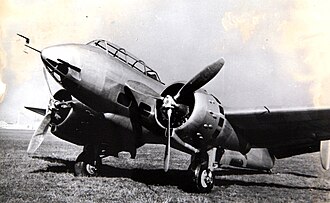
Bloch MB.170 – France’s Advanced Multi-Role Combat Aircraft That Arrived Too Late
The history of military aviation is filled with aircraft whose technical excellence was overshadowed by circumstances beyond the control of their designers. Some machines entered service too late to influence the outcome of a conflict, while others were produced in numbers too small to demonstrate their true potential. Among these overlooked aircraft stands the Bloch MB.170, one of the most sophisticated French military aircraft designed before the outbreak of the Second World War. Although it never achieved the fame of the British de Havilland Mosquito, the German Junkers Ju 88, or the American Douglas A-20 Havoc, the MB.170 family represented one of the most ambitious and technically advanced aviation projects undertaken by France during the late 1930s.
Unlike many contemporary aircraft designed exclusively for bombing or reconnaissance, the MB.170 was conceived as a flexible multi-role platform capable of fulfilling several operational requirements. Its designers envisioned an aircraft that could perform tactical reconnaissance, strategic photographic missions, light bombing operations, and even limited fighter duties if necessary. Such versatility reflected changing military doctrine throughout Europe, where air forces increasingly recognized that speed, range, and adaptability could prove just as valuable as sheer bomb-carrying capacity or defensive armament.
The Bloch MB.170 ultimately became the foundation of an entire family of aircraft that included the MB.174, MB.175, MB.176, and later developments produced under changing political circumstances during and after the German occupation of France. Although only a relatively small number reached operational service before the French surrender in June 1940, those that did quickly earned an excellent reputation among pilots and reconnaissance crews. Their speed, handling characteristics, and photographic capabilities impressed both operators and adversaries alike, demonstrating that French aviation engineering remained capable of producing world-class military aircraft despite the industrial and political challenges confronting the nation.
Today, historians increasingly recognize the Bloch MB.170 as one of the finest examples of French pre-war aviation engineering. Its story illustrates not only remarkable technical achievement but also the profound influence of timing, industrial capacity, and geopolitical events upon the success or failure of military technology. Understanding the MB.170 therefore means exploring much more than a single aircraft—it means examining the aspirations of an entire aviation industry striving to modernize under the shadow of an approaching global conflict.
The Strategic Environment of Late-1930s France
During the mid-1930s, military planners across Europe witnessed dramatic changes in aircraft technology. Advances in aerodynamics, engine design, metallurgy, and manufacturing techniques transformed military aviation at an unprecedented pace. Aircraft that appeared modern in 1934 often seemed obsolete only four or five years later. Air forces sought faster bombers, longer-range reconnaissance platforms, heavier armament, improved communications equipment, and greater operational flexibility. These rapid developments placed immense pressure upon aircraft manufacturers, who needed to balance innovation with practical production schedules while responding to constantly evolving military requirements.
France faced particularly difficult circumstances. Although the nation possessed one of Europe’s oldest and most respected aviation industries, political instability, fluctuating defense budgets, and repeated industrial reorganizations complicated procurement programs. The nationalization of major aircraft manufacturers sought to improve efficiency and coordination, yet the transition introduced temporary disruptions that slowed development just as Germany accelerated military expansion under the Luftwaffe. French authorities understood the urgency of modernization but frequently struggled to convert promising prototypes into large-scale production aircraft quickly enough to meet growing strategic threats.
Reconnaissance assumed increasing importance within French military doctrine. Accurate intelligence concerning enemy troop movements, industrial production, transportation infrastructure, and battlefield developments depended upon aircraft capable of penetrating defended airspace at high speed. Existing reconnaissance aircraft increasingly appeared vulnerable to modern fighters, making survivability dependent upon performance rather than defensive armament alone. Consequently, the French Air Ministry issued specifications for a fast reconnaissance aircraft that emphasized speed, altitude, endurance, and photographic capability while retaining sufficient payload flexibility to undertake additional operational tasks if required.
Marcel Bloch and His Engineering Vision
The MB.170 originated within the design offices of Marcel Bloch, one of France’s most influential aircraft engineers and industrialists. Bloch had already established an impressive reputation through numerous military aircraft projects and possessed a clear understanding of emerging aviation trends. Rather than designing highly specialized aircraft limited to a single mission, he increasingly favored adaptable platforms capable of evolving alongside changing operational requirements. This philosophy anticipated later developments in military aviation, where flexibility often proved as valuable as absolute specialization.
Bloch’s engineering teams believed that careful aerodynamic refinement, efficient structural design, and powerful radial engines could produce an aircraft offering exceptional performance without sacrificing operational practicality. They emphasized clean external lines, efficient internal equipment arrangement, and structural robustness that would permit future upgrades as engines, weapons, and electronic equipment improved. Such foresight became one of the defining strengths of the MB.170 family, allowing later variants to incorporate significant enhancements while preserving the essential characteristics of the original design.
Another important aspect of Bloch’s philosophy involved close cooperation between engineers, test pilots, and military evaluators. Flight testing was viewed not merely as a process of validating completed designs but as an opportunity for continuous refinement. Pilot observations concerning visibility, handling, equipment accessibility, and operational convenience frequently influenced design modifications. This iterative development approach contributed significantly to the excellent flying qualities later associated with production aircraft derived from the MB.170 prototype.
Origins of the MB.170 Program
Development of the MB.170 began as a response to official French requirements for a modern reconnaissance aircraft capable of replacing increasingly outdated designs then serving with the Armée de l’Air. The specification demanded an aircraft possessing significantly greater speed than contemporary reconnaissance types while retaining adequate endurance for deep penetration missions. Designers also needed to provide sufficient internal space for cameras, navigation equipment, radios, defensive armament, and crew accommodations without compromising aerodynamic efficiency.
Meeting these diverse requirements required innovative engineering solutions. Traditional reconnaissance aircraft often sacrificed speed in favor of payload or endurance, while fighter-derived reconnaissance platforms frequently lacked the internal volume necessary for sophisticated photographic equipment. The MB.170 sought to bridge this gap by combining the performance characteristics of a fast twin-engine aircraft with the mission flexibility expected of a dedicated reconnaissance platform. Engineers carefully balanced every aspect of the design, recognizing that improvements in one area frequently introduced compromises elsewhere.
From its earliest conceptual stages, the aircraft attracted considerable interest because it appeared capable of satisfying multiple operational needs simultaneously. Military planners appreciated the possibility that reconnaissance aircraft could also deliver light bombing attacks or undertake maritime patrol missions when circumstances required. Such versatility promised improved efficiency during a period when defense budgets remained under constant political scrutiny.
A Modern Aerodynamic Design
One of the most striking characteristics of the Bloch MB.170 was its exceptionally clean aerodynamic appearance. The aircraft employed a cantilever low-wing monoplane configuration featuring smoothly integrated engine nacelles, a carefully streamlined fuselage, and retractable landing gear. Every visible aspect of the external design reflected the growing influence of aerodynamic research conducted throughout the 1930s. Engineers sought to minimize drag wherever possible, recognizing that even modest reductions could produce meaningful improvements in speed, range, and fuel efficiency.
The fuselage featured semi-monocoque all-metal construction that provided excellent structural strength while avoiding unnecessary weight. Aluminum alloy skins carried a substantial proportion of flight loads, allowing internal framework to remain relatively lightweight without compromising durability. This construction method had become increasingly common among advanced military aircraft but required considerable manufacturing precision. The resulting structure combined robustness with maintenance accessibility, ensuring that operational units could inspect and repair aircraft efficiently under field conditions.
Wing design likewise reflected sophisticated engineering principles. The cantilever arrangement eliminated external bracing, reducing aerodynamic drag while providing ample internal space for fuel tanks, landing gear mechanisms, and structural spars. Engineers optimized the wing profile to provide efficient lift characteristics across a broad speed range, ensuring stable low-speed handling during takeoff and landing while minimizing resistance during high-speed reconnaissance flights. The resulting balance contributed significantly to the aircraft’s favorable handling characteristics reported by test pilots.
Powerplant Selection
The MB.170 family employed powerful twin radial engines, a decision reflecting both engineering preference and operational practicality. Air-cooled radial engines offered several advantages for military aircraft expected to operate under demanding conditions. Their mechanical simplicity reduced maintenance complexity, while the absence of vulnerable liquid-cooling systems improved resistance to combat damage. Although radial engines presented greater frontal area than inline alternatives, careful cowling design minimized aerodynamic penalties while preserving cooling efficiency throughout the flight envelope.
Engine selection remained a critical aspect of aircraft development because powerplant availability often influenced production schedules as much as engineering considerations. France possessed a capable domestic engine industry, yet increasing military demand created supply pressures affecting numerous aircraft programs. Designers therefore sought sufficient flexibility to accommodate improved engines as development progressed, allowing later variants to benefit from advances in horsepower without requiring fundamental redesign of the airframe.
Twin-engine configuration also enhanced operational safety during long reconnaissance missions. Should one engine fail because of mechanical malfunction or enemy action, crews retained a reasonable possibility of returning safely to friendly territory. This redundancy proved especially valuable during deep reconnaissance operations conducted far beyond front-line positions, where forced landings frequently resulted in aircraft loss and crew capture.
Crew Arrangement and Operational Efficiency
Unlike single-seat fighters optimized exclusively for aerial combat, the MB.170 required accommodation for multiple crew members performing specialized tasks throughout lengthy reconnaissance missions. Pilots concentrated upon navigation, aircraft control, and tactical decision-making while observers managed photographic equipment, radio communications, navigation calculations, and defensive armament when necessary. The resulting cockpit arrangement reflected careful ergonomic planning intended to maximize efficiency without overcrowding the available internal space.
Large glazed areas provided excellent visibility, an essential characteristic for reconnaissance operations where accurate observation often determined mission success. Camera installations required unobstructed fields of view, while navigators benefited from extensive external references during visual navigation across unfamiliar terrain. Engineers carefully balanced these visibility requirements against structural strength and aerodynamic cleanliness, ultimately producing a cockpit praised for both functionality and comfort relative to contemporary military aircraft.
Communication between crew members received equal attention during development. Efficient coordination proved essential when rapidly identifying photographic targets, avoiding enemy defenses, or responding to unexpected tactical situations. Internal equipment layout therefore emphasized logical organization, enabling crews to perform complex reconnaissance tasks with minimal distraction during demanding operational flights.
Flight Testing and Prototype Evaluation
The first prototype of the Bloch MB.170 entered flight testing during a period of extraordinary urgency for the French aviation industry. Every successful flight provided valuable information not only about the aircraft itself but also about the broader direction of French military aircraft development. Test pilots immediately recognized that the MB.170 possessed qualities that distinguished it from many contemporary reconnaissance aircraft. Rather than feeling like a modified bomber adapted for observation duties, it behaved as a purpose-built high-performance aircraft whose speed and responsiveness inspired confidence. Pilots praised its balanced controls, relatively light handling characteristics, and stable behavior throughout much of its operating envelope. Such impressions proved particularly important because reconnaissance crews frequently flew long missions requiring sustained concentration, and an aircraft that demanded constant physical effort inevitably reduced operational effectiveness.
Evaluation flights examined every aspect of the aircraft’s performance. Engineers measured climb rates, maximum speed, cruising efficiency, fuel consumption, stall characteristics, structural vibration, engine cooling, and control effectiveness at various altitudes. Camera installations underwent extensive testing to ensure that vibration remained sufficiently low for sharp aerial photography. Radio systems, navigation equipment, electrical installations, and hydraulic components likewise received careful examination. Although numerous minor improvements emerged from this evaluation process—as would be expected for any advanced military aircraft—the overall assessment proved highly encouraging. The MB.170 demonstrated that its underlying aerodynamic design possessed significant potential, validating the engineering philosophy adopted by Marcel Bloch’s design team several years earlier.
The prototype program also highlighted the value of continuous refinement. Engineers implemented improvements to engine cowlings, cooling airflow, cockpit arrangements, equipment access panels, and structural details as testing progressed. None of these changes fundamentally altered the aircraft’s appearance, yet together they enhanced reliability, maintainability, and operational practicality. Such incremental development characterized many successful military aircraft of the era and reflected an understanding that genuine engineering excellence usually emerged through careful evolution rather than revolutionary redesign.
The Transition to the MB.174
An Evolution Rather Than a Replacement
Perhaps the most important legacy of the MB.170 lay in its direct evolution into the Bloch MB.174, the variant that would ultimately become the best-known member of the entire family. Rather than abandoning the original concept after prototype evaluation, Bloch engineers recognized that the airframe possessed outstanding potential. They therefore incorporated lessons learned during flight testing into a refined production design featuring improved aerodynamics, more powerful engines, enhanced systems integration, and greater operational efficiency. This evolutionary approach allowed the company to preserve the strengths of the original aircraft while systematically addressing every identified weakness.
The MB.174 retained the sleek lines and high-speed characteristics of the MB.170 but benefited from a more mature engineering approach shaped by extensive testing. Internal equipment arrangements became more practical, production techniques improved, and systems reliability increased. Military authorities regarded the new variant as exceptionally promising because it combined impressive performance with operational versatility at a time when reconnaissance aircraft increasingly faced interception by ever-faster enemy fighters.
Performance Improvements
The MB.174 demonstrated measurable improvements in almost every operational category. Higher cruising speeds reduced exposure to enemy interception, while improved engines enhanced climb performance and increased operational flexibility. Refinements to the airframe reduced drag without introducing unnecessary manufacturing complexity, illustrating the careful balance between engineering ambition and industrial practicality that characterized the Bloch design philosophy. Pilots reported that the aircraft remained pleasant to fly while offering noticeably stronger overall performance, making it one of the most capable reconnaissance aircraft available to the French Air Force immediately before the outbreak of war.
Reconnaissance as the Primary Mission
Although capable of performing several operational roles, reconnaissance remained the central mission for which the MB.170 family had been conceived. Military planners increasingly understood that modern warfare depended upon accurate and timely intelligence. Commanders required detailed information concerning troop concentrations, transportation networks, industrial facilities, supply depots, bridges, railways, ports, and airfields. Before the widespread introduction of radar surveillance, satellites, or electronic intelligence systems, aerial reconnaissance represented one of the few reliable methods of obtaining such information deep within enemy territory.
The MB.170 family addressed this requirement exceptionally well. Its combination of speed, altitude capability, and long operational range allowed crews to penetrate defended areas while minimizing the likelihood of interception. High-quality photographic equipment installed within the fuselage enabled systematic mapping of enemy positions, while excellent cockpit visibility assisted visual observation during rapidly changing battlefield conditions. Crews often flew demanding missions requiring precise navigation over unfamiliar landscapes, careful fuel management, and constant vigilance against hostile fighters and anti-aircraft artillery. The aircraft’s balanced flying qualities reduced pilot workload, enabling greater attention to mission execution under stressful circumstances.
Reconnaissance flights frequently produced intelligence whose strategic importance far exceeded the number of aircraft involved. A single successful photographic mission could reveal troop movements, identify new fortifications, locate supply concentrations, or detect preparations for major offensives. Consequently, the MB.170 family contributed to military planning in ways that cannot be measured solely through combat statistics or aircraft production totals.
Light Bomber Capabilities
Although optimized for reconnaissance, the MB.170 family also possessed the ability to undertake light bombing missions when operational circumstances required. This flexibility reflected evolving military doctrine during the late 1930s, when air forces increasingly valued aircraft capable of adapting to multiple mission profiles. Carrying a modest bomb load allowed reconnaissance crews to attack targets of opportunity, disrupt transportation infrastructure, or support ground forces during rapidly developing tactical situations without requiring specialized bomber units for every operation.
Bombing capability inevitably involved compromise. Every kilogram devoted to bombs reduced fuel capacity, reconnaissance equipment, or other operational resources. Engineers therefore designed the aircraft to balance these competing requirements rather than maximizing any single capability. Internal bomb arrangements minimized aerodynamic penalties while preserving the clean external lines responsible for the aircraft’s excellent performance. Although it could never rival dedicated medium bombers in payload capacity, the MB.170 family offered valuable operational flexibility that commanders appreciated during periods of limited aircraft availability.
Such versatility foreshadowed later developments in military aviation, where multi-role aircraft increasingly replaced highly specialized designs. In this respect, the Bloch engineers demonstrated remarkable foresight by recognizing that future combat environments would reward adaptability alongside raw performance.
Armament and Defensive Systems
Unlike heavy bombers carrying extensive defensive gun positions, reconnaissance aircraft depended primarily upon speed and altitude for survival. Nevertheless, the MB.170 family incorporated defensive armament intended to discourage pursuit by enemy fighters. Flexible machine-gun installations allowed observers to engage attackers approaching from vulnerable rear sectors, while careful ammunition storage ensured sufficient endurance during lengthy missions. Engineers understood that defensive weapons alone could rarely defeat determined fighter attacks, yet even limited firepower forced opponents to approach cautiously and sometimes created opportunities for successful escape.
Protection extended beyond armament. Fuel tank placement, structural strength, and system redundancy all contributed to battlefield survivability. Twin engines increased the probability of returning safely following mechanical failure or combat damage, while the robust all-metal airframe demonstrated impressive resistance to operational wear. Although no aircraft of the period could be considered truly invulnerable, the MB.170 family represented a thoughtful integration of passive and active defensive measures appropriate for its intended mission profile.
Production Challenges
Despite the technical promise demonstrated by the MB.170 and its improved derivatives, production encountered numerous obstacles reflecting broader difficulties within the French aviation industry. Nationalization had reorganized manufacturers into larger state-controlled entities intended to improve efficiency, yet the transition inevitably disrupted established production processes. Factories required modernization, supply chains remained under pressure, and shortages of skilled labor complicated expansion efforts just as military demand accelerated dramatically. Every delay reduced the number of modern aircraft available before war became unavoidable.
Engine availability constituted another significant constraint. Aircraft production depended not only upon completed airframes but also upon reliable deliveries of increasingly powerful radial engines from specialized manufacturers. Delays affecting engine production frequently postponed aircraft completion even when airframes themselves were ready for assembly. Similar challenges influenced propeller manufacture, radio equipment, hydraulic components, instruments, and other specialized systems whose production required highly skilled industrial capability.
Political uncertainty likewise influenced procurement decisions. Changing military priorities occasionally redirected resources toward competing aircraft programs, while evolving operational doctrine prompted repeated specification revisions. Engineers often found themselves incorporating new requirements into aircraft already approaching production readiness, increasing complexity while extending development schedules. Such circumstances were not unique to France but reflected the extraordinary pace of military aviation development throughout Europe during the late 1930s.
The Outbreak of War
When Germany invaded Poland in September 1939 and the Second World War began, the Bloch MB.170 family remained in the final stages of development and production. France entered the conflict possessing several promising modern aircraft, yet relatively few had reached frontline operational units in significant numbers. The period known as the “Phoney War” provided valuable additional time for production and training, but industrial expansion proceeded more slowly than military planners had hoped. Reconnaissance squadrons gradually received improved Bloch aircraft, whose performance quickly impressed operational crews, but overall fleet strength remained insufficient to transform the strategic balance.
Even during these early months, reconnaissance operations assumed growing importance. Aircraft of the MB.170 family monitored German troop deployments, transportation activity, and defensive preparations while refining operational procedures that would soon be tested under far more demanding combat conditions. Crews appreciated the aircraft’s speed, particularly when compared with older reconnaissance types whose vulnerability to modern fighters had become increasingly apparent. The ability to complete missions rapidly while minimizing exposure represented one of the Bloch aircraft’s greatest strengths.
The Battle of France
Reconnaissance Under Fire
When Germany launched its offensive against the Low Countries and France on 10 May 1940, the Bloch MB.170 family entered the most demanding period of its operational existence. French reconnaissance units equipped primarily with the improved MB.174 and the early production MB.175 suddenly found themselves flying multiple missions each day against one of the most capable integrated air defense systems in the world. The speed and handling characteristics that had impressed test pilots during peacetime now became matters of survival. Crews routinely crossed hostile territory to photograph advancing armored columns, railway junctions, bridges, troop concentrations, fuel depots, and airfields. These flights required extraordinary courage, as they were conducted under constant threat from German fighters and increasingly effective anti-aircraft artillery. Despite these dangers, the Bloch aircraft consistently demonstrated that they possessed performance superior to many older reconnaissance machines still serving with Allied forces.
Reports submitted after missions frequently praised the aircraft’s ability to maintain high cruising speeds while carrying sophisticated photographic equipment. German fighter pilots often found interception difficult because the Bloch aircraft could exploit their aerodynamic efficiency and powerful engines to escape at low or medium altitude after completing reconnaissance runs. Although losses inevitably occurred, operational crews generally regarded the aircraft as one of the safest reconnaissance platforms available to the French Air Force. The limitation was not technical quality but numbers. Too few aircraft had reached operational squadrons before the German offensive began, preventing the MB.170 family from exerting the broader strategic influence that larger production might have allowed.
Operational Effectiveness
The intelligence gathered by Bloch reconnaissance crews proved invaluable despite the rapidly deteriorating military situation. Photographs documented German river crossings, armored spearheads, logistical movements, and airfield activity, providing French commanders with information that often arrived faster and in greater detail than reports from ground observers. Unfortunately, the speed of the German advance, combined with weaknesses in Allied operational coordination and communications, frequently prevented available intelligence from being translated into effective countermeasures. Consequently, the MB.170 family demonstrated impressive operational capability while serving within a strategic environment increasingly dominated by events beyond the control of individual aircrews.
Development of the MB.175 and MB.176
Even as France fought for survival, engineers continued refining the Bloch design into increasingly capable variants. The MB.175 emerged as a bomber-reconnaissance development emphasizing greater payload flexibility while preserving the excellent aerodynamic qualities established by the original MB.170. Internal bomb arrangements improved operational versatility, and equipment installations became more efficient as engineers benefited from production experience accumulated during manufacture of earlier models. The aircraft remained immediately recognizable as a member of the same family, yet countless detail improvements reflected the continuous evolution that characterized Marcel Bloch’s engineering philosophy.
The MB.176 represented another significant branch of this developmental lineage. One of its defining characteristics was the installation of American-built Pratt & Whitney Twin Wasp radial engines rather than French powerplants. This modification resulted partly from concerns regarding engine availability and partly from the desire to exploit reliable, high-performance foreign engines already respected throughout the aviation world. The airframe adapted successfully to these new powerplants, illustrating the flexibility intentionally incorporated into the original design. Although wartime events limited large-scale production, the MB.176 demonstrated how adaptable the MB.170 concept remained even under rapidly changing industrial circumstances.
Collectively, these variants transformed what had begun as a reconnaissance prototype into an entire family of multi-role aircraft capable of serving reconnaissance, tactical bombing, and transport-related functions. Few French military aircraft of the era displayed such developmental breadth, underscoring the soundness of the original engineering decisions made several years earlier.
French Defeat and the Fate of the Aircraft
The collapse of France in June 1940 fundamentally altered the future of the MB.170 family. Aircraft completed before the armistice found themselves divided among various authorities according to the complicated political arrangements established after the French surrender. Some aircraft escaped to territories remaining under Allied influence, while others continued operating under the Vichy French government. Additional airframes under construction fell into German hands as occupying forces assumed control of major industrial facilities throughout much of the country.
For the engineers and factory workers who had devoted years to developing the aircraft, these events proved deeply frustrating. A design possessing genuine international competitiveness had reached operational maturity precisely when national defeat interrupted its full production potential. Instead of becoming the backbone of an expanding reconnaissance force, the MB.170 family entered an uncertain future shaped by occupation, restricted industrial activity, and competing political authorities. Nevertheless, the aircraft itself continued demonstrating its inherent quality whenever opportunities for operational service arose.
Service Under Vichy France
Aircraft retained by Vichy French forces continued operating in a variety of reconnaissance and security roles during the early years following the armistice. Although international political circumstances severely restricted military activity, the Bloch aircraft remained valuable because of their speed, reliability, and operational flexibility. Crews maintained high professional standards despite difficult political conditions, and maintenance organizations successfully supported the aircraft using increasingly limited industrial resources.
Operational missions varied considerably depending upon regional requirements. Maritime patrol, colonial communications, reconnaissance, and transport-related duties all fell within the capabilities of the Bloch aircraft. The adaptability envisioned during the original design process therefore continued proving valuable even within an entirely different strategic environment than originally anticipated. Although these operations rarely attracted widespread historical attention, they demonstrated the durability and usefulness of the aircraft under circumstances that its designers could never have predicted.
German Evaluation and Use
German authorities also examined captured examples of the Bloch aircraft with considerable professional interest. The Luftwaffe routinely evaluated foreign aircraft encountered during the war, seeking useful engineering ideas while assessing potential operational applications. The MB.170 family impressed German evaluators because of its modern aerodynamic design, efficient structural construction, and excellent overall performance. Although Germany possessed numerous reconnaissance aircraft of its own, the quality of the French design received genuine respect from experienced technical personnel.
Some captured aircraft subsequently served in secondary duties, training roles, or evaluation programs. Their use remained limited compared with standard Luftwaffe equipment, largely because maintaining small fleets of foreign aircraft created logistical complications involving spare parts, technical documentation, and specialized maintenance procedures. Even so, the fact that German authorities considered the aircraft worthy of evaluation reflects the high regard in which its engineering qualities were held.
The Aircraft’s Technological Legacy
Advanced Aerodynamics
One of the greatest achievements of the MB.170 family lay in its remarkably advanced aerodynamic design. The aircraft demonstrated that French engineers fully understood the importance of drag reduction, structural efficiency, and careful integration of engines with the surrounding airframe. Many design principles visible in the Bloch aircraft would later become standard features of successful post-war piston-engine aircraft and even early jet designs. Smooth external contours, retractable landing gear, efficient engine cowlings, and carefully optimized wing geometry reflected engineering methods that remained relevant long after the aircraft itself disappeared from operational service.
Influence on Later Aircraft
Although interrupted by war, the engineering knowledge accumulated during development of the MB.170 family continued influencing French aviation after liberation. Marcel Bloch himself, later known worldwide as Marcel Dassault, would build one of the world’s most respected aerospace companies. While post-war jet fighters differed enormously from twin-engine reconnaissance aircraft, the engineering discipline established during earlier piston-engine projects remained invaluable. Lessons concerning structural design, production engineering, systems integration, and iterative development all contributed to the remarkable success achieved by Dassault Aviation during the Cold War era.
Why the MB.170 Remains Historically Important
The Bloch MB.170 deserves greater recognition because it represents one of those rare aircraft whose historical significance extends far beyond production statistics. It demonstrated that France possessed engineers capable of designing aircraft competitive with the finest military aviation developments anywhere in the world. Had political circumstances differed, or had production begun even one or two years earlier, the MB.170 family might today be remembered alongside the most famous reconnaissance aircraft of the Second World War. Instead, history largely associated French aviation with national defeat rather than technical accomplishment, obscuring the impressive achievements represented by aircraft such as the Bloch family.
Modern aviation historians increasingly reassess this perspective. Careful examination of flight performance, operational reports, pilot testimony, and engineering documentation consistently reveals an aircraft of exceptional quality whose principal misfortune lay in timing rather than design. Reconnaissance crews trusted it, engineers admired it, and even opposing forces respected its capabilities. Such widespread professional appreciation provides compelling evidence that the MB.170 family deserves a much more prominent place within the history of military aviation.
Conclusion
The Bloch MB.170 stands today as one of the finest examples of French aviation engineering produced during the years immediately preceding the Second World War. Conceived as a fast, modern, and highly adaptable reconnaissance aircraft, it evolved into an entire family of multi-role military machines whose operational performance consistently justified the confidence placed in them by their designers. Elegant aerodynamics, strong structural design, efficient crew arrangements, impressive speed, and remarkable versatility combined to create an aircraft that compared favorably with many contemporary foreign designs.
Its operational career, though tragically brief under French control, demonstrated the practical value of careful engineering supported by thoughtful development. During the Battle of France, Bloch reconnaissance crews carried out hazardous missions whose intelligence contributed significantly to Allied understanding of German operations. Later variants continued serving under changing political circumstances while preserving the reputation for reliability and performance established by the original prototype.
Perhaps the greatest legacy of the MB.170 lies in the engineering philosophy it embodied. Rather than pursuing isolated innovation, Marcel Bloch and his team created a flexible platform capable of continuous improvement through successive variants. This approach anticipated modern aerospace development, where adaptable designs evolve over decades through incremental refinement. Although overshadowed by the dramatic events surrounding France’s defeat in 1940, the aircraft remains a testament to the creativity, determination, and technical excellence of the French aviation industry.
Today, the Bloch MB.170 family deserves remembrance not simply as an interesting wartime aircraft but as a symbol of unrealized potential. It reminds us that technological excellence alone cannot determine historical success; production capacity, political decisions, strategic timing, and industrial organization all shape the ultimate fate of even the most capable machines. Within aviation history, the MB.170 therefore occupies a unique position as both an engineering triumph and a poignant illustration of opportunities lost amid one of history’s greatest conflicts.
Technical Specifications (Bloch MB.170 Prototype)
| Specification | Bloch MB.170 |
|---|---|
| Role | Twin-engine reconnaissance and light bomber prototype |
| Manufacturer | Société des Avions Marcel Bloch |
| Designer | Marcel Bloch and the Bloch design team |
| Country of Origin | France |
| First Flight | 1938 |
| Crew | 3 |
| Configuration | Low-wing all-metal cantilever monoplane |
| Landing Gear | Retractable tailwheel landing gear |
| Powerplant | 2 × Gnome-Rhône 14N air-cooled radial engines |
| Engine Output | Approximately 1,030–1,140 hp each (depending on prototype configuration) |
| Maximum Speed | Approximately 530 km/h (329 mph) |
| Cruising Speed | Approximately 460 km/h (286 mph) |
| Range | Approximately 1,600 km (994 miles) |
| Service Ceiling | Approximately 10,000 m (32,800 ft) |
| Armament | Flexible machine guns and provision for a light internal bomb load (varied by prototype and later variants) |
| Primary Mission | Tactical and strategic aerial reconnaissance |
| Secondary Missions | Light bombing, maritime reconnaissance, army cooperation |
| Major Production Derivatives | MB.174, MB.175, MB.176, and post-war SO.175 developments |
| Historical Significance | Foundation of one of France’s most advanced twin-engine reconnaissance aircraft families of the Second World War. |
