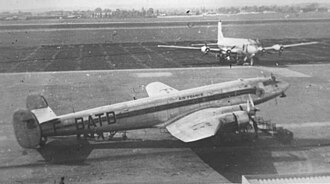
SNCASE SE.161 Languedoc – France’s Forgotten Postwar Airliner
Among the many transport aircraft that helped rebuild global civil aviation after the Second World War, the SNCASE SE.161 Languedoc occupies a fascinating yet often overlooked place in aviation history. While names like the Douglas DC-4, Lockheed Constellation, and Douglas DC-6 dominate discussions about the rebirth of international air travel, France’s SE.161 quietly carried thousands of passengers across Europe, North Africa, and beyond during one of the most transformative periods in commercial aviation. Although it never achieved the international fame of its American contemporaries, the aircraft represented a determined effort by the French aviation industry to restore its position after years of occupation, wartime disruption, and industrial reorganization.
The story of the SNCASE SE.161 Languedoc is far more than the biography of a single airliner. It is a story about national reconstruction, engineering persistence, economic realities, political change, and the rapid technological evolution that defined aviation during the 1940s and 1950s. Designed before the outbreak of the Second World War but entering widespread service only after the conflict had ended, the aircraft bridged two very different eras. Its development reflected prewar engineering philosophy, while its operational life unfolded during the dawn of modern commercial aviation, when airlines were rapidly expanding international networks and passenger expectations were evolving almost as quickly as aircraft technology itself.
Although the Languedoc eventually became overshadowed by newer pressurized airliners and emerging turboprop designs, it played an important role in rebuilding French civil aviation. It served national airlines, military organizations, government agencies, and private operators while demonstrating that France remained capable of producing sophisticated commercial aircraft despite the immense challenges of the postwar years. Today, the aircraft deserves recognition not only for its technical characteristics but also for the broader historical significance it carried during one of aviation’s most remarkable transitional periods.
The Origins of a New French Airliner
The origins of the SE.161 Languedoc can be traced back to the late 1930s, a period during which European aviation manufacturers sought to create increasingly capable passenger aircraft for expanding domestic and international airline networks. Air travel was gradually becoming more accessible, airlines demanded larger cabins and greater reliability, and governments recognized aviation as both an economic asset and a strategic necessity. France possessed a respected aerospace industry, yet competition from American and British manufacturers was becoming increasingly intense. Engineers understood that the next generation of transport aircraft would require all-metal construction, efficient engines, improved passenger comfort, and dependable long-distance performance.
The project that eventually became the Languedoc was initially conceived before the outbreak of global war. Designers envisioned a modern twin-engine airliner capable of transporting dozens of passengers across medium-range routes while offering improved economy compared with earlier transports. However, history intervened. Germany’s invasion of France in 1940 fundamentally altered every aspect of French aircraft production. Development slowed dramatically, factories were disrupted, engineering teams became scattered, and industrial priorities shifted toward wartime demands. Like many ambitious aviation projects of the era, the aircraft’s progress was interrupted by circumstances far beyond the control of its designers.
Rather than disappearing entirely, however, the project survived in modified form. After the liberation of France and the conclusion of the Second World War, the need for modern commercial aircraft became greater than ever before. Airlines required replacement fleets, governments sought to reconnect international destinations, and manufacturers resumed projects that had been suspended for years. The future SE.161 therefore emerged from a combination of prewar planning and postwar necessity, making it one of the most historically distinctive airliners of its generation.
The Formation of SNCASE
Understanding the SE.161 also requires understanding the organization that built it. SNCASE, officially known as the Société Nationale des Constructions Aéronautiques du Sud-Est, was created through the nationalization and consolidation of several French aviation companies. This restructuring sought to improve efficiency, preserve engineering expertise, and strengthen France’s ability to compete internationally. Instead of numerous independent firms pursuing separate projects, nationalized organizations could coordinate resources, manufacturing facilities, and technical talent more effectively.
SNCASE inherited experienced engineers, manufacturing infrastructure, and ongoing development programs from earlier companies. Although postwar economic conditions remained difficult, the organization became one of the principal pillars supporting the revival of French aerospace engineering. The SE.161 represented one of its most important early commercial products and demonstrated that the reorganized industry retained significant technical capability despite years of disruption. The aircraft therefore symbolized both industrial continuity and institutional renewal.
Design Philosophy Behind the Languedoc
The designers of the SE.161 adopted a philosophy emphasizing practicality, structural strength, passenger capacity, and operational reliability. Rather than pursuing revolutionary innovation for its own sake, they sought to create an aircraft that airlines could operate economically under a wide variety of conditions. This conservative engineering approach reflected the realities of postwar aviation, where dependability often mattered more than absolute performance. Airlines rebuilding their fleets required aircraft that maintenance crews could service efficiently, spare parts could support consistently, and flight crews could operate with confidence.
The resulting aircraft featured an all-metal stressed-skin structure, a cantilever low-wing configuration, retractable landing gear, and twin radial piston engines. These characteristics represented mature aviation technology that had proven successful during the late 1930s and throughout the Second World War. Passenger accommodation emphasized comfort relative to contemporary standards, while cargo capacity provided operational flexibility for mixed passenger and freight services. The spacious fuselage also allowed airlines to adapt cabin layouts according to route requirements, an important advantage during a period when commercial aviation was still experimenting with service models and passenger expectations.
Although lacking cabin pressurization, which became increasingly common among newer long-range airliners, the Languedoc nevertheless offered respectable comfort on medium-distance routes where lower cruising altitudes remained practical. The aircraft therefore occupied an important middle ground between older prewar transports and more technologically advanced postwar airliners.
Engineering and Structural Construction
From an engineering perspective, the SE.161 reflected the maturity of all-metal aircraft construction achieved during the late piston-engine era. Engineers employed semi-monocoque fuselage techniques that balanced structural strength with efficient weight distribution. The wing incorporated a robust internal spar arrangement capable of supporting significant payloads while maintaining aerodynamic efficiency across a wide range of operating conditions. Extensive use of aluminum alloys reduced overall weight without compromising durability, while carefully designed access panels simplified maintenance procedures for airline ground crews.
The landing gear retracted smoothly into the engine nacelles and fuselage, reducing aerodynamic drag during cruise while protecting major structural components during takeoff and landing. Hydraulic systems controlled landing gear operation, braking, and other essential aircraft functions. Flight controls employed conventional mechanical linkages that pilots of the era found familiar and dependable. Collectively, these engineering choices emphasized reliability rather than experimental complexity, a sensible decision given the operational environment in which the aircraft would spend most of its career.
The structural integrity of the Languedoc earned considerable respect among operators. Its airframe demonstrated durability under demanding commercial schedules, operating from airports that often lacked the sophisticated infrastructure available at major international hubs. This robustness became one of the aircraft’s defining characteristics throughout its service life.
Powerplant and Performance
The SE.161 employed two powerful Gnome-Rhône radial engines, reflecting France’s considerable experience with air-cooled piston powerplants. Radial engines offered several practical advantages for commercial operators, including mechanical simplicity, robust construction, and resistance to overheating under many operating conditions. Although somewhat less aerodynamically streamlined than liquid-cooled inline engines, radials proved highly dependable when maintained correctly and had accumulated extensive operational experience during wartime service.
Performance characteristics placed the aircraft comfortably within the medium-range transport category. Cruising speed balanced passenger schedule requirements with fuel economy, while maximum range permitted efficient operation across Western Europe, the Mediterranean, and North African routes. The aircraft’s service ceiling enabled safe operation above most weather conditions while remaining below the higher altitudes made practical by later pressurized cabins. Takeoff and landing performance allowed operations from many regional airports that larger four-engine transports found more challenging to serve.
These balanced performance characteristics made the aircraft particularly attractive for airlines seeking versatility rather than specialized capability. Although it could not match the range of larger transcontinental transports, it performed its intended mission effectively and economically.
The Passenger Experience
Passengers boarding the SE.161 during the late 1940s often regarded the experience as a remarkable demonstration of postwar progress. The cabin offered comfortable seating for several dozen travelers, large windows provided attractive views, and interior finishes reflected contemporary expectations for commercial air travel. While modern travelers might consider the environment relatively basic compared with jet airliners, the Languedoc represented a significant improvement over many earlier transports.
Cabin attendants provided meals, refreshments, and personalized service characteristic of the golden age of piston-engine aviation. Flights generally operated at lower altitudes than later pressurized aircraft, allowing passengers to observe landscapes throughout much of the journey. Although engine noise remained considerable due to the radial powerplants, interior insulation reduced discomfort as much as practical within contemporary engineering limitations.
For many travelers rebuilding international connections after years of wartime disruption, the aircraft symbolized renewed freedom of movement and the gradual normalization of European life. Business executives, diplomats, tourists, and families all found themselves sharing cabins aboard aircraft like the SE.161 as commercial aviation entered a period of rapid expansion.
Service with Air France
The airline most closely associated with the SE.161 was Air France, which employed the aircraft extensively during the immediate postwar years. The carrier faced enormous challenges rebuilding its route network, replacing wartime losses, and meeting growing passenger demand with limited financial resources. The Languedoc helped fill this critical need by providing reliable medium-range transportation across domestic and international destinations.
Routes connected major French cities with European capitals while extending services into North Africa and the Mediterranean region. The aircraft became a familiar sight at airports throughout France, contributing significantly to the restoration of commercial aviation. Although newer aircraft gradually entered the fleet during the 1950s, the Languedoc continued serving faithfully until advancing technology eventually rendered it obsolete.
Its contribution to Air France extended beyond simple transportation capacity. The aircraft also helped train crews, establish operational procedures, and support route expansion during one of the airline’s most formative periods.
Military and Government Operations
In addition to civilian service, the SE.161 also found employment with military organizations and government agencies. Transport aircraft frequently transition between civilian and military roles because their spacious cabins, dependable performance, and flexible interiors make them suitable for numerous missions. The Languedoc carried personnel, equipment, government officials, and occasionally specialized cargo requiring reliable transportation.
Military operators appreciated the aircraft’s rugged construction and straightforward maintenance requirements. Government organizations likewise valued its ability to transport delegations efficiently across Europe and French overseas territories. These varied roles demonstrated the aircraft’s versatility and extended its operational relevance beyond conventional airline service.
Competition in the Marketplace
Despite its strengths, the SE.161 faced formidable competition from internationally established manufacturers. American aircraft benefited from enormous wartime production capacity, mature supply chains, and significant export opportunities. Airliners such as the Douglas DC-4 offered impressive performance, proven reliability, and extensive operator support. Meanwhile, Lockheed’s elegant Constellation introduced higher cruising speeds and pressurized cabins that transformed passenger expectations.
Within this highly competitive environment, the Languedoc struggled to achieve widespread export success. Although technically competent, it entered service during an era of exceptionally rapid technological progress. Airlines increasingly preferred aircraft capable of flying higher, faster, and farther while offering superior passenger comfort through cabin pressurization. Consequently, the SE.161 remained primarily associated with French operators rather than becoming a globally dominant commercial transport.
Maintenance and Operational Reputation
Among maintenance crews, the Languedoc developed a generally favorable reputation for structural durability and mechanical accessibility. Radial engines required regular servicing, as did all piston powerplants of the era, but experienced technicians appreciated the relatively straightforward layout of major systems. Routine inspections, engine overhauls, hydraulic servicing, and airframe maintenance could be performed efficiently using established procedures and readily understood engineering principles.
Pilots generally regarded the aircraft as stable, predictable, and forgiving within its intended operating envelope. Flight characteristics emphasized safety rather than aggressive performance, making the aircraft suitable for airline operations requiring consistent reliability rather than exceptional maneuverability. These qualities contributed significantly to its operational success despite increasing competition from more advanced designs.
The Arrival of Pressurized Airliners
Perhaps the greatest challenge confronting the SE.161 was not any particular technical deficiency but rather the extraordinary pace of aviation innovation during the late 1940s and early 1950s. Pressurized cabins fundamentally transformed commercial air travel by allowing aircraft to cruise above weather systems while providing passengers with greater comfort. Simultaneously, more powerful engines improved speed, payload, and operating efficiency.
The Languedoc belonged to the final generation of large unpressurized piston-engine airliners. While entirely capable within its intended role, it inevitably appeared increasingly dated as airlines modernized their fleets. This rapid technological evolution shortened the commercial lifespan of many otherwise successful aircraft introduced during the immediate postwar years.
The Legacy of the SE.161 Languedoc
Although overshadowed by more famous airliners, the SNCASE SE.161 Languedoc deserves recognition as an important chapter in French aviation history. It represented the successful revival of domestic aircraft manufacturing following one of the most difficult periods the nation had ever experienced. It carried passengers safely during the reconstruction of Europe, supported airline expansion, and demonstrated the resilience of French engineering talent.
The aircraft also served as an important stepping stone for the French aerospace industry. Lessons learned regarding production methods, airline operations, maintenance practices, and commercial requirements informed subsequent transport aircraft projects. These cumulative experiences contributed to the continued development of France’s internationally respected aviation sector during the decades that followed.
Today, surviving examples preserved in museums remind visitors of an era when commercial aviation balanced elegance, craftsmanship, and engineering practicality. While jets eventually replaced piston-engine transports across the world’s airlines, the contribution of aircraft such as the Languedoc remains an essential part of understanding how modern air travel evolved.
Conclusion
The SNCASE SE.161 Languedoc may never have achieved the legendary status of some of its contemporaries, but its historical importance extends far beyond production numbers or international popularity. It emerged from the ruins of wartime Europe as a symbol of industrial recovery, technological resilience, and national determination. Designed in one era yet serving in another, it successfully bridged the gap between prewar engineering traditions and the rapidly modernizing world of postwar commercial aviation.
For airlines, it provided dependable transportation during a period of remarkable growth. For passengers, it represented renewed mobility and international connection. For engineers, it demonstrated the effectiveness of practical design supported by solid manufacturing principles. Most importantly, for France, the Languedoc stood as evidence that its aviation industry had survived tremendous adversity and remained capable of producing sophisticated commercial aircraft for the world’s expanding skies.
Although history has largely remembered the glamorous long-range airliners and the revolutionary jet aircraft that followed, the quiet achievements of the SE.161 deserve equal appreciation. Without dependable aircraft like the Languedoc rebuilding routes, restoring airline confidence, and reconnecting nations after war, the extraordinary expansion of global civil aviation during the second half of the twentieth century would have unfolded far differently.
Technical Specifications
| Specification | SNCASE SE.161 Languedoc |
|---|---|
| Aircraft Type | Twin-engine commercial transport airliner |
| Manufacturer | SNCASE (Société Nationale des Constructions Aéronautiques du Sud-Est) |
| Country of Origin | France |
| First Flight | 25 January 1945 |
| Entered Service | 1946 |
| Crew | 4–5 (typically two pilots, navigator, radio operator, and cabin crew) |
| Passenger Capacity | Approximately 33–44 passengers depending on cabin configuration |
| Length | 22.50 m (73 ft 10 in) |
| Wingspan | 31.44 m (103 ft 2 in) |
| Height | 7.20 m (23 ft 7 in) |
| Wing Area | Approximately 130 m² (1,399 ft²) |
| Powerplant | 2 × Gnome-Rhône 14R radial piston engines |
| Engine Power | Approximately 1,600 hp each |
| Maximum Speed | About 450 km/h (280 mph) |
| Cruising Speed | Approximately 370 km/h (230 mph) |
| Range | Approximately 2,000 km (1,240 miles) |
| Service Ceiling | Approximately 7,500 m (24,600 ft) |
| Landing Gear | Retractable tailwheel landing gear |
| Primary Operators | Air France, French Air Force, French government agencies, various civil operators |
| Primary Role | Medium-range passenger and transport aircraft |
| Historical Significance | One of France’s principal postwar commercial airliners and an important symbol of the nation’s aviation recovery. |
