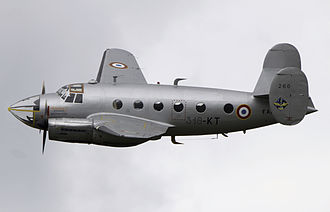
Dassault MD 315 Flamant – The Aircraft That Helped Rebuild French Military Aviation
When discussing the legendary aircraft produced by Dassault Aviation, attention almost always turns toward
high-performance combat aircraft such as the Mirage family or the modern Rafale. Yet long before the company
became synonymous with supersonic fighters, it produced an aircraft that quietly performed one of the most
important roles in post-war European aviation. The Dassault MD 315 Flamant was neither glamorous nor
particularly fast, but it became one of the essential workhorses of the French Air Force during a crucial period
of reconstruction following the Second World War. Designed as a versatile twin-engine utility aircraft, the
Flamant served as a transport, navigation trainer, communications aircraft, air ambulance, and even a light
ground-attack platform. Its flexibility made it indispensable during an era when France urgently needed reliable
aircraft capable of fulfilling many different missions while operating from a wide variety of airfields.
The story of the Flamant is also the story of French industrial recovery. Emerging from the devastation of war,
France sought to rebuild not only its armed forces but also its domestic aerospace industry. Marcel Dassault,
whose engineering talent had already been recognized before the conflict, played a central role in this revival.
The MD 315 Flamant became one of the earliest successful aircraft developed by his company after the war,
representing a bridge between pre-war design philosophy and the sophisticated military aircraft that would
eventually establish Dassault as one of the world’s leading aerospace manufacturers. Although overshadowed by
later jet-powered achievements, the Flamant deserves recognition for laying the foundation upon which much of
France’s post-war aviation success was built.
Origins of the Dassault MD 315 Flamant
The origins of the Flamant can be traced directly to the immediate aftermath of World War II, when France faced
an enormous challenge in rebuilding its aviation capabilities. The French Air Force had lost much of its modern
equipment during the conflict, and imported aircraft could not entirely satisfy national requirements. Domestic
production became both a military necessity and an economic priority. Marcel Dassault recognized this opportunity
and initiated work on a modern twin-engine aircraft capable of performing numerous operational tasks without
requiring extensive maintenance or specialized infrastructure. Instead of focusing on extreme performance, the
design philosophy emphasized practicality, reliability, operational flexibility, and ease of production.
At the time, military planners were looking for an aircraft that could replace several older platforms
simultaneously. Rather than purchasing different airplanes for transport, training, liaison duties, and medical
evacuation, the French government preferred a standardized aircraft capable of fulfilling multiple roles. This
approach promised lower acquisition costs, simplified logistics, easier pilot training, and reduced maintenance
requirements. The Flamant emerged as an ideal solution, offering sufficient payload, respectable performance,
good handling characteristics, and a rugged airframe that could tolerate intensive daily operations.
Development proceeded rapidly during the late 1940s. Engineers incorporated lessons learned from wartime aircraft
while introducing numerous refinements intended to improve reliability and pilot comfort. Although technologically
conservative compared to later jet aircraft, the Flamant represented a thoroughly modern design for its intended
purpose. Its conventional layout, featuring a low-mounted wing, retractable landing gear, twin piston engines,
and spacious cabin, provided excellent versatility without introducing unnecessary complexity.
Design Philosophy and Engineering
A Practical Rather Than Revolutionary Aircraft
One of the defining characteristics of the MD 315 Flamant was its emphasis on balanced engineering rather than
technological experimentation. Every component of the aircraft reflected practical considerations. The twin-engine
configuration improved safety during long flights while also increasing payload capacity compared to single-engine
alternatives. The cockpit provided excellent visibility for pilots, an important feature for navigation training
and operations from relatively small airfields. Large cabin doors simplified loading cargo, stretchers, or
passengers, allowing the aircraft to transition quickly between missions.
The airframe itself featured all-metal construction, reflecting post-war advances in aircraft manufacturing.
Strong structural members provided durability while keeping maintenance manageable. The relatively simple systems
reduced downtime and allowed technicians to service the aircraft even in austere environments. Because the French
Air Force frequently operated from dispersed bases, ease of maintenance became one of the aircraft’s greatest
strengths.
Powerplant and Performance
Power came from two Renault 12S air-cooled V-12 piston engines. These engines delivered dependable performance
while remaining economical to operate. Although they lacked the spectacular horsepower associated with larger
transport aircraft, they provided more than enough thrust for the Flamant’s intended missions. Twin-engine
operation also enhanced operational safety by allowing continued controlled flight in the event of a single-engine
failure under favorable conditions.
Performance figures reflected the aircraft’s utility role rather than pursuit of speed records. Moderate cruising
speed, respectable range, and practical payload capacity enabled the Flamant to connect military bases across
France and its overseas territories efficiently. The aircraft demonstrated stable flying qualities, making it
especially valuable for navigation instruction and multi-engine pilot conversion courses.
Multiple Variants for Multiple Missions
One of the principal reasons behind the Flamant’s long service life was its adaptability. Dassault developed
several variants that addressed different operational requirements while sharing the same fundamental airframe.
This approach minimized logistical complexity while maximizing operational flexibility.
MD 315
The baseline MD 315 became the standard transport and communications aircraft. It accommodated personnel,
equipment, administrative missions, and liaison flights between military installations. Comfortable seating,
reasonable cargo capacity, and dependable performance made it suitable for routine military transportation.
MD 312
The MD 312 primarily served as a navigation and training platform. Student pilots and navigators accumulated
valuable flight hours while learning multi-engine procedures, instrument flying, and long-distance navigation.
Because the aircraft possessed forgiving handling characteristics, instructors appreciated its ability to tolerate
student mistakes without compromising safety.
MD 311
Perhaps the most specialized version, the MD 311 featured a glazed nose section that improved visibility for
navigation training and reconnaissance tasks. Additional equipment supported advanced instruction, helping prepare
aircrews for larger operational aircraft. The distinctive transparent nose became one of the defining visual
characteristics separating this variant from the rest of the Flamant family.
Operational Service in the French Air Force
Following its introduction, the Flamant rapidly became one of the most frequently encountered aircraft within the
French Air Force. It participated in virtually every routine activity required to maintain military aviation
readiness. Personnel transport, courier flights, aerial photography, navigation instruction, communications,
medical evacuation, equipment delivery, and administrative travel all became routine assignments. The aircraft’s
ability to transition rapidly between missions meant that commanders could deploy available resources efficiently
without waiting for specialized aircraft.
During the 1950s and 1960s, France maintained military commitments extending well beyond mainland Europe. The
Flamant regularly operated throughout North Africa and other overseas territories, demonstrating impressive
adaptability under difficult climatic conditions. High temperatures, dusty airfields, and limited maintenance
facilities challenged many aircraft, yet the Flamant generally proved dependable. Its robust landing gear and
strong airframe allowed operations from semi-prepared runways where more delicate aircraft might have struggled.
Military pilots frequently praised the aircraft’s predictable flying qualities. Stable flight characteristics
reduced pilot workload during instrument conditions, while responsive controls remained forgiving enough for
training purposes. The combination of reliability and ease of operation contributed significantly to the aircraft’s
excellent safety reputation throughout decades of service.
Combat and Counterinsurgency Roles
Although conceived primarily as a transport and trainer, the Flamant occasionally assumed far more demanding
responsibilities. During periods of colonial conflict, especially in Algeria, several aircraft received
modifications enabling them to conduct light attack and armed reconnaissance missions. Engineers equipped certain
examples with machine guns, rockets, and light bombs, transforming an otherwise unassuming transport aircraft into
an effective counterinsurgency platform.
The aircraft’s relatively slow speed unexpectedly became an advantage during these missions. Crews could identify
ground targets more easily, coordinate closely with friendly forces, and deliver weapons with greater precision
than much faster aircraft operating at high altitude. While never intended to replace dedicated combat airplanes,
the armed Flamant demonstrated how adaptable the basic design truly was.
These operations highlighted an important lesson in military aviation: versatility often proves more valuable than
specialization. By modifying existing aircraft instead of introducing entirely new platforms, the French Air Force
saved valuable resources while responding quickly to evolving operational requirements.
The Flamant as a Training Platform
Perhaps the aircraft’s greatest contribution came through education rather than transportation. Thousands of French
military aviators completed portions of their professional development aboard the Flamant. Navigation, instrument
procedures, radio communication, crew coordination, emergency drills, and multi-engine handling all became part of
its extensive training syllabus.
Unlike high-performance aircraft that demanded constant attention from pilots, the Flamant allowed instructors to
focus on teaching broader aviation principles. Students learned systematic cockpit management, navigation planning,
fuel calculations, weather interpretation, and disciplined crew communication. These skills remained essential
regardless of whether graduates later transitioned to transport aircraft, maritime patrol platforms, bombers, or
jet fighters.
Because the aircraft remained in service for decades, multiple generations of French aviators developed their
professional foundations within its cockpit. In this respect, the Flamant influenced military aviation far beyond
its own operational capabilities by helping shape the competence of countless pilots and navigators.
Life in Daily Military Service
Routine military aviation rarely attracts public attention, yet it forms the backbone of every effective air
force. On an ordinary day, a Flamant might transport senior officers between bases during the morning, carry spare
aircraft components in the afternoon, evacuate an injured service member before sunset, and conduct navigation
training the following day. Few aircraft demonstrated such extraordinary flexibility within a single operational
week.
Ground crews likewise appreciated the aircraft’s accessibility. Maintenance inspections could often be completed
without specialized equipment, while replacement parts remained relatively straightforward to install. The
aircraft’s conventional mechanical systems reflected engineering priorities that emphasized reliability over
complexity. This philosophy translated directly into high availability rates, an essential requirement for military
organizations with limited budgets.
Comparison with Contemporary Aircraft
During its operational lifetime, the Flamant shared the skies with numerous other twin-engine utility aircraft.
Compared with American designs such as the Beechcraft Model 18 or the Cessna 310, the Flamant occupied a similar
general category while reflecting specifically French operational priorities. It offered generous internal space,
excellent low-speed handling, and remarkable adaptability across multiple mission profiles.
Unlike many aircraft designed primarily for civilian transport before military adaptation, the Flamant originated
from military requirements. Consequently, structural durability, operational simplicity, and mission flexibility
received greater emphasis than passenger comfort or commercial efficiency. These priorities helped explain the
aircraft’s enduring popularity within military service even as civilian technology advanced rapidly.
Legacy Within Dassault Aviation
The importance of the MD 315 Flamant extends well beyond its operational statistics. For Dassault Aviation, the
aircraft represented a major milestone in re-establishing the company’s engineering reputation after World War II.
The successful design, production, and widespread adoption of the Flamant demonstrated that French industry could
once again produce competitive military aircraft using domestic expertise.
Experience gained during the Flamant program strengthened engineering teams, manufacturing processes, quality
control procedures, and supplier networks that would later contribute directly to the development of increasingly
advanced aircraft. In many respects, every subsequent Dassault success—from the Mystère and Mirage families to the
modern Rafale—owes something to the confidence and industrial capability established during programs like the
Flamant.
Retirement and Preservation
As turbine-powered aircraft gradually replaced piston-engine designs during the 1960s and 1970s, the Flamant
began leaving frontline service. Newer aircraft offered greater speed, improved fuel efficiency, increased payload,
and more sophisticated avionics. Nevertheless, many Flamants continued serving in secondary roles for years,
reflecting their remarkable durability and continued usefulness.
Several surviving aircraft have fortunately been preserved by museums and aviation organizations throughout France.
These carefully restored examples provide valuable insight into the transitional era between wartime piston aircraft
and the jet age. Visitors often remark that the Flamant appears modest compared to sleek fighter aircraft displayed
nearby, yet historians recognize that such dependable utility aircraft frequently contribute more to day-to-day
military effectiveness than their more celebrated counterparts.
Why the Dassault MD 315 Flamant Still Matters Today
Modern aviation increasingly emphasizes advanced electronics, stealth technology, autonomous systems, and networked
warfare. Against this backdrop, a piston-powered twin-engine aircraft from the late 1940s might appear hopelessly
obsolete. However, the Flamant continues to offer valuable lessons for aerospace engineers, military planners, and
aviation historians alike. Its development illustrates the importance of designing aircraft around clearly defined
operational needs rather than technological fashion. Every successful aspect of the Flamant resulted from careful
attention to reliability, maintainability, versatility, and affordability.
The aircraft also demonstrates that strategic influence is not measured solely by combat victories or speed
records. Thousands of personnel, countless training missions, routine transport flights, humanitarian evacuations,
and logistical operations collectively shaped French military capability for decades. Aircraft like the Flamant
rarely dominate headlines, yet without them even the most advanced combat forces would struggle to function
effectively.
Finally, the Flamant stands as a symbol of national recovery. Emerging from one of Europe’s most difficult periods,
France rebuilt its aviation industry through practical engineering, industrial determination, and long-term
investment. The Flamant embodied these principles and helped establish the industrial foundation upon which one of
the world’s most respected aerospace manufacturers would continue to grow.
Technical Specifications
| Specification | Dassault MD 315 Flamant |
|---|---|
| Manufacturer | Dassault Aviation |
| Country of Origin | France |
| Primary Role | Utility transport, navigation trainer, liaison aircraft |
| First Flight | 1947 |
| Introduction into Service | Late 1940s |
| Crew | Typically 2 pilots (mission dependent) |
| Passenger Capacity | Up to 10 passengers (configuration dependent) |
| Length | Approximately 12.5 m (41 ft) |
| Wingspan | Approximately 20.7 m (68 ft) |
| Height | Approximately 4.5 m (15 ft) |
| Powerplant | 2 × Renault 12S air-cooled V-12 piston engines |
| Engine Power | Approximately 580 hp each |
| Maximum Speed | Approximately 380 km/h (236 mph) |
| Cruising Speed | Approximately 300 km/h (186 mph) |
| Operational Range | Approximately 1,200 km (746 miles) |
| Service Ceiling | Approximately 7,000 m (23,000 ft) |
| Landing Gear | Retractable tricycle configuration |
| Main Operators | French Air Force |
| Additional Roles | Medical evacuation, communications, navigation training, light attack |
| Status | Retired; several preserved in museums |
