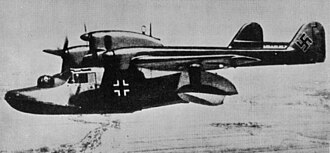
Blohm & Voss BV 138 Seedrache – The Luftwaffe’s Unusual Maritime Flying Boat
Among the countless aircraft developed during the Second World War, few possessed a silhouette as unmistakable as the
Blohm & Voss BV 138 Seedrache. Nicknamed Seedrache, meaning “Sea Dragon,” this German
three-engine flying boat represented one of the most distinctive maritime reconnaissance aircraft ever placed into
operational service. With its twin-boom tail, high-mounted wing, central hull, and trio of diesel engines, the BV 138
looked unlike almost every other military aircraft of its era. While many aircraft achieved fame through speed,
firepower, or spectacular aerial victories, the Seedrache earned its reputation through endurance, resilience, and the
ability to patrol enormous stretches of ocean where enemy ships and submarines operated beyond the reach of land-based
aircraft.
The aircraft became one of the principal long-range maritime reconnaissance platforms employed by the Luftwaffe
throughout much of the Second World War. Operating over the North Sea, Baltic Sea, Norwegian coastline, Arctic waters,
and portions of the Atlantic Ocean, the BV 138 performed missions that demanded patience, reliability, and exceptional
range rather than outright performance. Crews frequently spent many hours over open water in unforgiving weather,
searching for convoys, escorting naval forces, identifying mines, rescuing downed airmen, and collecting intelligence
that could influence naval strategy across entire theaters of war.
Although overshadowed by more famous German aircraft such as the Messerschmitt Bf 109, Junkers Ju 87 Stuka, or
Heinkel He 111, the BV 138 occupied a highly specialized niche that proved indispensable to German naval aviation.
Its unusual engineering reflected the unique operational challenges faced by maritime patrol aircraft operating far
from conventional airfields. Designed to take off from sheltered bays, fjords, harbors, and coastal anchorages rather
than prepared runways, the Seedrache embodied an entirely different philosophy of military aviation. Its story is one
of innovation, adaptation, and endurance under some of the harshest operational conditions encountered during the war.
The Strategic Need for a Long-Range Flying Boat
During the 1930s Germany recognized that any future naval conflict would require effective long-range maritime
reconnaissance. Surface warships and submarines depended heavily upon accurate intelligence regarding convoy routes,
enemy fleet movements, weather conditions, and coastal defenses. Land-based aircraft often lacked sufficient range to
maintain surveillance over distant waters, while aircraft carriers were not available to the German Navy in meaningful
numbers. Flying boats therefore represented one of the few practical solutions capable of extending aerial observation
hundreds of kilometers beyond the coastline.
The concept of a flying boat offered several important operational advantages. Unlike conventional aircraft requiring
prepared airfields, flying boats could operate directly from protected bodies of water. This flexibility allowed them
to establish forward operating locations in remote regions where runways did not exist. Fuel, supplies, and maintenance
equipment could often be delivered by ship, enabling aviation units to support naval operations across a wide
geographical area without constructing permanent infrastructure. Such capabilities became especially valuable along the
rugged Norwegian coast following Germany’s occupation of Norway in 1940.
Maritime reconnaissance also demanded aircraft capable of remaining airborne for exceptionally long periods while
carrying radios, navigation equipment, defensive armament, emergency survival gear, and multiple crew members. Every
design decision therefore prioritized endurance, seaworthiness, reliability, and crew survivability over maximum speed
or maneuverability. Blohm & Voss responded to these requirements with one of the most unconventional yet effective
flying boats of the era.
Development of the BV 138
Blohm & Voss Enters Aircraft Manufacturing
Although Blohm & Voss had earned international recognition primarily as one of Germany’s leading shipbuilding
companies, it expanded into aircraft production during the 1930s through its aviation division under the direction of
the talented engineer Dr. Richard Vogt. Vogt was renowned for unconventional thinking and frequently produced aircraft
layouts that challenged established design conventions. His willingness to experiment with structural arrangements,
weight distribution, and aerodynamic solutions became a defining characteristic of many Blohm & Voss aircraft,
including the BV 138.
Rather than simply adapting existing flying boat concepts, Vogt developed an entirely new configuration optimized for
maritime patrol duties. The resulting aircraft featured a slender central hull suspended beneath a high-mounted wing,
with twin tail booms extending rearward to support the horizontal stabilizer. This arrangement provided excellent
stability while leaving ample space within the hull for crew accommodations, fuel, equipment, and defensive positions.
Although visually unusual, the design reflected careful engineering rather than stylistic experimentation.
Prototype Development
Early prototypes revealed both the promise and challenges associated with such an innovative aircraft. Engineers
encountered structural issues, hydrodynamic refinements, and engine integration problems that required extensive
testing before operational service became feasible. Numerous modifications improved hull performance during takeoff,
enhanced seaworthiness in rough conditions, strengthened structural components, and increased overall reliability.
These refinements ultimately produced an aircraft capable of handling the demanding realities of maritime warfare.
Distinctive Design Characteristics
The Central Flying Boat Hull
Perhaps the most recognizable feature of the BV 138 was its boat-shaped fuselage. Unlike conventional aircraft, the
central hull functioned both as an aerodynamic fuselage during flight and as a seaworthy vessel while afloat. Engineers
carefully shaped the hull to minimize water resistance during takeoff while ensuring adequate buoyancy in rough seas.
Crew members could remain aboard for extended periods even while floating at anchor, making the aircraft highly
practical for remote maritime operations.
The hull incorporated multiple watertight compartments to improve survivability in the event of damage. Internal
arrangements balanced operational efficiency with crew comfort, providing workstations for pilots, navigators, radio
operators, observers, and gunners. Storage areas accommodated survival equipment, spare parts, emergency provisions,
and specialized reconnaissance gear necessary for prolonged patrols over isolated waters.
The Twin-Boom Tail Configuration
The twin-boom arrangement served several practical purposes beyond creating the aircraft’s distinctive appearance.
Separating the tail structure from the central hull improved stability while allowing unobstructed placement of the
center engine. It also enhanced fields of fire for defensive armament and simplified structural load distribution.
Although unconventional, the configuration proved remarkably successful throughout the aircraft’s operational career.
Three Diesel Engines
One of the BV 138’s most remarkable technical features was its use of Junkers Jumo 205 opposed-piston diesel engines.
At a time when the overwhelming majority of military aircraft relied upon gasoline-powered engines, diesel propulsion
offered several advantages. Fuel consumption proved significantly lower, increasing operational range. Diesel fuel was
also less volatile than aviation gasoline, reducing fire risk following combat damage. These characteristics made the
engines particularly well suited for long-duration maritime patrols where endurance often determined mission success.
The aircraft carried one engine mounted centrally above the wing and two additional engines positioned farther outward
along the wing structure. This arrangement optimized weight distribution while maintaining acceptable aerodynamic
performance and simplifying maintenance access.
Life Aboard the Seedrache
Flying aboard the BV 138 demanded considerable endurance from its crews. Maritime patrol missions frequently lasted
eight, ten, or even twelve hours depending upon operational requirements. Unlike high-speed combat sorties, these
missions required prolonged concentration while scanning vast expanses of seemingly empty ocean. Navigators carefully
tracked position using celestial observations, dead reckoning, radio signals, and coastal landmarks whenever available.
Observers continuously searched for ships, submarines, aircraft, mines, and weather systems capable of influencing
military operations.
Operating conditions could be extremely demanding. North Atlantic weather frequently exposed crews to freezing
temperatures, dense fog, heavy rain, powerful winds, and rough seas. Ice accumulation posed a constant hazard during
winter operations, while extended periods over open water left little opportunity for emergency landings. Despite these
difficulties, the BV 138 developed a reputation as a dependable platform capable of bringing its crews home under
conditions that challenged many contemporary aircraft.
Operational Service During World War II
North Sea Operations
Following its introduction into Luftwaffe service, the BV 138 quickly assumed responsibility for maritime patrols over
the North Sea. Crews monitored shipping lanes, identified enemy naval activity, escorted German vessels, and gathered
intelligence supporting naval planning. Constant reconnaissance enabled commanders to track convoy movements and assess
the effectiveness of Allied naval operations.
Norwegian Coast and Arctic Waters
The occupation of Norway dramatically increased the strategic importance of long-range flying boats. Norway’s extensive
coastline, countless fjords, and proximity to Arctic shipping routes created ideal operating conditions for the BV 138.
Protected anchorages allowed flying boats to deploy close to operational areas without constructing permanent airbases.
From these forward locations the aircraft monitored Arctic convoys transporting vital supplies between Allied nations
and the Soviet Union.
Arctic missions represented some of the most difficult assignments undertaken by any Luftwaffe aircrews. Navigation
became increasingly challenging due to rapidly changing weather, magnetic compass irregularities, prolonged darkness,
and limited landmarks. Nevertheless, the BV 138 demonstrated exceptional reliability under these demanding conditions.
Baltic Sea Missions
The Baltic Sea remained another important theater for the Seedrache. Here the aircraft supported naval training,
conducted anti-submarine patrols, monitored Soviet naval activity, and performed search-and-rescue operations. The
relatively sheltered waters allowed efficient flying boat operations throughout much of the year while still presenting
numerous navigational challenges.
Reconnaissance and Intelligence Gathering
Reconnaissance formed the aircraft’s primary mission throughout its operational career. Rather than engaging directly
with enemy forces whenever possible, BV 138 crews collected information that could influence broader strategic
decisions. Detailed reports concerning convoy composition, escort strength, weather systems, harbor activity, and naval
movements often proved more valuable than isolated tactical successes. Radio operators transmitted intelligence whenever
conditions permitted, allowing German naval commanders to adjust submarine deployments and fleet operations.
Visual observation remained the principal reconnaissance method despite advances in aerial photography. Experienced
observers developed remarkable abilities to estimate ship classes, identify camouflage patterns, recognize national
markings, and distinguish between merchant vessels, destroyers, cruisers, and larger warships from considerable
distances. Such expertise required extensive training and practical experience accumulated through countless patrol
hours over open water.
Defensive Armament and Survivability
Although reconnaissance represented its primary function, the BV 138 possessed substantial defensive armament intended
to discourage attacking fighters. Various production models incorporated machine guns and automatic cannon positioned
within nose, dorsal, and tail stations, allowing overlapping fields of fire covering multiple directions. While these
weapons could not guarantee protection against determined fighter attacks, they significantly increased the aircraft’s
ability to defend itself during encounters over isolated waters.
The robust flying boat structure also contributed to survivability. Crews frequently reported returning safely despite
combat damage that might have proven fatal in lighter aircraft. Redundant systems, strong structural members, and
multiple engines improved the likelihood of successful recovery following enemy engagement or mechanical difficulties.
Variants of the BV 138
BV 138 A
The initial production series incorporated many lessons learned during prototype testing. Although relatively limited
in numbers, these aircraft established operational procedures and revealed additional improvements for subsequent
variants.
BV 138 B
The BV 138 B introduced stronger structural components, improved defensive armament, enhanced equipment, and refined
hydrodynamic characteristics. Many historians regard this version as the first fully mature operational model capable
of meeting Luftwaffe requirements consistently.
BV 138 C
The final major production version received upgraded defensive weaponry, improved systems reliability, and additional
equipment supporting extended reconnaissance missions. Continuous refinement throughout production reflected operational
experience gained across multiple theaters.
Strengths and Weaknesses
The BV 138 possessed numerous strengths that justified its continued production despite its unusual appearance. Its
exceptional endurance, economical diesel engines, robust construction, excellent seaworthiness, and impressive range
made it ideally suited for maritime reconnaissance. Crews appreciated the aircraft’s stability during long patrols,
while maintenance personnel valued its generally dependable mechanical systems.
However, limitations inevitably accompanied these advantages. Maximum speed remained modest compared with contemporary
fighters, leaving the aircraft vulnerable whenever intercepted without escort. Large physical dimensions increased
visibility, making concealment difficult during daylight operations. Rough sea states occasionally complicated takeoff
and landing, while increasingly capable Allied fighters gradually reduced operational freedom later in the war.
Despite these shortcomings, the Seedrache remained one of Germany’s most effective flying boats throughout the conflict.
Comparison with Allied Flying Boats
Several Allied flying boats performed missions similar to those of the BV 138, including the British Short Sunderland
and the American Consolidated PBY Catalina. Each reflected different national priorities. The Sunderland emphasized
heavy defensive armament and crew accommodations, while the Catalina achieved remarkable range and versatility across
multiple theaters. The German Seedrache distinguished itself primarily through diesel propulsion, compact operational
footprint, and its highly distinctive structural configuration.
Although the BV 138 never matched Allied production numbers, it demonstrated that innovative engineering could produce
effective solutions tailored to specialized operational requirements. Its unique combination of endurance, economy, and
maritime capability ensured continued service throughout much of the war despite rapidly evolving aviation technology.
The End of Operational Service
As the war progressed, Allied air superiority increasingly restricted German maritime aviation. Improved radar,
long-range fighter escorts, and intensified anti-submarine operations made reconnaissance missions progressively more
hazardous. Many surviving BV 138 aircraft were destroyed during combat, abandoned at remote bases, or deliberately
scuttled near the end of hostilities to prevent capture. Only a very small number survived the war intact.
Despite these losses, the aircraft’s operational contribution remained significant. For years it had served as one of
Germany’s principal eyes over northern waters, gathering intelligence essential to naval operations while performing
numerous transport, rescue, and patrol missions under exceptionally demanding conditions.
Historical Legacy
Today the Blohm & Voss BV 138 occupies a fascinating place in aviation history. It exemplifies how specialized
requirements can produce unconventional yet highly effective engineering solutions. Although overshadowed by more famous
combat aircraft, the Seedrache demonstrated remarkable operational value through endurance rather than spectacular
performance. Historians continue to study its innovative structural layout, efficient diesel propulsion system, and
successful adaptation to maritime reconnaissance roles that demanded reliability above all else.
The aircraft also highlights the broader importance of maritime aviation during the Second World War. Intelligence
gathered by reconnaissance flying boats frequently shaped naval strategy, convoy routing, and submarine deployment
without attracting the public attention associated with dramatic aerial combat. In this respect, the BV 138 stands as a
reminder that many of history’s most influential military aircraft achieved success not through headlines but through
consistent, dependable service performed day after day over vast stretches of open ocean.
Technical Specifications
| Specification | Blohm & Voss BV 138 C-1 |
|---|---|
| Manufacturer | Blohm & Voss Flugzeugbau |
| Country | Germany |
| Role | Maritime reconnaissance flying boat |
| Nickname | Seedrache (“Sea Dragon”) |
| First Flight | 1937 |
| Introduction | 1940 |
| Crew | 6 |
| Length | 19.85 m (65 ft 1 in) |
| Wingspan | 26.50 m (86 ft 11 in) |
| Height | 5.90 m (19 ft 4 in) |
| Wing Area | 78.3 m² |
| Empty Weight | Approximately 11,200 kg |
| Maximum Takeoff Weight | Approximately 17,500 kg |
| Powerplant | 3 × Junkers Jumo 205D opposed-piston diesel engines |
| Power Output | 880 hp (656 kW) each |
| Maximum Speed | Approximately 285 km/h (177 mph) |
| Cruising Speed | Approximately 230 km/h (143 mph) |
| Range | Approximately 4,300 km (2,670 miles) |
| Service Ceiling | Approximately 5,000 m (16,400 ft) |
| Armament | 20 mm cannon, MG 131 machine guns, bombs or depth charges (variant dependent) |
| Primary Operators | Luftwaffe |
| Operational Theaters | North Sea, Baltic Sea, Norway, Arctic Ocean, Atlantic |
| Status | Retired |
