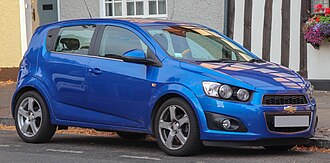
Chevrolet Aveo as a Used Car: Is This Affordable Small Car Still Worth Buying?
The Chevrolet Aveo is an interesting used-car proposition because it combines two very different stories. On one hand, it was designed as an inexpensive small car for buyers who wanted straightforward transportation without paying for a premium badge. On the other hand, Chevrolet’s withdrawal from the mainstream European passenger-car market means that today’s used Aveo buyer is purchasing a discontinued model rather than a current product with a large official dealer network behind it. That makes the Aveo potentially attractive for someone looking for affordable transport, but it also means that condition, parts availability and the exact engine become particularly important.
In Europe, the Aveo name was used on several generations, with the later T300 generation being the most modern version sold before Chevrolet left the European mainstream market. The T300 arrived for the 2011 model year and was offered as both a five-door hatchback and a four-door saloon. European versions included 1.2-litre and 1.4-litre petrol engines, a 1.6-litre petrol in some markets and a 1.3-litre diesel. The hatchback measured just over four metres in length while offering a surprisingly practical 290-litre boot, expandable to 653 litres with the rear seats folded; the saloon was longer and offered a 502-litre luggage compartment.
The Aveo therefore makes most sense when viewed for what it was intended to be: inexpensive, uncomplicated everyday transportation. It is not a car to buy for prestige, high-speed motorway performance or cutting-edge technology. Its strengths are more practical. It is relatively compact, easy to park, inexpensive to buy second-hand and available with simple petrol engines that can make sense for low-mileage drivers. A carefully selected example can still be a perfectly useful first car, commuter vehicle or second family car, but buyers need to approach an old Aveo differently from a newer mainstream model.
Which Chevrolet Aveo Should You Buy?
The first decision is which generation to consider. Earlier Aveos, including cars sold in Europe under the Chevrolet and Daewoo names, can be extremely cheap, but their age now means that corrosion, mechanical wear and general deterioration can outweigh the attraction of a low purchase price. The later T300 is usually the more interesting target because it is newer, has a more modern safety and equipment package and feels considerably more substantial.
The T300 was sold in Europe from roughly 2011 to 2014, meaning that even the youngest examples are now more than a decade old. That is old enough for maintenance history to be more important than the original list price or trim level. A high-mileage car that has been serviced consistently can be preferable to a low-mileage example that has spent years standing unused or has an incomplete history.
The choice between hatchback and saloon is also worth considering. The hatchback is easier to manoeuvre in cities and has a more versatile cargo area, while the saloon offers a very generous 502-litre boot for a small car. The saloon’s approximately 4.40-metre length also gives it a slightly more substantial road presence, although the hatchback’s roughly 4.04-metre body makes it more convenient in crowded urban environments.
Petrol or Diesel?
1.2 Petrol: The Sensible Choice for Many Buyers
The 1.2-litre petrol engine is arguably the most sensible Aveo choice for a buyer who wants simplicity. European T300 versions were offered with outputs around 70 PS and 86 PS, depending on specification and model year. The stronger 86-PS version is preferable if you regularly drive outside the city because the additional power makes motorway merging and overtaking less stressful. Official European figures for the 86-PS hatchback included a claimed 0–100 km/h time of about 14.4 seconds and a top speed of 171 km/h.
The important point is that neither version is particularly powerful. The Aveo is a small, relatively affordable car rather than a performance hatchback, and the 1.2 needs to be worked reasonably hard when the car is fully loaded. For urban driving, however, that is not necessarily a problem. The engine’s straightforward nature and the absence of a turbocharger can make it attractive to buyers who prioritize predictable ownership costs over acceleration.
For someone covering a modest annual mileage, the 1.2 petrol is often a better bet than an old diesel. There are fewer diesel-specific components to worry about, and the car is less dependent on long-distance driving to keep its emissions system operating correctly.
1.4 Petrol: The Better All-Rounder
The 1.4-litre petrol engine is a stronger all-round choice if you regularly carry passengers or spend time on faster roads. The T300 European version produced around 100 PS, with official figures giving a top speed of approximately 174 km/h and a claimed combined fuel consumption of around 5.3 litres per 100 kilometres under the test regime of the period.
The difference may look small on paper, but in a lightweight compact car an additional 14 PS over the 86-PS 1.2 can make everyday driving noticeably easier. The 1.4 does not transform the Aveo into a fast car, but it gives the driver more flexibility when joining motorways, climbing hills or carrying several people.
For many European used-car buyers, this is the sweet spot. It retains the relative simplicity of a naturally aspirated petrol engine while providing enough performance for normal mixed driving. If the price difference between an equivalent 1.2 and 1.4 is small, the larger engine is worth considering.
1.3 Diesel: Economical but More Complicated
The 1.3-litre diesel is the specialist choice. European T300 versions were available with approximately 75 PS and 95 PS, and the stronger version produced around 210 Nm of torque. The 95-PS model was paired with a six-speed manual transmission in some configurations and had a claimed combined consumption figure of around 4.1 litres per 100 kilometres in period testing.
On paper, those figures make the diesel very attractive. The torque is significantly stronger than that of the small petrol engines, and fuel consumption can be impressive when the vehicle is driven economically. For someone covering a large annual mileage, particularly on longer journeys, the diesel can make sense.
But this is an older small diesel, and that means buyers need to consider the cost and condition of its emissions and turbocharging systems. A diesel that has spent most of its life on short urban journeys may be a less attractive purchase than a petrol Aveo with a higher odometer reading but a more appropriate usage history.
What Is the Aveo Like to Drive?
The Aveo’s driving experience is best described as uncomplicated. It is small enough to feel at home in narrow European streets, light enough to be easy to manoeuvre and compact enough to park without much difficulty. Visibility is generally good, and the driving position is straightforward.
The T300 is more substantial than the basic city cars that surround it in the used market. Its width is approximately 1.74 metres, giving the cabin enough space for four adults to travel reasonably comfortably. The suspension is designed for everyday road use rather than sporty handling, and the car generally feels more comfortable when driven smoothly rather than aggressively.
The 1.2 and 1.4 petrol engines are not particularly refined by modern standards, especially when pushed hard. The diesel can feel stronger at low engine speeds but brings the characteristic noise and vibration associated with an older small diesel. On motorways, the Aveo is perfectly capable of maintaining normal speeds, but road and wind noise become more noticeable than they would in a newer compact car.
That is an important distinction for prospective buyers. The Aveo can be an excellent inexpensive commuter, but it should not be mistaken for a miniature long-distance luxury car. If your normal journeys consist of urban and suburban trips, its limitations are much less significant.
What Makes the Chevrolet Aveo Attractive as a Used Car?
Low Purchase Cost
One of the Aveo’s greatest advantages is its price. Because Chevrolet is no longer a mainstream new-car brand in Europe, the model lacks the popularity of used Volkswagen, Škoda, Renault or Toyota alternatives. That can work in the buyer’s favour. A good Aveo can offer considerable basic transportation for relatively little money.
However, a low purchase price should not encourage buyers to spend every available euro on the car itself. An older vehicle needs a maintenance reserve. Money should be kept aside for tyres, brakes, suspension components, fluids, batteries and unexpected repairs.
Compact Dimensions
The Aveo’s compact footprint is particularly useful in European cities. The T300 hatchback is about 4.04 metres long and 1.74 metres wide, making it substantially easier to place in a tight parking space than a modern family SUV.
This is also one reason the Aveo can make sense as a first car. It provides a reasonably conventional driving experience without the size and weight of a modern crossover. For a new driver who mainly travels around town, those characteristics can be more useful than having a large touchscreen or a powerful engine.
Surprisingly Useful Boot Space
The hatchback’s 290-litre boot is respectable for a small car, while folding the rear seats increases the available cargo volume considerably. The saloon is even more impressive in this respect, with a 502-litre boot according to European specifications.
That makes the Aveo more practical than its exterior dimensions might suggest. A family can use it for normal shopping and weekend trips, while a single driver can carry considerably more luggage than would be possible in many small city cars.
What Should You Check Before Buying?
Inspect the Body and Chassis
With an older Aveo, the body should be inspected carefully for corrosion, accident damage and poorly repaired panels. Check the wheel arches, sills, doors, boot lid, underside and suspension mounting areas. Uneven panel gaps or differences in paint texture can indicate previous accident repairs.
The underside deserves particular attention in countries where cars are exposed to winter road salt. Surface corrosion is not unusual on an older vehicle, but serious corrosion around structural areas can make the car uneconomical to repair.
Check the Engine From Cold
Always try to inspect the vehicle when the engine is cold. A seller who has already warmed it up may be trying to hide a starting or running problem. The engine should start promptly and settle into a stable idle.
Look for oil or coolant leaks, excessive exhaust smoke and unusual mechanical noises. On the 1.2 and 1.4 petrol engines, listen for abnormal noises from the top end and check that the engine responds cleanly to throttle input. On the diesel, pay particular attention to turbocharger behaviour and any warning lights.
Test the Clutch and Gearbox
Manual transmissions are common, and the clutch should engage smoothly without excessive slipping or judder. A very high clutch engagement point can indicate significant wear, although the exact feel varies with adjustment and condition.
During the test drive, make sure all gears can be selected easily. Pay attention to second and third gears in particular, because these are frequently used in urban driving and can reveal problems that may not be obvious during a short motorway test.
Check the Electrical Equipment
The Aveo is not packed with the electronics found in modern cars, but every electrical system should still be tested. Check the lights, windows, central locking, air conditioning, dashboard displays, audio system and warning lights.
If the car has steering-wheel controls, parking equipment or other optional features, make sure they function correctly. Electrical problems may be relatively inexpensive in isolation, but on an old vehicle a collection of small faults can quickly become frustrating and expensive.
Is the Chevrolet Aveo Reliable?
The Aveo can be dependable when properly maintained, but it is important to separate the reliability of the original design from the condition of a 10- to 20-year-old example. Almost any car of this age can develop problems simply because components deteriorate with time.
Suspension bushes, shock absorbers, wheel bearings, brake components, exhaust systems, batteries and air-conditioning components are all worth checking. The engine may be perfectly healthy while the rest of the car needs attention.
The best Aveo to buy is therefore not necessarily the one with the lowest mileage. A vehicle with a detailed service history, regular oil changes and evidence of preventative maintenance is much more reassuring. A suspiciously low-mileage example without documentation should be treated cautiously.
What About Parts and Servicing?
Chevrolet’s departure from the European new-car market is one of the main concerns potential Aveo buyers have, but it does not mean that these cars cannot be maintained. Many mechanical components are shared with related General Motors and Daewoo/Chevrolet products, and independent garages can still service the basic mechanical systems.
The situation becomes more complicated when looking for model-specific body panels, trim pieces or certain electronic components. This is where a common used-car model has an advantage: popular European competitors usually have a much larger supply of used and aftermarket parts.
Before buying an Aveo, it is therefore sensible to check parts availability for the exact engine and year. This is particularly important if you are buying a rare specification or an automatic version.
Is the Chevrolet Aveo Safe?
The later T300 represented a substantial improvement over the earliest Aveos in terms of equipment and overall vehicle design. Depending on specification, European cars could be equipped with features such as electronic stability control, airbags and ABS, while higher trims offered additional convenience equipment.
Nevertheless, the Aveo should now be judged as an older compact car. Modern vehicles have benefited from years of development in crash structures and electronic driver assistance, so a newer supermini or compact hatchback can provide a substantially more contemporary safety package.
For a budget buyer, the important thing is to ensure that all airbags, warning systems, brakes, tyres and stability-control equipment are functioning correctly. A pre-purchase inspection is particularly worthwhile if you are buying the car for a young or inexperienced driver.
Who Should Buy a Used Chevrolet Aveo?
The Aveo is best suited to someone who values affordability and simplicity above all else. It can be a good first car, a second household car, a commuter vehicle or inexpensive urban transport. The 1.2 or 1.4 petrol engines are particularly appropriate for drivers who cover modest annual mileage and want to avoid the complexity of an older diesel.
The 1.3 diesel becomes more attractive for high-mileage users who regularly travel longer distances. Its torque and potential fuel economy make it a more capable motorway car, but the buyer must be comfortable with the additional maintenance considerations associated with an older diesel.
The Aveo is less suitable for someone who spends most of their time on motorways and wants excellent refinement, or for a buyer who expects the latest safety and infotainment technology. It is also not ideal if you have no tolerance for occasional repairs.
Final Verdict: Is the Chevrolet Aveo Worth Buying?
The Chevrolet Aveo is an old-fashioned used-car proposition in the best and worst senses of the phrase. It is small, relatively simple and inexpensive, but it also lacks the refinement, technology and brand support that buyers receive from newer mainstream European models.
For a budget-conscious buyer, however, those disadvantages can be acceptable. The later T300 generation in particular offers a useful combination of compact dimensions, reasonable interior space, a practical boot and simple petrol engines. The 1.2 is adequate for urban driving, the 1.4 is arguably the best all-round petrol choice, and the 1.3 diesel is worth considering for drivers who cover substantial distances.
The most important advice is to buy condition rather than specification. A clean, well-maintained Aveo with a complete history can be an inexpensive and dependable form of transportation, while a neglected example can easily turn its low purchase price into a series of repair bills. Check corrosion, suspension, clutch, gearbox, engine condition and electrical equipment carefully, and leave room in your budget for maintenance.
For European buyers who simply need a cheap car that gets them from A to B, the Chevrolet Aveo can still make sense. It is not an exciting purchase, and it will not offer the polish of a modern Škoda Fabia, Renault Clio or Toyota Yaris, but that is not really its purpose. The Aveo’s appeal is its ability to provide basic, practical motoring at a modest entry price. Find the right example and it can remain a surprisingly useful little car.
Chevrolet Aveo Technical Specifications
The specifications below focus primarily on the European T300 generation sold from approximately 2011 to 2014. Exact figures varied by engine, body style, transmission and trim level. For example, European technical data list the hatchback at approximately 4,039 mm long and the saloon at approximately 4,399 mm, while engine outputs ranged from about 70 to 115 PS depending on version.
| Specification | 1.2 Petrol 70 PS | 1.2 Petrol 86 PS | 1.4 Petrol 100 PS | 1.6 Petrol 115 PS | 1.3 Diesel 75 PS | 1.3 Diesel 95 PS |
|---|---|---|---|---|---|---|
| Engine | 1.2 petrol | 1.2 petrol | 1.4 petrol | 1.6 petrol | 1.3 turbo diesel | 1.3 turbo diesel |
| Displacement | 1,229 cc | 1,229 cc | 1,398 cc | 1,598 cc | 1,248 cc | 1,248 cc |
| Cylinders | 4 | 4 | 4 | 4 | 4 | 4 |
| Power | 70 PS | 86 PS | 100 PS | 115 PS | 75 PS | 95 PS |
| Approx. torque | 115 Nm | 115 Nm | approx. 130 Nm | approx. 155 Nm | 190 Nm | 210 Nm |
| Transmission | 5-speed manual | 5-speed manual | 5-speed manual / automatic depending on market | 5-speed manual / automatic depending on market | 5-speed manual | 6-speed manual |
| Drive | FWD | FWD | FWD | FWD | FWD | FWD |
| Body styles | Hatchback/saloon | Hatchback/saloon | Hatchback/saloon | Hatchback | Hatchback/saloon | Hatchback/saloon |
| Hatchback length | approx. 4,039 mm | approx. 4,039 mm | approx. 4,039 mm | approx. 4,039 mm | approx. 4,039 mm | approx. 4,039 mm |
| Saloon length | approx. 4,399 mm | approx. 4,399 mm | approx. 4,399 mm | — | approx. 4,399 mm | approx. 4,399 mm |
| Width | approx. 1,735 mm | approx. 1,735 mm | approx. 1,735 mm | approx. 1,735 mm | approx. 1,735 mm | approx. 1,735 mm |
| Wheelbase | approx. 2,525 mm | approx. 2,525 mm | approx. 2,525 mm | approx. 2,525 mm | approx. 2,525 mm | approx. 2,525 mm |
| Hatchback boot | 290–653 l | 290–653 l | 290–653 l | 290–653 l | 290–653 l | 290–653 l |
| Saloon boot | 502 l | 502 l | 502 l | — | 502 l | 502 l |
| Best suited to | City driving | General use | Mixed driving | Faster/mixed use | High mileage | High mileage |
| Main advantage | Simple and affordable | Good economy/performance balance | Best petrol all-rounder | Strongest petrol | Low fuel consumption | Strong torque and economy |
The European T300 specification data support the principal figures used above, including the 1.2, 1.4 and 1.6 petrol range, the 1.3 diesel in 75- and 95-PS forms, the 2,525-mm wheelbase and the different hatchback/saloon dimensions and luggage capacities.
