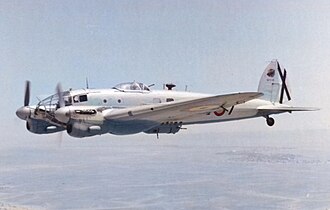
The CASA 2.111 and Its Place in Aviation History
The CASA 2.111 occupies a fascinating place in the history of military aviation, representing the intersection of German aircraft engineering, Spanish industrial development, and the changing requirements of air forces during and after the Second World War. Built by Construcciones Aeronáuticas S.A. (CASA), the aircraft was a Spanish-produced development of the German Heinkel He 111, a twin-engine medium bomber that had become one of the most recognizable aircraft of the Luftwaffe. Although the CASA 2.111 initially retained the basic configuration and overall appearance of its German predecessor, its development into a distinct aircraft family illustrates how a design created for one nation’s military requirements could be adapted to suit another country’s industrial capabilities, strategic circumstances, and operational needs. The resulting aircraft served Spain for decades, outlasting the conflict that had originally established the importance of the He 111 design and eventually finding a second life in film productions and aviation heritage displays.
What makes the CASA 2.111 particularly interesting is that it was not simply a matter of producing an existing aircraft under a different name. Spain’s postwar aviation industry faced considerable challenges in acquiring modern military equipment, maintaining access to foreign technology, and developing the domestic manufacturing capacity needed to support its armed forces. Producing a locally manufactured version of the He 111 offered a practical way to establish a capable medium-bomber fleet while developing valuable engineering experience and industrial infrastructure. Over time, changes in available engines, manufacturing techniques, and operational requirements resulted in meaningful differences between the Spanish-built aircraft and the original German machines. The CASA 2.111 therefore provides an excellent example of licensed or derivative aircraft production evolving into a more independent engineering undertaking, while also demonstrating how long-lived military airframes can acquire new roles long after their original purpose has diminished.
Understanding the CASA 2.111 requires looking beyond its external shape. Its story encompasses the origins of the Heinkel He 111, the circumstances surrounding Spanish aircraft production, the distinction between its different variants, the practical consequences of engine substitution, and its eventual transition from a military asset to a historically significant aircraft. It also offers a broader perspective on the evolution of military aviation in mid-twentieth-century Europe, when political isolation, industrial limitations, and changing international relationships often influenced aircraft development as strongly as aerodynamic performance or battlefield experience.
The Origins of the CASA 2.111
The origins of the CASA 2.111 can be traced to the Heinkel He 111 , a twin-engine aircraft developed by the German manufacturer Heinkel during the 1930s. Initially designed in the context of Germany’s expanding aviation industry and the rapid evolution of military aircraft technology, the He 111 combined a relatively streamlined fuselage, a low-mounted wing, twin engine nacelles, and a configuration suited to carrying bombs over medium distances. Its development coincided with a period in which aircraft designers were increasingly adopting all-metal construction, retractable landing gear, enclosed cockpits, and more powerful engines to improve speed, payload capacity, and operational flexibility. The He 111 became widely associated with German military aviation during the Second World War, serving in bombing, reconnaissance, transport, and other supporting roles. Its extensive production and long operational history made it a natural candidate for postwar derivative manufacturing where the required technical knowledge and industrial arrangements could be established.
Spain’s connection with the He 111 was shaped by the Spanish Civil War and the military relationships that developed during the conflict. German aircraft and technology had played a significant role in the war, and the conflict provided Spain with direct experience of aircraft types and operational concepts that would influence its subsequent military aviation development. Following the end of the Civil War in 1939, Spain sought to rebuild and modernize its armed forces under difficult international and economic conditions. The Second World War further complicated the acquisition of modern aircraft, while the postwar political environment created additional obstacles to obtaining new military equipment from abroad. Domestic production of a proven aircraft design consequently became an attractive option, allowing Spain to build up its aviation capabilities without relying entirely on the purchase of complete aircraft from foreign manufacturers.
CASA, founded in 1923, was central to this effort. The company had established itself as an important participant in Spain’s aircraft manufacturing sector and possessed experience in producing aircraft under foreign arrangements. Spanish production of the He 111 family led to the CASA 2.111 designation, creating a long-term industrial program that would supply aircraft to the Spanish Air Force. Rather than representing an entirely new design, the CASA 2.111 began with the fundamental architecture of the Heinkel aircraft, including its twin-engine arrangement, cantilever low-wing configuration, retractable landing gear, and enclosed crew compartments. This approach offered a substantial practical advantage: Spain could develop a military aircraft manufacturing program around an established design instead of starting with the expensive and technically demanding process of creating a completely new medium bomber from the ground up.
Why Spain Needed a Domestic Medium Bomber
The need for a domestically produced medium bomber was closely linked to Spain’s strategic and industrial circumstances during the 1940s. The Spanish Air Force required aircraft capable of carrying useful payloads over operational distances, supporting military exercises, maintaining a credible bombing capability, and providing a platform for developing trained aircrews. However, the country faced shortages of industrial resources, limited access to some foreign technologies, and significant economic pressures in the years following the Civil War. These conditions made it difficult to acquire sufficient numbers of modern aircraft from international suppliers, particularly during a period when many European countries were rebuilding their own armed forces and aerospace industries.
Manufacturing the CASA 2.111 domestically helped address several of these challenges simultaneously. It created work for Spanish engineers and skilled manufacturing personnel, encouraged the development of production techniques for metal aircraft structures, and supported the establishment of supply and maintenance systems that could sustain an aircraft fleet over many years. Domestic production also gave Spanish authorities greater control over repairs, spare parts, and modifications, although such independence remained dependent on access to suitable engines, materials, and other components. In this respect, the CASA 2.111 was not merely an aircraft procurement decision but part of a broader effort to preserve and expand national aerospace capabilities during a period of limited international access.
The aircraft also illustrates an important distinction between acquiring an aircraft design and achieving complete technological independence. Even when an airframe can be manufactured locally, the production of reliable engines, advanced instruments, specialist components, and compatible maintenance equipment may remain difficult. Spain’s eventual decision to use British Rolls-Royce Merlin engines in later CASA 2.111 variants demonstrates how foreign industrial relationships could become essential to the continued development of a domestically manufactured aircraft. The program thus combined local production with international technology in a manner that reflected both the ambitions and the practical limitations of Spain’s postwar aviation industry.
Design and Engineering of the CASA 2.111
Airframe, Wings, and Aerodynamic Configuration
The CASA 2.111 retained the general aerodynamic layout that had made the Heinkel He 111 recognizable: a low-mounted wing, a relatively long fuselage, two engine nacelles, a conventional tail assembly, and retractable landing gear. Its all-metal construction reflected the manufacturing philosophy of advanced military aircraft of the period, when metal-skinned structures were increasingly preferred for their strength, durability, and suitability for mass production. The aircraft’s cantilever wing, supported internally rather than by external bracing, provided a clean aerodynamic configuration and sufficient internal structure for the fuel systems and loads associated with medium-bomber operations. Its broad wingspan helped support the aircraft’s weight while providing the lift needed for takeoff, sustained flight, and the carriage of military equipment. The overall design was a compromise between aerodynamic efficiency, structural strength, internal volume, and the practical requirements of military service, rather than an attempt to maximize speed alone.
The fuselage was designed to accommodate the crew, flight instruments, defensive positions, and mission-specific equipment, with internal space also allocated to the aircraft’s payload. In bomber configurations, the bomb-carrying arrangement was central to the aircraft’s purpose, while reconnaissance and training versions required different equipment and operational layouts. The nose and cockpit arrangements evolved from the original Heinkel design, and the precise configuration depended on the version being considered. As a result, although the CASA 2.111 and He 111 could appear remarkably similar from a distance, their internal arrangements, engine installations, equipment, and some external details could differ considerably. These distinctions matter when interpreting photographs, identifying surviving aircraft, or comparing technical specifications across different examples.
The CASA 2.111’s relatively large airframe also made it adaptable to missions beyond conventional bombing. Its internal volume and twin-engine layout provided a useful starting point for reconnaissance equipment, crew training, and passenger transport modifications. Such flexibility was particularly valuable for an air force operating under economic and procurement constraints, because it allowed a common aircraft family to serve several functions without requiring an entirely separate type for every task. The airframe’s adaptability became one of the most important reasons the CASA 2.111 remained useful after the strategic circumstances that had originally justified its development had changed.
Engine Development: From Junkers Jumo to Rolls-Royce Merlin
One of the most important technical developments in the CASA 2.111 program was the transition from German Junkers Jumo engines to British Rolls-Royce Merlin engines. The earliest Spanish-built versions were associated with the Jumo 211F-2, a liquid-cooled, inverted V-12 piston engine used in German aircraft of the period. However, the availability of suitable German engines and replacement parts became increasingly problematic as the Second World War ended and the industrial and political circumstances surrounding European aviation changed. An aircraft manufacturing program could not remain sustainable if it depended on engines that were difficult to obtain, so CASA and Spanish aviation authorities needed an alternative that would allow the existing airframes to continue operating.
The Rolls-Royce Merlin offered a practical solution. Famous for its use in aircraft such as the Supermarine Spitfire, Hawker Hurricane, and North American P-51 Mustang, the Merlin was a liquid-cooled V-12 engine with a long record of military service. In the CASA 2.111B, the installation of Merlin 500-series engines represented a significant change from the original German-powered configuration. The engine substitution was not simply a matter of exchanging one power unit for another: engine mounts, nacelles, cooling arrangements, accessories, maintenance procedures, and other installation details had to be compatible with the replacement powerplant. The modified nacelle configuration also became one of the clearest visual clues distinguishing the Merlin-powered aircraft from earlier Jumo-powered examples.
The Merlin installation helped preserve the operational value of the CASA 2.111 while reducing its dependence on an increasingly inaccessible German engine supply. It also demonstrates an important principle of aircraft engineering: the useful life of an airframe can extend far beyond the availability of its original engine, provided that an alternative powerplant can be integrated safely and economically. The replacement did not turn the aircraft into a completely new design, but it changed an essential part of its performance and logistical identity. This is one reason the CASA 2.111 should be understood as a family of related aircraft rather than as a single, unchanging specification. The Deutsches Museum identifies the CASA 2.111B as a Spanish-built example fitted with two Rolls-Royce Merlin 500-29 engines, each rated at approximately 1,600 metric horsepower.
Cockpit, Crew, and Flight Operations
The cockpit and crew arrangements of the CASA 2.111 reflected the needs of a multi-engine military aircraft operating in an era when navigation, communications, target identification, engine monitoring, and defensive awareness demanded considerable coordination. The aircraft’s flight crew needed to manage two piston engines, monitor engine temperatures and pressures, control fuel consumption, navigate over operational distances, and coordinate with other crew members when conducting military missions. The workload was especially significant during long sorties, when engine management, weather, navigation, and fuel planning could all affect whether an aircraft reached its destination and returned safely. Although the number and duties of crew members varied with the aircraft’s configuration and mission, five crew members are commonly listed for the Merlin-powered 2.111B.
In a bomber, the crew’s responsibilities extended beyond flying the aircraft. Mission equipment, bomb-release procedures, defensive weapons, radio communications, and coordination with other aircraft could all become part of the operational routine. A reconnaissance aircraft would instead place greater emphasis on observation, navigation, and the handling of photographic or other mission equipment, while a training aircraft required an arrangement suitable for instruction and supervised flight practice. The CASA 2.111 family therefore provides a useful example of how the same basic airframe can support distinct working environments even when its external appearance remains broadly consistent.
Like other aircraft of its generation, the CASA 2.111 also required disciplined ground support. A twin-engine piston aircraft could not be judged by its flight performance alone; serviceability depended on inspections, fuel and oil handling, engine maintenance, replacement parts, airframe checks, and the availability of personnel trained to understand its systems. These practical requirements shaped the aircraft’s usefulness over its long service life. A platform that could be maintained using available skills and resources had an important advantage over an ostensibly more capable aircraft that depended on an unreliable supply chain or specialized equipment unavailable to its operator.
The Main CASA 2.111 Variants
The designation CASA 2.111 covers several versions developed for different roles or modified to accommodate different engines. Knowing the variants is essential because the name alone does not identify the exact configuration of an aircraft, its original mission, or its technical performance. The letters distinguish broad differences in role and powerplant, although individual aircraft could be modified during their service careers. The most widely discussed versions include the Jumo-powered bomber, Merlin-powered bomber, reconnaissance aircraft, training aircraft, and passenger transport derivative.
CASA 2.111A: The Jumo-Powered Bomber
The CASA 2.111A represented the original bomber-oriented form of the Spanish production program, using the basic Heinkel-derived airframe and Junkers Jumo 211F-2 engines. Its role was to provide Spain with a domestically produced medium bomber at a time when the acquisition of complete modern aircraft from abroad was difficult. The design retained the familiar twin-engine configuration and internal volume needed for military payloads, while production in Spain helped develop the country’s industrial ability to manufacture and support a relatively complex combat aircraft.
The development of the 2.111A was closely tied to the difficulties of obtaining German technical assistance and engines during the Second World War and its aftermath. Although production arrangements had been made earlier, the first Spanish-built aircraft did not fly until 23 May 1945, after the war in Europe had effectively ended. This delay meant that the aircraft entered service under circumstances very different from those originally envisaged. Instead of joining a wartime bomber force during the conflict that had inspired its design, it became part of a longer postwar effort to maintain and develop Spain’s own military aviation capability. The 2.111A consequently illustrates how manufacturing delays and international circumstances can transform the purpose and historical significance of a weapons program.
CASA 2.111B: The Merlin-Powered Bomber
The CASA 2.111B is among the best-known versions of the aircraft and the one most frequently used as the reference point for published technical specifications. Its defining feature was the installation of two Rolls-Royce Merlin 500-series engines in place of the original German powerplants. The revised configuration retained the aircraft’s fundamental medium-bomber layout but gave it a different engine installation and a more sustainable route to continued operation. The Merlin-powered aircraft is often cited with a maximum speed of approximately 440 km/h, a maximum takeoff weight of 14,000 kg, and a range of around 1,950 km, although published values can differ depending on the source and the conditions or definitions used.
The 2.111B is particularly significant because it demonstrates the longevity of an established aircraft design when supported by effective engineering adaptation. By the time the Merlin-powered versions became established, the original wartime rationale for the He 111 design had already changed considerably. Nevertheless, the aircraft remained useful as a military platform, and its combination of a familiar airframe and replacement engines enabled continued service without requiring the complete development of a new bomber. The aircraft’s recognizably Heinkel-derived silhouette also contributed to its later popularity in historical films, where its resemblance to German wartime bombers made it a practical substitute for original He 111 aircraft.
CASA 2.111C and 2.111D: Reconnaissance Versions
The CASA 2.111C and 2.111D extended the aircraft’s usefulness beyond bombing. The 2.111C was associated with the earlier Jumo-powered configuration, while the 2.111D was the Merlin-powered reconnaissance counterpart. Their mission was based on the collection of information rather than simply the delivery of bombs, making equipment, observation requirements, navigation, and the ability to operate over useful distances important considerations. Reconnaissance aircraft could support military planning by documenting terrain, monitoring activity, and providing information that was difficult to obtain from ground-based observation alone.
The differences between reconnaissance and bomber variants demonstrate why an aircraft’s operational role cannot be inferred solely from its overall appearance. A reconnaissance aircraft might retain a bomber’s general aerodynamic layout while using different mission equipment and internal arrangements. Its effectiveness depended not only on speed and range but also on the quality of the information collected, the crew’s ability to locate the intended area, and the aircraft’s capacity to return with usable results. The existence of both Jumo-powered and Merlin-powered reconnaissance versions also shows how the engine transition affected more than the bomber fleet alone; it formed part of the wider effort to keep the CASA 2.111 family operational.
CASA 2.111F: The Training Aircraft
The CASA 2.111F was a dual-control trainer developed to support flight instruction. Multi-engine aircraft required a different set of skills from single-engine trainers, particularly in engine management, asymmetric thrust handling, systems monitoring, and the coordination of procedures across two powerplants. A dedicated training configuration allowed pilots to learn these skills in an aircraft related to the operational type, helping create a more direct path from instruction to service flying.
Training variants often receive less attention than combat aircraft, but they are essential to understanding how military aviation systems function. A bomber fleet cannot operate effectively without a steady supply of pilots who understand the aircraft’s handling and systems, nor can its long-term usefulness be sustained without instructors and maintenance personnel who possess the appropriate technical knowledge. The 2.111F therefore represented a supporting role within the larger CASA program, contributing to the human expertise required to operate and maintain the aircraft family.
CASA 2.111E and 2.111T8: Transport Developments
Transport derivatives highlight another dimension of the CASA 2.111’s adaptability. The designations associated with transport versions appear somewhat differently across secondary references, so it is worth distinguishing the broad concept of the transport aircraft from the precise variant nomenclature used by a particular source. The 2.111T8 is commonly described as a passenger transport capable of carrying up to nine passengers. Such an aircraft could make use of an established airframe for personnel movement and other support duties, allowing a platform originally associated with military bombing to serve a very different purpose.
Passenger transport required changes in interior arrangement, seating, access, and operational equipment, along with the removal or adaptation of systems no longer necessary for the new role. The resulting aircraft was not equivalent to a purpose-built modern airliner, but it could provide useful transport capacity within an air force that already understood the underlying airframe and had personnel trained to maintain it. Transport use also helped extend the life of some aircraft after their original combat roles had become less important. The broader lesson is that the service life of an aircraft is often determined as much by its capacity for economical adaptation as by the performance for which it was first designed.
Operational History of the CASA 2.111
Entry into Service and the Postwar Environment
The first Spanish-built CASA 2.111 flew on 23 May 1945, a date that places the aircraft at a remarkable turning point in European aviation history. The war in Europe was ending, the Luftwaffe’s major bomber operations had ceased, and many of the aircraft designs developed during the 1930s and early 1940s were already approaching the end of their original strategic relevance. Yet Spain’s situation was different from that of countries that had fought throughout the Second World War. Its armed forces still needed equipment, its aviation industry needed sustained production work, and its government had to consider how to maintain military capability under difficult international conditions. The CASA 2.111 therefore entered a world in which the demands of peacetime preparedness, industrial continuity, and national defence were becoming more important than the immediate requirements of a major European air war.
The aircraft’s delayed arrival also explains why its history cannot be understood simply as an extension of the Luftwaffe’s He 111 operations. The Spanish aircraft inherited a proven general configuration, but it operated within a different military organization, a different logistical system, and a different strategic environment. Spain could use its domestic production program to build technical experience and preserve an operational medium-bomber capability, even as other air forces began transitioning toward newer aircraft designs. This made the CASA 2.111 an important part of the Spanish Air Force’s postwar development, though it also meant that the aircraft would eventually have to compete with more modern aircraft in terms of speed, mission flexibility, navigation equipment, and operational efficiency.
The Importance of the Merlin Conversion
The adoption of Rolls-Royce Merlin engines was one of the decisive events in the aircraft’s service history. Without an alternative source of powerplants and spares, the original Jumo-powered production program would have faced substantial limitations. The postwar availability of German engines and components could not be assumed, and an airframe that lacked reliable engines would quickly lose its military value regardless of how sound its basic structure remained. By adopting a British engine, Spain could continue to use the aircraft while drawing on a different supply and maintenance network.
The conversion also reflected a wider pattern in postwar military aviation: aircraft designed before or during the war were frequently retained because replacing them immediately would have required substantial investment. An engine change could be an attractive intermediate solution when the airframe still met basic operational requirements, existing crews were familiar with the type, and the operator had invested in tools, facilities, and spare parts. The CASA 2.111’s continued use demonstrated the advantages of this approach, although a successful conversion could not eliminate every limitation inherent in an older design. It could extend useful life and improve logistical sustainability, but it could not make the aircraft equivalent to a new-generation bomber designed around more recent aerodynamic, structural, and electronic technologies.
Service During the Ifni War
The CASA 2.111 also saw operational use during the Ifni War of 1957–1958, when Spanish forces were involved in fighting in the Ifni and Spanish Sahara region. The aircraft was used in a close air support role, demonstrating that its military career extended beyond routine training, peacetime readiness, and the maintenance of a conventional bomber capability. This deployment is an important part of the aircraft’s history because it shows how a design associated with a previous generation of European warfare could still be applied to a different operational setting.
The demands of close air support differed from those of the high-altitude medium-bomber missions that had influenced the He 111’s original development. Supporting ground forces required attention to target identification, coordination with friendly troops, mission timing, and the tactical conditions under which aircraft could safely engage targets. Aircraft employed in this role had to operate within the limits of their equipment and the circumstances of the conflict rather than simply perform according to their published maximum speed or range. The CASA 2.111’s use in this context illustrates the practical flexibility of older military aircraft, but it should not be interpreted as evidence that the type was equally suitable for every kind of modern air operation. Its usefulness depended on the particular mission, the available opposition, and the capabilities of the forces employing it.
Performance and Flight Characteristics
Maximum Speed, Range, and Operating Ceiling
The performance of the CASA 2.111B provides a useful reference for understanding the aircraft’s capabilities. Published specifications commonly list a maximum speed of approximately 440 km/h, a range of roughly 1,950 km, and a service ceiling near 7,800 m. These figures indicate an aircraft capable of covering substantial distances and operating at altitudes useful for its intended military roles. However, maximum speed, range, and ceiling are not independent guarantees of operational performance. A fully loaded aircraft carrying additional equipment or fuel may behave differently from a lightly loaded aircraft, and real-world range depends on flight profile, engine settings, weather, reserve fuel requirements, and the time spent operating under demanding conditions.
Maximum speed is especially easy to misunderstand when comparing historic aircraft. The published figure generally represents a defined test or operating condition, not the speed at which an aircraft could necessarily maintain an entire mission while carrying its full payload. Cruising speed, which is more relevant to route planning and fuel economy, is normally lower than maximum speed. Similarly, a service ceiling represents an altitude associated with specified performance limits rather than an indication that every mission would be conducted at that height. The CASA 2.111’s performance figures should therefore be treated as technical reference values rather than as a complete description of its practical effectiveness.
Payload and the Medium-Bomber Role
The aircraft’s medium-bomber classification reflected its combination of payload capacity, twin-engine power, and operational range. Published descriptions of the Merlin-powered version commonly list a maximum bomb load of approximately 2,000 kg, although the usable load for a particular mission would depend on the aircraft’s configuration, fuel requirements, and the number and type of weapons carried. The ability to transport a substantial payload over operational distances made the aircraft useful for its intended role, but payload figures must be interpreted carefully. Maximum bomb load does not necessarily mean that the aircraft could carry that load on every sortie while also achieving its maximum range, speed, or altitude performance.
The practical planning of a bombing mission involved trade-offs between weapons, fuel, crew requirements, and the conditions at the destination. A longer mission might require additional fuel at the expense of payload, while a mission requiring a heavier payload could restrict the aircraft’s radius of action. These considerations applied to the CASA 2.111 just as they did to other medium bombers of its generation. The aircraft’s value lay in its ability to combine these competing requirements within a workable operational envelope, rather than in any single headline specification.
Handling and the Realities of Twin-Engine Flight
As a twin-engine piston aircraft, the CASA 2.111 required pilots to understand both the normal behaviour of the aircraft and the consequences of a change in engine performance. Two-engine aircraft offer operational advantages because they distribute power across two installations, but they also introduce additional systems, maintenance demands, and handling considerations. An engine malfunction can create asymmetric thrust, requiring the pilot to manage directional control while responding to the underlying problem. The effect depends on factors including aircraft speed, power setting, aircraft weight, and the condition of the remaining engine.
The aircraft’s relatively substantial dimensions also meant that ground handling, takeoff planning, landing technique, and approach management were important parts of safe operation. Pilots had to account for runway conditions, wind, loading, and the aircraft’s energy state, rather than relying exclusively on the maximum performance figures found in a specification table. The CASA 2.111’s long service life reflected not only the engineering of its airframe and engines but also the training and maintenance systems that enabled crews to operate it within its limitations.
The CASA 2.111 in Film and Aviation Heritage
Why the Aircraft Appeared in War Films
One of the most unusual aspects of the CASA 2.111’s later history was its use as a stand-in for the German Heinkel He 111 in historical films. The two aircraft shared a common design lineage and retained a sufficiently similar overall appearance that the Spanish-built aircraft could represent its wartime predecessor on screen. This was particularly valuable for productions depicting large aerial battles, where filmmakers needed aircraft that looked convincing in flight and could be operated within the practical limits of the available aviation resources. Original wartime He 111s were scarce, and obtaining airworthy examples was difficult, making the CASA 2.111 a useful alternative.
The aircraft appeared in productions including Battle of Britain and Patton. Its presence in these films helped preserve a visual record of an aircraft type that had otherwise become increasingly difficult to see in flight. For many viewers, cinematic appearances became an introduction to the silhouette of the He 111 family, even when the aircraft on screen was technically a Spanish-built derivative rather than a German wartime machine. The film industry thus gave the CASA 2.111 a second public identity: an aircraft designed for military service became a practical tool for recreating the aviation history of an earlier era.
Differences Between the CASA 2.111 and the Original Heinkel He 111
Despite their close visual relationship, the CASA 2.111 and the original Heinkel He 111 should not be treated as identical aircraft. Their shared lineage explains similarities in fuselage shape, wing arrangement, tail configuration, and overall proportions, but the Spanish-built versions incorporated their own manufacturing and equipment differences. The use of Rolls-Royce Merlin engines on later versions is perhaps the most conspicuous example, because it changed the appearance of the engine nacelles and the technical systems supporting the aircraft. Other distinctions could include equipment, armament, cockpit details, and the specific configuration of individual airframes.
For historians and aviation enthusiasts, these differences are important because photographs and film footage can easily lead to an oversimplified understanding of the aircraft’s identity. An aircraft that resembles a German He 111 in outline might actually be a postwar CASA derivative with different engines and a different operational history. Identifying the variant correctly helps establish when and where an aircraft was built, how it was used, and which technical specifications apply. It also demonstrates why historical aircraft identification requires more than recognizing a familiar silhouette: design ancestry, production origin, and subsequent modification all contribute to the identity of an individual aircraft.
Surviving Aircraft and Museum Collections
The CASA 2.111 remains important to aviation museums because it preserves a link between wartime German aircraft design and Spain’s postwar aerospace industry. One example is displayed by the Deutsches Museum at its Flugwerft Schleißheim aviation exhibition. The museum identifies its aircraft as a CASA 2.111B fitted with Rolls-Royce engines and notes its subsequent use in Battle of Britain after retirement from Spanish Air Force service. Its published information provides a valuable reference for the aircraft’s dimensions, engines, and performance.
Preserved aircraft are valuable for reasons that go beyond their appearance. They allow visitors and researchers to examine the physical proportions of a medium bomber, appreciate the scale of its wing and fuselage, and understand how crew stations and engine installations fit into the larger structure. Museum aircraft also provide opportunities to study the differences between surviving examples and original drawings or photographs. Not every preserved aircraft remains airworthy, and a museum display should not be confused with an operational flying example, but static preservation can still protect important evidence of engineering and industrial history.
A notable reminder of the difficulties involved in keeping historic aircraft flying came in July 2003, when a Merlin-powered CASA 2.111 derivative operating in the United States was destroyed in a fatal landing accident near Cheyenne, Wyoming. The loss highlighted the risks associated with maintaining and operating ageing, complex aircraft, particularly when engine reliability, parts availability, and the demands of modern flight operations must be managed alongside historical preservation. The incident also underscored why surviving examples are important and why maintaining an aircraft in flying condition requires much more than preserving its external structure.
Why the CASA 2.111 Matters in Aviation History
A Case Study in Industrial Adaptation
The CASA 2.111 offers a compelling example of how an aircraft program can become an instrument of industrial development. By manufacturing a derivative of an established German design, Spain acquired experience in building complex metal aircraft, organizing production, supporting engines and airframes, and developing the technical workforce needed to sustain a military fleet. These capabilities mattered even when the original aircraft design was no longer at the forefront of international aviation. Industrial knowledge accumulates over time, and the ability to manufacture, inspect, repair, and modify an aircraft can support future projects in ways that extend beyond the service life of a single type.
The program also reveals the limitations of technological dependence. Spain’s ability to produce the airframe did not automatically guarantee a stable supply of the engines and components required to operate it. The transition to the Merlin engine showed that local manufacturing and international procurement were closely connected, particularly for technologically demanding products such as military aircraft. The CASA 2.111 therefore represents both a success in domestic aircraft production and a reminder that aerospace independence is built from many interdependent capabilities, including engines, materials, instruments, production tooling, testing, and maintenance.
The Evolution of Military Aircraft After the Second World War
The aircraft’s extended service also illustrates how military aviation evolved after 1945. During the Second World War, medium bombers had been important elements of national air forces, but the postwar decades brought rapid advances in jet propulsion, radar, electronic navigation, guided weapons, and integrated air-defence systems. Aircraft that had been competitive or useful in an earlier environment increasingly faced limitations when confronted with new operational requirements. Yet these changes did not render every older aircraft immediately useless. Military organizations often continued to operate established platforms where the aircraft remained adequate for training, transport, reconnaissance, or missions that did not require the newest technology.
The CASA 2.111’s service history reflects this gradual transition. Rather than disappearing immediately after the war, the aircraft continued to serve as Spain maintained its air force and adapted to changing strategic conditions. Its eventual withdrawal was part of a broader process in which older piston-engine aircraft gave way to more modern equipment. In that sense, the CASA 2.111 provides a bridge between the aircraft manufacturing methods of the 1930s and the more technologically advanced aviation environment that emerged in the decades following the Second World War.
A Lasting Legacy Beyond Military Service
The lasting importance of the CASA 2.111 rests on more than its bomb-carrying capacity or maximum speed. It is a historical link between German aircraft design, Spanish manufacturing, postwar military adaptation, and the preservation of aviation heritage. Its different variants reveal how an airframe could be adapted for bombing, reconnaissance, training, and transport, while its engine conversion illustrates the practical engineering decisions that can extend the usefulness of an ageing aircraft. Its film appearances, meanwhile, introduced the aircraft’s distinctive shape to audiences who might never have encountered it in a museum or aviation history book.
For modern aviation enthusiasts, the CASA 2.111 is a reminder that an aircraft’s significance cannot be measured solely by whether it was the fastest, most heavily armed, or most technologically advanced machine of its generation. Some aircraft are historically important because they connect different periods of industrial and military development, demonstrate the consequences of international relationships, or reveal how engineers and operators adapt to changing circumstances. The CASA 2.111 does all three, making it a worthwhile subject for anyone interested in historic aircraft, Spanish aviation, the Heinkel He 111, or the evolution of military aircraft production.
Technical Specifications of the CASA 2.111
The following table summarizes commonly published specifications for the CASA 2.111B, the Merlin-powered bomber variant. Figures are representative rather than universal: other CASA 2.111 variants used different engines or mission equipment, and published performance figures may vary slightly by source.
| Specification | CASA 2.111B |
|---|---|
| Aircraft type | Twin-engine medium bomber |
| Manufacturer | Construcciones Aeronáuticas S.A. (CASA), Spain |
| Design origin | Derived from the Heinkel He 111 |
| First Spanish-built flight | 23 May 1945 |
| Production period | 1945–1956 |
| Total production | Approximately 236 aircraft across the family |
| Crew | 5 |
| Length | 16.4 m (53 ft 10 in) |
| Wingspan | Approximately 22.5 m (73 ft 10 in) |
| Height | 3.9 m (12 ft 10 in) |
| Wing area | 86.5 m² (931 sq ft) |
| Engines | 2 × Rolls-Royce Merlin 500-29 |
| Engine type | Liquid-cooled V-12 piston |
| Power per engine | Approximately 1,600 metric hp (1,577 mechanical hp) |
| Maximum takeoff weight | 14,000 kg (30,865 lb) |
| Maximum speed | Approximately 440 km/h (273 mph) |
| Published range | Approximately 1,950 km (1,210 miles) |
| Service ceiling | Approximately 7,800 m (25,600 ft) |
| Typical published maximum bomb load | Approximately 2,000 kg |
| Primary operator | Spanish Air Force |
| Other roles within the family | Reconnaissance, training, passenger transport |
| Retirement | Most withdrawn during the 1960s; transport operations continued into the early 1970s |
Specification references: Deutsches Museum and published CASA 2.111 technical summaries. Engine power is expressed in both metric and mechanical horsepower, which are not numerically identical.
Conclusion: An Aircraft That Bridged Two Eras
The CASA 2.111 was much more than a Spanish-built copy of a famous German bomber. It was the product of a specific historical moment in which Spain needed to strengthen its aviation industry, maintain military capability, and find practical solutions to the challenges of international procurement. Derived from the Heinkel He 111, the aircraft combined an established airframe concept with Spanish production and, in its later versions, British Rolls-Royce Merlin engines. That combination allowed the aircraft family to serve a range of roles long after the circumstances that originally inspired the He 111 had disappeared.
Its operational career, which included military service and use during the Ifni War, demonstrates the continued utility of older aircraft when they are matched to appropriate tasks and supported by effective maintenance. Its reconnaissance, training, and transport variants further reveal the flexibility of the underlying design, while its appearances in historical films gave it a second life as a recognizable symbol of wartime aviation. Today, surviving examples preserve a tangible record of the technical and industrial relationships that shaped European aviation during the middle decades of the twentieth century.
Ultimately, the CASA 2.111 deserves attention because it brings together several important themes in aviation history: the transfer of technology, the development of domestic manufacturing, the adaptation of existing designs, and the preservation of historic aircraft. Its story shows that aviation progress is not always a simple sequence in which one new design immediately replaces another. Often, it is a gradual process involving engineering compromise, industrial necessity, operational experience, and the creative reuse of existing technology. The CASA 2.111 stands as a particularly interesting example of that process, bridging the legacy of the Second World War with Spain’s postwar aviation development and the enduring fascination of historic aircraft.
