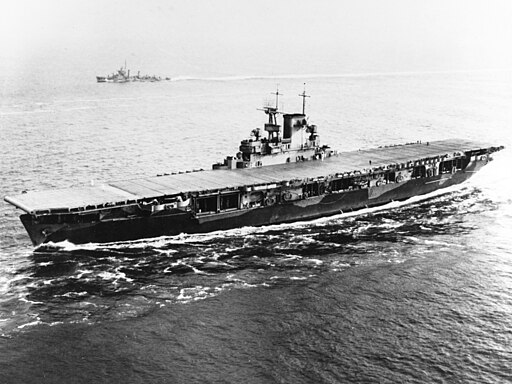
USS Wasp CV-7
The USS Wasp (CV-7) was a legendary aircraft carrier that played a significant role in the early years of World War II. Commissioned in 1940, the Wasp was the lead ship of its class and quickly established itself as a vital asset to the United States Navy. Equipped with a formidable air wing and advanced aircraft handling capabilities, the Wasp was instrumental in projecting American power across the Pacific theater. Its early operations included escorting convoys, providing air support for amphibious landings, and engaging enemy forces in critical battles.
One of the most notable feats of the USS Wasp was its involvement in the delivery of fighter aircraft to the besieged island of Malta in the Mediterranean. During Operation Pedestal in 1942, the Wasp, along with other Allied ships, braved relentless enemy attacks to deliver much-needed aircraft to bolster the defenses of the island. Despite facing heavy opposition from Axis air and naval forces, the Wasp successfully completed its mission, highlighting its strategic importance and the bravery of its crew.
Tragically, the USS Wasp met its end during the Battle of Guadalcanal in September 1942, where it was struck by torpedoes launched by Japanese submarines. The damage inflicted upon the Wasp was severe, ultimately leading to its sinking. While its service was relatively short-lived, the legacy of the USS Wasp endures as a testament to the courage, sacrifice, and resilience of its crew. The Wasp’s contributions to the Allied war effort, particularly in the crucial early years of the conflict, remain etched in the annals of naval history, serving as a reminder of the sacrifices made in the defense of freedom and democracy.
Armament of USS Wasp (CV-7)
The armament of the USS Wasp (CV-7) included various weapons systems for self-defense and aircraft support. Here is a list of its main armament:
- Aircraft: The USS Wasp was capable of carrying a complement of aircraft, including fighters, bombers, torpedo bombers, and reconnaissance planes. These aircraft formed the primary offensive and defensive capability of the ship.
- Anti-Aircraft Guns: For self-defense against air attacks, the Wasp was equipped with a range of anti-aircraft guns, including 5-inch (127 mm) guns and 1.1-inch (28 mm) quad-mounted anti-aircraft guns. These guns were used to engage enemy aircraft that threatened the ship.
- Machine Guns: In addition to the larger anti-aircraft guns, the Wasp carried a number of 50-caliber machine guns for defense against air attacks and for engaging low-flying targets.
- Torpedo Tubes: Some versions of the Wasp were equipped with torpedo tubes as part of their armament for defense against enemy ships or submarines. These torpedo tubes were used to launch torpedoes to engage hostile vessels.
This armament provided the USS Wasp with the means to defend itself and provide protection to its aircraft during missions. Throughout its service, the Wasp played a crucial role in various operations and battles, contributing significantly to the Allied war effort in the Pacific Theater during World War II.
Dimensions of USS Wasp (CV-7)
The USS Wasp (CV-7) had the following approximate dimensions:
- Length: Approximately 741 feet (225.6 meters)
- Beam (Width): Approximately 83 feet (25.3 meters)
- Draft (Depth): Approximately 24 feet (7.3 meters)
These dimensions may vary slightly depending on specific configurations and modifications made over the course of the ship’s service. The USS Wasp was an early aircraft carrier of the Yorktown class, playing a significant role in the early stages of World War II.
_entering_Hampton_Roads_on_26_May_1942.jpg)