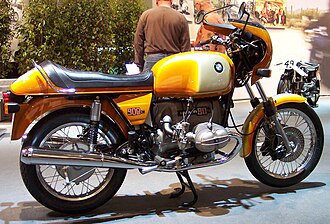
The BMW R90S is one of those rare machines that didn’t just succeed in its own time—it fundamentally changed the trajectory of motorcycle engineering and design. When it debuted in 1973, it marked a turning point for BMW Motorrad, a company long associated with conservative touring machines rather than performance-oriented sport motorcycles. The R90S shattered that perception with authority, combining speed, styling, and technical sophistication in a way that positioned it among the most influential motorcycles ever built.
This article explores the R90S in extensive depth—from its historical context and engineering breakthroughs to its technical parameters and cultural legacy—offering a comprehensive, long-form perspective on a machine that helped define the modern sport motorcycle.
Historical Context: BMW Reinvents Itself
The Conservative Image of BMW
For decades leading up to the 1970s, BMW motorcycles were known for their reliability, durability, and engineering precision. However, they were also perceived as conservative—machines favored by long-distance riders and professionals rather than enthusiasts seeking excitement.
By the early 1970s, this image had become a liability. Japanese manufacturers were producing faster, lighter, and more aggressive motorcycles, while European brands like Ducati and Moto Guzzi were gaining traction in the performance segment.
BMW needed a radical shift—not just a faster motorcycle, but a complete reimagining of what a BMW could be.
The Birth of the R90S
The R90S was introduced as part of the new “/6” series, but it stood apart as the flagship model. It was designed under the direction of Hans Muth, a stylist who brought a fresh perspective to BMW’s traditionally utilitarian designs.
The result was a motorcycle that combined:
- High performance
- Innovative styling
- Advanced engineering
The R90S was not just a product—it was a statement.
Engineering Philosophy: Performance Meets Precision
The R90S was engineered with a clear goal: to compete with the best sport motorcycles in the world while maintaining BMW’s reputation for reliability.
This required balancing several factors:
- High-speed performance
- Long-distance usability
- Mechanical durability
- Rider comfort
Rather than sacrificing one for the other, BMW engineers aimed for a holistic design—an approach that would later define sport-touring motorcycles.
Engine Architecture: The Airhead at Its Peak
Core Engine Design
At the heart of the R90S lies BMW’s iconic boxer engine:
- Configuration: Horizontally opposed flat twin
- Cooling: Air-cooled
- Valvetrain: OHV, 2 valves per cylinder
This engine, part of the “Type 247” family, was a refined evolution of earlier designs.
Displacement and Geometry
The R90S featured a significantly enlarged engine compared to its predecessors:
- Displacement: 898 cc
- Bore × stroke: approximately 90 mm × 70.6 mm
This increase in displacement allowed for greater power output without compromising reliability.
Compression and Combustion
- Compression ratio: 9.5:1
This relatively high compression ratio improved:
- Thermal efficiency
- Power output
- Throttle response
Power and Torque
The R90S produced:
- 67 horsepower at approximately 7,000 rpm
- 76 Nm of torque at around 5,500 rpm
This made it one of the fastest production motorcycles of its time, capable of reaching approximately 200 km/h (124 mph).
Carburetion: Dell’Orto Performance
One of the defining technical features of the R90S was its use of Dell’Orto carburetors instead of the more traditional Bing units used on other BMW models.
Advantages of Dell’Orto Carburetors
- Accelerator pump for improved throttle response
- Better fuel atomization at high speeds
- Sportier engine behavior
These carburetors gave the R90S a more aggressive character compared to other BMW motorcycles.
Transmission and Drivetrain
Gearbox
The R90S was equipped with a:
- 5-speed manual transmission
This allowed for:
- Close gear ratios
- Smooth power delivery
- Efficient high-speed cruising
Shaft Drive System
BMW retained its signature shaft drive:
- Low maintenance
- Long service life
- Clean operation
Unlike chain-driven competitors, the shaft drive contributed to the R90S’s reputation for reliability and touring capability.
Chassis and Frame Design
Structural Integrity
The R90S utilized a steel tubular frame designed for:
- High-speed stability
- Long-distance durability
- Rider comfort
Geometry and Handling
With a wheelbase of approximately 1,465 mm, the R90S offered:
- Stable high-speed behavior
- Predictable cornering
- Balanced weight distribution
Suspension System
Front Suspension
- Telescopic forks
- Long travel for improved comfort
Rear Suspension
- Dual shock absorbers
- Adjustable preload
This setup provided a balance between comfort and performance.
Braking System: A Major Innovation
The R90S introduced a groundbreaking feature:
- Dual front disc brakes
This was a significant advancement at the time, improving stopping power and safety.
Brake Configuration
- Front: Dual disc brakes (approx. 230–260 mm)
- Rear: 200 mm drum brake
This setup placed the R90S at the forefront of braking technology in the 1970s.
Aerodynamics and Design
The Bikini Fairing
One of the most iconic features of the R90S was its small “bikini fairing”:
- Reduced wind resistance
- Improved rider comfort
- Integrated instrumentation
This was one of the first production motorcycles to feature such a design.
Styling and Paintwork
The R90S was visually revolutionary:
- Two-tone paint schemes (“Smoke Silver” and “Daytona Orange”)
- Hand-painted pinstripes
- Sculpted fuel tank and tail section
This marked the first time BMW invested heavily in styling as a core element of its motorcycles.
Ergonomics and Rider Experience
Seating Position
The R90S offered a slightly forward-leaning riding position:
- Sport-oriented but comfortable
- Suitable for long-distance riding
Instrumentation
The bike included:
- Speedometer and tachometer
- Clock and voltmeter integrated into the fairing
This level of instrumentation was advanced for its time.
Performance Characteristics
Acceleration and Speed
- 0–100 km/h: approximately 4.8 seconds
- Quarter mile: ~13.5 seconds
These figures placed the R90S among the fastest motorcycles of its era.
High-Speed Stability
The combination of:
- Boxer engine layout
- Long wheelbase
- Aerodynamic fairing
resulted in excellent high-speed stability.
Motorsport Success
The R90S proved its capabilities in competition:
- 1976 AMA Superbike Championship winner
- Strong performances at the Isle of Man TT
These achievements helped solidify its reputation as a true performance motorcycle.
Production and Variants
Production Numbers
- Total units: approximately 17,455 (Wikipedia)
Model Years
- 1974 model
- 1975 model
- 1976 model
Each year introduced minor technical improvements, including:
- Stronger crankshaft
- Improved engine casings
- Enhanced braking components
Riding Experience: A Unique Character
Strengths
- Smooth engine operation
- Strong mid-range torque
- Comfortable long-distance capability
Challenges
- Carburetor tuning complexity
- Heavy weight compared to modern bikes
- Drum rear brake limitations
Despite these challenges, the R90S remains a rewarding motorcycle to ride.
Cultural Impact and Legacy
The R90S is often regarded as BMW’s first “superbike.” It changed:
- Public perception of BMW motorcycles
- The role of styling in motorcycle design
- Expectations for performance in touring bikes
It also paved the way for future models such as:
- R100S
- R100RS
Design Influence
The R90S introduced several features that became industry standards:
- Sport fairings
- Dual disc brakes
- Integrated instrumentation
Its influence can still be seen in modern motorcycles.
Collector Status
Today, the R90S is highly collectible:
- Limited production
- Historical significance
- Iconic design
Well-preserved examples are sought after by enthusiasts worldwide.
Technical Specifications Table
| Parameter | Specification |
|---|---|
| Model | BMW R90S |
| Production Years | 1973–1976 |
| Units Produced | ~17,455 |
| Class | Sport motorcycle |
| Engine Type | Air-cooled OHV flat-twin (boxer) |
| Displacement | 898 cc |
| Bore × Stroke | 90 mm × 70.6 mm |
| Compression Ratio | 9.5:1 |
| Power Output | 67 hp @ 7,000 rpm |
| Torque | 76 Nm @ 5,500 rpm |
| Carburetion | Twin Dell’Orto carburetors |
| Ignition | Electronic |
| Transmission | 5-speed manual |
| Clutch | Single-plate dry |
| Final Drive | Shaft drive |
| Frame | Steel tubular |
| Front Suspension | Telescopic forks |
| Rear Suspension | Dual shocks |
| Front Brake | Dual disc (230–260 mm) |
| Rear Brake | 200 mm drum |
| Wheelbase | 1,465 mm |
| Length | 2,180 mm |
| Width | 740 mm |
| Height | 1,210 mm |
| Seat Height | 820 mm |
| Weight (wet) | ~215 kg |
| Fuel Capacity | 24 L |
| Top Speed | ~200 km/h (124 mph) |
Conclusion: The Machine That Redefined BMW
The BMW R90S is more than just a motorcycle—it is a milestone in engineering and design. It marked the moment when BMW transitioned from a conservative manufacturer to a leader in performance and innovation.
With its powerful boxer engine, advanced braking system, distinctive styling, and real-world usability, the R90S set new standards for what a sport motorcycle could be. Its influence continues to resonate today, not only in BMW’s lineup but across the entire motorcycle industry.
