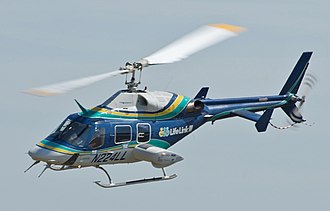
The Bell 222: A Landmark in Twin-Engine Civil Helicopter Design
The Bell 222 occupies a distinctive place in the history of rotary-wing aviation, representing a pivotal shift in how helicopters were designed, marketed, and utilized in the civilian sector. Developed during a period of rapid technological innovation and growing demand for corporate and emergency aviation solutions, the Bell 222 introduced a new level of sophistication, safety, and aesthetic refinement to light twin-engine helicopters. Its sleek fuselage, retractable landing gear, and emphasis on passenger comfort marked a departure from purely utilitarian rotorcraft and helped define the modern executive helicopter category. In this article, we will explore the Bell 222 in depth—its development history, engineering innovations, operational roles, and lasting influence—before concluding with a comprehensive table of its technical specifications.
Origins and Development
The Vision Behind the Bell 222
In the late 1960s and early 1970s, the helicopter market was undergoing a transformation. Manufacturers were beginning to recognize the potential for helicopters beyond military and industrial roles, particularly in corporate transport, emergency medical services, and offshore operations. The Bell Helicopter (now part of Bell Textron) sought to capitalize on this emerging demand by developing a light twin-engine helicopter that combined performance, reliability, and executive-level comfort.
The Bell 222 project was officially launched in the early 1970s, with the goal of creating a helicopter that would meet stringent safety requirements while offering a level of luxury comparable to fixed-wing business aircraft. One of the key design priorities was redundancy; twin engines would provide increased safety, particularly for operations over urban areas or water. At the same time, Bell aimed to produce a machine that was not only functional but visually appealing, helping to attract corporate clients.
First Flight and Certification
The prototype Bell 222 made its maiden flight on August 13, 1976. The aircraft underwent extensive testing to validate its aerodynamic performance, structural integrity, and system reliability. Certification by the Federal Aviation Administration (FAA) was achieved in 1979, marking the Bell 222 as one of the first light twin-engine helicopters approved for single-pilot instrument flight rules (IFR) operations in certain configurations.
This certification milestone was significant because it allowed the Bell 222 to operate in a wider range of weather conditions, increasing its utility for corporate and emergency missions. The helicopter entered service shortly thereafter, quickly gaining attention for its advanced design and capabilities.
Design Philosophy and Aerodynamics
Streamlined Fuselage and Aesthetic Innovation
One of the most striking features of the Bell 222 is its streamlined fuselage. Unlike earlier helicopters that prioritized function over form, the Bell 222 was designed with a strong emphasis on aesthetics. The smooth contours, integrated landing gear, and balanced proportions gave the aircraft a futuristic appearance that set it apart from its contemporaries.
The retractable landing gear was particularly notable, as it reduced aerodynamic drag during flight and contributed to higher cruise speeds. This feature was relatively uncommon in helicopters of this class at the time and underscored Bell’s commitment to performance optimization.
Rotor System and Stability
The Bell 222 utilizes a two-blade semi-rigid main rotor system, a hallmark of many Bell helicopter designs. This rotor configuration offers a balance between simplicity, reliability, and performance. The semi-rigid system allows for flapping and feathering motions, enabling the helicopter to maintain stability and control across a wide range of flight conditions.
The tail rotor, mounted on the vertical fin, provides anti-torque control and directional stability. The overall aerodynamic design of the Bell 222 ensures efficient lift generation and responsive handling, making it suitable for both experienced pilots and those transitioning from smaller rotorcraft.
Powerplant and Performance
Twin-Engine Configuration
At the heart of the Bell 222 are its twin turboshaft engines, typically Lycoming (later Honeywell) LTS101 series engines. These engines provide the helicopter with a high level of redundancy and reliability, which is critical for safety in civilian operations. In the event of an engine failure, the remaining engine can sustain flight, allowing the pilot to safely land the aircraft.
The engines are mounted above the cabin, reducing noise and vibration for passengers while also improving accessibility for maintenance. This configuration reflects a thoughtful approach to both operational efficiency and passenger comfort.
Performance Capabilities
The Bell 222 offers impressive performance characteristics for its class. With a maximum cruise speed exceeding 130 knots and a range of approximately 300 nautical miles, the helicopter is well-suited for regional transport missions. Its service ceiling allows it to operate in a variety of environments, including mountainous terrain and high-altitude locations.
The helicopter’s climb rate and hover performance are also noteworthy, enabling it to operate effectively in confined areas and challenging conditions. These capabilities have made the Bell 222 a popular choice for emergency medical services, where rapid response and precision maneuvering are essential.
Cabin Design and Passenger Experience
Executive Comfort
One of the defining features of the Bell 222 is its emphasis on passenger comfort. The cabin is designed to accommodate up to eight occupants, including the pilot, with ample space for seating and movement. High-quality materials, soundproofing, and climate control systems contribute to a comfortable and quiet environment.
The interior can be configured in various layouts, depending on the operator’s needs. Corporate versions often feature luxurious seating, communication systems, and entertainment options, while utility configurations may prioritize space for equipment or medical gear.
Accessibility and Visibility
The Bell 222’s cabin design also prioritizes accessibility and visibility. Large windows provide excellent external views, enhancing both the passenger experience and situational awareness for the pilot. Wide doors and a low cabin floor facilitate easy entry and exit, which is particularly important for emergency medical operations.
Variants and Evolution
Bell 222A and 222B
The initial production version, the Bell 222A, was followed by the improved Bell 222B. The latter featured more powerful engines and enhanced performance capabilities, addressing feedback from operators and expanding the helicopter’s operational envelope.
These incremental improvements demonstrate Bell’s commitment to continuous development and customer satisfaction. By refining the design based on real-world experience, Bell ensured that the 222 remained competitive in a rapidly evolving market.
Bell 222UT (Utility Twin)
The Bell 222UT variant was developed to meet the needs of utility operators. It featured fixed landing gear instead of retractable gear, reducing maintenance complexity and improving durability for rugged operations. The UT variant also offered increased payload capacity, making it suitable for tasks such as cargo transport and offshore support.
Transition to the Bell 230
The Bell 222 served as the foundation for the later Bell 230, which incorporated further advancements in engine performance, avionics, and structural design. The Bell 230 built upon the success of the 222 while addressing evolving regulatory and market requirements.
Operational Roles and Applications
Corporate Transport
The Bell 222 quickly became a popular choice for corporate transport, offering a combination of speed, comfort, and prestige. Its ability to land in confined spaces and bypass ground traffic made it an attractive option for executives and business travelers.
Emergency Medical Services (EMS)
In the EMS sector, the Bell 222 proved to be a valuable asset. Its spacious cabin, smooth ride, and reliable performance allowed medical teams to transport patients quickly and safely. The helicopter’s ability to operate in adverse weather conditions further enhanced its utility in life-saving missions.
Law Enforcement and Government Use
Law enforcement agencies and government organizations have also utilized the Bell 222 for surveillance, transport, and search-and-rescue operations. Its versatility and reliability make it well-suited for a wide range of missions.
Offshore and Utility Operations
The Bell 222 has been employed in offshore oil and gas operations, where it transports personnel and equipment to remote platforms. Its twin-engine configuration provides the safety assurance required for overwater flights, while its performance capabilities enable efficient operations.
Cultural Impact and Popularity
Hollywood Fame
The Bell 222 gained widespread recognition through its appearance in the 1980s television series Airwolf. The modified helicopter used in the show became an iconic symbol of advanced aviation technology, capturing the imagination of audiences worldwide. Although heavily customized for the series, the aircraft’s distinctive silhouette remained unmistakably that of the Bell 222.
Legacy in Aviation Design
Beyond its media presence, the Bell 222 has left a lasting legacy in helicopter design. Its emphasis on aesthetics, comfort, and performance influenced subsequent generations of rotorcraft, helping to shape the modern helicopter industry.
Maintenance and Operational Considerations
Reliability and Serviceability
The Bell 222 is known for its reliability, thanks in part to its robust engineering and high-quality components. Regular maintenance is essential to ensure continued safe operation, particularly for the engines and rotor system.
The helicopter’s design facilitates maintenance access, reducing downtime and operational costs. This consideration is particularly important for commercial operators who rely on high aircraft availability.
Operating Costs
While the Bell 222 offers numerous advantages, it also comes with associated operating costs, including fuel consumption, maintenance, and insurance. These factors must be carefully managed to ensure economic viability, especially for smaller operators.
The Enduring Appeal of the Bell 222
Despite the introduction of newer helicopter models, the Bell 222 continues to be valued by operators around the world. Its combination of classic design, proven performance, and versatility ensures its relevance even decades after its introduction.
Collectors and aviation enthusiasts also appreciate the Bell 222 for its historical significance and distinctive appearance. As a result, many examples remain in operation or have been preserved for display.
Technical Specifications Table
Below is a comprehensive overview of the Bell 222’s technical parameters:
| Specification | Bell 222 (Typical Values) |
|---|---|
| Manufacturer | Bell Helicopter |
| Type | Light twin-engine helicopter |
| First Flight | August 13, 1976 |
| Certification | 1979 (FAA) |
| Crew | 1–2 pilots |
| Passenger Capacity | Up to 7 passengers |
| Length (overall) | ~17.1 m |
| Rotor Diameter | ~12.8 m |
| Height | ~3.5 m |
| Empty Weight | ~2,200 kg |
| Maximum Takeoff Weight | ~3,850 kg |
| Powerplant | 2 × Lycoming LTS101 engines |
| Engine Power | ~650 shp each |
| Maximum Cruise Speed | ~130–140 knots |
| Range | ~300 nautical miles |
| Service Ceiling | ~20,000 ft |
| Rate of Climb | ~1,700 ft/min |
| Landing Gear | Retractable (fixed on UT) |
| Rotor System | Two-blade semi-rigid |
Final Thoughts
The Bell 222 stands as a testament to innovation in civil helicopter design, bridging the gap between utility and luxury while setting new standards for safety and performance. Its influence can still be seen in modern rotorcraft, and its legacy continues to inspire engineers, pilots, and aviation enthusiasts alike. Whether viewed as a technological milestone, a cultural icon, or a practical workhorse, the Bell 222 remains one of the most significant helicopters ever produced in its class.
