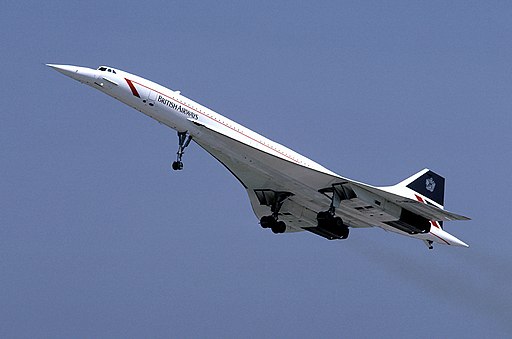
Concorde
Concorde: The Supersonic Icon of Aviation
The Concorde was one of the most ambitious and groundbreaking aircraft in history, a supersonic passenger jet capable of traveling at twice the speed of sound. Built as a joint venture between Britain and France, it was designed to revolutionize air travel by drastically reducing flight times. From its first flight in 1969 to its retirement in 2003, the Concorde symbolized luxury, speed, and engineering excellence.
Despite its technological achievements, the Concorde faced numerous challenges, including high operational costs, limited routes, and environmental concerns. However, its legacy continues to inspire the aviation industry, with new supersonic projects aiming to follow in its footsteps.
Development and History
Origins of the Supersonic Dream
The concept of supersonic passenger travel emerged in the 1950s and 1960s, when aviation was advancing rapidly. Governments and aerospace companies saw the potential for an aircraft that could:
- Cut transatlantic flight times in half
- Provide an elite travel experience for business and VIP passengers
- Demonstrate national engineering superiority
A Joint British-French Project
In 1962, Britain’s British Aircraft Corporation (BAC) and France’s Aérospatiale signed an agreement to jointly develop a supersonic airliner. The aircraft was named “Concorde”, meaning “harmony” in both English and French, reflecting the collaboration between the two nations.
First Flights and Testing
- The first Concorde prototype took flight on March 2, 1969, from Toulouse, France.
- The first supersonic flight occurred on October 1, 1969.
- After extensive testing, the Concorde was certified for commercial service in 1975.
Entry into Commercial Service
- British Airways and Air France were the only airlines to operate Concorde.
- The first commercial flights took place on January 21, 1976, flying from:
- London to Bahrain (British Airways)
- Paris to Rio de Janeiro via Dakar (Air France)
- The most famous route became London–New York and Paris–New York, cutting flight times from 7-8 hours to just over 3 hours.
Technical Specifications and Performance
Supersonic Speed and Efficiency
The Concorde was a technological masterpiece, capable of sustained Mach 2.04 (2,180 km/h or 1,354 mph), more than twice the speed of conventional airliners.
Key Performance Features:
- Engines: 4 × Rolls-Royce/Snecma Olympus 593 turbojet engines
- Maximum Speed: Mach 2.04 (2,180 km/h or 1,354 mph)
- Cruising Altitude: 18,300 meters (60,000 feet)
- Range: 7,222 km (4,488 miles)
- Passenger Capacity: 92–128 passengers
- Takeoff Speed: 250 knots (460 km/h or 286 mph)
Innovative Design and Materials
To withstand extreme temperatures and speeds, Concorde incorporated advanced materials and engineering solutions:
- Delta Wing Design: Provided stability and efficiency at supersonic speeds.
- Heat-Resistant Airframe: Built using aluminum alloy, which expanded during flight due to extreme heat.
- Droop Nose: A moveable nose cone improved aerodynamics and visibility during landing.
- Afterburners: The only commercial aircraft to use afterburners, providing extra thrust during takeoff and acceleration.
Fuel Efficiency and Challenges
Despite its speed, Concorde was not fuel-efficient. It burned:
- More than 25,000 liters (6,600 gallons) of fuel per hour.
- Three times more fuel per passenger than modern subsonic aircraft.
This high fuel consumption contributed to operational costs that made Concorde expensive to fly.
The Concorde Experience
Luxury and Prestige
Flying on the Concorde was an exclusive experience, attracting business leaders, celebrities, and royalty.
Inside the Concorde Cabin:
- Leather seats and fine dining offered a luxury experience.
- Champagne and gourmet meals were served at 60,000 feet.
- Large windows and a Mach meter reminded passengers they were traveling at twice the speed of sound.
The Fastest Way to Cross the Atlantic
- London to New York: 3 hours 15 minutes
- Paris to New York: 3 hours 30 minutes
- Conventional airliners: 7-8 hours
Passengers could have breakfast in London, attend meetings in New York, and return the same day.
Challenges and Controversies
High Costs and Limited Market
- Ticket prices were extremely high—a round trip between London and New York cost over $12,000.
- Only 14 Concordes were ever put into commercial service, making it financially unsustainable.
Noise Pollution and Environmental Concerns
- Loud Sonic Booms: Restricted Concorde to overwater routes, limiting its destinations.
- High Fuel Consumption: Made it less efficient than subsonic aircraft.
The 2000 Air France Flight 4590 Crash
On July 25, 2000, Air France Flight 4590 crashed shortly after takeoff from Paris Charles de Gaulle Airport, killing all 109 passengers and crew and 4 people on the ground.
- The accident was caused by a piece of metal on the runway, which punctured a tire and led to a fuel tank explosion.
- This was the only fatal accident in Concorde’s history, but it damaged public confidence in the aircraft.
The Final Years and Retirement
After the 2000 crash, demand declined, and Concorde struggled with:
- Rising maintenance costs
- Aging technology
- Lower passenger numbers after 9/11
On April 10, 2003, British Airways and Air France announced Concorde’s retirement.
- Final Air France flight: May 31, 2003
- Final British Airways flight: October 24, 2003
Concorde’s Legacy and Future of Supersonic Travel
Where Are the Concordes Now?
Although retired, Concorde remains on display in museums around the world, including:
- The Intrepid Sea, Air & Space Museum (New York, USA)
- Musée de l’Air et de l’Espace (Paris, France)
- Brooklands Museum (UK)
- Aeroscopia Museum (Toulouse, France)
The Future of Supersonic Travel
Several companies are working on new supersonic jets inspired by Concorde, including:
- Boom Supersonic Overture – A modern supersonic passenger jet set to fly in the 2030s.
- NASA and Lockheed Martin X-59 – A supersonic aircraft designed to reduce sonic booms.
While Concorde was ahead of its time, modern technology may soon make supersonic travel viable again.
Conclusion: A Legend in Aviation History
Concorde was not just an aircraft—it was a symbol of human innovation and ambition. It changed the way people thought about air travel, proving that supersonic passenger flights were possible.
Although it faced economic and environmental challenges, Concorde remains one of the greatest engineering achievements in aviation history. Its legacy continues to inspire future supersonic aircraft, ensuring that its dream of high-speed passenger travel lives on.
