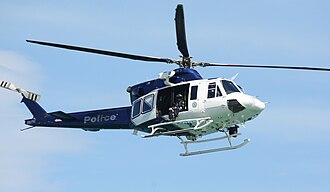
The Bell 412: A Comprehensive Exploration of a Proven Twin-Engine Workhorse
The Bell 412 stands as one of the most successful and widely used medium twin-engine helicopters in the world, representing a culmination of decades of engineering refinement, operational feedback, and technological evolution. Developed by Bell Helicopter, the Bell 412 is a direct descendant of the iconic Huey family, yet it incorporates significant advancements that elevate it far beyond its predecessors. Known for its reliability, versatility, and adaptability across a wide range of mission profiles, the Bell 412 has become a staple in civilian, military, and governmental aviation sectors worldwide. In this extensive blog-style article, we will explore the helicopter’s origins, design philosophy, engineering features, operational roles, and technical parameters in great depth.
Origins and Development of the Bell 412
From the Huey Legacy to a Modern Twin
To fully appreciate the Bell 412, it is essential to understand its lineage, particularly its connection to the legendary Bell UH-1 Iroquois, commonly known as the Huey. The UH-1 became synonymous with helicopter operations during the Vietnam War, where it proved invaluable in transport, medevac, and combat roles. However, as aviation technology progressed and mission requirements evolved, the limitations of single-engine helicopters became increasingly apparent.
Bell responded by developing the twin-engine Bell 212, which offered improved safety and performance. While the Bell 212 was a major step forward, the company continued to refine the design, ultimately leading to the creation of the Bell 412.
Development Goals and First Flight
The Bell 412 program was initiated in the late 1970s with the goal of creating a helicopter that would offer enhanced performance, reduced vibration, improved fuel efficiency, and greater payload capacity. One of the key innovations was the introduction of a four-blade composite main rotor system, replacing the two-blade system used in earlier models.
The prototype Bell 412 first flew in 1979, demonstrating significant improvements in performance and handling. Certification followed in the early 1980s, and the helicopter quickly entered service, gaining widespread acceptance among operators.
Design Philosophy and Structural Characteristics
Airframe and Structural Enhancements
The Bell 412 retains the general layout of its predecessors but incorporates numerous structural enhancements that improve durability and performance. The fuselage is designed to accommodate a wide range of configurations, from passenger transport to cargo and medical evacuation.
The use of advanced materials and manufacturing techniques contributes to a robust yet relatively lightweight structure. This balance is crucial for maximizing payload capacity while maintaining structural integrity.
Four-Blade Composite Rotor System
One of the defining features of the Bell 412 is its four-blade composite main rotor. This system offers several advantages over traditional two-blade designs, including reduced vibration, increased lift efficiency, and quieter operation.
The rotor blades are constructed from composite materials, which provide superior strength and resistance to fatigue. The result is a smoother ride for passengers and reduced stress on the airframe, leading to longer service life and lower maintenance costs.
Tail Rotor and Stability
The tail rotor system of the Bell 412 is designed to provide effective anti-torque control and directional stability. Combined with the helicopter’s aerodynamic design, this ensures precise handling and stable flight characteristics across a wide range of conditions.
Powerplant and Performance
Twin-Engine Configuration
The Bell 412 is powered by two Pratt & Whitney Canada PT6T-3D (Twin-Pac) turboshaft engines. This twin-engine configuration provides redundancy and enhances safety, particularly for operations over water, urban areas, or remote regions.
The Twin-Pac system combines two engines into a single gearbox, delivering power to the main rotor. This design simplifies the drivetrain while maintaining the benefits of dual-engine operation.
Performance Capabilities
The Bell 412 offers impressive performance metrics, including a maximum cruise speed of approximately 120–130 knots and a range of around 350 nautical miles. Its service ceiling allows it to operate effectively in high-altitude environments, while its hover performance enables operations in confined areas.
The helicopter’s ability to carry substantial payloads makes it suitable for a wide range of missions, from passenger transport to heavy lifting.
Cabin Design and Interior Flexibility
Spacious Cabin Layout
The cabin of the Bell 412 is one of its most notable features, offering ample space for passengers, cargo, or specialized equipment. Depending on the configuration, the helicopter can accommodate up to 13 passengers in addition to the crew.
The interior is designed to be easily reconfigurable, allowing operators to adapt the helicopter to different mission requirements. This flexibility is a key factor in the Bell 412’s widespread use.
Accessibility and Ergonomics
Large sliding doors on both sides of the fuselage facilitate easy loading and unloading of passengers and cargo. The cabin floor is designed to support heavy loads, and tie-down points are provided for securing cargo.
In medical evacuation configurations, the cabin can be equipped with stretchers, medical equipment, and seating for medical personnel, transforming the helicopter into a flying intensive care unit.
Avionics and Modern Systems
Advanced Flight Deck
Modern variants of the Bell 412 are equipped with advanced avionics systems, including digital glass cockpits that provide pilots with real-time information on navigation, weather, and aircraft performance.
These systems enhance situational awareness and reduce pilot workload, contributing to safer and more efficient operations. Features such as autopilot, GPS navigation, and terrain awareness systems further improve the helicopter’s capabilities.
Safety and Redundancy
Safety is a central consideration in the design of the Bell 412. The helicopter incorporates multiple redundant systems, including dual hydraulics and electrical systems, to ensure continued operation in the event of a failure.
The aircraft is also designed to meet stringent certification standards, making it suitable for a wide range of operational environments.
Variants and Evolution
Bell 412EP and 412HP
Over the years, Bell has introduced several variants of the 412, including the Bell 412EP (Enhanced Performance) and 412HP (High Performance). These versions feature upgraded engines, improved avionics, and enhanced operational capabilities.
Bell 412EPI
The Bell 412EPI represents the latest evolution of the platform, incorporating a fully digital glass cockpit and advanced flight management systems. This variant reflects the ongoing modernization of the Bell 412 to meet contemporary aviation standards.
Operational Roles and Applications
Emergency Medical Services (EMS)
The Bell 412 is widely used in emergency medical services due to its spacious cabin, reliability, and ability to operate in challenging conditions. It can transport multiple patients and medical personnel, making it a critical asset in disaster response and routine medical missions.
Search and Rescue (SAR)
In search and rescue operations, the Bell 412’s range, payload capacity, and stability make it an ideal platform. It can be equipped with hoists, rescue baskets, and advanced sensors to locate and recover individuals in distress.
Offshore Transport
The helicopter is commonly used in offshore oil and gas operations, transporting personnel and equipment to and from platforms. Its twin-engine configuration provides the safety required for overwater flights.
Military and Government Use
Military forces and government agencies around the world utilize the Bell 412 for transport, surveillance, and utility missions. Its versatility and reliability make it a valuable asset in a wide range of operational scenarios.
Maintenance and Operational Considerations
Reliability and Serviceability
The Bell 412 is known for its reliability and ease of maintenance. The design of its systems allows for quick access to components, reducing downtime and operational costs.
Operating Costs
While more complex than single-engine helicopters, the Bell 412 offers a favorable balance between performance and operating costs. Its fuel efficiency and durability contribute to long-term cost-effectiveness.
Legacy and Global Impact
The Bell 412 has established itself as a cornerstone of modern helicopter aviation, with hundreds of units in service worldwide. Its adaptability and proven performance have ensured its continued relevance in an ever-evolving industry.
The helicopter’s influence can be seen in subsequent designs, particularly in the emphasis on versatility, safety, and passenger comfort.
Technical Specifications Table
Below is a comprehensive overview of the Bell 412’s technical parameters:
| Specification | Bell 412 (Typical Values) |
|---|---|
| Manufacturer | Bell Helicopter |
| Type | Twin-engine utility helicopter |
| Crew | 1–2 pilots |
| Passenger Capacity | Up to 13 passengers |
| Length (overall) | ~17.1 m |
| Rotor Diameter | ~14.0 m |
| Height | ~4.6 m |
| Empty Weight | ~3,200 kg |
| Maximum Takeoff Weight | ~5,400 kg |
| Powerplant | 2 × Pratt & Whitney PT6T-3D |
| Engine Power | ~900 shp each (combined Twin-Pac) |
| Maximum Cruise Speed | ~120–130 knots |
| Range | ~350 nautical miles |
| Service Ceiling | ~20,000 ft |
| Rate of Climb | ~1,500 ft/min |
| Landing Gear | Skid-type |
| Rotor System | Four-blade composite |
| Avionics | Glass cockpit (modern variants) |
Final Thoughts
The Bell 412 exemplifies the evolution of helicopter design, combining the proven reliability of the Huey lineage with modern advancements in aerodynamics, powerplant technology, and avionics. Its versatility and performance have made it a trusted platform for operators around the world, ensuring its place as one of the most enduring and influential helicopters in aviation history.
Police_Helicopter_039.jpg)