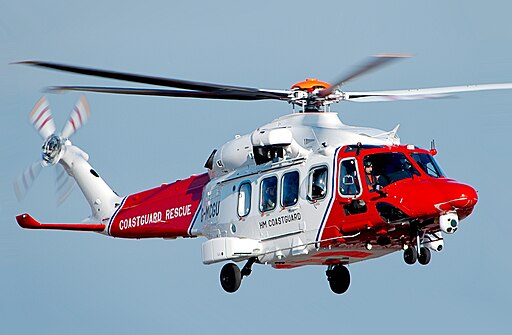
AgustaWestland AW189
AgustaWestland AW189: A Benchmark in Super-Medium Lift Helicopter Innovation
The AgustaWestland AW189 stands at the forefront of modern rotorcraft engineering—a versatile, high-performance helicopter meticulously designed to meet the demands of complex missions. Whether operating in challenging offshore environments, executing critical search and rescue (SAR) operations, or providing VIP transport, the AW189 seamlessly blends cutting-edge technology with robust construction, making it a truly exceptional platform in its class.
Overview of the AW189
Origins and Development
Introduced amid growing demands for a super-medium-lift helicopter capable of diverse operational roles, the AW189 was first announced in 2011 as an evolution of existing platforms like the AW149 and AW139. Its development was driven by a commitment to incorporating state-of-the-art materials, innovative aerodynamic design, and advanced mission equipment. The helicopter achieved its maiden flight on December 21, 2011, and by early 2014, it had secured certification from major aviation authorities, paving the way for its introduction into global service. This rapid progression from concept to operational use underscores the strategic vision and technical expertise invested in the AW189’s creation.
Mission Versatility and Role
Engineered as a multi-mission asset, the AW189 is built to excel in a variety of roles. It is extensively used for:
- Offshore Support: Its long-range capability and robust design make it ideal for crew changes and logistical operations on deep-water platforms.
- Search and Rescue (SAR) Operations: Equipped with advanced sensor suites and an ice-protection system, the helicopter can execute missions in adverse weather and challenging terrains.
- Medical Evacuation (MEDEVAC) and VIP Transport: A configurable cabin allows for rapid reconfiguration to transport patients on stretchers, or to offer a luxurious, low-noise environment for high-profile passengers.
This operational flexibility cemented the AW189’s reputation as an indispensable tool in modern aviation, adeptly handling both commercial and emergency service demands.
Technical Specifications
Dimensions and Weight
The AW189’s design emphasizes both efficiency and spaciousness, incorporating dimensions that facilitate superior aerodynamic performance and operational practicality:
- Overall Length: Approximately 17.6 meters (57 ft 9 in)
- Rotor Diameter: Roughly 14.6 meters (47 ft 11 in)
- Height: About 5.1 meters (16 ft 7 in)
- Maximum Takeoff Weight (MTOW): Approximately 8,400 kg (around 18,500 lbs)
These dimensions ensure that the AW189 maintains a compact but robust structure, critical for achieving exceptional performance, stability, and maneuverability in the demanding environments it is designed to operate within.
Powerplant and Performance
The heart of the AW189’s performance lies in its twin-engine configuration, which combines power and redundancy to deliver the operational excellence required across multiple mission profiles:
- Engines: It is powered by two high-performance turboshaft engines. The baseline configuration typically utilizes General Electric CT7-2E1 engines, though some variants offer the option of Safran Aneto-1K engines to enhance hot and high performance.
- Engine Power: Each engine generates approximately 1,665 shaft horsepower, providing the helicopter with the thrust necessary for rapid climbs and sustained cruise conditions.
- Rate of Climb: Up to 1,800 feet per minute, enabling swift responsiveness during emergency missions.
- Cruise Speed: Typically around 150 knots, with the ability to reach higher speeds when required.
- Operational Range: Under optimal conditions, the AW189 can achieve an operational range of roughly 750 kilometers (405 nautical miles), with auxiliary fuel options available to extend flight duration for long-haul missions.
This powerful engine suite, combined with an aerodynamic design optimized for both efficiency and speed, equips the AW189 to meet the varying demands of its diverse operational roles.
Avionics and Safety Systems
Modern avionics and safety features are cornerstones of the AW189’s design, enhancing both situational awareness and operational reliability:
- Digital Glass Cockpit: The AW189 features a fully integrated, digital flight deck with advanced displays that provide real-time data on flight parameters, thereby reducing pilot workload and improving decision-making capabilities.
- Navigation and Flight Management: Equipped with state-of-the-art GPS, autopilot, and flight management systems, the helicopter ensures precise navigation even in challenging conditions.
- Mission Systems: Modular sensor suites and mission-specific configurations allow the AW189 to be quickly adapted for SAR, offshore, or medical evacuation roles.
- Redundant Safety Mechanisms: The helicopter incorporates multiple layers of redundancy, including advanced ice protection systems certified by leading authorities, as well as a built-in auxiliary power unit (APU) to maintain critical systems during emergencies.
These technologies not only provide a high margin of safety but also allow the AW189 to operate effectively in environments that demand uncompromised reliability and precision.
Design and Construction
Structural Innovations
The AW189’s structure is a testament to contemporary aerospace engineering, merging lightweight materials with innovative design principles:
- Advanced Materials: Utilizing a combination of high-strength aluminum alloys and composite materials, the helicopter achieves a critical balance between weight reduction and structural durability.
- Rotor System: The main rotor is meticulously engineered to maximize lift while ensuring minimal aerodynamic drag. Its design contributes to reduced vibration levels, thereby enhancing passenger comfort and aircraft longevity.
- Transmission and Systems: An innovative main transmission design—with “run dry” capability—ensures that, in critical flight phases, safety is maintained even if lubrication systems fail. This level of engineering redundancy is a key factor in the AW189’s stellar safety record.
Cabin and Mission Flexibility
The interior of the AW189 is as thoughtfully designed as its exterior, addressing diverse operational needs through smart engineering:
- Spacious Cabin: The cabin is highly flexible, capable of seating up to 16 passengers in standard configurations, with alternative arrangements available for medical evacuation featuring space for stretchers and medical equipment.
- Interior Comfort: Designed with passenger comfort and mission efficiency in mind, the cabin features advanced climate control systems, noise reduction measures, and ample storage – all of which contribute to a superior in-flight experience.
- Modular Layout: The cabin can be easily reconfigured to support multiple mission types. Whether for transporting offshore crews, executing a rescue operation, or carrying VIP clients, the AW189’s interior layout adapts seamlessly to the mission at hand.
Operational Advantages and Safety Enhancements
Beyond its impressive raw specifications, the AW189 is engineered with a suite of features that enhance its operational efficiency and safety:
- Extended Endurance: With a fuel-efficient design and the potential for auxiliary fuel tanks, the AW189 is capable of extended missions—a critical advantage for offshore transport and long-range SAR operations.
- All-Weather Capability: Certified to operate in icing conditions and adverse weather, the AW189 can maintain high performance across a wide range of environmental challenges.
- Comprehensive Redundancy: Multiple backup systems—from redundant control units to emergency power provisions—ensure that the helicopter maintains safe operation even when individual components encounter issues.
Each of these elements contributes to the AW189’s reputation as a reliable, versatile platform capable of delivering under the most demanding conditions.
Future Outlook and Industry Impact
Advancements and Upgrades
The evolution of aviation technology is continuous, and the AW189 is no exception. Ongoing research and development promise further refinements in performance, avionics, and safety. Future upgrades are expected to integrate next-generation digital systems and enhanced engine options, ensuring that the AW189 remains at the cutting edge of rotary-wing technology. These improvements will not only bolster operational efficiency but also expand the helicopter’s applicability across an even broader range of missions.
Market Position and Versatility
Positioned in a competitive niche, the AW189 has carved out a reputation for excellence in the super-medium-lift category. Its versatility has enabled operators worldwide to rely on it for a myriad of applications—from rigorous offshore transport duties to life-saving SAR missions. Under the banner of Leonardo Helicopters, the AW189 continues to set benchmarks in performance, safety, and operational adaptability, demonstrating how innovative engineering can meet the diverse challenges of modern aerial operations.
Conclusion
The AgustaWestland AW189 epitomizes modern rotorcraft innovation through its blend of advanced engineering, rigorous safety features, and versatile mission capabilities. Its impressive technical specifications—from precise dimensions and a powerful twin-engine configuration to state-of-the-art avionics and a reconfigurable cabin—make it a standout aircraft in today’s competitive aerospace market. As the industry continues to move toward greater efficiency and adaptability, the AW189 is well poised to meet future challenges, setting new standards in both performance and safety. Whether serving offshore platforms, executing emergency rescues, or providing premium transport services, the AW189 remains a benchmark of excellence in super-medium-lift helicopter design and a vital asset in the evolution of modern aviation.
.jpg)