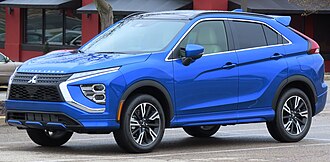
Mitsubishi Eclipse Cross as a Used Car: A Distinctive SUV Worth a Second Look
The Mitsubishi Eclipse Cross occupies an unusual position on the used-car market. It arrived in Europe in 2017 as a compact family SUV positioned between the smaller ASX and larger Outlander, at a time when buyers were rapidly moving away from conventional hatchbacks and towards crossovers. Mitsubishi gave it an intentionally distinctive appearance, particularly the early cars with their unusual split rear window and coupe-inspired roofline, while underneath it remained a practical five-door SUV with front- or four-wheel drive, a turbocharged petrol engine and, in some markets, a diesel. The model was never a sales leader against the Nissan Qashqai, Peugeot 3008, SEAT Ateca or Škoda Karoq, but that relative rarity can actually make it attractive today. Used buyers get a well-equipped family SUV with plenty of safety technology and, importantly, the possibility of Mitsubishi’s sophisticated S-AWC all-wheel-drive system without necessarily paying the premium associated with more fashionable rivals.
The Eclipse Cross is particularly interesting because its used-car appeal depends heavily on which version you choose. Early 1.5-litre turbo petrol models are the most common in Europe and offer a good combination of performance and equipment, but the CVT automatic requires careful examination and a manual gearbox is worth seeking out if simplicity is a priority. Later facelifted cars are more practical and visually conventional, while the 2.4-litre PHEV introduced a completely different ownership proposition, especially for buyers who can charge at home. The result is a used-car range that can suit several different types of driver, provided you understand the differences between the powertrains rather than treating every Eclipse Cross as essentially the same vehicle.
What Is the Mitsubishi Eclipse Cross Like as a Used Car?
The first-generation Eclipse Cross is a compact SUV with a relatively high driving position, five doors and enough interior space for normal family use. Its styling was deliberately more dramatic than the conservative ASX and Outlander, with a sloping roof and pronounced rear treatment intended to give it a coupe-like appearance. The early split rear window attracted plenty of attention when the car was new, although it also affected rearward visibility. The 2021 facelift substantially revised the rear of the vehicle, removing the split-window arrangement and making the car longer, while simultaneously improving luggage capacity and giving it a more conventional appearance.
Inside, the Eclipse Cross is generally more convincing than some earlier Mitsubishi products. The cabin provides a good driving position, decent passenger space and generous equipment, while many versions have useful features such as adaptive cruise control, automatic emergency braking and smartphone connectivity. The model was also equipped with a strong safety package from launch, including seven airbags and automatic emergency braking on UK-market versions. However, the infotainment system and some interior details have not aged quite as well as those in newer European competitors. Used-car reviews also point out that the cabin is practical rather than exceptionally sophisticated.
The driving experience is similarly mixed. The Eclipse Cross is not intended to be a sporty SUV despite its name and styling. Its strongest qualities are ride comfort, cruising refinement and the reassuring grip provided by S-AWC on four-wheel-drive versions. On the other hand, the handling is not particularly engaging and some cars fitted with large wheels can ride firmly over poor surfaces. The combination of a willing turbocharged engine and CVT can also make the car noisier than expected during hard acceleration.
Which Engine Is Best?
1.5 MIVEC Turbo Petrol: The Main Recommendation
For most European used-car buyers, the 1.5-litre MIVEC turbo petrol is the engine to start with. It produces approximately 163 hp in European specification and provides enough power to make the Eclipse Cross feel comfortably quick in everyday driving. Unlike a naturally aspirated engine of similar size, the turbocharger provides useful torque at relatively low engine speeds, so the car does not need to be driven particularly hard to make progress. The engine uses a timing chain rather than a conventional cambelt, which removes one routine replacement expense, although that does not mean maintenance can be ignored.
The 1.5 turbo is particularly appealing because it combines reasonably compact displacement with enough performance for a family SUV. It is available with a six-speed manual on two-wheel-drive versions, while CVT automatic versions were offered across the range and paired with S-AWC on certain four-wheel-drive models. The manual is arguably the enthusiast’s choice because it gives the driver more direct control and avoids one of the Eclipse Cross’s more frequently discussed used-car concerns: the condition and maintenance history of the CVT.
The engine itself has a generally good reputation when maintained properly, but buyers should still check for evidence of regular oil changes and inspect the car for uneven running, unusual turbo noises or warning lights. As with many modern direct-injection turbo petrol engines, intake deposits and turbo/PCV-related issues can develop over time. These are not reasons to automatically reject the engine, but they reinforce the importance of a complete service history and a proper test drive.
2.2 DI-D Diesel: Attractive for Long-Distance Drivers
Some European markets also received the 2.2-litre DI-D diesel, producing roughly 148–150 hp and around 388 Nm of torque. Its greatest advantage is effortless low-speed pulling power, which makes it particularly suitable for motorway driving, carrying heavy loads and, where permitted, towing. Unlike the CVT-equipped petrol versions, this diesel was paired with an eight-speed automatic transmission on relevant European versions, giving it a distinctly different character.
The diesel, however, is not automatically the best choice simply because it consumes less fuel. An older diesel SUV brings additional components that can become expensive with age, including the DPF, EGR system, turbocharger and injection equipment. Cars that have spent most of their lives on short urban journeys are particularly worth treating with caution. A diesel Eclipse Cross with a documented history of long-distance use can be a very good vehicle, but a low-mileage example with an unclear history may be considerably less attractive than a petrol car with twice the annual mileage.
For most private buyers who cover average mileage, the 1.5 turbo petrol remains easier to recommend. The diesel makes the most sense when the owner’s driving pattern genuinely suits it.
2.4 PHEV: The Interesting Later Option
The 2021 facelift brought the most significant technical change in the Eclipse Cross’s history: the introduction of a plug-in hybrid system derived from Mitsubishi’s established Outlander PHEV technology. The European version combines a 2.4-litre petrol engine with two electric motors and a 13.8 kWh lithium-ion traction battery, with a total system output of 188 hp. The official Czech technical data lists an electric range of approximately 45 km, a maximum speed of 162 km/h and a 0–100 km/h time of 10.9 seconds.
The PHEV is a completely different proposition from the earlier 1.5 turbo. It is heavier, more expensive to buy and less interesting for someone who cannot charge regularly, but it can be extremely attractive for an owner who makes short daily journeys and can recharge at home. The electric motors also give the car a smooth and quiet character around town, while the petrol engine provides the ability to travel much further without depending on public charging.
The main thing to check on a used PHEV is the condition of the high-voltage battery. Battery degradation is normal in any plug-in hybrid, so buyers should establish the battery’s state of health rather than relying solely on the original advertised electric range. The hybrid system itself is based on technology Mitsubishi had already used extensively in the Outlander PHEV, which is reassuring, but a specialist diagnostic check is still sensible before purchase.
Is the CVT Gearbox a Problem?
The CVT deserves particular attention when viewing a used Eclipse Cross. Mitsubishi’s continuously variable transmission is designed to keep the engine in an efficient operating range rather than changing through fixed conventional gears. This can make acceleration feel different from a normal automatic, and the engine may rev relatively high under hard acceleration before settling down again.
That behaviour should not automatically be interpreted as a fault. What matters is whether the transmission operates smoothly and predictably. During a test drive, pay attention to hesitation, shuddering, unusual noises, delayed engagement and any warning messages. A properly maintained CVT can be dependable, but specialist used-car sources consistently recommend paying close attention to its service history and using the correct transmission fluid.
If you prefer the lowest possible mechanical complexity, a manual 1.5 turbo is consequently an appealing choice. If you want an automatic, do not buy purely on price: service documentation for the transmission should be considered almost as important as the engine’s maintenance history.
What Problems Should You Check Before Buying?
Recalls and Electronic Systems
Because the Eclipse Cross contains a considerable amount of electronic safety equipment, buyers should check that all recall campaigns and software updates have been completed. Some early cars were affected by campaigns involving driver-assistance and braking-system software, while later cars built up to September 2019 were subject to a recall involving wheel-arch mouldings.
This does not make early Eclipse Cross models undesirable. Recalls are normal for modern vehicles, and the important question is whether the necessary work has actually been carried out. A Mitsubishi dealer or appropriate vehicle-history check should be able to establish whether outstanding campaigns remain.
The electronic equipment should also be tested individually. Check the infotainment system, reversing camera, parking sensors, adaptive cruise control, lane-departure systems and automatic emergency braking functions. Warning messages that appear intermittently should not be dismissed simply because the car continues to drive normally.
Suspension, Wheels and Tyres
The Eclipse Cross is a relatively substantial SUV, and large wheels can make suspension wear more noticeable. During a test drive, listen for knocking over potholes and speed bumps and check whether the vehicle remains stable under braking. Inspect the tyres for uneven wear because this can reveal alignment problems or worn suspension components.
Ride comfort is also worth considering. Used reviews note that the larger 18-inch wheels can make the car less comfortable on rough roads, whereas smaller wheels generally provide a more compliant ride.
Manual Gearbox and Clutch
Manual Eclipse Cross models should be tested for smooth gear selection, particularly second gear. Used-car specialists have reported that stiffness selecting second gear and occasional stalling can occur on manual cars, so the gearbox should not be ignored simply because it is mechanically simpler than the CVT.
The clutch should engage progressively without slipping or juddering. A high bite point alone is not necessarily proof of imminent failure, but combined with slipping under acceleration it should prompt a professional inspection. Remember that replacing a clutch on an older used car can represent a significant percentage of its purchase price.
How Practical Is the Eclipse Cross?
Practicality is one of the areas where the Eclipse Cross sits somewhere between its rivals. The rear seats provide useful space and, on early models, sliding rear-seat adjustment allows the owner to prioritise passenger legroom or luggage capacity. This is a genuinely useful feature for family ownership.
The unusual roofline does, however, compromise the overall sense of luggage space compared with more box-shaped SUVs. The early rear design also affected rear visibility, although the later facelift improved the vehicle’s proportions and substantially increased luggage capacity. The 2021 update made the car 14 cm longer, specifically helping to address some of the original model’s practicality limitations.
Consequently, someone choosing between an Eclipse Cross and a conventional family SUV should look carefully at their actual requirements. It is perfectly capable of serving as a family car, but buyers who regularly carry large pushchairs, bulky sports equipment or substantial holiday luggage may find a more conventional SUV or estate car easier to live with.
What Are the Eclipse Cross’s Biggest Strengths?
The biggest advantage is that the Eclipse Cross offers something different without sacrificing the essentials. It looks distinctive, has a relatively high driving position, offers plenty of equipment and can be fitted with an excellent all-wheel-drive system. The S-AWC system is particularly attractive to drivers who regularly encounter snow, slippery roads or poor surfaces because it provides more sophisticated traction management than a simple on-demand four-wheel-drive system.
The car also has a strong safety specification and generally solid mechanical reputation. ADAC breakdown statistics show relatively low breakdown rates for several recent registration years, although the dataset also identifies fuel-pump failures among reported breakdown causes.
Finally, the Eclipse Cross benefits from being less common than its mainstream competitors. This does not automatically make it better, but it does mean that a buyer willing to look beyond the usual Qashqai, 3008 and Karoq choices can find a well-equipped and distinctive SUV for reasonable money.
What Are Its Weaknesses?
The main weaknesses are refinement and practicality relative to the best competitors. The CVT can make the petrol engine sound strained under acceleration, while the handling is competent rather than engaging. Large-wheel versions can also ride firmly over poor surfaces.
The infotainment system is another area where age is becoming apparent. A newer rival may provide a more modern user interface, faster smartphone integration and a more sophisticated digital dashboard. None of these issues makes the Eclipse Cross unusable, but they matter if technology is a high priority.
Running costs also vary considerably according to specification. A manual front-wheel-drive petrol car is relatively straightforward, whereas an AWD automatic or PHEV has considerably more complex hardware. Buyers should therefore compare not only purchase prices but also tyres, servicing, insurance and likely future repairs.
Which Used Eclipse Cross Should You Buy?
For the majority of buyers, the ideal conventional Eclipse Cross is a well-maintained 1.5 MIVEC Turbo with a manual gearbox and front-wheel drive. It offers sufficient power, avoids diesel-specific complications and removes the CVT from the equation. If you want an automatic, the CVT version can still be a good purchase, but its service history should be checked carefully and the test drive should be thorough.
For long-distance drivers, the 2.2 DI-D can be attractive because of its torque and automatic transmission, but only when the vehicle’s history demonstrates appropriate use. For urban commuters who can charge at home, the later 2.4 PHEV may be the most interesting version of all, provided the battery condition is verified.
The facelifted 2021-onwards cars are also worth considering if the budget allows. They have a more conventional rear design, greater practicality and the option of the PHEV system. However, an excellent early 1.5 turbo can still represent better value than a later car simply because it is newer.
Final Verdict: Is the Mitsubishi Eclipse Cross a Good Used Car?
The Mitsubishi Eclipse Cross deserves more attention on the used market than its relatively modest sales figures might suggest. It is not the class leader in every category, but it offers a compelling combination of distinctive styling, generous equipment, strong safety technology, comfortable cruising and the option of sophisticated four-wheel drive. Its relative rarity is also an advantage for buyers who want something different from the usual compact-SUV choices.
The key is to choose according to how you actually drive. The 1.5 turbo petrol is the best all-rounder, especially with a manual gearbox. The diesel is better suited to drivers who cover substantial distances, while the later PHEV can make excellent sense for short daily journeys when regular charging is available. The CVT should not be feared, but it should be inspected carefully and supported by evidence of correct maintenance.
Ultimately, the Eclipse Cross is best bought as a well-maintained, carefully inspected used SUV rather than simply as a cheap alternative to a Qashqai or 3008. Find one with a complete service history, healthy drivetrain, good tyres, functioning electronics and no unresolved recall work, and it can make a very convincing family car. It may not be the most obvious choice in its class, but for a buyer willing to look beyond the mainstream, that is precisely what makes the Mitsubishi Eclipse Cross interesting.
Mitsubishi Eclipse Cross Technical Specifications
| Specification | Eclipse Cross, typical European versions |
|---|---|
| First-generation production | 2017–2024 |
| Body style | 5-door compact SUV |
| Seating | 5 |
| Drive | Front-wheel drive or S-AWC four-wheel drive |
| 1.5 MIVEC Turbo | 1,499 cc, 4-cylinder petrol |
| 1.5 Turbo power | Approximately 163 hp |
| 1.5 Turbo transmission | 6-speed manual or CVT |
| 2.2 DI-D | 2,268 cc, 4-cylinder diesel |
| 2.2 DI-D power | Approximately 148–150 hp |
| 2.2 DI-D transmission | 8-speed automatic |
| 2.4 PHEV | 2,360 cc petrol + two electric motors |
| PHEV system output | 188 hp / 138 kW |
| PHEV battery | 13.8 kWh lithium-ion |
| PHEV electric range | Approximately 45 km, depending on test cycle |
| PHEV transmission | Fixed-gear hybrid transmission |
| PHEV 0–100 km/h | Approximately 10.9 seconds |
| PHEV maximum speed | Approximately 162 km/h |
| PHEV fuel tank | Approximately 43 litres |
| Early-model length | Approximately 4.41 m |
| Facelifted-model length | Approximately 4.55 m |
| Width | Approximately 1.81 m |
| Wheelbase | Approximately 2.67 m |
| Timing system, 1.5 Turbo | Timing chain |
| Best conventional engine | 1.5 MIVEC Turbo petrol |
| Best automatic option | 1.5 Turbo CVT with documented maintenance, or 2.2 DI-D for high-mileage use |
| Best option for short journeys | 2.4 PHEV, provided regular charging is available |
| Main buying concerns | CVT servicing, turbo/engine maintenance, diesel DPF/EGR, electronics, recalls and suspension |
| Main strengths | Distinctive design, equipment, safety, comfort and available S-AWC AWD |
| Main weaknesses | Dated infotainment, CVT behaviour, firm ride on large wheels and modest luggage practicality in early cars |
