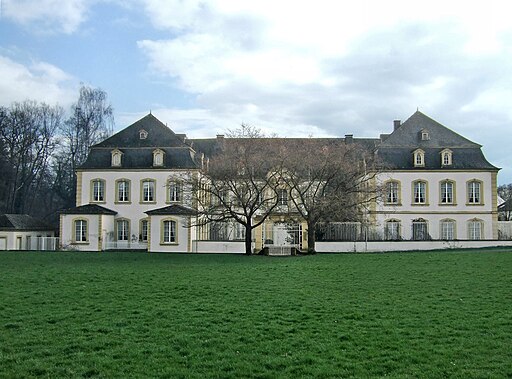
Quinter Schloss is a distinguished historic estate located in the Trier district of Quint, set within the gentle hills and vineyard landscapes of the Moselle region. Although not as monumental as the great medieval castles of the area, the estate stands out through its elegant architectural composition, its long connection to regional nobility, and its tranquil setting near the banks of the Kyll River. Quinter Schloss forms a central element of the local cultural heritage, reflecting centuries of changing ownership, architectural evolution, and adaptation to new functions. Its refined façade and landscaped surroundings give the property a stately presence, complementing the historical charm of the wider Trier region.
Historical Origins and Early Development
The roots of Quinter Schloss stretch back to the Middle Ages, when the site was connected to the landholdings of religious institutions and noble families operating in the orbit of Trier, one of Germany’s oldest cities. Originally, the property would have served as a manor-like estate rather than a fortress, providing administrative oversight, agricultural management, and residence for regional lords or ecclesiastical officials. Over time, as wealth and political influence increased in the area, the estate evolved in scale and sophistication, eventually giving rise to the more refined palace-like structure that stands today. This evolution reflects a broader shift in the region from purely defensive constructions toward estates that emphasized comfort, prestige, and social standing.
Architectural Characteristics
Quinter Schloss exemplifies the architectural tendencies of the early modern period, displaying harmonious proportions, a balanced façade, and a restrained use of ornamentation. The building integrates elements typical of aristocratic manor houses, including multi-story wings, tall windows, mansard-like roof structures, and a central entrance that highlights symmetry and stately elegance. The materials and building techniques reflect local traditions, utilizing stone and plaster finishes that allow the structure to blend seamlessly with its surroundings. The estate’s interior historically included extensive living quarters, reception rooms, and ancillary spaces, organized to support both domestic life and administrative functions. Although the exact interior configuration has varied with time, the property has consistently maintained an air of cultivated refinement.
Changes in Ownership and Usage
Throughout its long history, Quinter Schloss passed through the hands of various noble families, clerical institutions, and later private or civic owners. Each period of ownership left a distinct mark on the estate, whether through renovations, expansions, or changes in the surrounding grounds. With the secularization waves of the eighteenth and nineteenth centuries, many properties in the Trier region transitioned from ecclesiastical to private possession, and Quinter Schloss was no exception. In later decades, the estate adapted to more practical modern uses, sometimes serving as a residence, an administrative building, or part of a larger complex of local community functions. These continual adaptations ensured that the property remained relevant even as societal needs shifted.
Restoration and Preservation Efforts
Preserving a historic estate like Quinter Schloss requires ongoing commitment, particularly as aging structures demand careful maintenance and sensitive restoration. Over time, efforts have been made to reinforce the building’s foundations, preserve original architectural elements, and restore damaged façades or interiors without sacrificing historical integrity. Restoration often focuses on harmonizing the estate’s traditional design with modern requirements, ensuring safety, accessibility, and stability. The preservation of surrounding green spaces—such as old trees, courtyards, and garden elements—also plays a vital role, since these natural components form an essential part of the property’s historical identity. These combined efforts allow Quinter Schloss to continue standing as a symbol of the region’s heritage.
Surrounding Landscape and Setting
One of the defining features of Quinter Schloss is its placement within the scenic Moselle landscape, characterized by rolling hills, vineyards, and wooded slopes. The nearby Kyll River adds to the estate’s picturesque quality, contributing both natural beauty and historical significance, as waterways were once essential for trade and communication. Gardens and landscaped terraces historically framed the estate, offering both aesthetic pleasure and practical space for cultivation or leisure. Even today, the harmonious relationship between the built structure and its natural environment remains a central aspect of the estate’s charm, giving Quinter Schloss a sense of serenity and timelessness that reflects the character of the wider Trier region.
Cultural Role in the Region
Quinter Schloss forms an integral part of the cultural narrative of the Trier–Kyll river area. It represents a class of noble estates that shaped the political, social, and economic landscape of the region for many centuries. While larger castles and forts captured the imagination through military power, estates like Quinter Schloss demonstrated influence through administration, landownership, and cultivated lifestyle. Its preserved architecture contributes to the historical mosaic of the region, complementing Roman ruins, medieval churches, and Baroque buildings that define Trier’s rich heritage. As such, the estate serves not only as a historical monument but also as a cultural anchor that connects contemporary life to centuries of regional tradition.
Modern Perception and Accessibility
Today, Quinter Schloss is appreciated as a significant architectural landmark, even though it may not be as widely known internationally as Trier’s Roman monuments or the Moselle Valley’s medieval castles. Its elegant form and peaceful surroundings invite interest from architecture enthusiasts, historians, and local residents who value cultural preservation. Depending on current ownership and use, the estate may not always be accessible for interior visits, yet its exterior and setting continue to attract those who explore the historical landscapes around Trier. For many, Quinter Schloss represents the quieter, more refined side of regional heritage—an estate shaped not by warfare, but by centuries of cultivated living, adaptation, and historical continuity.
