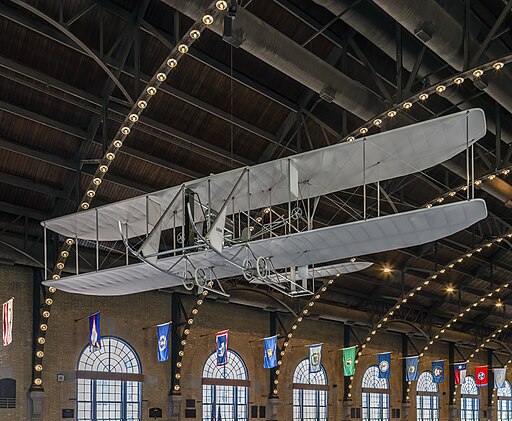
The Wright Model B represents one of the earliest and most influential designs in the history of powered aviation. Developed by the Wright brothers following their groundbreaking first powered flight in 1903, the Model B was their first practical aircraft to enter production and was built to improve upon the limitations of their earlier models. It played a significant role in transitioning aviation from experimental craft to more reliable and controlled machines. Notably, the Wright Model B was designed with a conventional tractor biplane configuration, a departure from the canard layout used in the Wright Flyer of 1903. This shift indicated the Wright brothers’ evolving understanding of aerodynamics and aircraft control, which influenced subsequent aircraft design globally.
Design and Structural Features
The Wright Model B was a biplane with a two-bay wing configuration, meaning it had two sets of vertical struts between the upper and lower wings, providing structural stability. Both wings were roughly rectangular with slight tapering toward the tips. The wings were constructed using spruce and ash wood for strength and lightness, and covered with fabric, typically linen, coated with dope to create a taut, aerodynamic surface. The aircraft featured a conventional tail unit, including a fixed horizontal stabilizer and a single rudder positioned aft of the tailplane. Unlike the earlier canard layout, the Model B positioned its elevator at the rear, improving pitch control and stability. The fuselage consisted of a wooden frame covered in fabric, designed to house the pilot and passenger side-by-side in an open cockpit.
The landing gear of the Model B was relatively simple yet robust, featuring a pair of main wheels mounted on a fixed axle with a tail skid to aid ground handling. This configuration allowed for easier takeoff and landing on grassy airfields, the most common surface available at the time. The overall construction emphasized a balance between lightweight materials and structural integrity, crucial for maintaining lift and maneuverability with the relatively low engine power available.
Powerplant and Performance
The Wright Model B was powered by a four-cylinder, water-cooled inline engine designed and built by the Wright brothers themselves. This engine produced approximately 35 horsepower, a significant improvement over their original 12-horsepower engine used in the 1903 Flyer. The engine drove a pair of two-bladed wooden propellers mounted behind the wings, operating in a tractor configuration. The propellers were designed with careful consideration of blade pitch and diameter to optimize thrust for the relatively modest engine power. The engine’s weight was a critical factor, and the Wright brothers succeeded in creating a lightweight powerplant that maintained sufficient reliability for flight operations.
In terms of performance, the Model B had a maximum speed of around 45 miles per hour (72 kilometers per hour) and a service ceiling of approximately 1,000 feet (300 meters), depending on load and atmospheric conditions. The aircraft’s range was limited by its fuel capacity and engine efficiency, making it suitable primarily for short demonstration flights or training purposes. Despite these limitations, the Model B demonstrated improved handling and stability compared to earlier Wright designs, thanks to its refined control surfaces and more conventional layout.
Control Systems and Flight Mechanics
One of the most notable advancements in the Wright Model B was its control system. The aircraft employed a three-axis control scheme, which included wing warping for roll control, a movable rudder for yaw, and an elevator for pitch. The wing-warping mechanism involved twisting the wings to change the angle of attack differentially between the left and right wings, allowing the pilot to bank the aircraft during turns. This control method was an early predecessor to modern ailerons and required a system of cables and pulleys linked to the pilot’s hip cradle or control wheel.
The rudder was linked directly to the control system and worked in concert with wing warping to coordinate turns, reducing adverse yaw. The elevator at the rear provided pitch control, enabling the pilot to climb or descend by adjusting the angle of the aircraft’s nose. This combination of controls allowed for relatively precise maneuvering, a significant leap forward from the unstable, largely uncontrollable flight attempts that preceded the Wright brothers’ innovations. The Model B’s control system set the standard for future aircraft and is recognized as one of the first practical three-axis control systems in aviation history.
Operational History and Legacy
The Wright Model B was introduced commercially around 1910 and was among the first aircraft to be sold to civilian customers, including flight schools and exhibition pilots. It marked the Wright brothers’ first attempt at mass production, with approximately 100 units built under license, including variants made by the Wright Company. The Model B was used extensively for pilot training and early aerial exhibitions, showcasing the feasibility of powered flight to a broader audience.
Though it was soon eclipsed by more advanced designs with stronger engines and improved aerodynamics, the Wright Model B’s contribution to the standardization of aircraft configuration and control cannot be overstated. Its influence extended beyond the United States, impacting early European aviation development. The Model B’s conventional layout, combined with its control system, laid the groundwork for the future of airplane design, making it a cornerstone in the history of powered flight.
Technical Specifications Summary
- Type: Two-seat, tractor biplane
- Crew: 1 pilot (with space for 1 passenger)
- Length: Approximately 27 feet (8.2 meters)
- Wingspan: Approximately 39 feet (11.9 meters)
- Wing Area: Around 510 square feet (47.4 square meters)
- Empty Weight: Approximately 800 pounds (363 kilograms)
- Gross Weight: Around 1,250 pounds (567 kilograms)
- Powerplant: Wright-designed 4-cylinder inline water-cooled engine
- Power Output: Approximately 35 horsepower
- Maximum Speed: 45 mph (72 km/h)
- Range: Limited to short flights, typically under 30 miles (48 kilometers)
- Service Ceiling: Approximately 1,000 feet (300 meters)
- Control: Wing warping (roll), movable rudder (yaw), rear elevator (pitch)
- Landing Gear: Fixed, two main wheels with tail skid
The Wright Model B embodies a crucial evolutionary step in early aviation, bridging the gap between experimental flight and practical aircraft operation, and serving as a foundation for the development of more sophisticated aircraft in the years that followed.
