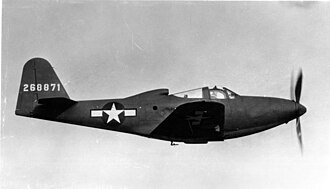
Bell P-63 Kingcobra — The Evolution of an Unconventional Fighter
In the vast landscape of World War II aviation, certain aircraft achieved legendary status through combat success, while others became known for their technological innovations. The Bell P-63 Kingcobra occupies a fascinating middle ground between these two categories. It was not the most famous American fighter, nor the most widely deployed by U.S. forces, yet it represented one of the most refined iterations of a highly unconventional design philosophy.
Derived from the earlier Bell P-39 Airacobra, the P-63 Kingcobra embodied both the strengths and lessons learned from its predecessor. It featured improved aerodynamics, enhanced firepower, and better high-altitude performance. Yet paradoxically, it found its greatest success not in American hands, but with the Soviet Union.
This article explores the Bell P-63 Kingcobra in depth—its origins, engineering innovations, combat use, and legacy—offering a comprehensive technical and historical examination of one of the most intriguing fighters of the Second World War.
Origins: From Airacobra to Kingcobra
To understand the P-63, one must first understand the aircraft that came before it.
The Bell P-39 Airacobra was one of the most unconventional fighters of its time. Unlike most aircraft, it featured:
- A mid-mounted engine located behind the pilot
- A tricycle landing gear configuration
- A nose-mounted cannon firing through the propeller hub
While innovative, the P-39 suffered from poor high-altitude performance due to the absence of a turbo-supercharger. This limitation reduced its effectiveness in the European theater, where high-altitude combat was common.
However, the aircraft performed well at low and medium altitudes—conditions typical on the Eastern Front. This led to its widespread use by the Soviet Air Force, where it achieved considerable success.
The Need for Improvement
Recognizing the limitations of the P-39, Bell Aircraft began work on an improved version even before the Airacobra had fully proven itself in combat.
The goal was ambitious:
- Retain the strengths of the P-39
- Fix its weaknesses
- Create a more competitive fighter for evolving aerial warfare
The result was the P-63 Kingcobra.
Development and Prototyping
XP-63 Prototype
The initial prototype, designated XP-63, first flew in December 1942. While it resembled the P-39 in general layout, it incorporated numerous improvements:
- A redesigned wing with laminar flow characteristics
- A more powerful engine
- Enhanced structural strength
Laminar Flow Wing
One of the most significant advancements was the introduction of a laminar flow wing—similar in concept to that used on the North American P-51 Mustang.
This design reduced drag by maintaining smoother airflow over the wing surface, improving speed and efficiency.
However, laminar flow wings required extremely smooth surfaces and precise manufacturing—something that posed challenges during wartime production.
Design and Engineering
General Layout
The P-63 retained the distinctive layout of the Airacobra:
- Engine mounted behind the cockpit
- Driveshaft running under the pilot to the propeller
- Nose-mounted armament
This configuration offered several advantages:
- Improved center of gravity
- Concentrated firepower
- Better pilot visibility
Powerplant
The Kingcobra was powered by the Allison V-1710 engine, a liquid-cooled V-12 piston engine.
Unlike earlier versions used in the P-39, the P-63’s engine was paired with a more effective supercharging system, improving high-altitude performance.
Armament
The P-63 was heavily armed for its size:
- 1 × 37 mm M4 cannon (firing through the propeller hub)
- 4 × .50 caliber machine guns
This configuration made it particularly effective against both aircraft and ground targets.
Aerodynamic Improvements
The P-63 was not merely a refined P-39—it was a significantly improved aircraft in aerodynamic terms.
Larger Wing Area
The Kingcobra featured a larger wing area, which:
- Improved lift
- Enhanced maneuverability
- Reduced wing loading
Refined Fuselage
The fuselage was streamlined to reduce drag and improve airflow, contributing to better overall performance.
Stability Enhancements
Changes to the tail and control surfaces improved stability, particularly at higher speeds.
Flight Performance
Compared to the P-39, the P-63 offered:
- Higher top speed
- Better climb rate
- Improved high-altitude capability
However, it still lagged behind top-tier fighters like the Messerschmitt Bf 109 and Focke-Wulf Fw 190 in certain aspects.
Handling Characteristics
Pilots generally described the P-63 as:
- Stable and predictable
- Well-balanced in flight
- Responsive at medium altitudes
However, like the P-39, it could be unforgiving if mishandled, particularly in spins.
Operational Use
Limited U.S. Service
Despite its improvements, the P-63 saw limited service with the United States Army Air Forces.
It was primarily used for:
- Training
- Target towing
- Experimental roles
Lend-Lease Program
The majority of P-63 aircraft were delivered to the Soviet Union under the Lend-Lease program.
In Soviet service, the Kingcobra became a highly effective aircraft.
The Kingcobra in Soviet Service
The Soviet Union was the primary operator of the P-63.
Why the Soviets Valued It
The aircraft’s characteristics aligned well with Eastern Front conditions:
- Combat typically occurred at low to medium altitudes
- Heavy armament was ideal for ground attack
- Durability was essential
Combat Effectiveness
Soviet pilots used the P-63 in:
- Air superiority missions
- Ground attack operations
- Close air support
It proved to be a capable and reliable aircraft in these roles.
Post-War Use
After World War II, the P-63 continued to see service in several roles.
Training and Target Aircraft
In the United States, modified versions were used as:
- Target drones
- Gunnery training aircraft
International Use
Other countries also operated the P-63, including France.
Unique Variants
RP-63 “Pinball” Aircraft
One of the most unusual variants of the Kingcobra was the RP-63, used for gunnery training.
These aircraft were equipped with:
- Special armor plating
- Sensors to detect hits
Pilots would fly these aircraft while trainees fired frangible bullets at them—a dangerous but effective training method.
Strengths and Weaknesses
Strengths
- Heavy armament
- Good low-to-medium altitude performance
- Innovative design
Weaknesses
- Limited high-altitude capability compared to top fighters
- Complex internal layout
- Maintenance challenges
Comparison with Contemporary Fighters
The P-63 occupied a middle tier among WWII fighters.
| Aircraft | Strengths | Weaknesses |
|---|---|---|
| P-63 Kingcobra | Firepower, stability | High-altitude performance |
| P-51 Mustang | Range, speed | Less heavily armed |
| Bf 109 | Climb rate | Limited range |
Legacy
The P-63 Kingcobra represents an important step in aviation evolution.
Technological Innovation
It demonstrated the viability of unconventional aircraft layouts.
Operational Lessons
It highlighted the importance of matching aircraft design to combat conditions.
Historical Significance
Although overshadowed by more famous fighters, the P-63 played a crucial role—particularly in Soviet service.
Conclusion
The Bell P-63 Kingcobra was not a revolutionary aircraft in the way that jet fighters would soon become, but it was a refined and capable evolution of an unconventional idea.
Its story is one of adaptation, improvement, and international collaboration. While it may not have achieved fame in American service, it proved its worth on the Eastern Front, where its strengths could be fully utilized.
In many ways, the P-63 stands as a reminder that success in aviation is not solely determined by technological superiority, but by how well an aircraft fits the needs of those who fly it.
Technical Specifications — Bell P-63 Kingcobra
| Parameter | Value |
|---|---|
| Manufacturer | Bell Aircraft |
| Role | Fighter / Ground Attack Aircraft |
| First Flight | December 7, 1942 |
| Crew | 1 |
| Length | 9.97 m |
| Wingspan | 11.68 m |
| Height | 3.84 m |
| Wing Area | 23.04 m² |
| Empty Weight | 2,892 kg |
| Maximum Takeoff Weight | 4,763 kg |
| Powerplant | 1 × Allison V-1710 V-12 piston engine |
| Power Output | ~1,500 hp |
| Maximum Speed | ~660 km/h |
| Range | ~720 km |
| Service Ceiling | ~13,100 m |
| Rate of Climb | ~14 m/s |
| Armament | 1 × 37 mm cannon, 4 × .50 cal machine guns |
| Production Number | ~3,300 aircraft |
.jpg)