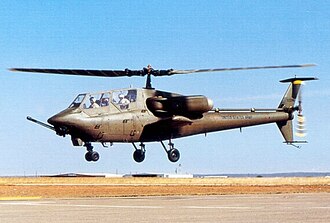
The Bell YAH-63: A Bold Contender in the Evolution of Attack Helicopters
The Bell YAH-63 represents one of the most fascinating “what-if” stories in military aviation history. Developed during the intense technological and strategic competition of the Cold War, the YAH-63 was Bell Helicopter’s ambitious entry into the United States Army’s Advanced Attack Helicopter (AAH) program. Although it ultimately lost to its rival—the Hughes YAH-64, which evolved into the famous Boeing AH-64 Apache—the YAH-63 remains a remarkable example of innovative engineering, unconventional design choices, and forward-thinking battlefield concepts. This article explores the Bell YAH-63 in extensive depth, examining its origins, design philosophy, technical innovations, operational intent, and enduring legacy.
Origins of the Advanced Attack Helicopter Program
The Strategic Context of the Cold War
To understand the Bell YAH-63, it is essential to examine the broader strategic environment that led to its creation. During the late 1960s and early 1970s, the United States Army faced a growing concern: the increasing armored strength of Warsaw Pact forces in Europe. The battlefield of the future, as envisioned by military planners, would require highly mobile, heavily armed platforms capable of engaging large numbers of enemy tanks quickly and effectively.
Earlier efforts, such as the Lockheed AH-56 Cheyenne, had aimed to create a revolutionary gunship. However, technical difficulties and shifting requirements led to the cancellation of the Cheyenne program in 1972.
In response, the Army redefined its approach. Instead of pursuing overly complex experimental designs, it sought a more conventional but highly capable attack helicopter that could deliver superior firepower, survivability, and reliability.
The Birth of the Bell YAH-63
Bell Helicopter’s Entry into the AAH Competition
In 1972, the Army issued a request for proposals for the Advanced Attack Helicopter (AAH) program. Several major aerospace companies submitted designs, including Bell, Hughes, Lockheed, and Sikorsky. After initial evaluations, Bell and Hughes were selected as finalists in 1973, each tasked with building prototype aircraft.
Bell’s design, internally designated Model 409, became the YAH-63. While it drew inspiration from earlier Bell helicopters such as the Bell AH-1 Cobra, the YAH-63 was not merely an evolution—it was a largely new machine incorporating innovative solutions to meet the Army’s demanding requirements.
First Flight and Prototype Development
The first prototype of the YAH-63 took to the air on October 1, 1975, marking a major milestone in the program. The aircraft demonstrated strong performance during early testing, showcasing Bell’s engineering expertise and the potential of its design.
However, development was not without challenges. One prototype experienced a crash during testing in 1976, though it was later repaired. Despite these setbacks, Bell continued refining the design and entered the competitive fly-off against the Hughes YAH-64.
Design Philosophy: Innovation Meets Practicality
A New Approach to Attack Helicopter Layout
At first glance, the YAH-63 follows the classic attack helicopter configuration: a narrow fuselage, tandem seating, and stub wings for weapons. However, a closer look reveals several unconventional design choices that set it apart.
One of the most notable differences is the seating arrangement. Unlike most attack helicopters, where the pilot sits in the rear seat, the YAH-63 placed the pilot in the front cockpit. This decision was based on the helicopter’s intended mission profile—low-altitude “nap-of-the-earth” flight—where forward visibility is critical.
Tricycle Landing Gear
Another distinctive feature is the use of wheeled tricycle landing gear instead of the skid-type or tailwheel configurations commonly seen in helicopters. This design offered advantages in ground handling and crashworthiness, including energy-absorbing struts designed to improve survivability during hard landings.
However, this feature would later be viewed as a disadvantage by the Army, which preferred the stability of alternative configurations.
The T-Tail Configuration
The YAH-63 featured an unusual T-tail design, with the horizontal stabilizer mounted high on the vertical fin. This configuration contributed to improved stability and reduced the risk of tail rotor strikes during operations.
The helicopter also included a large ventral fin, enhancing directional stability and aerodynamic performance.
Rotor System and Aerodynamic Characteristics
Two-Blade Main Rotor Design
Bell opted to retain its traditional two-blade semi-rigid rotor system, a hallmark of many of its helicopters. This design offered simplicity, reduced mechanical complexity, and ease of maintenance.
However, the choice of a two-blade rotor would ultimately prove controversial. The Army later judged that such a system was more vulnerable to battle damage compared to the four-blade rotor used by the competing YAH-64.
Wide-Chord Rotor Blades
The YAH-63 featured wide-chord rotor blades designed to improve lift and survivability. These blades allowed for greater structural separation within the rotor, enhancing resistance to damage from enemy fire.
The rotor system was also engineered for rapid retraction, enabling easier transport of the helicopter in cargo aircraft.
Powerplant and Performance
Twin Engine Configuration
In accordance with Army requirements, the YAH-63 was powered by two General Electric T700 turboshaft engines, each producing approximately 1,500 shaft horsepower.
This twin-engine configuration provided redundancy and improved survivability, ensuring that the helicopter could continue flying even if one engine failed.
Performance Characteristics
The YAH-63 demonstrated impressive performance metrics for its time. It was capable of reaching speeds of approximately 325 km/h and carrying a substantial payload of weapons.
The helicopter’s design emphasized low-altitude maneuverability, enabling it to fly close to the terrain to avoid detection and engage targets effectively.
Armament and Combat Capabilities
Integrated Weapons Systems
The YAH-63 was designed as a dedicated anti-armor platform, capable of engaging enemy tanks and armored vehicles with precision.
Its primary armament included a three-barrel 30 mm XM-188 rotary cannon mounted in a chin turret. This weapon provided a high rate of fire and was effective against both ground and aerial targets.
Missile and Rocket Payload
In addition to its cannon, the YAH-63 could carry a variety of weapons on its stub wings, including:
- Up to 16 anti-tank missiles (such as TOW or Hellfire)
- Rocket pods for area suppression
- Additional ordnance for mission flexibility
This combination of weapons made the YAH-63 a formidable attack platform, capable of engaging multiple targets in a single mission.
Avionics and Battlefield Role
Advanced Targeting Systems
The YAH-63 incorporated advanced targeting systems for its time, including stabilized sights and sensor systems designed for day and night operations. These technologies enabled accurate targeting and improved situational awareness.
Nap-of-the-Earth Operations
A key aspect of the YAH-63’s design was its ability to perform nap-of-the-earth (NOE) flight—flying at extremely low altitudes to avoid radar detection and enemy fire.
The forward seating position of the pilot, combined with the helicopter’s agility, made it particularly well-suited for this type of operation.
The Fly-Off Competition
Bell YAH-63 vs. Hughes YAH-64
The AAH competition culminated in a head-to-head evaluation between the YAH-63 and the YAH-64. Both aircraft demonstrated impressive capabilities, but the Army ultimately selected the Hughes design in December 1976. (Wikipedia)
Reasons for the Decision
Several factors influenced the Army’s decision:
- The YAH-64’s four-blade rotor was considered more survivable
- Its landing gear configuration was deemed more stable
- Overall design choices aligned more closely with Army preferences
While the YAH-63 was a strong contender, these differences ultimately tipped the balance in favor of the YAH-64.
Legacy and Influence
Impact on Future Bell Designs
Although the YAH-63 did not enter production, its development was far from wasted. Bell applied lessons learned from the program to later helicopters, including advanced variants of the Cobra series.
The experience gained with the T700 engine and advanced systems also contributed to future rotorcraft development.
A Preserved Prototype
Today, one surviving YAH-63 prototype is preserved at a U.S. Army aviation museum, serving as a reminder of this pivotal chapter in helicopter development. (aviastar.org)
Engineering Lessons and Historical Significance
The Bell YAH-63 illustrates the complex interplay between innovation, military requirements, and technological risk. It demonstrated that even highly capable designs can be overshadowed by competitors that better align with operational priorities.
In many ways, the YAH-63 represents the road not taken—a glimpse into an alternate history of attack helicopter development.
Technical Specifications Table
Below is a comprehensive overview of the Bell YAH-63’s technical parameters:
| Specification | Bell YAH-63 (Model 409) |
|---|---|
| Manufacturer | Bell Helicopter |
| Type | Attack helicopter prototype |
| First Flight | October 1, 1975 |
| Crew | 2 (pilot and gunner) |
| Length (rotors turning) | ~18.5 m |
| Main Rotor Diameter | ~15.5 m |
| Height | ~3.7 m |
| Empty Weight | ~4,000 kg (approx.) |
| Maximum Takeoff Weight | ~7,200 kg |
| Powerplant | 2 × GE T700 turboshaft |
| Engine Power | ~1,500 shp each |
| Maximum Speed | ~325 km/h |
| Hover Ceiling | ~1,980 m |
| Armament | 30 mm XM-188 cannon |
| Missile Capacity | Up to 16 anti-tank missiles |
| Rocket Capacity | Up to 76 rockets |
| Landing Gear | Tricycle wheeled |
| Rotor System | Two-blade semi-rigid |
Final Thoughts
The Bell YAH-63 remains one of the most intriguing experimental helicopters ever built. Though it never reached operational service, its innovative features, bold design decisions, and competitive performance make it a standout in aviation history. It serves as a reminder that progress often comes through competition—and that even unsuccessful designs can leave a lasting impact on the evolution of technology.
