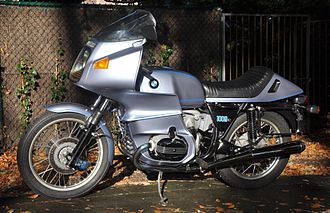
BMW R100RS – The Motorcycle That Taught the World What a Sport-Touring Machine Could Be
There are motorcycles that become successful because they are fast. Others become legendary because they are beautiful, rare, or technologically advanced. Then there are motorcycles that redefine an entire category and permanently alter the expectations of riders around the world. The BMW R100RS belongs firmly in that last group. It was not simply another touring motorcycle from Germany, nor was it merely a larger boxer twin with stylish bodywork. When the BMW R100RS arrived in the second half of the 1970s, it fundamentally changed the way riders thought about long-distance speed, comfort, weather protection, stability, and engineering sophistication.
Today, decades after its debut, the R100RS remains one of the most admired motorcycles ever produced by BMW Motorrad. Riders still talk about the bike with a kind of reverence usually reserved for machines that carry emotional weight far beyond their mechanical specifications. It represented an era when motorcycles were evolving from relatively exposed and simple machines into refined grand touring instruments capable of crossing countries at high speed while protecting their riders from fatigue and the elements.
The story of the BMW R100RS is also the story of BMW itself during a fascinating period in motorcycle history. Japanese manufacturers were rapidly dominating global markets with increasingly powerful inline-four machines. European motorcycle brands were under pressure, and many struggled to survive. Instead of attempting to imitate Japanese sport motorcycles directly, BMW chose a different path. The company focused on engineering precision, stability, rider comfort, and real-world performance over outright acceleration figures.
The result was a motorcycle unlike anything else available at the time. The R100RS was among the very first production motorcycles to feature a wind tunnel-developed full fairing designed by the manufacturer itself. While fairings had existed previously in racing and aftermarket applications, BMW integrated aerodynamics into the motorcycle as a complete design philosophy. Riders suddenly discovered that long-distance travel at highway speeds could be calmer, quieter, and significantly less exhausting.
Even now, many enthusiasts consider the R100RS one of the most influential motorcycles ever built. Its appearance is unmistakable. The sharply angular fairing, low clip-style handlebars, horizontally opposed boxer engine, and purposeful stance created a machine that looked serious before it even moved. It did not scream for attention in the same way as Italian superbikes or Japanese race replicas. Instead, it projected confidence, intelligence, and engineering authority.
The motorcycle also embodied a uniquely European interpretation of performance. It was designed not merely for short bursts of speed but for sustained high-speed travel across long distances. On unrestricted sections of German autobahn, the R100RS could maintain impressive cruising speeds while remaining stable and composed. Riders often described the machine as feeling almost locomotive-like in its ability to cover enormous distances with little drama.
Over time, the BMW R100RS evolved into something larger than a motorcycle model. It became a symbol of mature motorcycling. It appealed to riders who valued engineering depth, practical sophistication, and enduring quality over fashion trends. Unlike many motorcycles that lose relevance after a few years, the R100RS has continued to attract collectors, restorers, long-distance travelers, and enthusiasts who appreciate analog mechanical character.
To understand why this motorcycle continues to inspire admiration almost fifty years after its introduction, it is necessary to examine not only the technical details but also the historical context, riding experience, design philosophy, and emotional appeal that made the R100RS such a landmark machine.
The Motorcycle Industry in the 1970s – A Time of Transformation
The 1970s represented one of the most turbulent and transformative periods in motorcycle history. Manufacturers around the world were experimenting with new technologies, larger engines, improved suspension systems, and changing rider expectations. Japanese companies such as Honda, Kawasaki, Suzuki, and Yamaha were aggressively pushing the industry forward with high-performance multi-cylinder motorcycles that stunned the market with their speed and reliability.
Honda’s CB750 had already demonstrated that mass-produced superbikes could become commercially successful. Kawasaki followed with brutally fast machines that emphasized acceleration and top speed. European manufacturers suddenly faced a difficult challenge. Traditional motorcycle brands that had dominated previous decades found themselves competing against technologically ambitious Japanese motorcycles that offered tremendous performance at attractive prices.
BMW Motorrad understood that simply trying to imitate Japanese motorcycles would not be the right strategy. BMW already possessed a distinct identity rooted in engineering quality, shaft-drive reliability, and horizontally opposed boxer engines. The company recognized that its customers valued long-distance capability, durability, and refinement.
This realization became critically important. Rather than building a high-revving sport machine focused purely on acceleration numbers, BMW concentrated on creating motorcycles optimized for real-world travel. The company believed there was enormous value in comfort, stability, weather protection, and reliability during sustained high-speed riding.
At the same time, motorcycling culture itself was changing. Riders were beginning to travel farther than ever before. Touring was becoming increasingly popular, especially in Europe and North America. Highways were improving, travel distances were increasing, and motorcyclists wanted machines capable of carrying luggage and passengers comfortably over long journeys.
BMW already had experience building practical touring motorcycles, but the company wanted to create something more ambitious. The goal was not merely comfort. BMW envisioned a motorcycle that could blend sportiness, aerodynamics, and touring practicality into one coherent package.
That idea sounds normal today because the sport-touring category is now well established. However, in the mid-1970s, this concept was genuinely revolutionary. Most motorcycles were still specialized tools. Sport bikes emphasized speed and agility but sacrificed comfort. Touring motorcycles focused on comfort but often lacked sporting character. BMW aimed to create a machine that could achieve both.
The R100RS emerged directly from this philosophy. It was not simply a motorcycle with a fairing attached. It was a fully integrated high-speed touring system designed from the beginning around aerodynamic efficiency and rider endurance.
This distinction mattered enormously. BMW invested substantial effort into wind tunnel testing and ergonomic development. The company understood that sustained high-speed travel required more than horsepower. Rider fatigue, wind buffeting, weather exposure, and stability all influenced the quality of long-distance riding.
When the R100RS finally appeared, many riders immediately recognized that BMW had created something genuinely different. The motorcycle was not necessarily the fastest machine of its era in a straight line, but it delivered a uniquely sophisticated experience that many competitors could not match.
The Birth of the BMW R100RS
The BMW R100RS debuted in 1976 and immediately attracted attention from journalists and experienced riders alike. At first glance, the motorcycle looked futuristic compared with many of its contemporaries. Its angular full fairing gave it a purposeful and aerodynamic appearance unlike the naked motorcycles that dominated the market.
One of the most important figures behind the R100RS was Hans Muth, the influential designer responsible for shaping the motorcycle’s distinctive visual identity. Muth understood that the fairing could not simply be functional; it also needed to establish a strong aesthetic character. The result was a motorcycle that looked simultaneously elegant and aggressive.
The fairing itself represented a major engineering achievement. BMW used wind tunnel testing during development, making the R100RS one of the first production motorcycles in history to feature a manufacturer-designed aerodynamic fairing developed scientifically rather than stylistically.
This fairing transformed the riding experience. Riders could travel at highway speeds with significantly reduced wind pressure on the chest and upper body. Long-distance fatigue decreased dramatically, especially during cold or wet weather. The aerodynamic protection also improved stability and reduced turbulence.
The engine powering the R100RS was a 980cc air-cooled boxer twin derived from BMW’s established flat-twin architecture. While some competitors focused on increasingly complex multi-cylinder engines, BMW remained committed to the boxer layout for several reasons.
The horizontally opposed cylinders helped lower the motorcycle’s center of gravity, contributing to stable handling characteristics. The engine’s broad torque delivery suited long-distance riding perfectly. Maintenance accessibility also remained excellent, as cylinder heads protruded outward and could be serviced relatively easily.
The R100RS produced approximately 70 horsepower, which was respectable for the era. More importantly, the motorcycle delivered power smoothly and predictably. Riders appreciated the engine’s relaxed but confident character.
BMW paired the engine with shaft drive, another defining characteristic of the brand. While chain-driven motorcycles required regular cleaning, lubrication, and adjustment, the shaft-driven BMW offered exceptional convenience for touring riders.
The motorcycle also featured a five-speed transmission, dual front disc brakes, and carefully tuned suspension geometry designed for stability at speed. BMW engineers prioritized composure over nervous agility. The result was a motorcycle that felt exceptionally secure during fast cruising.
Journalists who tested the R100RS often emphasized how different the machine felt compared with contemporary sport motorcycles. It was not twitchy or hyperactive. Instead, it felt deliberate, planted, and mature.
Some riders initially found the riding position somewhat unusual. The handlebars were relatively low, and the fairing enclosed the rider more than most motorcycles of the period. However, many owners soon discovered that the ergonomics worked remarkably well at speed.
The fairing’s effectiveness became especially apparent during poor weather conditions. Rain, cold air, and fatigue affected R100RS riders less severely than those on conventional naked motorcycles. This capability dramatically extended the comfort range of long-distance travel.
As the motorcycle gained popularity, it became clear that BMW had succeeded in creating a new type of machine. The R100RS was not simply another touring motorcycle. It was arguably the first true modern sport-tourer.
Design Philosophy – Form Following Function
One of the most remarkable aspects of the BMW R100RS is the extent to which its design reflects engineering priorities. Every major visual element of the motorcycle serves a practical purpose.
The fairing is perhaps the best example. Unlike decorative bodywork added primarily for appearance, the R100RS fairing was designed scientifically to improve aerodynamic efficiency and rider comfort. Wind tunnel testing allowed BMW engineers to study airflow patterns and optimize protection.
At higher speeds, the fairing creates a calm pocket of air around the rider. This significantly reduces physical strain during long rides. Riders who spend hours exposed to direct wind pressure often experience neck, shoulder, and upper body fatigue. The R100RS minimized these issues in ways that few motorcycles had previously achieved.
The fairing also contributed to weather protection. During cold-weather riding, reduced wind exposure made a substantial difference in rider endurance. In rain, the fairing helped redirect water away from the rider’s torso.
Hans Muth’s styling ensured that the fairing remained visually cohesive with the motorcycle’s mechanical structure. The angular lines reflected 1970s industrial design trends while simultaneously appearing timeless.
The fuel tank design also deserves attention. BMW tanks from this era possessed a distinctive shape that balanced visual elegance with practical riding ergonomics. The narrow knee area allowed comfortable rider positioning while still providing generous fuel capacity.
Instrumentation on the R100RS reflected BMW’s practical philosophy. The gauges were clear, functional, and easy to read. Switchgear emphasized usability over decorative complexity.
The boxer engine itself became a visual centerpiece. Unlike engines hidden beneath extensive bodywork, the protruding cylinders remained fully visible. This gave the motorcycle mechanical honesty. Riders could immediately recognize the machine’s engineering layout.
The exposed cylinders also communicated BMW’s engineering confidence. Rather than concealing the boxer architecture, BMW celebrated it.
The riding position represented another carefully considered compromise. It was sportier than many touring motorcycles but more comfortable than pure sport machines. The low handlebars encouraged a slightly forward-leaning posture that worked harmoniously with the fairing at highway speeds.
Importantly, the R100RS was designed for actual use rather than showroom theatrics. Every component emphasized durability and practicality. The paint quality, hardware finish, and overall assembly standards reflected BMW’s reputation for precision engineering.
Many motorcycles from the 1970s now appear dated, but the R100RS continues to look purposeful and sophisticated. This longevity results largely from the honesty of its design philosophy. Machines built primarily around genuine functional priorities often age more gracefully than trend-driven designs.
Riding the BMW R100RS – A Unique Experience
Riding a BMW R100RS is an experience fundamentally different from operating many modern motorcycles. The machine possesses a deeply mechanical character that immediately distinguishes it from contemporary electronically managed bikes.
The first thing many riders notice is the boxer engine’s personality. At idle, the engine produces a subtle side-to-side rocking motion caused by the crankshaft orientation. This characteristic movement has become one of the defining sensory signatures of classic BMW motorcycles.
Once underway, the engine delivers broad and usable torque rather than explosive acceleration. The powerband feels relaxed but authoritative. Instead of encouraging frantic high-rev riding, the R100RS rewards smooth throttle inputs and sustained momentum.
The transmission has a deliberate feel that modern riders sometimes describe as agricultural, although experienced BMW enthusiasts often view this as part of the motorcycle’s charm. Gear changes feel mechanical and substantial.
At low speeds, the motorcycle can feel heavier than smaller machines, but once moving, the balance becomes remarkably natural. The low center of gravity created by the boxer engine contributes significantly to this sensation.
Where the R100RS truly comes alive is on open roads. At highway speeds, the fairing demonstrates its brilliance. Wind pressure decreases dramatically, allowing riders to maintain high cruising speeds with minimal fatigue.
The motorcycle feels incredibly stable at speed. BMW engineered the chassis for composure rather than hyperactive steering response. Long sweeping curves suit the R100RS perfectly.
The suspension setup reflects the engineering priorities of its era. Compared with modern sport motorcycles, the suspension is softer and less aggressive. However, it remains highly effective for long-distance touring and real-world road conditions.
Many riders describe the R100RS as a motorcycle that encourages thoughtful riding rather than aggressive behavior. The machine rewards smoothness, anticipation, and rhythm.
Braking performance was impressive for the era, particularly with dual front discs, although modern riders accustomed to radial calipers and advanced ABS systems may find the brakes require firmer input.
One of the greatest pleasures of riding the R100RS is the sense of connection between rider and machine. There are few electronic systems separating human inputs from mechanical response. The motorcycle communicates directly.
Engine vibrations, shaft-drive reactions, intake sounds, and suspension feedback all contribute to a deeply engaging riding experience. Many enthusiasts argue that this mechanical transparency creates a stronger emotional bond than many modern motorcycles can provide.
Long-distance touring remains one of the R100RS’s greatest strengths. Riders often report covering enormous distances comfortably, especially compared with naked motorcycles of similar vintage.
The fairing’s weather protection becomes especially valuable during changing conditions. Cold air, rain, and fatigue affect riders less severely than expected from a 1970s motorcycle.
Another important aspect of the R100RS riding experience is durability confidence. BMW motorcycles from this period developed strong reputations for reliability and longevity. Riders frequently trusted these machines for serious travel.
Even today, well-maintained R100RS motorcycles continue to complete long journeys successfully. Many examples have accumulated extraordinary mileage figures.
Engineering Excellence and the Boxer Twin Legacy
The BMW boxer twin engine is one of the most recognizable motorcycle engine configurations ever created. By the time the R100RS appeared, BMW had already spent decades refining this architecture.
The boxer layout places two horizontally opposed cylinders on either side of the motorcycle. This arrangement provides several important advantages.
First, it lowers the center of gravity. A lower center of gravity improves stability and contributes to the planted feel that became a hallmark of BMW motorcycles.
Second, air cooling works effectively because both cylinders remain exposed directly to airflow. During the 1970s, air cooling was still entirely normal, but BMW’s boxer configuration allowed particularly consistent cooling performance.
Third, maintenance accessibility is excellent. Valve adjustments, for example, can be performed relatively easily because the cylinder heads remain exposed.
The R100RS engine represented the culmination of extensive boxer development. The 980cc displacement provided strong torque and relaxed highway cruising capability.
Unlike many high-performance motorcycles that demand constant high-rev operation, the R100RS delivered flexible real-world power. Riders could accelerate smoothly without needing to constantly chase peak horsepower.
BMW also prioritized durability. The engine was designed to withstand sustained high-speed operation over long distances.
The shaft-drive system further reinforced the motorcycle’s touring mission. Chain maintenance can become tedious during long trips, especially in poor weather. Shaft drive reduced maintenance requirements dramatically.
Of course, shaft drive also influenced riding dynamics. Older shaft-driven motorcycles sometimes exhibited noticeable suspension reactions under throttle changes. BMW engineers worked carefully to minimize these effects.
The motorcycle’s frame design emphasized rigidity and stability. BMW understood that high-speed touring required predictable handling more than razor-sharp corner entry.
Electrical systems on classic BMW motorcycles earned generally positive reputations, although age now means many surviving examples require restoration work.
The engineering philosophy behind the R100RS reflected a broader BMW mindset. The company approached motorcycle design with automotive-like seriousness. Components were intended to function cohesively as part of a complete long-distance transportation system.
This philosophy helped distinguish BMW from manufacturers focused primarily on speed or styling.
The R100RS also demonstrated that motorcycles could be technologically sophisticated without sacrificing reliability. BMW managed to integrate aerodynamic innovation while preserving mechanical simplicity.
Many enthusiasts admire the motorcycle precisely because it represents a balance rarely achieved in modern design. It combines engineering sophistication with analog mechanical honesty.
The R100RS and Long-Distance Touring Culture
To fully appreciate the BMW R100RS, it is important to understand its impact on long-distance motorcycling culture.
Before motorcycles like the R100RS, high-speed touring often involved significant physical exhaustion. Riders on naked motorcycles faced constant wind pressure, weather exposure, and fatigue.
BMW recognized that reducing rider fatigue could fundamentally improve the touring experience. The R100RS fairing transformed expectations regarding comfort at speed.
Riders suddenly realized they could travel farther, faster, and more comfortably than before.
This capability proved especially important in Europe, where long-distance travel across multiple countries was common. German autobahns allowed sustained high-speed cruising that highlighted the advantages of aerodynamic protection.
The motorcycle became popular among experienced touring riders who valued practical capability over fashion trends.
BMW owners often formed a distinct motorcycling subculture centered around travel, reliability, and engineering appreciation. The R100RS fit perfectly within this identity.
The motorcycle also attracted riders transitioning from traditional touring machines who wanted more sporting capability without sacrificing comfort.
Unlike large American touring motorcycles emphasizing relaxed cruising, the R100RS encouraged active riding while still providing substantial comfort.
Owners frequently used these motorcycles for ambitious journeys involving thousands of kilometers.
The luggage options available for BMW motorcycles further enhanced touring practicality. Hard panniers and tank bags allowed riders to carry substantial gear securely.
The fuel range also supported long-distance travel effectively. Combined with good highway efficiency, the R100RS could cover impressive distances between fuel stops.
Over time, the motorcycle earned a reputation as an intelligent traveler’s machine. It appealed to riders interested in exploration rather than posing.
This identity continues today among classic BMW enthusiasts. Many restored R100RS motorcycles remain fully functional touring machines rather than static museum pieces.
The machine’s enduring touring reputation also helped influence later generations of sport-touring motorcycles from numerous manufacturers.
Modern motorcycles such as the BMW RT series, Honda ST models, Yamaha FJR1300, and Kawasaki Concours all owe something to the pioneering philosophy established by the R100RS.
Evolution Through the Years
Like many successful motorcycles, the BMW R100RS evolved gradually during its production life.
BMW introduced updates to improve reliability, comfort, and performance while preserving the motorcycle’s core identity.
Early examples from the late 1970s are especially prized by collectors due to their purity and historical significance.
Throughout the late 1970s and early 1980s, BMW refined suspension components, braking systems, and electrical equipment.
Certain cosmetic changes also appeared over the years, including different paint schemes and trim variations.
The iconic Motorsport-inspired paint combinations became particularly admired.
As emissions regulations and market conditions changed during the 1980s, BMW adjusted engine tuning and technical specifications.
The motorcycle eventually gained improvements such as Nikasil cylinder coatings and upgraded ignition systems.
Despite these updates, BMW wisely avoided altering the fundamental character of the R100RS.
The boxer engine, shaft drive, aerodynamic fairing, and stable touring-focused chassis remained central to the motorcycle’s identity.
Production of the original airhead R100RS eventually concluded, but the model’s influence persisted strongly within BMW’s lineup.
Modern BMW sport-touring motorcycles continue to reflect many concepts pioneered by the R100RS.
The machine also became increasingly collectible as enthusiasts recognized its historical importance.
Today, early and well-preserved examples command significant respect within the collector motorcycle community.
Restoration projects have become increasingly popular, with owners seeking to preserve the motorcycle’s original engineering character.
Some riders prefer factory-original restorations, while others subtly modernize components such as suspension, brakes, or charging systems to improve usability.
Regardless of approach, the enduring enthusiasm surrounding the R100RS demonstrates how successfully BMW created a motorcycle with lasting emotional appeal.
Why the BMW R100RS Became a Legend
Many motorcycles achieve temporary popularity, but relatively few become true legends. The BMW R100RS achieved legendary status because it succeeded simultaneously in multiple important areas.
First, it introduced genuine innovation. The wind tunnel-developed fairing represented a major breakthrough in production motorcycle design.
Second, the motorcycle fulfilled its intended purpose exceptionally well. It was not a marketing exercise disconnected from reality. Riders genuinely experienced improved comfort, stability, and long-distance capability.
Third, the R100RS possessed strong visual identity. Even decades later, the motorcycle remains instantly recognizable.
Fourth, the engineering quality inspired trust and loyalty.
BMW motorcycles from this era developed reputations for durability and longevity. Many owners accumulated enormous mileage.
Fifth, the motorcycle appealed emotionally to riders seeking mature and purposeful motorcycling experiences.
Unlike motorcycles focused purely on youthful aggression or fashion, the R100RS projected intelligence and sophistication.
Its understated confidence became part of its charm.
The motorcycle also arrived at precisely the right historical moment. Riders were increasingly interested in touring, high-speed travel, and practical comfort.
BMW anticipated these changing priorities before many competitors.
Another reason for the R100RS’s enduring reputation is that it remains enjoyable to ride.
Some historic motorcycles feel fascinating only as museum objects. The R100RS continues to function effectively as a real-world motorcycle.
Owners frequently describe deep emotional attachment to these machines.
The motorcycle’s mechanical honesty contributes significantly to this connection. Riders can feel and understand what the machine is doing.
Modern motorcycles often isolate riders behind layers of electronic systems. The R100RS remains beautifully transparent.
Its flaws also contribute to its humanity. The transmission clunks, the boxer rocks gently at idle, and the suspension reflects older engineering priorities.
Yet these characteristics create personality rather than frustration.
The R100RS also occupies a fascinating historical position between classic and modern motorcycling.
It retains traditional mechanical simplicity while simultaneously introducing advanced aerodynamic concepts.
This balance gives the motorcycle timeless relevance.
Collecting and Restoring the BMW R100RS
The collector market for classic BMW motorcycles has grown steadily over recent decades, and the R100RS occupies a particularly respected position.
Enthusiasts value the motorcycle not only for its historical significance but also for its usability.
Unlike some fragile collector motorcycles that require careful preservation and limited operation, the R100RS was engineered for serious mileage.
Many restored examples continue to tour extensively.
When searching for an R100RS today, buyers often prioritize originality, maintenance history, and overall mechanical condition.
Because these motorcycles were frequently used for long-distance travel, high mileage is common.
Fortunately, BMW’s engineering durability means mileage alone does not necessarily indicate poor condition.
Proper maintenance remains far more important.
Valve adjustments, carburetor tuning, driveshaft inspection, and electrical system health all require attention.
Rust and corrosion can affect neglected examples, especially around frames and exhaust systems.
Original paint and factory components often increase collector value.
The fairing itself deserves careful inspection because replacement parts for certain early versions can be difficult to source.
Fortunately, BMW’s enthusiast community remains exceptionally strong.
Owners clubs, specialist workshops, and aftermarket suppliers continue supporting classic airhead BMW motorcycles extensively.
This support network makes restoration and maintenance more practical than with many vintage motorcycles.
Some owners choose sympathetic upgrades such as improved suspension units, electronic ignition systems, upgraded charging systems, or modern tires.
These modifications can improve reliability and ride quality while preserving the motorcycle’s original character.
Others pursue concours-level restorations focused on factory authenticity.
Both approaches reflect the depth of enthusiasm surrounding the R100RS.
Prices for excellent examples have increased substantially over time, especially for early production models in desirable colors.
However, many enthusiasts argue that the motorcycle’s true value lies not in investment potential but in the riding experience itself.
Owning an R100RS often becomes a long-term relationship rather than a temporary purchase.
The BMW R100RS Compared with Modern Motorcycles
Comparing the BMW R100RS with modern motorcycles reveals fascinating insights into how motorcycling has evolved.
Modern sport-tourers are undeniably faster, more powerful, and technologically advanced.
Electronic rider aids, sophisticated suspension systems, traction control, ABS, navigation systems, and high-performance brakes have transformed motorcycle capability.
Yet many experienced riders still find the R100RS uniquely satisfying.
One reason is simplicity.
The motorcycle delivers a direct mechanical experience largely absent from many modern machines.
There are no riding modes, touchscreen menus, or software updates.
The rider interacts directly with throttle, clutch, gearbox, and chassis.
This simplicity creates clarity.
The R100RS also encourages a different riding mindset.
Rather than overwhelming the rider with immense horsepower, it rewards smoothness, anticipation, and rhythm.
Modern motorcycles can achieve astonishing speed almost effortlessly, but the R100RS often feels more involving at realistic road velocities.
Its engine character also differs dramatically from many contemporary powerplants.
The boxer twin produces torque-rich and relaxed performance rather than explosive acceleration.
Aerodynamic protection remains surprisingly effective even by modern standards.
Many riders are astonished by how comfortable the motorcycle remains during highway cruising.
Of course, the R100RS also reflects its era in certain ways.
Braking performance, suspension sophistication, tire technology, and overall power output cannot match modern motorcycles.
However, these limitations are often part of the appeal.
The motorcycle demands engagement and respect.
Many enthusiasts believe classic motorcycles like the R100RS provide richer sensory experiences precisely because they are less isolated and automated.
Mechanical sounds, vibrations, and physical feedback become integral parts of the journey.
The motorcycle also represents a philosophy increasingly rare in modern product design.
It was engineered primarily for longevity and functional integrity rather than rapid replacement cycles.
Many R100RS motorcycles remain operational nearly fifty years after production.
That durability itself has become deeply admirable.
Cultural Impact and Legacy
The influence of the BMW R100RS extends far beyond its production numbers.
The motorcycle helped establish BMW Motorrad as a serious innovator capable of defining entirely new categories.
Its success demonstrated that motorcycles could combine speed, comfort, weather protection, and sophisticated engineering within one coherent package.
Nearly every modern sport-touring motorcycle owes some conceptual debt to the R100RS.
The idea that riders could travel long distances at high speed while remaining protected and comfortable became increasingly mainstream because of motorcycles like this one.
The R100RS also reinforced BMW’s identity as a manufacturer focused on thoughtful engineering rather than superficial trends.
This reputation continues influencing BMW Motorrad today.
Within popular motorcycling culture, the R100RS developed a distinctive image.
It became associated with experienced riders, long-distance travelers, engineers, professionals, and enthusiasts who appreciated substance over spectacle.
This mature image contrasted with the rebellious stereotypes often associated with motorcycles.
The motorcycle’s visual design also influenced future generations of BMW styling.
Hans Muth’s work on the R100RS established themes that would echo through later BMW motorcycles.
The machine has appeared in countless motorcycle magazines, documentaries, collector exhibitions, and enthusiast discussions.
Classic motorcycle journalists frequently rank it among the most important motorcycles ever built.
Its historical significance is not merely nostalgic exaggeration.
The R100RS genuinely changed production motorcycle design.
Today, surviving examples serve both as collector objects and functioning historical artifacts.
Riders continue using these motorcycles for touring adventures across Europe, North America, and beyond.
The enduring visibility of the R100RS on modern roads demonstrates the timelessness of its engineering philosophy.
Conclusion – Why the BMW R100RS Still Matters
The BMW R100RS remains important because it represents far more than a successful motorcycle model. It symbolizes a moment when thoughtful engineering reshaped rider expectations.
BMW did not create the R100RS merely to compete in horsepower wars. Instead, the company focused on solving real problems faced by riders who traveled long distances at speed.
The result was a motorcycle that introduced revolutionary aerodynamic concepts while preserving mechanical honesty and rider engagement.
Its wind tunnel-developed fairing transformed comfort expectations.
Its boxer twin engine delivered dependable and charismatic performance.
Its chassis offered remarkable stability.
Its overall design achieved a balance between sportiness and practicality that remains impressive even today.
The motorcycle also demonstrated that mature engineering could possess emotional depth.
The R100RS does not rely on outrageous styling or excessive power to create attachment.
Instead, it earns admiration gradually through competence, character, and integrity.
Riders who spend time with these motorcycles often develop deep affection for them.
Even in an era dominated by advanced electronics and extraordinary performance figures, the R100RS continues to attract enthusiasts because it offers something timeless: authenticity.
Every vibration, sound, and mechanical response feels genuine.
The motorcycle invites riders to participate actively in the experience rather than passively consuming it.
Its influence remains visible across the entire sport-touring category.
Modern motorcycles capable of crossing continents comfortably at high speed exist partly because BMW dared to rethink motorcycle aerodynamics and rider comfort during the 1970s.
The R100RS proved that performance and practicality did not need to exist separately.
Nearly fifty years after its debut, the motorcycle still looks purposeful, still rides beautifully, and still inspires admiration.
That longevity is perhaps the clearest measure of true greatness.
The BMW R100RS was not simply ahead of its time.
In many ways, it created the future.
BMW R100RS – Technical Specifications
| Parameter | Specification |
|---|---|
| Model | BMW R100RS |
| Manufacturer | BMW Motorrad |
| Production Start | 1976 |
| Motorcycle Type | Sport-Touring |
| Engine Type | Air-cooled, four-stroke, boxer twin |
| Displacement | 980 cc |
| Bore x Stroke | 94 mm × 70.6 mm |
| Compression Ratio | Approximately 9.5:1 |
| Power Output | Approximately 70 hp |
| Torque | Approximately 76 Nm |
| Fuel System | Bing carburetors |
| Cooling System | Air-cooled |
| Transmission | 5-speed manual |
| Final Drive | Shaft drive |
| Frame Type | Steel tubular frame |
| Front Suspension | Telescopic forks |
| Rear Suspension | Dual shock absorbers |
| Front Brakes | Dual disc brakes |
| Rear Brake | Single disc brake |
| Front Wheel | 19-inch |
| Rear Wheel | 18-inch |
| Fuel Tank Capacity | Approximately 24 liters |
| Dry Weight | Approximately 236 kg |
| Top Speed | Around 200 km/h |
| Fairing Type | Wind tunnel-developed full fairing |
| Starter System | Electric starter |
| Country of Origin | Germany |
| Legacy | Widely considered the first true sport-touring motorcycle |
