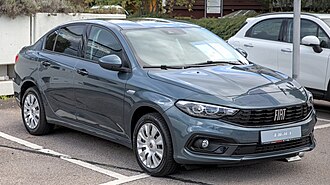
Buying a used family car has never been more challenging. Modern motorists expect generous interior space, low running costs, reliable mechanical components, comfortable ride quality, modern safety equipment, economical engines, and attractive pricing—all in one package. Many manufacturers promise this combination, but only a few genuinely deliver it. One of the most convincing examples is the Fiat Tipo, a car that has quietly become one of the best-value used family vehicles available on today’s market.
Unlike many competitors that attempt to impress buyers with expensive technology, fashionable styling, or premium branding, the Fiat Tipo follows a refreshingly straightforward philosophy. It was designed from the beginning to provide everything a family driver genuinely needs while avoiding unnecessary complexity that increases purchase prices and maintenance costs. The result is a practical, spacious, dependable, and affordable car that consistently exceeds expectations.
The modern Tipo was introduced in 2015, reviving one of Fiat’s most respected model names. The original Fiat Tipo of 1988 had won the prestigious European Car of the Year award for 1989 thanks to its innovative engineering and outstanding practicality. More than two decades later, Fiat chose to revive the legendary nameplate with a completely new vehicle aimed at buyers seeking sensible transportation rather than fashionable image.
Initially launched as a sedan, the Tipo later expanded into a full family of vehicles that included a practical five-door hatchback and a spacious station wagon. This broad model range allowed Fiat to compete directly with established rivals such as the Škoda Octavia, Ford Focus, Hyundai i30, Kia Ceed, Renault Mégane, and Peugeot 308.
Although the Tipo rarely dominates automotive headlines, it has quietly earned an excellent reputation among owners. Buyers appreciate its generous interior space, straightforward engineering, affordable servicing, comfortable ride, and dependable engines. Perhaps most importantly, depreciation has made the Tipo one of the strongest bargains available on the used market.
This comprehensive guide examines every important aspect of buying a used Fiat Tipo, including its history, design, practicality, engine choices, driving characteristics, reliability, common problems, maintenance costs, ownership experience, and which versions deserve the most serious consideration.
The History of the Modern Fiat Tipo
Reviving a Legendary Name
When Fiat announced the return of the Tipo name, many enthusiasts wondered whether the new model could match the reputation of its celebrated predecessor.
The original Tipo, produced between 1988 and 1995, was famous for its spacious interior, innovative construction, and practical design. It established Fiat as a serious competitor in the compact family car segment.
The new Tipo followed a different philosophy. Instead of emphasizing technological innovation, Fiat concentrated on creating a dependable, practical, and affordable family vehicle capable of succeeding in numerous global markets.
Development focused heavily on value for money. Rather than competing directly with premium compact hatchbacks, Fiat positioned the Tipo as a car offering more space and equipment than similarly priced rivals.
Production began in Bursa, Turkey, where modern manufacturing facilities ensured consistently high build quality. The factory rapidly became one of Fiat’s most important production centers.
The strategy proved successful. Although the Tipo never became Europe’s best-selling compact car, it gained a loyal customer base among private owners, taxi operators, rental companies, and fleet buyers seeking dependable transportation.
Subsequent updates introduced improved infotainment systems, revised styling, enhanced driver assistance technologies, and mild-hybrid powertrains while preserving the model’s practical character.
Exterior Design
Timeless Rather Than Trendy
One of the Fiat Tipo’s greatest strengths is its restrained exterior design.
Unlike many modern vehicles featuring exaggerated styling elements, oversized grilles, or unnecessarily aggressive bodywork, the Tipo adopts clean and balanced proportions that are unlikely to become outdated quickly.
The front end features attractive headlights integrated into a wide grille that gives the car a confident yet approachable appearance. Later facelifted models introduced LED lighting, updated bumpers, and refreshed styling that modernized the overall look without fundamentally altering the vehicle’s identity.
The hatchback offers sporty proportions suitable for urban drivers, while the sedan emphasizes traditional elegance with a generously sized luggage compartment.
Perhaps the most practical member of the family is the station wagon, combining attractive proportions with exceptional cargo capacity.
Large windows contribute to excellent visibility in every direction, making parking and city driving considerably easier than in many competitors.
The Tipo’s understated appearance also appeals to buyers who prefer discreet styling over fashionable design trends.
Interior Design and Cabin Quality
Built Around Everyday Practicality
Step inside the Fiat Tipo and it quickly becomes apparent that practicality guided every design decision.
The dashboard is logically arranged, with clearly labeled controls positioned within comfortable reach of the driver. Even buyers unfamiliar with Fiat products usually adapt within minutes thanks to the intuitive layout.
Earlier models feature simpler infotainment systems, while later versions receive larger touchscreens supporting Apple CarPlay and Android Auto, significantly improving connectivity.
Material quality reflects the Tipo’s value-oriented positioning. Soft-touch plastics appear only in selected areas, while harder materials dominate much of the dashboard. However, assembly quality is generally solid, and many interiors withstand years of regular use remarkably well.
Seats deserve particular praise. Front occupants benefit from generous cushioning and excellent comfort during long journeys, while rear passengers enjoy legroom that rivals considerably larger vehicles.
The elevated seating position improves visibility while making entry and exit easier for older passengers.
Storage compartments throughout the cabin further enhance practicality. Large door bins, cup holders, a spacious glovebox, and multiple smaller storage areas accommodate everyday belongings with ease.
Passenger Space and Practicality
One of the Most Spacious Cars in Its Class
Interior space represents one of the Tipo’s greatest competitive advantages.
Despite competing in the compact family car segment, the Tipo offers passenger accommodation comparable to some larger vehicles.
Rear passengers enjoy generous knee room and headroom, making the car particularly suitable for families with teenagers or adults who frequently travel in the back.
The luggage compartment is equally impressive.
The sedan offers an enormous trunk suitable for holiday luggage, business equipment, or family shopping.
The hatchback combines practical loading access with substantial cargo capacity.
The station wagon becomes one of the most versatile vehicles in its class, providing generous space for bicycles, sports equipment, pets, camping gear, or furniture.
Numerous luggage hooks, folding rear seats, and a low loading lip further improve usability.
Engine Options
Petrol Engines
Fiat offered several petrol engines throughout the Tipo’s production.
Early buyers commonly selected the dependable 1.4-liter naturally aspirated engine. Although performance is modest, reliability remains one of its strongest attributes.
The 1.4 T-Jet turbocharged engine delivers considerably stronger acceleration while maintaining reasonable fuel economy. It remains one of the most enjoyable petrol options.
Later models introduced the efficient 1.0 FireFly turbocharged three-cylinder engine, combining modern technology with excellent everyday performance.
More recent mild-hybrid systems improve urban fuel economy while reducing emissions.
Diesel Engines
Diesel engines have traditionally represented one of Fiat’s greatest engineering strengths, and the Tipo continues this tradition.
The 1.3 MultiJet offers exceptional fuel economy, making it particularly attractive for urban deliveries and moderate annual mileage.
The larger 1.6 MultiJet remains the most desirable diesel choice for many buyers. It provides strong torque, relaxed motorway cruising, impressive durability, and excellent long-distance efficiency.
Properly maintained MultiJet engines frequently exceed very high mileages without requiring major internal repairs.
Driving Experience
Comfort Takes Priority
The Fiat Tipo is not designed as a sports hatchback.
Instead, Fiat concentrated on creating a comfortable and confidence-inspiring driving experience suitable for everyday family use.
The suspension effectively absorbs poor road surfaces while maintaining reassuring stability during motorway travel.
Steering is light during city driving, making parking simple, yet retains sufficient accuracy on faster roads.
Noise insulation compares favorably with many competitors in the same price category.
Long-distance comfort is particularly impressive. The seats remain supportive, suspension minimizes fatigue, and larger diesel engines provide effortless cruising.
The station wagon behaves almost identically to the hatchback despite its increased practicality.
Overall, the Tipo excels as an everyday family car rather than an enthusiastic driver’s machine.
Reliability
Better Than Fiat’s Old Reputation Suggests
Older Fiat models sometimes suffered from reliability stereotypes that no longer accurately reflect the company’s engineering.
The modern Tipo has established an excellent reliability record, particularly regarding its engines and transmissions.
Naturally aspirated petrol engines remain exceptionally dependable due to their mechanical simplicity.
The MultiJet diesel family continues Fiat’s long tradition of durable diesel technology.
Manual gearboxes prove robust, while automatic transmissions generally perform reliably when serviced according to manufacturer recommendations.
Electrical systems also compare favorably with many competitors, although occasional infotainment glitches appear on certain early examples.
Overall, the Tipo ranks among Fiat’s most dependable modern vehicles.
Common Problems to Check Before Buying
Diesel Particulate Filter
Drivers using diesel models primarily for short urban journeys may experience DPF-related issues.
Regular motorway driving significantly reduces this risk.
Suspension Components
Anti-roll bar links, bushings, and shock absorbers naturally wear over time.
Fortunately, replacement costs remain reasonable.
Infotainment Software
Some early multimedia systems occasionally require software updates to resolve connectivity issues.
Battery Condition
Modern vehicles equipped with start-stop technology depend heavily on healthy batteries.
Weak batteries may trigger multiple warning messages.
Air Conditioning
Compressors and condensers should be inspected carefully during pre-purchase evaluation.
Service History
Perhaps the most important factor is documented maintenance.
Regular oil changes using approved lubricants significantly contribute to long-term engine durability.
Running Costs
One of the Tipo’s Greatest Strengths
The Fiat Tipo consistently impresses owners with affordable operating expenses.
Fuel economy remains competitive across the entire engine range.
Insurance costs are generally lower than for many similarly sized competitors.
Routine servicing requires reasonably priced filters, fluids, brakes, and suspension components.
Independent workshops are widely familiar with the Tipo, reducing labor expenses.
Purchase prices also remain remarkably competitive, allowing buyers to acquire relatively modern vehicles with extensive equipment for surprisingly modest sums.
Spare Parts Availability
Excellent Throughout Europe
Obtaining replacement parts for the Tipo presents few difficulties.
Routine maintenance items remain widely available from both Fiat and numerous aftermarket suppliers.
Body panels, lighting components, cooling system parts, suspension components, clutches, timing kits, and electronic sensors can usually be sourced quickly.
Because the Tipo continues in production in some markets, parts availability is likely to remain excellent for many years.
Which Fiat Tipo Should You Buy?
For most buyers, the ideal used Tipo combines the 1.6 MultiJet diesel engine with the station wagon or five-door hatchback body.
This combination delivers excellent fuel economy, generous performance, comfortable long-distance driving, and exceptional practicality.
Drivers covering lower annual mileage should consider the naturally aspirated 1.4 petrol engine because of its straightforward maintenance and proven reliability.
The 1.0 FireFly turbo also represents an excellent modern petrol alternative.
Choosing a well-maintained vehicle with comprehensive service records remains considerably more important than selecting a specific trim level.
Advantages
Why the Fiat Tipo Represents Outstanding Value
The Tipo possesses numerous qualities that make it one of today’s smartest used family car purchases.
Its spacious interior, generous luggage capacity, dependable engines, comfortable suspension, affordable purchase price, low maintenance costs, excellent fuel economy, practical body styles, and straightforward engineering create an exceptionally well-balanced package.
Unlike many competitors, it avoids unnecessary complexity while delivering everything most families genuinely require.
Disadvantages
Areas Worth Considering
Although the Tipo performs strongly overall, it is not perfect.
Interior materials feel less premium than some German competitors.
Handling prioritizes comfort over sporty responsiveness.
Certain lower-powered engines may feel modest when fully loaded.
Diesel models require appropriate driving patterns to maintain emissions systems.
Finally, resale values remain lower than some rivals, although this benefits buyers entering the used market.
Final Verdict
The modern Fiat Tipo is one of the most underrated family cars available as a used vehicle. It successfully delivers exactly what many motorists genuinely need: generous passenger space, practical luggage capacity, economical engines, comfortable ride quality, dependable mechanical components, and remarkably affordable ownership costs.
Rather than chasing premium image or fashionable trends, Fiat concentrated on building an honest family car capable of serving owners reliably for many years. That philosophy has aged exceptionally well.
For families, commuters, company drivers, retirees, and anyone seeking dependable transportation without unnecessary expense, the Tipo deserves serious consideration. A carefully maintained example offers excellent value for money while avoiding many of the costly complications associated with more technologically ambitious competitors.
If there is one characteristic that best defines the Fiat Tipo, it is balance. It does not attempt to be the fastest, most luxurious, or most prestigious vehicle in its class. Instead, it succeeds by combining practicality, reliability, comfort, and affordability in a package that consistently exceeds expectations. That is precisely why it remains one of the smartest used family cars available today.
Fiat Tipo Technical Parameters
| Parameter | Specification |
|---|---|
| Model | Fiat Tipo (second generation) |
| Production years | 2015–present |
| Vehicle class | Compact car (C-segment) |
| Body styles | 4-door sedan, 5-door hatchback, 5-door station wagon |
| Layout | Front-engine, front-wheel drive |
| Seating capacity | 5 passengers |
| Doors | 4 or 5 |
| Length | Approx. 4,368–4,571 mm (depending on body style) |
| Width | Approx. 1,792 mm |
| Height | Approx. 1,495–1,515 mm |
| Wheelbase | Approx. 2,638 mm |
| Kerb weight | Approx. 1,200–1,450 kg |
| Petrol engines | 1.4 Fire, 1.4 T-Jet, 1.0 FireFly Turbo, 1.5 Hybrid |
| Diesel engines | 1.3 MultiJet, 1.6 MultiJet |
| Power output | Approx. 95–130 hp |
| Transmission | 5-speed manual, 6-speed manual, 6-speed automatic, 7-speed dual-clutch automatic (depending on engine) |
| Fuel tank capacity | Approx. 50 litres |
| Boot capacity | Sedan: approx. 520 litres; Hatchback: approx. 440 litres; Station Wagon: approx. 550 litres |
| Front suspension | Independent MacPherson strut |
| Rear suspension | Torsion beam |
| Front brakes | Ventilated disc |
| Rear brakes | Disc or drum (depending on version) |
| Average fuel consumption | Approx. 4.0–6.8 L/100 km |
| Top speed | Approx. 180–210 km/h |
| Main strengths | Spacious interior, excellent value, reliable engines, low running costs, comfortable ride |
| Common weaknesses | Basic interior materials, DPF issues on short-trip diesels, occasional infotainment glitches |
| Recommended used version | 1.6 MultiJet 120 hp or 130 hp with a full service history, or the 1.4 petrol for lower annual mileage |
