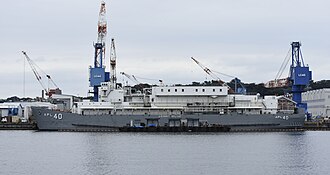
USS Nueces (APB-40)
Among the thousands of naval vessels constructed during the Second World War, some became legendary because of dramatic combat victories, while others quietly performed duties so essential that fleets could not have functioned without them. The USS Nueces (APB-40) belongs firmly in the second category. It was never a glamorous battleship, aircraft carrier, or guided missile destroyer. It did not become famous through cinematic naval battles or spectacular sinkings. Yet the history of USS Nueces is one of the most fascinating examples of how adaptable naval engineering can become when war, politics, and logistics constantly reshape military priorities. Over decades of service, the vessel transformed from a self-propelled barracks ship into a floating operational base during the Vietnam War and later into a support and accommodation platform serving American naval personnel in Japan. Few ships in U.S. Navy history experienced such a varied operational life while remaining continuously useful across radically different eras of warfare.
The story of USS Nueces also reveals an often-overlooked truth about naval operations: military success depends not only on frontline combat ships but also on support vessels that sustain sailors, troops, and logistical systems. Throughout naval history, floating barracks, repair ships, tenders, hospital ships, and supply vessels have quietly enabled fleets to function far from home ports. Without them, major operations would collapse under the weight of practical limitations. USS Nueces became one of those indispensable support platforms, adapting to changing operational demands over the course of more than half a century.
Named after the Nueces River in Texas, the ship emerged during the final phase of World War II, when American shipyards were producing vessels at astonishing speed. The United States Navy had learned that victory across the Pacific depended not merely on firepower but also on the ability to support enormous numbers of personnel operating across vast oceanic distances. This logistical philosophy led to the construction of specialized auxiliary ships designed to house, feed, and support naval personnel in forward operating regions. USS Nueces was one of these ships, though its career would become far more unusual than anyone could have predicted in 1945.
What makes the vessel particularly interesting is its extraordinary adaptability. It was built at the end of World War II, placed into reserve service shortly afterward, reactivated during the Vietnam War to support riverine operations in the Mekong Delta, and eventually transformed into a non-self-propelled berthing and messing barge in Japan. Few vessels survived so many changing strategic environments while continuing to serve useful operational purposes.
The USS Nueces therefore represents more than a simple naval support ship. It reflects the broader history of American naval logistics, Cold War military adaptation, riverine warfare in Vietnam, and long-term fleet support infrastructure. It also demonstrates how military organizations frequently extend the life of older vessels through creative repurposing rather than immediate scrapping.
In many ways, the ship’s long career mirrors the evolution of the U.S. Navy itself during the twentieth century. It began during the industrial mobilization of World War II, participated indirectly in the Cold War environment, served actively during the Vietnam conflict, and later became part of the long-standing American military presence in East Asia. Each phase of its existence reflected changing military priorities and strategic realities.
The vessel’s story is also deeply human. Thousands of sailors lived aboard USS Nueces over the decades. Some experienced the monotony of reserve fleet operations, while others faced the intense realities of Vietnam’s dangerous river systems. Later generations used the vessel as temporary accommodation during shipyard maintenance periods in Japan. Every era produced its own memories, routines, and traditions aboard the aging but resilient ship.
Today, naval enthusiasts and historians often focus on frontline warships because they appear more dramatic and technologically impressive. Yet support ships like USS Nueces often had longer and more flexible careers precisely because they could adapt to changing operational demands. They occupied the invisible backbone of naval infrastructure.
The USS Nueces remains a compelling example of how naval engineering, strategic necessity, and institutional adaptability can combine to give a vessel an exceptionally long and unusual life. Understanding its story requires examining not only the ship itself but also the larger military and historical context in which it operated.
Origins of the Benewah-Class Barracks Ships
To understand USS Nueces properly, it is necessary to examine the broader class of ships to which it belonged. The vessel was part of the Benewah-class self-propelled barracks ships, a specialized category of naval auxiliary vessels developed during World War II. These ships emerged because the United States Navy faced enormous logistical challenges as it expanded operations across the Atlantic and Pacific theaters.
During the war, American naval planners recognized that fleets required more than combat ships. Massive numbers of sailors, technicians, support personnel, and operational staffs needed housing in forward areas where shore infrastructure was limited or nonexistent. Temporary barracks on land were not always practical, especially in rapidly changing operational environments. Floating barracks ships offered a flexible alternative.
The Benewah-class vessels were designed to provide accommodations, administrative space, dining facilities, and support services for large numbers of personnel. In many respects, they functioned like floating military bases. Unlike ordinary cargo ships, these vessels prioritized living space and personnel support systems.
Interestingly, the design philosophy behind these ships reflected wartime urgency. American shipyards frequently modified existing designs to accelerate production. The Benewah-class vessels shared similarities with Landing Ship Tank (LST) hull forms, which simplified construction because shipyards already possessed relevant experience and production infrastructure.
Originally, some of these vessels were intended as non-self-propelled barracks barges classified as APLs. However, wartime operational needs changed, and several were redesigned as self-propelled barracks ships under the APB classification. This modification dramatically increased operational flexibility because the ships could relocate independently without requiring towing assistance. USS Nueces was one such vessel.
The Navy recognized that mobile support infrastructure was essential in modern naval warfare. Pacific operations especially demonstrated the need for floating logistical systems capable of supporting personnel across enormous distances.
The Benewah-class ships therefore occupied a unique niche within the fleet. They were not glamorous warships, but they represented practical solutions to operational realities.
USS Nueces emerged from this strategic environment during the final year of World War II.
Construction of USS Nueces
USS Nueces was laid down at the Boston Navy Yard on January 2, 1945. The timing is significant because it occurred during the closing phase of World War II, when Allied victory already seemed increasingly likely but Pacific combat operations remained extremely intense. American shipyards were still operating at extraordinary production levels, producing vessels across countless classifications.
The vessel was launched on May 6, 1945, sponsored by Mrs. Dorothy E. Dunnell. By that time, Germany had effectively surrendered in Europe, but the Pacific War continued with brutal fighting across Okinawa and preparations for a possible invasion of Japan itself.
Like many ships completed late in the war, USS Nueces entered service at a moment when strategic priorities were already beginning to shift. The vessel was commissioned on November 30, 1945, after the war had officially ended following Japan’s surrender in September.
This timing shaped the ship’s early operational life profoundly.
Instead of participating directly in wartime combat operations, USS Nueces entered service during the enormous demobilization process that followed Allied victory. Millions of servicemen required processing, transport, reassignment, or discharge. The Navy suddenly possessed a vast wartime fleet that exceeded peacetime requirements.
As a result, many newly built ships experienced unusual careers. Some entered reserve fleets almost immediately, while others found temporary roles supporting demobilization activities. USS Nueces became one of the latter.
The ship provided quarters for deactivation crews at Green Cove Springs, Florida, where large reserve fleet operations were organized. The vessel effectively supported the process of placing wartime ships into inactive status.
This role may sound mundane, but it was actually critically important. The rapid reduction of the wartime Navy required enormous organizational effort. Ships had to be preserved, crews reassigned, equipment inventoried, and reserve fleets maintained systematically.
USS Nueces therefore began its career not in combat but in the logistical aftermath of global war.
The Postwar Navy and Reserve Fleet Operations
The years immediately following World War II represented one of the most dramatic military transitions in American history. The United States reduced its armed forces rapidly while attempting to preserve strategic readiness in an uncertain geopolitical environment.
The Navy retained reserve fleets containing hundreds of mothballed vessels that could theoretically be reactivated if future conflicts emerged. Maintaining these fleets required specialized infrastructure and support personnel.
USS Nueces supported these activities during its early years.
The ship’s status changed in March 1946 to inactive in commission while continuing service with the Atlantic Reserve Fleet. Eventually, the vessel became associated with the 6th Naval District before being decommissioned in 1955.
For many naval vessels, decommissioning during the 1950s effectively marked the end of operational relevance. Technological advances in naval warfare were occurring rapidly. Jet aircraft, guided missiles, nuclear propulsion, and advanced submarine technologies transformed naval strategy during the Cold War.
Yet support vessels often retained utility because logistical needs remained relatively constant even as combat systems evolved.
USS Nueces entered mothball status at Orange, Texas, joining other reserve ships maintained for potential future use.
At the time, few people could have predicted that the ship would later return to active service under dramatically different operational conditions.
Reactivation During the Vietnam War
The Vietnam War transformed USS Nueces from an aging reserve vessel into an operationally important component of American riverine warfare strategy.
Vietnam presented unique military challenges for the United States. The Mekong Delta region contained vast networks of rivers, canals, swamps, and waterways that complicated conventional military operations. Communist forces used these waterways for movement, supply transport, concealment, and infiltration.
The U.S. military therefore developed riverine warfare concepts specifically designed for the Vietnamese environment.
The Mobile Riverine Force emerged as a joint Army-Navy organization intended to project military power deep into the Mekong Delta using coordinated river operations. This strategy required specialized support infrastructure, including floating bases capable of housing troops, command staffs, and logistical systems near operational areas.
USS Nueces proved ideally suited for this mission after conversion and modernization.
The vessel was recommissioned on May 3, 1968, amid escalating American involvement in Vietnam. Rather than functioning merely as a barracks ship, USS Nueces became a mobile operational support platform for river patrol squadrons and Army infantry battalions.
This transformation dramatically changed the ship’s operational significance.
The vessel crossed the Pacific and eventually operated near Vung Tau before supporting Mobile Riverine Force operations in South Vietnam.
Riverine warfare differed fundamentally from traditional blue-water naval operations. Instead of open-ocean maneuvering, vessels operated in narrow waterways vulnerable to ambush, mines, sniper fire, and guerrilla attacks.
Support ships like USS Nueces became essential because they provided stable logistical hubs in unstable combat environments.
USS Nueces and the Mobile Riverine Force
The Mobile Riverine Force represented one of the most unusual operational concepts developed during the Vietnam War. Inspired partly by Civil War river operations and earlier colonial riverine campaigns, the force combined Navy river assault craft with Army infantry units capable of rapid deployment throughout the Mekong Delta.
USS Nueces served as part of this floating operational infrastructure.
The vessel supported Task Force 117 and Army elements of the 9th Infantry Division. As a command and support ship, it provided accommodations, communications facilities, logistical coordination, maintenance support, and operational planning space.
The ship’s role was not glamorous, but it was operationally essential.
Riverine operations required continuous coordination between multiple units operating in difficult terrain under dangerous conditions. Small patrol boats, troop carriers, helicopters, infantry units, and artillery support elements needed centralized logistical and command systems.
USS Nueces became one of the floating headquarters supporting these operations.
Conditions in the Mekong Delta were extremely demanding. Heat, humidity, mud, insects, and constant operational stress affected both personnel and equipment. River systems created tactical complexity because waterways simultaneously enabled movement and created vulnerability.
Patrol boats faced ambushes from concealed enemy positions along riverbanks. Mines and booby traps posed constant threats.
Support ships therefore occupied a difficult position. They needed to remain close enough to support operations while maintaining security against enemy attacks.
USS Nueces functioned within this dangerous environment throughout much of 1968 and 1969.
Life Aboard USS Nueces During Vietnam
Life aboard USS Nueces during the Vietnam War differed dramatically from traditional naval service aboard destroyers or carriers.
The vessel operated more like a floating military base than a conventional warship. Personnel aboard included sailors, Army staff, logistics specialists, communications personnel, and support crews connected to riverine operations.
The atmosphere combined naval discipline with the realities of counterinsurgency warfare.
Unlike blue-water deployments involving long ocean voyages, riverine support operations often maintained continuous proximity to combat zones. Helicopter traffic, patrol boat activity, troop movements, and operational planning created constant activity aboard the vessel.
Sailors and soldiers lived in crowded conditions typical of military support ships. Yet the vessel provided critical shelter, food services, medical support, and command facilities in a region where permanent infrastructure was often limited.
The climate created additional hardships.
Vietnam’s tropical environment challenged both personnel and machinery. Heat and humidity affected morale, equipment reliability, and daily routines. Maintenance requirements remained constant because riverine environments exposed vessels to mud, debris, corrosion, and biological growth.
At night, the surrounding waterways often appeared deceptively calm despite ongoing military danger.
Personnel aboard support ships experienced a unique form of psychological tension. Unlike infantry troops conducting direct patrol operations, support personnel occupied semi-stationary platforms vulnerable to indirect threats and surprise attacks.
The war never felt entirely distant.
USS Nueces therefore became part home, part operational headquarters, and part defensive outpost.
Engineering and Design Features
Although USS Nueces was fundamentally a support ship, its engineering characteristics reflected thoughtful wartime naval design principles.
The vessel measured approximately 328 feet in length with a beam of around 50 feet. Its relatively shallow draft allowed operations in coastal and riverine environments where deeper vessels would face limitations.
The ship displaced approximately 2,189 tons standard and over 4,000 tons fully loaded.
Unlike non-self-propelled barracks barges, USS Nueces possessed its own propulsion system. Two General Motors diesel engines powered twin propellers through reduction gearing arrangements. The ship could achieve speeds around 10 to 12 knots.
This speed was modest compared with combat ships but entirely adequate for support operations.
The vessel’s internal layout prioritized accommodation capacity. USS Nueces could house large numbers of personnel, including officers and enlisted sailors. Berthing arrangements reflected the practical realities of wartime naval operations rather than comfort.
The ship also possessed defensive armament, including anti-aircraft weapons and machine guns. Although not designed for frontline combat, the vessel needed basic defensive capabilities because support ships frequently operated near dangerous areas.
Electrical generation systems supported onboard facilities and operational equipment.
The engineering philosophy behind the vessel emphasized durability, practicality, and adaptability rather than advanced technological sophistication.
Ironically, this relatively simple design contributed significantly to the ship’s longevity.
Decommissioning and Transformation into a Barracks Barge
Following Vietnam service, USS Nueces was decommissioned again in March 1970 at Long Beach, California.
For many vessels, a second decommissioning after wartime service would have marked the end of useful life. Yet USS Nueces again demonstrated remarkable adaptability.
The ship eventually became associated with Naval Inactive Ship Maintenance Facility operations before being redesignated as IX-503 in 1975.
This redesignation reflected another transformation in operational purpose.
Rather than serving as a mobile support ship, the vessel became a non-self-propelled berthing and messing barge supporting American naval activities in Japan. Eventually associated with Sasebo and Yokosuka, the ship provided accommodations and support services for sailors during shipyard maintenance periods and operational transitions.
This role may seem unremarkable compared with wartime operations, but it remained operationally important.
Major naval bases require temporary accommodation infrastructure because crews often need housing while ships undergo maintenance or overhaul periods. Floating barracks barges provide flexible solutions without requiring permanent shore construction.
USS Nueces therefore entered a third distinct phase of operational life.
Remarkably, reports from personnel associated with the vessel during the late twentieth century suggested that the ship remained structurally sound despite its age.
Some onboard areas were modernized for contemporary use, including conversion of former engineering spaces into recreational facilities.
The vessel’s survival into the twenty-first century illustrates the extraordinary durability of wartime naval construction when properly maintained.
USS Nueces in Japan
The ship’s long service in Japan represents one of the most unusual aspects of its history.
American naval forces have maintained a major presence in Japan since the end of World War II. Bases at Yokosuka and Sasebo remain strategically important for U.S. operations in the Pacific.
Support infrastructure for these bases includes accommodation facilities for sailors assigned temporarily to ships undergoing repairs or modernization.
USS Nueces became part of this logistical network.
The vessel effectively functioned as a floating dormitory and support center for generations of sailors. Although no longer operating independently under its own propulsion, the ship continued serving useful purposes decades after its original construction.
This longevity fascinated naval historians and enthusiasts.
Online discussions among sailors and military observers often highlighted the vessel’s remarkable age and unusual appearance. Some described the ship as carrying the unmistakable atmosphere of a World War II-era vessel despite ongoing modifications. (Reddit)
Such comments reveal how older naval vessels often develop distinctive personalities and reputations among personnel who live or work aboard them.
USS Nueces became more than a practical support platform. It evolved into a living historical artifact still integrated into modern naval infrastructure.
The Importance of Naval Support Ships
The story of USS Nueces also provides insight into the broader importance of naval auxiliary vessels.
Public attention usually focuses on combat ships because they appear more dramatic and technologically advanced. Yet support vessels form the essential foundation enabling fleets to operate globally.
Barracks ships, tenders, repair vessels, supply ships, hospital ships, and floating bases extend operational endurance and flexibility.
Throughout history, naval power has depended heavily on logistics.
The United States Navy became exceptionally effective during World War II partly because of its ability to create mobile support systems across vast distances. Auxiliary ships allowed combat forces to remain operational far from traditional bases.
USS Nueces belonged to this broader logistical tradition.
During Vietnam, the ship demonstrated how older auxiliary vessels could adapt to new strategic environments. Riverine warfare required precisely the kind of floating support infrastructure that barracks ships could provide.
Later, the vessel continued supporting fleet operations in Japan.
Its long career therefore illustrates the enduring relevance of logistical support in military strategy.
The Human Experience Aboard USS Nueces
While technical specifications and operational histories matter, the true life of any naval vessel consists largely of the people who served aboard it.
Thousands of sailors experienced life aboard USS Nueces across multiple generations.
Some remembered the ship during reserve fleet operations after World War II. Others associated it with the intense operational tempo of Vietnam riverine warfare. Later crews encountered the vessel as a floating accommodation platform in Japan.
Each generation viewed the ship differently.
For Vietnam veterans, USS Nueces represented part of the dangerous and exhausting riverine campaign in the Mekong Delta. For sailors stationed in Japan decades later, the vessel may have seemed more like an aging floating residence connected to maintenance operations.
Yet in every era, the ship functioned as a living environment shaped by naval routines, traditions, and social dynamics.
Life aboard older ships often created distinctive experiences. Narrow passageways, steel compartments, engine noise, and institutional routines generated atmospheres unlike civilian life.
Many sailors developed emotional attachments to ships even when conditions were uncomfortable.
USS Nueces therefore accumulated layers of memory across generations of service.
Historical Legacy of USS Nueces
Today, USS Nueces occupies a unique position in naval history.
The ship never achieved the fame of major combat vessels, yet its operational longevity and adaptability make it historically significant.
The vessel connected multiple eras of American military history, including World War II mobilization, postwar demobilization, Cold War reserve operations, Vietnam riverine warfare, and long-term Pacific fleet support infrastructure.
Very few ships successfully transitioned through so many radically different operational roles.
USS Nueces also illustrates broader themes in military history, including the importance of logistics, adaptability, and institutional pragmatism.
Rather than discarding older vessels immediately, navies often repurpose ships creatively according to changing needs.
This flexibility reflects both economic practicality and engineering durability.
The ship’s Vietnam service remains especially notable because riverine warfare represented one of the most unusual naval operational environments of the twentieth century.
Floating support bases like USS Nueces enabled sustained operations in terrain where conventional military infrastructure proved inadequate.
The vessel therefore contributed meaningfully to one of the most distinctive military campaigns of the Cold War era.
Conclusion
USS Nueces (APB-40) stands as one of the most fascinating examples of long-term naval adaptability in modern American military history.
Constructed during the final months of World War II, the vessel initially served in postwar reserve fleet operations before entering mothball status during the Cold War. Yet its story did not end there. Reactivated during the Vietnam War, USS Nueces became an operational support platform for the Mobile Riverine Force in the dangerous waterways of the Mekong Delta. Later, the vessel evolved once again into a floating berthing and messing barge supporting U.S. naval operations in Japan. (mrfa.org)
The ship’s remarkable longevity demonstrates the enduring importance of naval support infrastructure. While battleships and aircraft carriers often dominate public imagination, vessels like USS Nueces quietly enabled military operations through logistics, accommodation, command support, and operational flexibility.
The vessel also symbolizes the broader adaptability of naval institutions themselves. Military organizations constantly reshape older technologies and platforms to meet new strategic demands. USS Nueces survived because it remained useful across changing eras of warfare.
Perhaps most importantly, the ship reminds us that naval history is not only about dramatic battles and famous commanders. It is also about the countless support systems that make sustained operations possible.
For decades, USS Nueces provided shelter, infrastructure, and operational support to generations of American sailors and soldiers.
That quiet but essential service forms the true legacy of the ship.
Technical Parameters of USS Nueces (APB-40)
| Parameter | Specification |
|---|---|
| Vessel Name | USS Nueces |
| Hull Classification | APB-40 |
| Later Classifications | IX-503, APL-40 |
| Ship Type | Self-Propelled Barracks Ship |
| Class | Benewah-class |
| Builder | Boston Navy Yard |
| Construction Location | Boston, Massachusetts, USA |
| Laid Down | January 2, 1945 |
| Launched | May 6, 1945 |
| Commissioned | November 30, 1945 |
| Recommissioned | May 3, 1968 |
| Decommissioned | September 30, 1955 / March 13, 1970 |
| Length | 328 ft (100 m) |
| Beam | 50 ft (15.24 m) |
| Draft | 11.2 ft (3.4 m) |
| Standard Displacement | Approximately 2,189 tons |
| Full Load Displacement | Approximately 4,080 tons |
| Propulsion | 2 × General Motors 12-567A diesel engines |
| Power Output | Approximately 1,800 shp |
| Propellers | Twin propellers |
| Rudders | Twin rudders |
| Maximum Speed | Approximately 12 knots |
| Electrical Systems | 5 × diesel-driven ship service generators |
| Crew Complement | 12 officers and 129 enlisted personnel |
| Berthing Capacity | Up to 26 officers and 1,200 enlisted personnel |
| Fuel Capacity | Approximately 2,975 barrels diesel fuel |
| Armament | 3-inch guns, quad 40 mm guns, machine guns |
| Vietnam War Role | Mobile Riverine Force support ship |
| Primary Vietnam Operations | Mekong Delta riverine warfare |
| Postwar Role | Berthing and messing barge |
| Later Homeports | Sasebo and Yokosuka, Japan |
| Awards | 4 Vietnam battle stars and multiple unit citations |
