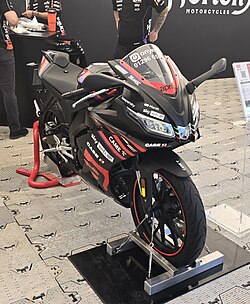
The Aprilia RS4 and Its Racing Heritage
The Aprilia RS4 is a motorcycle that brings the unmistakable character of Italian sportbike engineering into the lightweight motorcycle category. Inspired by the racing machines that have helped establish Aprilia as one of the most respected names in international motorcycle competition, the RS4 combines aggressive styling, a sporty riding position, carefully developed chassis components, and an appearance that closely resembles much larger superbikes. Designed for riders who appreciate the excitement of a fully faired sports motorcycle, the RS4 offers an interesting combination of visual appeal, everyday usability, and racing-inspired engineering. Available primarily in 50 cc and 125 cc versions, the model family has attracted younger motorcyclists, enthusiasts looking for an accessible sporting machine, and experienced riders who appreciate lightweight motorcycles with distinctive Italian styling.
Aprilia has a long history of producing motorcycles that connect road-going machines with competitive racing technology. The company has achieved considerable success in motorcycle racing, particularly in smaller Grand Prix categories, where lightweight construction, responsive engines, precise handling, and rider skill play essential roles. The RS4 follows this philosophy by incorporating design elements and mechanical solutions associated with Aprilia’s larger sportbike models. Its full fairing, aerodynamic bodywork, sporty chassis, and distinctive front lighting arrangement create an appearance that communicates performance even when the motorcycle is standing still.
The RS4 125 is particularly interesting because it occupies an important position in the 125 cc sportbike category. It offers a four-stroke, liquid-cooled, single-cylinder engine with electronic fuel injection and a six-speed gearbox, creating a relatively practical package for everyday transportation and recreational riding. Its aluminum perimeter frame, upside-down front fork, sporty braking system, and full-size 17-inch wheels help distinguish it from ordinary commuter motorcycles. Rather than being designed exclusively as a basic means of transportation, the RS4 125 is intended to deliver an engaging riding experience while remaining accessible to riders entering the world of sport motorcycles.
The smaller RS4 50 offers a different mechanical approach, using a compact two-stroke engine and a lightweight sportbike platform. Although its performance is naturally more limited because of its smaller displacement, it retains much of the visual identity and sporting character of the larger version. Together, the RS4 50 and RS4 125 demonstrate Aprilia’s ability to create motorcycles that bring the atmosphere of racing into different levels of the lightweight motorcycle market.
Aprilia RS4 Design: A Superbike Appearance in a Compact Package
Aggressive Italian Styling
One of the strongest attractions of the Aprilia RS4 is its design. The motorcycle has the appearance of a miniature superbike, with a full aerodynamic fairing, a sharply shaped front section, a low windscreen, and sculpted body panels that give it a distinctly sporting personality. Aprilia has carefully developed the styling to resemble the visual language of its larger racing-inspired motorcycles, allowing the RS4 to stand out from more conventional 125 cc and 50 cc machines.
The front section is particularly recognizable because of its distinctive lighting arrangement, with multiple headlights integrated into the front fairing. The compact windscreen and central air-intake styling contribute to an aggressive appearance, while the side fairings create a smooth connection between the front of the motorcycle and its rear section. These design details are not simply decorative. The overall shape is intended to manage airflow around the motorcycle and provide a sporting silhouette that reflects Aprilia’s experience with high-performance machines.
The fuel tank is another important part of the RS4’s design. Its sculpted shape gives the rider a natural area to grip with the knees, which becomes particularly useful when cornering or braking. The seat arrangement is also inspired by traditional sportbikes, with a relatively narrow rider seat and a raised passenger section that creates a recognizable racing profile. The tail section is compact, and the rear bodywork contributes to the motorcycle’s dynamic appearance.
Aprilia has offered the RS4 in different color schemes and special editions, including Replica-inspired liveries that emphasize its connection with the company’s racing activities. These versions can be especially attractive to enthusiasts who appreciate motorsport aesthetics and want a motorcycle that looks closely related to Aprilia’s competition machines.
Aerodynamics and Functional Bodywork
The full fairing is one of the defining features of the RS4. Compared with a naked motorcycle, the fairing provides a degree of protection from wind and helps direct airflow around the rider and mechanical components. At higher speeds, this can make the riding experience more comfortable by reducing direct wind pressure on the rider’s upper body.
The aerodynamic design also contributes to the motorcycle’s sporting appearance. The side panels, front cowl, and windscreen work together to create a cohesive shape that looks purposeful from almost every angle. Although the RS4 does not have the advanced aerodynamic equipment found on modern high-performance superbikes, its bodywork reflects the same general design philosophy: compact proportions, controlled airflow, and a visually integrated appearance.
The fairing also provides practical protection for some mechanical components against road debris and weather exposure. Owners should nevertheless inspect mounting points, fasteners, and plastic panels regularly, particularly on older used examples. Damaged or poorly fitted fairings can produce unwanted vibration and noise, especially at higher engine speeds.
Riding Position and Ergonomics
The RS4 has a sporty riding position that differs considerably from the upright posture of ordinary commuter motorcycles. The handlebars are positioned to create a forward-leaning stance, while the footpegs are relatively rear-set. This arrangement allows the rider to adopt a more compact position and move naturally when cornering.
The seat height is approximately 820 mm on commonly documented RS4 125 specifications, giving the motorcycle a familiar sportbike riding position. However, the actual experience depends on the rider’s height, leg length, and flexibility. The narrow seat and relatively slim bodywork can make it easier for some riders to reach the ground compared with wider motorcycles of similar seat height.
The ergonomics are designed primarily around solo sporting use, although passenger accommodation is available. As with many small sportbikes, the passenger seat is relatively compact, and longer journeys with two people may become less comfortable. Riders who primarily travel alone will generally appreciate the motorcycle’s compact layout and sporting proportions.
Aprilia RS4 125 Engine and Performance
The 124.8 cc Four-Stroke Engine
The Aprilia RS4 125 is powered by a liquid-cooled, four-stroke, single-cylinder engine with electronic fuel injection and four valves. Its displacement is approximately 124.8 cc in the original factory technical documentation, making it suitable for the lightweight sportbike category and relevant 125 cc licensing classes, depending on the market and applicable regulations.
The engine uses double overhead camshafts, commonly referred to as DOHC, to control the four valves. This arrangement supports efficient gas exchange and allows the engine to operate effectively at the relatively high revolutions associated with small-displacement sport motorcycles. The liquid-cooling system helps maintain a controlled operating temperature, while electronic fuel injection provides more consistent fuel delivery than a traditional carburetor-based arrangement.
The bore and stroke measure 58 x 47 mm, and the compression ratio is approximately 12.5:1 in the factory technical documentation. These characteristics reflect the engine’s sporting orientation, with a relatively short-stroke design intended to provide responsive performance within the limitations of the 125 cc category.
The engine is not designed to deliver the enormous torque or acceleration of a larger motorcycle. Instead, it focuses on providing manageable power, predictable throttle response, and an engaging experience for riders who enjoy using the gearbox and exploring the engine’s available rev range. This makes the RS4 125 particularly suitable for learning the fundamentals of sporting riding, including smooth acceleration, gear selection, braking, and cornering technique.
Power Delivery and Acceleration
The RS4 125 belongs to a category where legal power restrictions are particularly important. In European markets, motorcycles designed for the A1 licence category are generally limited to a maximum continuous rated power of 11 kW, equivalent to approximately 15 horsepower, together with the applicable power-to-weight requirements.
The RS4 125’s engine is developed around this category, providing a balance between performance and accessibility. Acceleration is naturally more modest than on larger sportbikes, but the motorcycle’s relatively low mass and six-speed gearbox help make effective use of the available engine output.
The riding experience depends heavily on maintaining appropriate engine speed and selecting the correct gear. Unlike larger motorcycles that can accelerate strongly from relatively low revolutions, a small-displacement sportbike often rewards riders who understand how to use the transmission effectively. This can make the RS4 an excellent platform for developing mechanical sympathy and improving riding technique.
Maximum speed varies according to model year, engine condition, rider weight, gearing, road conditions, and local restrictions. It is therefore more useful to evaluate the RS4 125 through its overall riding characteristics than through a single advertised top-speed figure.
Six-Speed Gearbox and Clutch
The Aprilia RS4 125 uses a six-speed manual transmission that allows the rider to make effective use of the engine’s available power. The gear ratios are arranged to provide flexibility across urban riding, acceleration, and higher-speed cruising.
The clutch is a wet multi-plate design, meaning that its friction plates operate in an oil bath. This arrangement is commonly used in motorcycles because it provides effective heat management and smooth engagement. The clutch lever allows the rider to control power delivery when starting, changing gears, or maneuvering at low speeds.
The six-speed transmission is particularly important on a 125 cc sportbike. Since the engine has limited displacement, selecting the appropriate gear can significantly influence acceleration and overall riding performance. Riders who become familiar with the gearbox will find that smooth and accurate gear changes are an essential part of enjoying the RS4.
The Aprilia RS4 50 and Its Two-Stroke Engine
The RS4 50 is mechanically different from the RS4 125 and deserves separate attention. It uses a 49.9 cc, liquid-cooled, single-cylinder two-stroke engine in the versions documented in Aprilia’s original model literature. This engine configuration produces a different riding character from the four-stroke powerplant of the RS4 125.
Two-stroke engines have a relatively simple mechanical architecture compared with four-stroke engines, but their operating characteristics and maintenance requirements are different. They generally require appropriate two-stroke lubrication and benefit from careful attention to the condition of the cylinder, piston, exhaust system, and fuel-delivery components.
The RS4 50 also uses a six-speed manual gearbox, which gives it a more involved riding experience than an automatic scooter. Its sporting chassis and full-size wheels help create the appearance and handling characteristics of a genuine miniature sportbike.
Depending on the version and market, performance figures and emissions specifications can differ. Buyers should therefore identify the exact engine version before purchasing a used RS4 50, particularly when evaluating a motorcycle that may have undergone engine modifications or changes to its exhaust and intake systems.
Chassis and Handling: The Importance of Lightweight Engineering
Aluminum Perimeter Frame
One of the most interesting engineering features of the Aprilia RS4 is its aluminum perimeter frame. Aluminum construction helps reduce weight while providing a rigid structural platform for the engine, suspension, and steering components.
The frame design is particularly important on a lightweight sportbike because the motorcycle must remain predictable when changing direction, accelerating, or braking. A well-balanced chassis can make a relatively modest motorcycle feel considerably more engaging than its engine specifications might suggest.
The RS4’s compact dimensions and sporting geometry contribute to its agility. It is designed to respond accurately to steering inputs and provide a stable platform during cornering. These qualities are particularly useful on narrow roads, where smooth changes of direction and predictable behavior are more important than extreme straight-line acceleration.
The aluminum frame also reinforces the RS4’s premium character within the lightweight motorcycle category. Many ordinary commuter motorcycles use simpler steel frame designs, whereas Aprilia’s use of an aluminum perimeter structure emphasizes the model’s sporting ambitions.
Front Suspension and Upside-Down Fork
The RS4 features an upside-down front fork, also known as an inverted fork. On commonly documented RS4 125 specifications, the front fork uses 41 mm stanchions and provides approximately 110 mm of wheel travel.
Inverted forks are widely associated with sporting motorcycles because of their structural arrangement and ability to provide a suitable combination of stiffness and suspension control. Their design places the larger outer fork sections closer to the steering head, while the sliding sections connect to the front wheel assembly.
For the rider, the main benefit is a front suspension system designed to provide predictable feedback during braking and cornering. It also helps the motorcycle manage road imperfections without losing the controlled character expected from a sport-oriented chassis.
As with any motorcycle suspension, condition is extremely important on used examples. Fork seals, oil condition, sliding surfaces, and steering-head bearings should be inspected regularly. Leaking fork seals can reduce suspension performance and potentially contaminate the front brake components.
Rear Suspension and Swingarm
At the rear, the RS4 uses an asymmetrical swingarm and a centrally positioned monoshock absorber. This configuration provides controlled movement of the rear wheel while maintaining a compact chassis arrangement.
The rear suspension works together with the front fork to maintain tire contact with the road. This is essential for acceleration, braking, and cornering because the motorcycle relies on the tires to transmit all forces between the machine and the road surface.
The swingarm design also contributes to the motorcycle’s distinctive appearance. Its asymmetrical construction is visually associated with sporting engineering and allows the rear suspension and drive components to be packaged within the available space.
The suspension system is not intended to provide the extensive adjustment possibilities of a premium superbike, but it offers a sporting foundation appropriate to the RS4’s displacement and intended use.
Wheels and Tires
The Aprilia RS4 uses 17-inch wheels, which are an important feature of its full-size sportbike design. The wheel dimensions allow the motorcycle to use road-oriented tires designed for predictable handling and reasonable grip.
The commonly documented RS4 125 setup uses a 110/70-17 front tire and a 150/60-17 rear tire. Exact tire sizes should always be verified against the specific model year and the manufacturer’s recommendations before replacement.
Tire condition has a significant influence on the handling of a lightweight motorcycle. Because the RS4 is relatively light, incorrect tire pressures, worn tread, or unsuitable tire construction can noticeably change the way it responds to steering inputs.
Owners should use tires approved for the motorcycle and maintain the recommended pressures. Choosing appropriate tires is particularly important for riders who use the motorcycle throughout the year, including during colder weather or on wet roads.
Braking System and Safety Equipment
Front and Rear Disc Brakes
The RS4 125 is equipped with a sporting braking system designed to provide controlled stopping performance. Its front brake uses a large 300 mm stainless-steel disc and a four-piston radial caliper, while the rear brake uses a 218 mm disc with a single-piston caliper.
The large front disc provides an effective braking surface, while the radial caliper contributes to the rigidity and precision of the braking assembly. This is a particularly interesting specification for a lightweight motorcycle because the front brake arrangement reflects the model’s sporting positioning.
The rear brake provides additional control and helps the rider manage speed in different situations. Effective braking depends not only on the hardware but also on tire condition, brake fluid, pad quality, and the rider’s technique.
Owners should regularly inspect brake pads and discs for wear, check the brake fluid condition, and ensure that the braking system operates smoothly. Any changes in lever feel, unusual vibration, or reduced stopping performance should be investigated before the motorcycle is used again.
Braking Technique and Rider Confidence
A motorcycle with sporting ergonomics and a responsive chassis encourages riders to develop accurate braking habits. The RS4 is particularly suitable for learning how braking forces affect the motorcycle’s balance.
Progressive application of the front brake, appropriate use of the rear brake, and correct body positioning all contribute to stable deceleration. Sudden or excessive braking can disturb the motorcycle’s balance, especially on wet or uneven surfaces.
Riders should also remember that the presence of powerful-looking braking hardware does not eliminate the physical limitations of tire grip. The RS4 is a lightweight sportbike, and responsible riding remains essential in every situation.
Riding Experience: What Is the Aprilia RS4 Like on the Road?
Urban Riding and Daily Transportation
The RS4 can be used as a daily motorcycle, particularly in urban environments where its relatively compact dimensions are an advantage. Its narrow profile and manageable weight make it easier to position in traffic than many larger sportbikes, while the engine provides sufficient performance for normal city transportation.
The six-speed gearbox requires more rider involvement than an automatic scooter, but this is also part of the RS4’s appeal. Riders who enjoy operating a manual transmission will appreciate the opportunity to develop their gear-changing skills and become more familiar with engine behavior.
The sporting riding position is one consideration for everyday use. Although the RS4 is more manageable than many large-capacity superbikes, its forward-leaning ergonomics can become tiring during long periods of stop-and-go traffic. Riders who spend most of their time in congested city centers may find an upright motorcycle more comfortable.
Nevertheless, the RS4 offers an attractive combination of practical dimensions and sporty character. It can serve as transportation during the week while providing a more engaging experience during weekend rides.
Country Roads and Cornering
The RS4 is particularly enjoyable on winding country roads, where its lightweight construction and responsive chassis can be appreciated. On roads with frequent changes of direction, a small sportbike can be extremely entertaining because the rider can focus on maintaining smooth cornering lines rather than managing enormous amounts of engine power.
Its aluminum frame, inverted front fork, and relatively compact dimensions contribute to a precise riding experience. The motorcycle is designed to feel connected to the road, allowing the rider to develop confidence through repeated practice and a better understanding of cornering technique.
The limited engine displacement also encourages riders to concentrate on maintaining momentum. Rather than relying on aggressive acceleration to compensate for poor corner entry, the rider benefits from smooth braking, accurate gear selection, and a consistent line through the corner.
This is one of the reasons lightweight sportbikes can be valuable learning tools. They teach important riding skills while still offering the visual appeal and mechanical involvement associated with larger sports motorcycles.
Highway Riding and Longer Journeys
Although the RS4 has full fairing and a windscreen, it is not primarily designed as a long-distance touring motorcycle. Its aerodynamic bodywork provides some wind protection, but the relatively small engine means that sustained high-speed riding is more demanding than on a larger motorcycle.
The RS4 125 is best suited to roads and riding conditions appropriate to its power output and legal classification. On faster roads, riders may find themselves using a significant portion of the engine’s available performance, particularly when climbing hills or carrying a passenger.
The riding position can also become tiring over longer distances. The seat and footpeg arrangement are optimized for a sporty posture rather than relaxed touring comfort, and luggage capacity is limited.
For occasional recreational journeys, however, the RS4 can be an enjoyable companion. Riders who plan longer trips should prepare carefully, check the motorcycle’s mechanical condition, and plan routes that suit the machine’s performance.
Aprilia RS4 125 Compared with Other 125 cc Sportbikes
The lightweight sportbike category has attracted several manufacturers, each offering a different interpretation of the 125 cc motorcycle. The Aprilia RS4 125 competes conceptually with models such as the Yamaha YZF-R125, Honda CBR125R, and other fully faired motorcycles designed around the A1 licence category.
One of the RS4’s strongest advantages is its aluminum perimeter frame and sporting chassis specification. These features give it a premium mechanical character and reinforce its connection with Aprilia’s racing heritage.
The Yamaha YZF-R125 is another well-known example of a sporty 125 cc motorcycle. It has built a reputation for its aggressive design, modern equipment, and strong brand presence in the entry-level sportbike segment. The Honda CBR125R, particularly in its earlier generations, takes a slightly different approach by combining sporting appearance with a practical and accessible riding experience.
The RS4 distinguishes itself through its Italian design language, upside-down front fork, radial front brake caliper, and distinctive styling. Its appeal is not based exclusively on engine output, because motorcycles in this category are generally subject to similar licensing restrictions in many European markets.
Choosing between these motorcycles therefore requires considering more than the published power figures. Seat comfort, service history, parts availability, insurance costs, dealer support, riding position, and overall condition can all have a greater influence on ownership satisfaction.
For riders who appreciate Italian styling and a chassis that emphasizes sporting character, the Aprilia RS4 remains an interesting option in the used 125 cc sportbike market.
Maintenance, Reliability, and Ownership Costs
Regular Engine Maintenance
Like every motorcycle, the Aprilia RS4 requires regular servicing to maintain reliability and performance. The RS4 125 uses a four-stroke engine, so owners should follow the manufacturer’s recommendations for oil changes, filter replacement, valve-clearance inspection, cooling-system maintenance, and other scheduled procedures.
Correct engine oil is essential for lubrication and heat management. Riders should also monitor coolant levels and inspect hoses and connections for leaks. A cooling system that is not operating correctly can lead to excessive engine temperatures and potentially expensive damage.
The chain drive requires regular cleaning, lubrication, and tension adjustment. A poorly maintained chain can accelerate wear on the sprockets and negatively affect power transmission. Owners should inspect the chain after riding in rain or on dusty roads and adjust it according to the manufacturer’s specifications.
The RS4 50 has different maintenance requirements because of its two-stroke engine. Depending on the exact version, owners need to pay particular attention to two-stroke lubrication, carburetor condition, ignition components, exhaust deposits, and piston-cylinder wear. Its service requirements should not be confused with those of the four-stroke RS4 125.
Reliability and Common Used-Motorcycle Checks
The reliability of an older RS4 depends heavily on maintenance history and the way the motorcycle has been used. Many examples may have been owned by younger riders, which makes a careful inspection particularly important before purchasing.
Prospective buyers should check the condition of the fairings, frame, steering stops, handlebars, footpegs, wheels, and suspension components. Signs of crash damage, non-original fasteners, poorly repaired plastic panels, or mismatched components may indicate previous accidents or extensive modifications.
The engine should start reliably, idle consistently, and respond smoothly to throttle input. Unusual mechanical noises, smoke, coolant leaks, excessive vibration, or difficulties selecting gears should be investigated by a qualified mechanic.
On the RS4 125, the electronic fuel-injection system and cooling system deserve attention. On the RS4 50, the condition of the two-stroke engine, carburetor, and exhaust system is particularly important.
A documented service history is one of the most valuable things a used motorcycle can have. Buyers should also verify the VIN, registration documents, engine specification, and any modifications that might affect road legality or insurance coverage.
Spare Parts and Servicing
Parts availability can vary according to the age of the motorcycle and the country in which it is being maintained. Routine consumables such as brake pads, chains, sprockets, filters, and tires are generally easier to source than model-specific bodywork and certain original electrical components.
Because the RS4 uses specialized chassis and fairing components, purchasing a motorcycle with damaged bodywork can result in additional repair expenses. Before buying an older example, it is sensible to check the availability and cost of replacement fairings, mirrors, lights, and other model-specific components.
Servicing at a workshop familiar with Aprilia motorcycles can also be beneficial, especially when dealing with electrical problems or fuel-injection diagnostics.
Is the Aprilia RS4 Suitable for Beginners?
The Aprilia RS4 125 can be a suitable motorcycle for riders who are beginning their experience with manual sport motorcycles, provided they meet the relevant licensing requirements and have received appropriate training. Its relatively small engine displacement, manageable proportions, and predictable power delivery make it less intimidating than larger sportbikes.
One of its most valuable characteristics is the opportunity it provides to develop fundamental riding skills. The rider must learn to use the clutch, select gears, maintain momentum, brake smoothly, and position the motorcycle correctly through corners. These are essential skills that remain useful when progressing to larger motorcycles.
The RS4 50 can also appeal to younger riders in countries where the relevant licensing category permits its use. However, the precise legal requirements differ between countries, so prospective owners should always verify local rules concerning engine displacement, rated power, vehicle classification, and minimum rider age.
It is important to understand that a sporty appearance does not automatically make a motorcycle appropriate for every beginner. A forward-leaning riding position may take some getting used to, and the RS4 requires the rider to develop confidence with a manual gearbox.
For riders who want to begin their motorcycling journey with a machine that looks and feels like a traditional sportbike, the RS4 125 can be an appealing choice.
Advantages and Disadvantages of the Aprilia RS4
Main Advantages
The Aprilia RS4 offers several qualities that distinguish it from ordinary lightweight commuter motorcycles. Its full fairing, distinctive Italian design, and racing-inspired appearance give it a strong visual identity. The aluminum perimeter frame and upside-down front fork also contribute to its sporting character.
The RS4 125’s four-stroke, liquid-cooled engine provides practical everyday performance within the 125 cc category. Its six-speed gearbox encourages rider involvement, while the radial front brake caliper and 300 mm front disc offer a specification that reinforces its sporting ambitions.
Its relatively compact dimensions make it suitable for urban riding and narrow roads, while the lightweight platform can help riders develop important motorcycle control skills. The model also benefits from Aprilia’s strong motorsport identity, which is an important part of its appeal among enthusiasts.
The RS4 50 adds another dimension to the model family by offering a small-displacement two-stroke alternative with a manual gearbox and a sporting chassis.
Potential Disadvantages
Despite its strengths, the Aprilia RS4 has some limitations. The 125 cc version has restricted performance compared with larger motorcycles, which means that highway riding and overtaking at higher speeds require more planning. Riders looking for strong acceleration may eventually want to move to a larger motorcycle.
The sporty riding position can also become tiring during long journeys, particularly for riders accustomed to upright motorcycles. Passenger comfort and luggage capacity are limited, so the RS4 is not an ideal choice for regular touring.
Older examples may also require additional maintenance, especially if they have been used intensively or modified without proper technical knowledge. The availability of original bodywork and certain model-specific components should be checked before buying.
Finally, the RS4 50’s two-stroke engine requires a different maintenance approach from the RS4 125. Buyers should understand this distinction rather than assuming that both motorcycles have the same mechanical characteristics.
Why the Aprilia RS4 Is Still Interesting to Motorcycle Enthusiasts
The Aprilia RS4 remains an interesting motorcycle because it represents a period when lightweight sportbikes offered many of the visual and mechanical characteristics of larger racing-inspired machines. Its design emphasizes the idea that a small motorcycle can still feel special, engaging, and closely connected to motorsport.
The RS4 125 provides a practical entry point into the world of manual sport motorcycles, combining a manageable engine with an aluminum chassis, inverted front fork, and distinctive braking equipment. The RS4 50 takes the concept in a different direction, offering a two-stroke engine and an even smaller displacement while retaining the family resemblance.
For many owners, the appeal is not simply about performance figures. The motorcycle’s appearance, gearbox, riding position, mechanical involvement, and association with Aprilia’s racing heritage all contribute to the ownership experience.
The used motorcycle market also makes the RS4 an interesting option for enthusiasts who want a fully faired Italian sportbike without purchasing a modern high-capacity machine. Condition and maintenance history remain essential, but a well-maintained example can still provide plenty of enjoyment.
Conclusion: Is the Aprilia RS4 Worth Buying?
The Aprilia RS4 is a distinctive lightweight sportbike family that brings Italian racing-inspired design into the accessible 50 cc and 125 cc motorcycle categories. Its aggressive fairing, compact proportions, aluminum frame, upside-down front suspension, and sporting braking system make it stand out from more conventional small-capacity motorcycles.
The RS4 125 is particularly appealing to riders who want a manual sportbike with a practical four-stroke engine and manageable performance. Its 124.8 cc single-cylinder powerplant, six-speed gearbox, and relatively sophisticated chassis provide an engaging foundation for everyday riding and recreational journeys.
The RS4 50 offers a different experience, with its 49.9 cc two-stroke engine, six-speed transmission, and distinctive sportbike styling. It is an interesting choice for riders who meet the applicable licensing requirements and appreciate the mechanical character of older two-stroke motorcycles.
Neither version should be judged by the standards of a large-capacity superbike. Their strengths lie in accessibility, lightweight handling, distinctive design, and the opportunity to develop riding skills. The RS4 125 is particularly suitable for riders entering the A1 sportbike category, while the RS4 50 serves a more specialized entry-level role.
For anyone searching for an Italian motorcycle with genuine sporting character, the Aprilia RS4 deserves consideration. It may not offer the extraordinary horsepower of modern superbikes, but it delivers something equally important in the lightweight category: an engaging riding experience built around design, handling, and the pleasure of riding.
Aprilia RS4 Technical Specifications
The following table summarizes the principal technical specifications of the Aprilia RS4 125, based on the original factory documentation for the RS4 125 generation. Individual specifications can differ according to model year, market, and special edition.
| Technical Specification | Aprilia RS4 125 |
|---|---|
| Motorcycle category | Lightweight sportbike |
| Manufacturer | Aprilia |
| Engine type | Single-cylinder, four-stroke |
| Cooling system | Liquid-cooled |
| Engine displacement | 124.8 cc |
| Bore x stroke | 58 x 47 mm |
| Valve configuration | 4 valves, DOHC |
| Compression ratio | Approximately 12.5:1 |
| Fuel system | Electronic fuel injection |
| Maximum power | Up to 15 hp (11 kW), market/version dependent |
| Maximum torque | Version and homologation dependent |
| Transmission | 6-speed manual |
| Clutch | Wet multi-plate |
| Final drive | Chain |
| Frame | Aluminum perimeter frame |
| Front suspension | 41 mm upside-down fork |
| Front suspension travel | Approximately 110 mm |
| Rear suspension | Asymmetrical swingarm with monoshock |
| Rear suspension travel | Approximately 130 mm |
| Front brake | 300 mm stainless-steel disc |
| Front brake caliper | Four-piston radial caliper |
| Rear brake | 218 mm stainless-steel disc |
| Rear brake caliper | Single-piston caliper |
| Front tire | 110/70-17 |
| Rear tire | 150/60-17 |
| Wheel size | 17 inches, front and rear |
| Seat height | Approximately 820 mm |
| Wheelbase | Approximately 1,350 mm |
| Length | Approximately 1,953 mm |
| Width | Approximately 740 mm |
| Fuel tank capacity | 14.5 litres |
| Starter | Electric |
| Emissions standard | Depends on model year and market |
| Riding position | Sport |
| Bodywork | Full aerodynamic fairing |
Important: The table refers to the RS4 125 and should not be used as the specification sheet for the RS4 50. The 50 cc version has a 49.9 cc liquid-cooled two-stroke engine and different engine, transmission, and tire specifications. Always consult the original documentation for the exact model year before purchasing replacement parts or performing maintenance.
