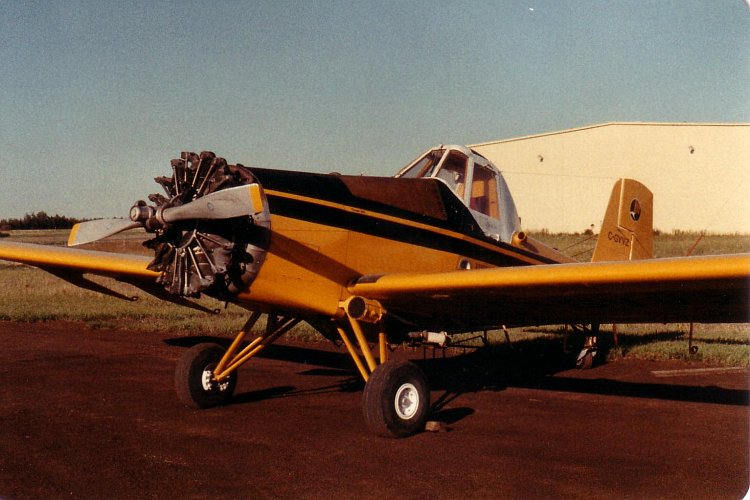
The Ayres Thrush is a specialized agricultural aircraft that represents decades of refinement in aerial application technology. Designed to operate in demanding low-altitude environments, the Thrush combines structural strength, precise handling, and high payload efficiency to support large-scale agricultural operations. While visually simple, the aircraft is the product of careful engineering choices intended to maximize reliability, safety, and productivity in one of aviation’s most challenging civilian roles.
Development Background and Design Philosophy
The origins of the Thrush trace back to the postwar expansion of aerial agriculture, when farmers increasingly relied on aircraft to apply fertilizers, herbicides, and pesticides over large areas quickly and efficiently. Early agricultural aircraft were often conversions of military trainers, but these designs proved suboptimal for sustained low-level operations with heavy chemical loads. The Thrush was conceived as a purpose-built solution, incorporating lessons learned from earlier platforms while emphasizing durability and operational efficiency.
Ayres Corporation refined the Thrush design through successive iterations, focusing on a straightforward airframe that could be easily maintained in remote agricultural regions. The aircraft was engineered to withstand repeated high-stress maneuvers close to the ground, frequent takeoffs and landings from rough strips, and prolonged exposure to corrosive chemicals. This pragmatic design philosophy resulted in an aircraft that prioritized function over aesthetics, yet delivered exceptional performance in its niche.
Airframe Structure and Materials
The Thrush features a robust, low-wing monoplane configuration constructed primarily from aluminum alloys. The airframe is heavily reinforced in critical load-bearing areas, particularly around the wing roots, landing gear mounts, and chemical hopper structure. This reinforcement allows the aircraft to safely carry substantial payloads while maintaining structural integrity over thousands of flight hours.
The fuselage is compact and streamlined, minimizing drag while providing space for the pilot, hopper, and essential systems. Corrosion-resistant materials and protective coatings are used extensively, reflecting the harsh operating environment associated with agricultural chemicals. The tail structure is designed for stability and precise control at low speeds, ensuring predictable handling during spray runs and tight turns at the end of each pass.
Wing Design and Low-Speed Handling
The wing design of the Thrush is optimized for low-speed flight and high lift, essential for accurate chemical application. The relatively large wing area provides excellent lift at low airspeeds, allowing the aircraft to operate safely with heavy loads while maintaining short takeoff and landing distances. This capability is critical when operating from small, unimproved airstrips near farmland.
High-lift devices, including flaps, enhance controllability during takeoff, landing, and maneuvering at low altitude. The wing structure is built to tolerate repeated high-load cycles, a necessity given the aggressive flight profiles typical of aerial application. The predictable stall characteristics of the wing contribute significantly to pilot safety during demanding operations close to the ground.
Powerplant and Propulsion Options
The Ayres Thrush has been produced with several powerplant configurations, reflecting evolving industry preferences and technological advancements. Early variants were powered by piston engines delivering reliable performance at relatively low operating costs. Later models adopted turboprop engines, offering increased power, improved fuel efficiency, and greater payload capability.
Turboprop-equipped Thrush aircraft typically use engines producing between 500 and 750 shaft horsepower. This power allows the aircraft to lift heavier chemical loads while maintaining strong climb performance, even in hot and high conditions. The propeller systems are designed for durability and efficiency, providing consistent thrust at the low speeds typical of agricultural flying.
Performance Parameters
Performance characteristics of the Thrush are tailored specifically to its mission profile. Typical cruising speeds range from 120 to 160 mph, with operational spray speeds significantly lower to ensure accurate application. Maximum takeoff weight varies by model but generally falls between 6,000 and 10,000 pounds, depending on engine configuration and hopper capacity.
Takeoff distances are short, even at high gross weights, enabling operation from confined airstrips. Service ceiling is modest compared to general aviation aircraft, as the Thrush is designed primarily for low-altitude work. Range and endurance are sufficient to complete multiple spray cycles without refueling, maximizing operational efficiency during peak agricultural seasons.
Chemical Hopper and Dispensing Systems
At the core of the Thrush’s mission capability is its chemical hopper, typically located directly ahead of the cockpit or near the aircraft’s center of gravity. Hopper capacities vary by model but can exceed 500 gallons, allowing large areas to be treated in a single sortie. The hopper is constructed from corrosion-resistant materials and designed for rapid loading and cleaning.
Dispensing systems are highly customizable, accommodating a wide range of application equipment including spray booms, atomizers, and granular spreaders. Precision control systems enable pilots to adjust flow rates in real time, ensuring uniform coverage and minimizing waste. The integration of modern GPS-guided application technology has further enhanced accuracy and efficiency.
Cockpit Layout and Pilot Environment
The Thrush cockpit is designed with a strong emphasis on visibility, ergonomics, and safety. The pilot sits high above the wing, with expansive forward and downward views that are essential for precise low-level flying. Controls are arranged for intuitive operation, allowing the pilot to focus on terrain, obstacles, and application accuracy.
Modern variants feature reinforced cockpit structures and improved crashworthiness, including energy-absorbing seats and protective frameworks. Instrumentation is straightforward yet comprehensive, providing essential flight and engine data without unnecessary complexity. Environmental systems are basic but effective, supporting long hours of operation in hot and dusty conditions.
Operational Use and Field Performance
In service, the Ayres Thrush has earned a reputation for reliability and productivity. Operators value its ability to carry heavy loads, withstand harsh conditions, and deliver consistent performance throughout long agricultural seasons. The aircraft’s rugged construction reduces downtime, while its straightforward systems simplify maintenance and repairs in field conditions.
The Thrush is used worldwide for crop spraying, fertilization, and seeding, demonstrating its adaptability to different climates and agricultural practices. Its performance in demanding environments has made it a preferred platform for professional aerial applicators seeking a balance between power, efficiency, and durability.
Evolution and Variants
Over time, the Thrush family has evolved to incorporate new technologies and meet changing regulatory and operational requirements. Improvements in engine efficiency, structural design, and avionics have extended the aircraft’s relevance well into the modern era. Each variant reflects incremental refinements rather than radical redesigns, preserving the core strengths of the original concept.
Advances in navigation and application technology have transformed the Thrush into a precision agricultural tool. Integration with digital mapping and automated flow control systems has increased accuracy while reducing pilot workload, aligning the aircraft with contemporary best practices in sustainable agriculture.
Legacy and Role in Agricultural Aviation
The Ayres Thrush occupies a respected position in the field of agricultural aviation as a purpose-built workhorse. Its success lies not in speed or sophistication, but in its ability to perform a demanding job safely, efficiently, and reliably day after day. The aircraft embodies the practical engineering solutions required for specialized aviation roles.
From a technical standpoint, the Thrush demonstrates how focused design and incremental improvement can yield an enduring platform. Its continued use across the globe underscores the effectiveness of its engineering and the essential role it plays in modern agriculture, making it a lasting contributor to both aviation and food production industries.
