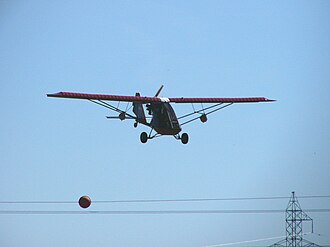
The history of aviation is filled with extraordinary inventions that challenged conventional thinking. While jet aircraft, helicopters, and spacecraft usually dominate the spotlight, some of the most fascinating engineering achievements have emerged from projects that relied almost entirely on human strength. Among these remarkable machines stands the Birdman Chinook, a human-powered aircraft that demonstrated how lightweight engineering, aerodynamic efficiency, and human endurance could be combined into a functioning airplane.
Although it never became a commercial aircraft or entered widespread production, the Birdman Chinook remains an important milestone in experimental aviation. It represents an era when engineers, designers, and aviation enthusiasts believed that the limits of powered flight could be pushed using nothing more than intelligent engineering and the energy produced by a single pilot.
Today, the Chinook is remembered not only as a successful human-powered aircraft but also as an inspiration for later developments in lightweight aviation, composite construction, and high-efficiency aerodynamic design. Its story illustrates how persistence, scientific understanding, and creative engineering can accomplish what initially appears impossible.
What Was the Birdman Chinook?
The Birdman Chinook was a human-powered aircraft developed in Canada during the 1980s. Designed specifically to fly using only pedal power, it relied on an exceptionally lightweight structure combined with a large, efficient wing capable of generating enough lift at extremely low airspeeds.
Unlike conventional aircraft powered by gasoline engines or electric motors, the Chinook depended entirely on the pilot’s physical effort. Sitting inside a minimalist cockpit, the pilot pedaled a bicycle-like drivetrain that transferred power to a large propeller mounted behind the cockpit. Every revolution of the pedals directly translated into thrust, meaning there was no reserve of horsepower beyond what the human body could sustain.
Human-powered aircraft occupy one of the most demanding categories in aerospace engineering. Since even a well-trained cyclist can produce only a few hundred watts for extended periods, every component of the aircraft must be optimized to minimize weight and drag while maximizing lift and propulsive efficiency.
The Birdman Chinook demonstrated that such optimization was possible.
The Origins of Human-Powered Flight
Long before the Chinook appeared, engineers dreamed about machines capable of flying under human power. Leonardo da Vinci imagined ornithopters centuries before practical aviation became reality. Later inventors experimented with pedal-driven flying machines, but nearly all failed because available materials were too heavy.
The breakthrough came only after advances in aluminum alloys, synthetic fabrics, carbon fiber, and aerodynamic research dramatically reduced structural weight.
By the second half of the twentieth century, human-powered aviation became a legitimate engineering discipline. Universities, aerospace companies, and independent designers began competing to create aircraft capable of sustained controlled flight using only muscular power.
These projects served a greater purpose than simply proving human-powered flight was possible. They became laboratories for studying:
- lightweight structures,
- efficient airfoils,
- composite materials,
- low-speed aerodynamics,
- propeller optimization,
- structural flexibility,
- pilot ergonomics,
- energy efficiency.
The Birdman Chinook emerged directly from this tradition.
The Engineering Philosophy Behind the Chinook
Creating a human-powered aircraft requires designers to rethink nearly every principle used in conventional aviation.
Instead of designing around a powerful engine, engineers must begin by asking a very different question:
How can an aircraft fly using only the energy available from a cyclist?
This seemingly simple question influences every design decision.
The Chinook therefore embraced several important principles.
First, weight had to be minimized. Every unnecessary gram required additional lift, which in turn demanded more power from the pilot.
Second, drag had to be reduced as much as possible. Since available propulsion was extremely limited, aerodynamic efficiency became more important than speed.
Third, the wings needed a very large surface area. Large wings generate sufficient lift even at slow speeds, allowing the aircraft to remain airborne while traveling little faster than a sprinting athlete.
Finally, structural flexibility became an accepted characteristic rather than a flaw. Unlike heavy aluminum aircraft, lightweight composite structures naturally flex under aerodynamic loads. Engineers learned to design around this movement instead of attempting to eliminate it completely.
A Lightweight Airframe Designed for Efficiency
One of the Chinook’s most remarkable achievements was its incredibly light construction.
Traditional aircraft rely on robust aluminum structures capable of surviving turbulence, heavy landings, and decades of service.
The Chinook faced an entirely different mission.
Its goal was simply to remain airborne long enough to demonstrate successful human-powered flight.
To achieve this, the designers selected materials that combined high strength with minimal weight.
The structure consisted primarily of lightweight tubing supported by tension wires, while the wings were covered with extremely thin transparent film rather than conventional aircraft skin.
Looking at the aircraft from a distance, the wings appeared almost fragile. Yet this apparent delicacy represented careful engineering rather than weakness.
Every structural member existed because it served a specific purpose.
Every gram saved improved flight performance.
Every reduction in drag increased the pilot’s chances of remaining airborne.
Wing Design: The Secret Behind Human-Powered Flight
Perhaps the most distinctive feature of the Birdman Chinook was its enormous wing.
The wingspan stretched far beyond what many people expect from such a small aircraft.
This was no accident.
Human-powered airplanes must generate lift at exceptionally low speeds.
A conventional airplane might cruise at over 200 kilometers per hour.
The Chinook flew at only a fraction of that speed.
To remain airborne under these conditions, engineers designed wings with:
- very high aspect ratios,
- efficient low-speed airfoils,
- lightweight internal structures,
- minimal surface imperfections,
- carefully controlled flexibility.
Long slender wings reduce induced drag while improving lift generation.
This same aerodynamic principle can be seen in modern sailplanes, which also prioritize efficiency over speed.
The Pedal-Powered Propulsion System
Unlike motorized aircraft, the Chinook relied entirely on human muscle.
The pilot pedaled continuously throughout the flight.
Power traveled through a drivetrain resembling an oversized bicycle transmission before reaching the rear-mounted propeller.
This propeller represented another engineering masterpiece.
Because human power output is limited, propeller efficiency becomes critically important.
Instead of spinning rapidly like the propellers found on conventional aircraft, the Chinook’s propeller rotated relatively slowly while maintaining excellent efficiency.
Its large diameter allowed it to move a significant volume of air without wasting precious energy.
Every percentage improvement in efficiency translated directly into improved flight performance.
Flying the Birdman Chinook
Piloting a human-powered aircraft differs dramatically from flying a conventional airplane.
The pilot must simultaneously serve as:
- engine,
- navigator,
- flight controller,
- energy manager.
Unlike pilots of powered aircraft, Chinook pilots could not simply increase throttle to recover from mistakes.
If the aircraft lost too much airspeed or climbed too steeply, available human power might not be sufficient to recover.
This required exceptionally smooth flying techniques.
Takeoff demanded careful acceleration.
The pilot needed to build enough speed before lifting off while maintaining maximum pedaling effort.
Once airborne, every movement had to be gentle.
Abrupt turns increased drag.
Rapid climbs wasted energy.
Sharp descents sacrificed hard-earned altitude.
The aircraft rewarded patience and precision rather than aggressive maneuvering.
Endurance: The Human Engine
One of the most fascinating aspects of the Chinook is the relationship between pilot physiology and aircraft performance.
Aircraft powered by engines can operate as long as fuel remains available.
The Chinook depended entirely on the endurance of one individual.
Elite cyclists can sustain approximately 250 to 350 watts for extended periods, with brief bursts exceeding several hundred watts.
For comparison, even the smallest automobile engine produces tens of thousands of watts.
This enormous difference highlights just how efficient the Chinook needed to be.
The aircraft effectively transformed a trained athlete into an aviation powerplant.
Every heartbeat mattered.
Every breath mattered.
Every watt mattered.
Challenges Faced During Development
Designing a human-powered aircraft involves solving numerous engineering problems that rarely affect conventional airplanes.
One major challenge involves structural stiffness.
An extremely lightweight wing naturally bends under load.
Too much flexibility can alter aerodynamic performance or create control difficulties.
Another issue is vibration.
Because the propeller, drivetrain, and pilot all interact mechanically, unwanted oscillations may develop.
Engineers also had to account for changing pilot fatigue.
As the pilot tires, available power decreases.
The aircraft must therefore remain flyable across a range of power outputs.
Even environmental conditions become more significant.
Light winds that barely affect conventional airplanes may determine whether a human-powered aircraft can complete a successful flight.
Performance Achievements
The Birdman Chinook successfully demonstrated that sustained human-powered flight could be achieved through intelligent engineering rather than brute force.
Although it was never intended to compete with conventional aircraft, it proved several important concepts.
The project showed that:
- lightweight composite structures could perform reliably,
- careful aerodynamic optimization could compensate for limited power,
- human-powered propulsion was practical under appropriate conditions,
- efficient propeller design could maximize extremely limited energy sources.
Its flights validated years of theoretical research while encouraging further experimentation in low-energy aviation.
Influence on Aerospace Engineering
The Birdman Chinook’s legacy extends beyond human-powered aviation.
Many engineering techniques refined during its development later found applications in other fields.
Modern aerospace engineers routinely study:
- lightweight composite structures,
- finite element analysis,
- aeroelastic behavior,
- high-efficiency propellers,
- low-Reynolds-number aerodynamics.
These disciplines are now important not only for experimental aircraft but also for drones, electric aircraft, sailplanes, and even spacecraft structures.
The Chinook contributed valuable practical knowledge to these areas.
Lessons for Modern Aircraft Design
Although today’s aviation industry increasingly focuses on electric propulsion, many lessons learned from the Chinook remain surprisingly relevant.
Battery-powered aircraft face limitations similar to those encountered by human-powered airplanes.
Energy is precious.
Every kilogram matters.
Aerodynamic efficiency determines range.
Reducing drag improves endurance.
Lightweight construction extends flight time.
In this sense, the Birdman Chinook anticipated many of the engineering priorities that now shape sustainable aviation.
Why the Birdman Chinook Still Fascinates Aviation Enthusiasts
Human-powered aircraft possess a unique appeal because they embody pure engineering efficiency.
Watching such an aircraft leave the ground feels almost magical.
There is no roaring engine.
No jet exhaust.
No fuel consumption.
Only quiet, graceful flight powered by human determination.
The Birdman Chinook reminds us that aviation is not solely about speed or power.
Sometimes the greatest achievements emerge from working within strict limitations.
Rather than overcoming problems through larger engines, its designers solved them through intelligence, mathematics, material science, and relentless refinement.
This philosophy continues to inspire students, engineers, cyclists, and aviation enthusiasts around the world.
Legacy of the Birdman Chinook
The Birdman Chinook occupies an important place in aviation history because it demonstrated what becomes possible when engineering efficiency reaches extraordinary levels.
It proved that successful flight depends not only on horsepower but also on the careful balance between lift, drag, weight, structural design, and human capability.
While commercial aviation continues to pursue greater speed and capacity, projects like the Chinook remind us that another equally valuable path exists—one centered on elegance, simplicity, and efficiency.
Its influence can still be seen in modern research involving ultra-light aircraft, electric aviation, advanced composite materials, and high-efficiency aerodynamic design. More importantly, it continues to inspire new generations of engineers who recognize that meaningful innovation often comes from solving the hardest problems with the fewest available resources.
The Birdman Chinook may never have carried passengers across continents, but it carried aviation knowledge forward in ways that continue to matter decades after its first flights. As a symbol of human ingenuity and determination, it remains one of the most remarkable experimental aircraft ever created.
Technical Parameters
| Parameter | Specification |
|---|---|
| Aircraft | Birdman Chinook |
| Type | Human-powered experimental aircraft |
| Country of origin | Canada |
| Primary role | Human-powered flight research |
| Crew | 1 pilot |
| Power source | Pedal-powered drivetrain |
| Propulsion | Large rear-mounted propeller |
| Engine | None |
| Wing configuration | High-aspect-ratio monoplane |
| Wing structure | Lightweight tubular frame with tension bracing |
| Wing covering | Lightweight transparent film |
| Landing gear | Fixed bicycle-style landing gear |
| Flight controls | Conventional three-axis controls |
| Construction materials | Aluminum tubing, composites, synthetic covering materials |
| Takeoff method | Self-powered by pilot pedaling |
| Cruise speed | Very low airspeed suitable for human-powered flight |
| Flight endurance | Limited by pilot fitness and environmental conditions |
| Fuel capacity | None |
| Energy source | Human muscular power |
| Operational purpose | Experimental and research flights |
| Historical significance | Demonstrated practical sustained human-powered flight and advanced lightweight aircraft engineering |
