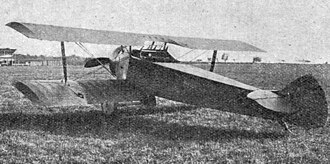
Blériot-SPAD S.34 – A Forgotten Pioneer of Early French Commercial Aviation
When the history of aviation is examined, the spotlight often falls on aircraft that achieved dramatic milestones: record-breaking machines, legendary fighters, and revolutionary designs that introduced entirely new technologies. However, the development of aviation depended equally on quieter achievements—the aircraft that performed routine missions, carried passengers, transported mail, and helped establish the systems that would eventually create the global aviation industry. The Blériot-SPAD S.34 belongs to this important but often overlooked category.
Developed in France during the early years of commercial aviation, the Blériot-SPAD S.34 represented the efforts of one of the country’s most famous aircraft manufacturers to adapt its engineering experience to the demands of peacetime air transport. It appeared during a period of major transition when aviation was moving away from the intense military focus of the First World War and toward a future based on passenger services, business travel, and international communication.
The aircraft was part of the broader Blériot-SPAD effort to establish a place in the growing civilian aviation market. The company had achieved fame through military aircraft such as the SPAD S.VII and SPAD S.XIII, which were among the most respected fighters of the First World War. After 1918, however, the company faced the same challenge as many aviation manufacturers: how to transform wartime expertise into successful civilian products.
The S.34 was one answer to that challenge. Rather than being designed for combat, it was intended for practical aviation roles, reflecting the changing priorities of the 1920s. It demonstrated how aircraft designers were beginning to think differently about flight. The airplane was no longer only a machine for military observation, racing, or personal adventure. It was becoming a tool for transportation.
Although the Blériot-SPAD S.34 never became as famous as some other aircraft of its period, it represents an important stage in aviation history. It reveals how early manufacturers experimented with passenger transport designs and how the foundations of modern air travel were created through gradual improvements rather than a single revolutionary invention.
The Background of Blériot-SPAD After the First World War
The Challenge of Moving from War to Peace
The end of the First World War created a difficult situation for aircraft manufacturers throughout Europe. During the conflict, aviation industries expanded rapidly to meet military demand. Factories produced thousands of aircraft, engines, and components, while engineers developed new technologies at an extraordinary pace.
France was one of the world’s leading aviation nations during this period. French companies produced some of the most successful aircraft of the war, and the country had developed a large industrial base capable of supporting aircraft production. Companies such as Blériot and SPAD had gained international recognition.
However, the peace of 1918 changed everything. Military orders declined dramatically, and manufacturers had to find new markets. Some companies attempted to continue producing military aircraft for export, while others turned toward civilian aviation.
Commercial aviation appeared to offer enormous potential. Governments wanted faster communication between cities, businesses saw opportunities for rapid transportation, and the public became fascinated by the possibilities of flight. Yet the industry was still in its infancy. Airlines were small, airports were basic, and passenger numbers were limited.
Aircraft manufacturers therefore had to design machines that were not simply adaptations of military aircraft. Civilian aviation required different priorities. Passengers needed protection and comfort, operators needed reliability and low maintenance costs, and aircraft had to be economical enough to support regular service.
The Blériot-SPAD S.34 emerged from this environment of experimentation. It reflected the company’s attempt to apply its engineering knowledge to the new commercial aviation market.
The Blériot-SPAD Merger and Design Heritage
The name Blériot-SPAD represented a combination of two important chapters in French aviation history. Louis Blériot had become one of aviation’s most famous pioneers after his historic 1909 flight across the English Channel. His company was among the earliest successful aircraft manufacturers and played a major role in establishing French aviation.
SPAD, meanwhile, became famous during the First World War. Under designer Louis Béchereau, SPAD developed aircraft known for strength, speed, and reliability. The SPAD S.VII and S.XIII became symbols of French aviation excellence and were flown by many of the era’s leading pilots.
After the war, the combined organization attempted to use this heritage to compete in the civilian market. The company possessed skilled engineers, manufacturing facilities, and valuable experience in aircraft construction. The challenge was adapting those resources to a new generation of aircraft.
The S.34 reflected this transition. While it was not a fighter, it inherited several design principles from earlier SPAD aircraft. Strong construction, careful engineering, and attention to reliability remained central themes.
The aircraft represented a continuation of the company’s philosophy: build machines that could be trusted. In commercial aviation, where safety and dependability were essential for gaining public acceptance, these qualities were especially valuable.
The Development of the Blériot-SPAD S.34
Creating an Aircraft for Civilian Operations
The development of the Blériot-SPAD S.34 took place during a period when aircraft designers were exploring what commercial airplanes should become. Early passenger aircraft were often modified military machines, but manufacturers gradually realized that civilian aviation required purpose-built designs.
A passenger aircraft had different requirements from a fighter or reconnaissance aircraft. Military pilots accepted uncomfortable conditions because their missions demanded performance. Passengers, however, expected a safer and more comfortable experience.
The S.34 was developed around these commercial considerations. Its design emphasized practicality rather than extreme performance. It was intended to carry people and equipment reliably, supporting the growth of scheduled air services.
The aircraft’s layout reflected the technology of the period. Biplanes remained common because they offered excellent structural strength and lifting ability. Although monoplanes would eventually dominate commercial aviation, biplane designs provided advantages during the 1920s.
The S.34’s configuration allowed designers to create a strong airframe without requiring advanced materials or manufacturing techniques. This was important because early airlines operated with limited resources and needed aircraft that could be maintained using available skills and equipment.
Engineering Philosophy and Design Priorities
The engineers behind the S.34 faced a series of compromises. Every aircraft design involves balancing competing requirements, and early commercial aviation made these challenges particularly clear.
Increasing passenger capacity required a larger structure, but additional size increased weight and reduced performance. More powerful engines could improve speed and payload capability, but they also increased fuel consumption and operating costs.
The S.34 represented an attempt to find a practical balance. It was not designed to dominate speed competitions or set records. Instead, it focused on the qualities that mattered most for commercial operations: reliability, manageable costs, and predictable performance.
This philosophy was typical of early airliner development. The most successful aircraft were often not the most technologically advanced but those that could perform regular service consistently.
Construction and Structural Features
Wood, Fabric, and Proven Aircraft Technology
The Blériot-SPAD S.34 was built using construction techniques that had been refined during the early decades of aviation. The primary structure consisted of wood, while fabric covering provided a lightweight aerodynamic surface.
Although modern aircraft use advanced materials such as aluminum alloys and composites, wood was highly effective for early aircraft. It offered excellent strength-to-weight characteristics and could be shaped by skilled craftsmen using relatively simple tools.
Fabric covering also had several advantages. It was lightweight, easy to repair, and allowed designers to create smooth aerodynamic surfaces. Maintenance crews could replace damaged sections without requiring complex industrial equipment.
The S.34 benefited from the extensive experience gained through wartime aircraft production. Engineers understood how to create structures capable of handling flight loads while remaining light enough for available engines.
The Biplane Configuration
The choice of a biplane configuration reflected the realities of aviation during the 1920s. Two wings provided a large lifting surface and allowed aircraft to operate at relatively low speeds. This was particularly useful for passenger aircraft using basic airfields.
Biplanes also offered structural advantages. The upper and lower wings could support each other through struts and wires, creating a rigid framework. This allowed designers to build strong aircraft without excessive weight.
However, the configuration also created aerodynamic disadvantages. The additional wing surfaces and supporting structures generated drag, limiting maximum speed. As engine technology improved and aerodynamic understanding increased, aircraft designers gradually moved toward cleaner monoplane designs.
The S.34 therefore represented a technology that was practical for its time but would eventually be replaced by more advanced approaches.
The Passenger Transport Concept
Designing Comfort in the Early Aviation Era
One of the greatest challenges facing commercial aviation was convincing people that flying could be comfortable and safe. Early aircraft were often associated with adventure, danger, and military operations. Airlines needed to create a different image.
Aircraft such as the Blériot-SPAD S.34 helped change perceptions by providing a more organized passenger environment. Instead of treating passengers as secondary occupants of a machine designed for another purpose, commercial aircraft increasingly considered their needs directly.
The enclosed cabin concept became an important part of this transformation. Protection from wind and weather made flights more pleasant and helped passengers view aviation as a legitimate form of transportation.
Although early cabins were basic compared with modern standards, they represented a significant improvement over open cockpits and improvised seating arrangements.
The Importance of Reliability in Airline Service
For early airlines, reliability was perhaps the most important measure of success. A passenger aircraft had to complete scheduled routes consistently. Delays and mechanical failures could damage public confidence and threaten the survival of young airlines.
The S.34 benefited from Blériot-SPAD’s experience with military aircraft, where reliability had been essential. Wartime operations had taught engineers how to create strong structures and dependable systems.
Commercial operators valued these qualities because every flight represented both an operational challenge and a business opportunity. The aircraft had to be maintained easily, repaired quickly, and operated safely.
Engine and Performance Characteristics
Balancing Power and Efficiency
The engine was one of the defining elements of early aircraft performance. Designers needed engines that provided enough power for takeoff and flight while remaining reliable and economical.
Unlike racing aircraft, which could sacrifice practicality for speed, commercial aircraft needed engines suitable for repeated operation. Fuel consumption, maintenance requirements, and durability were all critical considerations.
The Blériot-SPAD S.34 reflected this approach. Its engine installation was designed to provide practical performance rather than maximum speed. The aircraft’s mission was transportation, not competition.
Flight Qualities
Aircraft designed for passenger service needed stable and predictable handling. Pilots had to operate them safely under a variety of conditions while ensuring passenger comfort.
The S.34’s design emphasized stability. Its biplane configuration and conservative engineering approach contributed to dependable flight characteristics.
For early airline pilots, aircraft like the S.34 represented a shift away from the aggressive flying style associated with military aircraft. Commercial aviation required precision, discipline, and consistency.
Conclusion
The Blériot-SPAD S.34 represents an important but often overlooked chapter in the history of aviation. Developed during the transition from wartime aircraft production to commercial air transport, it embodied the challenges and opportunities of the 1920s aviation industry.
Its importance came not from spectacular achievements but from practicality. It was part of the generation of aircraft that helped prove aviation could become a regular service rather than merely an experiment.
Through its design, construction, and operational philosophy, the S.34 reflected the changing nature of flight. The aircraft carried forward the engineering traditions of Blériot and SPAD while adapting them to a peaceful world where aircraft were beginning to connect people and economies.
In the next part, the article will continue with the S.34’s operational history, relationship with other Blériot-SPAD transports, aviation development in the 1920s, strengths and weaknesses, historical legacy, conclusion, and a complete HTML technical specifications table.
Blériot-SPAD S.34 – Service History, Aviation Legacy, and Technical Specifications
The Role of the Blériot-SPAD S.34 in Early Commercial Aviation
The Blériot-SPAD S.34 entered service during one of the most important periods in aviation history. The 1920s represented the moment when flying began to transform from a specialized activity practiced by military pilots and enthusiasts into a practical transportation method. Airlines were being created across Europe, governments were investing in air routes, and aircraft manufacturers were searching for designs that could support a sustainable commercial aviation industry.
The S.34 was part of this transformation. It was not designed to achieve dramatic publicity through record flights or technological demonstrations. Instead, it represented the less glamorous but equally important side of aviation development: the creation of dependable aircraft capable of performing routine operations.
For early airlines, reliability was the foundation of success. A passenger aircraft needed to complete scheduled flights, operate from basic airfields, and withstand frequent use. The aircraft also needed to provide enough comfort to encourage passengers to choose air travel despite the unfamiliarity and expense associated with flying.
The S.34 reflected these requirements. Its design was conservative, practical, and based on proven engineering methods. It represented an approach that valued operational usefulness over experimentation.
Although exact production numbers and operational records are limited compared with more famous aircraft, the S.34 remains significant because it belonged to the generation of aircraft that helped create the commercial aviation system.
The Blériot-SPAD S.34 and French Air Transport Development
Building Confidence in Passenger Flight
In the years immediately following the First World War, one of the greatest obstacles facing commercial aviation was public confidence. Many people associated aircraft with military operations, dangerous demonstrations, or adventurous pilots. Airlines needed to prove that flying could be a reliable and respectable form of transportation.
Aircraft like the Blériot-SPAD S.34 contributed to this change in perception. By offering a dedicated passenger environment and a design focused on stability, the aircraft helped create a more professional image for air travel.
The importance of this psychological transition cannot be underestimated. Transportation systems depend not only on technology but also on public acceptance. Railways, ships, and automobiles all required passengers to trust that they could travel safely and predictably. Aviation faced the same challenge.
The S.34 represented a step toward normalizing air travel. It helped demonstrate that aircraft could serve ordinary transportation needs rather than existing only for military missions or spectacular events.
Airline Operations and Practical Use
Early airline operations were very different from modern aviation. Routes were limited, airports were simple, navigation depended on basic methods, and weather had a major influence on schedules. Aircraft had to operate in an environment where infrastructure was still developing.
The S.34’s design suited these conditions. Its relatively straightforward construction allowed maintenance crews to keep aircraft operational without requiring highly specialized equipment. This was essential during a period when aviation support networks were still being established.
Passenger aircraft of this era also frequently performed multiple roles. A single aircraft might carry passengers on one flight and transport mail or small cargo on another. Flexibility was valuable because airlines were still developing economically viable business models.
The S.34 represented this practical philosophy. It was a working aircraft designed to support the growth of air services rather than a specialized machine created for a narrow purpose.
Relationship with Other Blériot-SPAD Transport Aircraft
The Connection Between the S.34 and S.33
The Blériot-SPAD S.34 belonged to the same broader family of post-war transport aircraft that included designs such as the Blériot-SPAD S.33. These aircraft reflected the company’s efforts to adapt its engineering capabilities to commercial aviation.
The S.33 and S.34 shared the same historical context: both were developed during the period when aircraft manufacturers were attempting to move away from wartime production and toward civilian markets.
The two aircraft demonstrated similar priorities. Both emphasized reliability, passenger transport capability, and practical operation. They were not designed around military performance requirements but around the needs of emerging airlines.
The existence of multiple transport designs shows that Blériot-SPAD was actively exploring the possibilities of commercial aviation. The company recognized that the future of aviation would depend not only on fighters and military aircraft but also on passenger and cargo services.
Continuing the Blériot-SPAD Design Philosophy
The S.34 reflected the traditional Blériot-SPAD approach to aircraft design. The company had built its reputation on strong, dependable machines, and these characteristics remained important in civilian designs.
The aircraft inherited several principles from earlier SPAD fighters:
- Strong structural design
- Attention to reliability
- Practical engineering solutions
- Emphasis on predictable handling
However, these principles were adapted to a new purpose. Instead of surviving combat conditions, the aircraft needed to provide safe transportation and economical operation.
This transition demonstrated the flexibility of aviation engineering. The same fundamental knowledge used to build fighters could be transformed into aircraft designed to connect cities and support peaceful development.
The Changing Technology of the 1920s
The Rise of New Aircraft Designs
The aviation industry changed rapidly during the 1920s. New materials, improved engines, and better aerodynamic understanding gradually transformed aircraft design.
The wooden biplanes that dominated the early post-war period were eventually replaced by more advanced metal aircraft with cleaner aerodynamic shapes. Engines became more powerful and reliable, allowing aircraft to carry larger payloads over greater distances.
The Blériot-SPAD S.34 represented the technology of its moment. It was not outdated when introduced; rather, it was part of a generation that provided the foundation for later developments.
Understanding aircraft such as the S.34 is important because technological progress rarely occurs through sudden replacement. New generations of aircraft emerge from lessons learned through earlier designs.
The Transition Toward Modern Airliners
Modern passenger aircraft are defined by features such as pressurized cabins, advanced navigation systems, efficient engines, and large passenger capacities. None of these characteristics existed during the era of the S.34.
However, the fundamental ideas behind modern airlines were already developing. The S.34 helped demonstrate the value of dedicated passenger aircraft, scheduled services, and aviation infrastructure.
The aircraft belonged to the period when airlines were learning what commercial aviation required. Passenger comfort, operational reliability, and economic efficiency were becoming central design priorities.
These principles remain essential today.
Strengths and Limitations of the Blériot-SPAD S.34
Strengths of the Design
The greatest strength of the S.34 was its practical nature. It was created for real-world aviation operations rather than experimental purposes.
Its advantages included:
- Reliable construction based on proven technology
- Stable flight characteristics
- Suitability for passenger operations
- Ease of maintenance compared with more complex designs
- Adaptability to early airline requirements
These qualities made it a useful aircraft during a period when airlines needed dependable equipment more than advanced performance.
Limitations Compared with Later Aircraft
Like all aircraft of its era, the S.34 had significant limitations. Its biplane configuration created aerodynamic drag, limiting speed and efficiency. The wooden-and-fabric structure, while practical at the time, lacked the durability and performance advantages of later metal airframes.
Passenger capacity was also limited. As airlines expanded, they required larger aircraft capable of carrying more passengers and cargo over longer routes.
The S.34 was therefore a transitional aircraft. It served an important purpose but belonged to a technological stage that would eventually be replaced.
The Historical Legacy of the Blériot-SPAD S.34
An Aircraft That Helped Build an Industry
The significance of the Blériot-SPAD S.34 lies in its contribution to the development of commercial aviation. It was one of many aircraft that helped transform flying from an experimental activity into a functioning transportation system.
The growth of aviation depended on thousands of routine flights, not only famous achievements. Aircraft like the S.34 carried passengers, supported airline operations, and helped create public acceptance of air travel.
This role may not be as dramatic as breaking records or winning battles, but it was essential.
A Symbol of Aviation’s Transitional Era
The S.34 represents a fascinating moment between two worlds. It emerged from the technology of the First World War but looked toward a future of peaceful transportation.
It belonged to a generation of aircraft that helped redefine the purpose of flight. Instead of focusing solely on military applications, designers began creating machines that served society in new ways.
This transition laid the groundwork for the modern aviation industry.
Conclusion: The Place of the Blériot-SPAD S.34 in Aviation History
The Blériot-SPAD S.34 may not be among the most famous aircraft ever built, but its importance should not be overlooked. It represents the practical side of aviation development—the aircraft that helped create the systems, expectations, and technologies necessary for commercial flight.
Developed during a period of enormous change, the S.34 demonstrated how a company with a strong military heritage could adapt to a new civilian world. It combined proven engineering principles with the emerging requirements of passenger transport.
Its story reflects the broader evolution of aviation itself. Aircraft moved from battlefields to airports, from individual adventures to scheduled services, and from experimental machines to transportation tools.
The Blériot-SPAD S.34 was part of this transformation. It helped prove that aviation had a future beyond war and competition. It contributed to the development of commercial air travel and remains an important example of the aircraft that quietly built the foundations of modern aviation.
Blériot-SPAD S.34 Technical Specifications
The following specifications represent commonly reported characteristics of the Blériot-SPAD S.34 family. Exact figures may vary depending on individual aircraft configuration and available historical records.
| Specification | Details |
|---|---|
| Aircraft Name | Blériot-SPAD S.34 |
| Manufacturer | Blériot-SPAD |
| Country of Origin | France |
| Aircraft Type | Early commercial transport aircraft |
| Period | 1920s |
| Primary Role | Passenger transport, mail transport, civil aviation operations |
| Configuration | Single-engine tractor biplane |
| Crew | Typically one or two crew members depending on operation |
| Passenger Capacity | Small passenger cabin configuration |
| Construction | Wooden framework with fabric covering |
| Engine Type | Liquid-cooled inline piston engine |
| Power Output | Approximately 180–300 hp depending on installation |
| Maximum Speed | Approximately 170–200 km/h |
| Cruising Speed | Approximately 140–160 km/h |
| Range | Several hundred kilometers depending on load and fuel capacity |
| Landing Gear | Fixed conventional wheeled landing gear |
| Cabin Type | Enclosed passenger compartment |
| Wing Arrangement | Biplane configuration |
| Design Philosophy | Reliability, practicality, and commercial operation |
| Historical Importance | An early French aircraft contributing to the development of commercial aviation |
