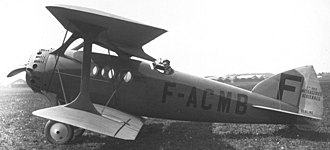
Blériot-SPAD S.33 – The Elegant French Airliner That Helped Build Commercial Aviation
When the history of aviation is discussed, attention often focuses on pioneering flights, military aircraft, and technological breakthroughs that changed the way people traveled. However, the development of commercial aviation depended just as much on a different category of aircraft: reliable passenger airplanes designed to connect cities, carry mail, and demonstrate that flying could become a practical part of everyday transportation. Among the most important early European airliners was the Blériot-SPAD S.33, a French aircraft that represented a major step in the transformation from wartime aviation to commercial air transport.
The Blériot-SPAD S.33 emerged during the 1920s, a period when aviation was searching for its identity after the First World War. The conflict had accelerated aircraft development at an unprecedented rate, producing powerful engines, improved structures, and experienced pilots. Yet once peace returned, aviation companies faced a fundamental question: what purpose would airplanes serve in a world no longer dominated by military requirements?
The answer gradually became commercial aviation. Airlines began forming across Europe, governments invested in air routes, and aircraft manufacturers adapted military experience into passenger designs. The S.33 became one of the aircraft that helped prove that air travel could be safe, comfortable, and economically useful.
Built by the Blériot-SPAD organization, the aircraft combined the engineering heritage of one of France’s most famous aviation companies with the practical demands of airline operations. It was not a fast or glamorous machine by modern standards, but it was dependable, spacious for its era, and well suited to the needs of early passenger services. Its success helped establish the foundations of French commercial aviation and contributed to the growth of international air networks.
The story of the Blériot-SPAD S.33 is therefore not only the story of an aircraft. It is the story of a period when aviation changed from a daring experiment into a transportation system capable of connecting nations.
The Background: From Warplanes to Airliners
The Transformation of French Aviation After 1918
Before the First World War, aviation was still a young technology. Aircraft were fragile experimental machines, and long-distance flight was considered a remarkable achievement rather than a routine possibility. The war changed this situation completely. Between 1914 and 1918, aircraft evolved from simple reconnaissance platforms into sophisticated military machines capable of performing bombing, observation, and combat missions.
France became one of the world’s leading aviation powers during this period. Companies such as Blériot and SPAD produced important military aircraft, and thousands of pilots gained experience operating in challenging conditions. However, the end of the war created a difficult economic environment. Military demand collapsed, leaving manufacturers with factories, engineers, and production capabilities but far fewer customers.
Many aircraft companies attempted to survive by converting military technology into civilian products. Some developed agricultural aircraft, racing machines, training aircraft, and passenger planes. Commercial aviation represented one of the most promising opportunities because governments and businesses recognized the potential of rapid transportation between cities.
France was particularly interested in developing air routes because of its geography and international connections. The country had strong aviation traditions, a skilled workforce, and major cities that could benefit from faster communication links. Airlines began experimenting with routes connecting France to neighboring European countries and overseas territories.
The Blériot-SPAD S.33 was created within this environment of optimism and experimentation. It represented an attempt to move beyond the limitations of military aircraft and create a purpose-built machine for peaceful aviation.
The Blériot and SPAD Heritage
The name Blériot-SPAD reflected the combination of two important French aviation traditions. Louis Blériot had become internationally famous after his historic 1909 flight across the English Channel, an event that demonstrated the practical potential of powered aircraft. His company produced many successful aircraft during the early years of aviation.
SPAD, meanwhile, became one of France’s most respected aircraft manufacturers during the First World War. Its fighters, particularly the SPAD S.VII and SPAD S.XIII, gained reputations for speed, strength, and reliability. The company’s designs reflected an engineering philosophy focused on robust construction and high performance.
After the war, these two traditions came together. The combined organization sought to use its experience and industrial capabilities to compete in the emerging civilian aviation market. The Blériot-SPAD S.33 was one of the most successful results of this effort.
Unlike wartime fighters, the S.33 was designed around passenger comfort, operational reliability, and economic service. Nevertheless, it inherited important lessons from military aviation, including structural strength, careful engineering, and attention to dependable performance.
Development of the Blériot-SPAD S.33
Designing an Aircraft for the Airline Age
The creation of a successful airliner required a completely different approach from designing a fighter aircraft. A fighter pilot might value speed, maneuverability, and climbing ability above everything else. An airline operator needed something different: reliability, capacity, ease of maintenance, and predictable operating costs.
The Blériot-SPAD S.33 was developed with these commercial priorities in mind. The designers understood that early airlines could not afford frequent mechanical problems or aircraft that required extensive maintenance. Every flight represented a financial investment, and delays could damage passenger confidence in air travel.
The aircraft was designed as a four-passenger transport machine, providing a level of comfort that was impressive for the period. At a time when many aircraft offered little protection from weather and noise, the S.33 featured an enclosed cabin that helped create a more pleasant passenger experience.
This enclosed cabin was one of the aircraft’s defining characteristics. It reflected a shift in thinking about aviation. Early flying had often been associated with adventure and exposure to the elements, but commercial aviation required a different image. Airlines needed to convince passengers that flying was not merely a dangerous experiment but a legitimate form of transportation.
The S.33 helped create this perception by offering a more civilized environment. Passengers could sit inside a dedicated cabin rather than an exposed cockpit or improvised seating area. Although comfort standards were modest compared with modern aircraft, the design represented a major advancement.
Construction and Airframe Design
The Blériot-SPAD S.33 used construction methods typical of the 1920s. The aircraft combined a wooden framework with fabric covering, a technique that had been refined during the First World War. Although later aircraft would increasingly adopt metal structures, wood remained popular because it offered a favorable balance between strength, weight, and manufacturing practicality.
The aircraft featured a conventional biplane layout, which was common among early airliners. Biplanes provided several advantages during this period. Their wings could generate substantial lift at relatively low speeds, making them suitable for short runways and slower approaches. They also offered strong structural characteristics because the two wings could support each other through struts and bracing wires.
The design emphasized durability rather than extreme performance. Airline aircraft needed to operate repeatedly under normal conditions, often from relatively basic airfields. A strong and forgiving structure was more valuable than maximum speed.
The S.33’s fuselage was designed to accommodate passengers while maintaining aerodynamic efficiency. Engineers had to balance the need for cabin space with the desire to reduce drag. The result was an aircraft that looked traditional but represented careful engineering for its intended role.
The Passenger Experience of the Blériot-SPAD S.33
Creating Confidence in Air Travel
One of the greatest challenges facing early airlines was not simply building aircraft—it was convincing people to fly. In the 1920s, many members of the public still viewed airplanes as experimental machines associated with military operations and dangerous adventures.
Aircraft manufacturers and airlines needed to create a sense of safety and reliability. The S.33 contributed to this effort through its design. Its enclosed passenger cabin provided psychological reassurance as well as practical benefits. Passengers were protected from wind, cold temperatures, and engine noise to a greater extent than in earlier aircraft.
The cabin arrangement also reflected changing ideas about transportation. Designers were beginning to understand that passengers were not pilots or aviation enthusiasts. Ordinary travelers needed comfort and convenience.
Although the cabin was small compared with modern airliners, it represented a significant improvement. Seats were arranged to provide a degree of privacy, and the enclosed environment created an atmosphere more similar to railway travel than open-air flying.
This was important because commercial aviation competed with established transportation systems such as trains and ships. Airlines had to demonstrate that flying offered not only speed but also an acceptable passenger experience.
The Importance of Reliability
For early airlines, reliability was perhaps the most important characteristic of an aircraft. A passenger airplane that frequently suffered mechanical problems could quickly destroy public confidence.
The Blériot-SPAD S.33 benefited from the engineering experience gained through military aircraft production. Wartime aviation had taught manufacturers the importance of dependable engines, strong structures, and practical maintenance procedures.
The aircraft was designed for regular service rather than occasional demonstration flights. It needed to complete scheduled routes repeatedly, often under changing weather conditions and with limited ground support.
This emphasis on reliability contributed significantly to the aircraft’s reputation. While it was not a revolutionary design in terms of speed or technology, it succeeded because it performed the essential task required of an airliner: carrying passengers safely and consistently.
Engine and Performance Characteristics
Powering a Commercial Aircraft
The engine requirements of an early airliner were very different from those of a fighter aircraft. Commercial operators valued reliability and fuel efficiency as much as raw power. An engine that provided consistent performance over many flights was more valuable than one that offered maximum speed but required frequent maintenance.
The Blériot-SPAD S.33 used reliable inline engines suitable for passenger operations. These engines provided enough power to carry passengers and mail while maintaining practical operating costs.
Performance was modest by modern standards, but this was normal for the era. The primary goal was not speed but dependable transportation. The aircraft had to balance payload capacity, fuel consumption, and operational reliability.
The S.33 demonstrated an important principle in commercial aviation: the best aircraft is not necessarily the fastest one. It is the aircraft that can provide useful service efficiently over many years.
Flight Characteristics
The aircraft’s handling reflected its passenger transport mission. Unlike a fighter designed for aggressive maneuvering, the S.33 was intended to provide stable and predictable flight.
Stability was essential because commercial pilots needed to manage longer flights while maintaining passenger comfort. Sudden movements or overly sensitive controls would create an unpleasant experience for passengers.
The biplane configuration contributed to the aircraft’s steady flight characteristics. Its relatively low-speed operation made takeoffs and landings more manageable, especially from the developing airfields of the 1920s.
For pilots transitioning from military aircraft, the S.33 represented a different philosophy. Success was no longer measured by combat performance but by professionalism, efficiency, and passenger safety.
The Beginning of Commercial Success
The Blériot-SPAD S.33 became one of the important aircraft associated with the growth of French commercial aviation. It demonstrated that passenger aircraft could be designed specifically for airline operations rather than adapted from military machines.
Its success helped strengthen confidence in scheduled air services and encouraged further development of aviation infrastructure. Airports, maintenance facilities, navigation procedures, and passenger services all evolved alongside aircraft such as the S.33.
Although later airliners would become faster, larger, and more advanced, the S.33 represented an important foundation. It belonged to the generation of aircraft that proved commercial aviation was possible.
Conclusion
The Blériot-SPAD S.33 was a landmark aircraft because it represented the moment when aviation began to mature into a transportation industry. Emerging from the experience of wartime aircraft development, it adapted proven engineering principles to the peaceful task of carrying passengers.
Its importance was not based on speed records or dramatic achievements. Instead, the S.33 succeeded through reliability, practicality, and its ability to make passengers believe in the future of air travel.
In the next part, the article will continue with the S.33’s airline service, international operations, variants, comparisons with contemporary airliners, historical legacy, conclusion, and a complete HTML technical specifications table.
Blériot-SPAD S.33 – Airline Service, Variants, Legacy, and Technical Specifications
The Expansion of French Commercial Air Routes
The success of the Blériot-SPAD S.33 was closely connected to the rapid development of commercial aviation networks during the 1920s. At the time, airlines were still experimental organizations attempting to prove that scheduled air transport could compete with established forms of travel. Railways dominated long-distance transportation in Europe, while ships remained essential for international routes. Aviation needed to demonstrate that it offered something unique: speed, flexibility, and the ability to connect locations without relying on existing ground infrastructure.
The S.33 became an important aircraft in this process because it was specifically designed for airline operations. It offered a combination of passenger capacity, operational reliability, and manageable maintenance requirements that suited the needs of early commercial carriers. Rather than being a machine built for record attempts or military missions, it was created to perform the everyday work required to build an aviation network.
One of the aircraft’s most important associations was with French airline operations, particularly those connected with the growth of the country’s international air routes. During this period, France was one of Europe’s leaders in aviation development, and French companies were exploring connections between major cities and neighboring countries.
The S.33’s enclosed cabin and dependable performance helped airlines present flying as a practical service rather than a risky adventure. Every successful passenger flight contributed to public confidence, and aircraft like the S.33 played an important role in changing attitudes toward air transportation.
The Blériot-SPAD S.33 in Airline Operations
Service with Compagnie Franco-Roumaine de Navigation Aérienne
One of the most significant operators of the Blériot-SPAD S.33 was the French airline Compagnie Franco-Roumaine de Navigation Aérienne, commonly known as CFRNA. This company was one of the pioneering European airlines and played a major role in developing routes between Western Europe and Eastern Europe.
CFRNA, which later became part of the organization that evolved into Air France, operated some of the earliest international passenger services. Its routes demonstrated the potential of aviation as a means of connecting countries that previously depended on slower transportation methods.
The S.33 was well suited for these operations. International routes required aircraft that could provide reliable service over long distances while carrying passengers in reasonable comfort. The aircraft’s design reflected the priorities of the era: reliability and practicality were more important than luxury or speed.
Passengers traveling on early airline routes experienced a very different form of air travel compared with modern aviation. Flights were often noisy, weather conditions could affect schedules, and navigation depended on basic methods. Nevertheless, aircraft like the S.33 helped establish the foundations of the global airline system that would later emerge.
Mail and Passenger Transport
Early commercial aviation depended heavily on mail contracts. Passenger numbers were limited because flying remained expensive and unfamiliar to many people. Carrying mail provided airlines with a reliable source of income while they developed passenger services.
The Blériot-SPAD S.33 was therefore valuable because it could support multiple commercial purposes. It could transport passengers while also carrying mail and small cargo. This flexibility improved the economic viability of airline operations.
The relationship between mail and passenger transport was fundamental to aviation development. Many early airlines began as mail carriers before becoming passenger-focused companies. Aircraft had to be capable of handling these mixed responsibilities.
The S.33 represented this transitional period. It was not yet a large passenger airliner in the modern sense, but it demonstrated the basic principles that would define commercial aviation: scheduled operations, dedicated routes, and aircraft designed around business requirements.
Design Improvements and Related Versions
The Evolution of the S.33 Family
Like many successful aircraft of the early aviation era, the Blériot-SPAD S.33 formed the basis for further development. Aircraft manufacturers often created improved versions by modifying engines, structures, or interior arrangements.
The early airliner market was still developing, and manufacturers experimented with ways to increase reliability, passenger capacity, and operational range. Improvements in engine technology allowed aircraft to carry heavier loads and fly longer distances.
The S.33 family reflected this gradual process of refinement. Rather than introducing revolutionary changes, designers focused on practical improvements that made the aircraft more useful for airline operators.
This approach was typical of the period. Aviation technology advanced through continuous adjustment rather than sudden transformation. Each new aircraft incorporated lessons learned from previous designs.
The Relationship with Later Blériot-SPAD Transport Aircraft
The S.33 contributed to the broader development of Blériot-SPAD passenger aircraft. The company continued exploring commercial aviation designs as airlines expanded and passenger expectations increased.
Later aircraft benefited from improved engines, larger cabins, and more advanced construction methods. However, the S.33 established important principles that remained relevant: reliability, passenger protection, and efficient operation.
Its design represented an important step between early converted military transports and the more specialized airliners that would appear during the 1930s.
Comparing the Blériot-SPAD S.33 with Contemporary Aircraft
Competition from Other European Airliners
During the 1920s, the Blériot-SPAD S.33 operated in a competitive environment. Aircraft manufacturers across Europe were developing their own passenger designs, each attempting to solve the challenges of commercial aviation.
British, German, Dutch, and French manufacturers produced a variety of aircraft ranging from small passenger transports to larger experimental airliners. Each design reflected the industrial capabilities and aviation philosophy of its country.
Compared with some competitors, the S.33 emphasized reliability and conservative engineering. It did not attempt to achieve extreme performance but instead focused on dependable operation.
This approach was logical for early airlines. A technically impressive aircraft was not necessarily successful if it was expensive to operate or difficult to maintain. Commercial aviation required practical solutions.
Advantages and Limitations
The greatest advantage of the Blériot-SPAD S.33 was its suitability for regular service. Its construction methods were familiar to maintenance crews, and its design reflected years of aircraft manufacturing experience.
The enclosed passenger cabin was another important advantage. At a time when passenger comfort was often neglected, the S.33 provided a more professional travel environment.
However, the aircraft also reflected the limitations of its era. Its capacity was small, its speed was modest, and its wooden-and-fabric construction would eventually be replaced by more advanced metal airframes.
These limitations were not failures of design. They were simply characteristics of a transitional period when aviation technology was developing rapidly.
The Historical Importance of the Blériot-SPAD S.33
A Foundation for Modern Airline Travel
The importance of the Blériot-SPAD S.33 lies in its contribution to the development of commercial aviation. It helped prove that airlines could operate regular passenger services and that people would accept aircraft as a practical method of transportation.
Modern aviation depends on concepts that were established during this period: scheduled routes, passenger cabins, airline networks, maintenance systems, and professional flight operations. Aircraft such as the S.33 were part of the generation that created these foundations.
Although it carried only a small number of passengers compared with modern aircraft, its role was significant. Every successful flight demonstrated that commercial aviation was becoming a reality.
The Transition from Adventure to Industry
Early aviation was often associated with individual courage and exploration. Pilots became famous for record flights and dangerous adventures. However, commercial aircraft required something different.
The Blériot-SPAD S.33 represented the transition from aviation as a spectacle to aviation as an industry. It was designed not for one-time achievements but for repeated service. Its success depended on consistency rather than publicity.
This change was one of the most important developments in aviation history. Without reliable transport aircraft, the airline industry could not have grown.
The Legacy of the Blériot-SPAD S.33
Remembering an Early Airliner Pioneer
The Blériot-SPAD S.33 is not as widely remembered as famous aircraft such as wartime fighters or record-breaking machines. However, its contribution to aviation history remains important.
The aircraft represented a crucial stage in the development of air transportation. It demonstrated that aircraft could be designed specifically for passengers and that commercial routes could operate successfully.
Historians often emphasize the importance of such aircraft because they reveal how aviation developed beyond individual achievements. The growth of aviation depended not only on famous pilots but also on practical machines that could perform routine tasks.
Influence on Future Airliners
The principles demonstrated by the S.33 continued to influence later passenger aircraft. Future airliners would become larger, faster, and more comfortable, but they would still rely on the same fundamental ideas: reliability, efficiency, and passenger confidence.
The aircraft helped establish the expectation that airline machines should provide a controlled and protected environment for travelers. This idea became increasingly important as commercial aviation expanded.
In this sense, the S.33 was part of the foundation upon which modern air transport was built.
Conclusion: The Blériot-SPAD S.33’s Place in Aviation History
The Blériot-SPAD S.33 occupies an important position in the history of aviation because it represents the moment when flying began to become a practical transportation service. Developed from the experience of one of France’s greatest aviation manufacturers, it transformed wartime engineering knowledge into a peaceful commercial application.
Its importance was not measured by speed records or combat victories. Instead, it succeeded through reliability, passenger comfort, and operational usefulness. It helped airlines establish confidence among travelers and contributed to the development of European air networks.
The S.33 belonged to a generation of aircraft that built the bridge between early aviation and the modern airline industry. It showed that airplanes could do more than entertain crowds or serve military purposes—they could connect cities, transport people, and become part of everyday life.
Although later aircraft would surpass it in every technical category, the Blériot-SPAD S.33 remains historically significant. It was one of the machines that helped transform the dream of flight into a functioning global transportation system.
Blériot-SPAD S.33 Technical Specifications
The following specifications represent typical published figures for the Blériot-SPAD S.33. Exact details varied depending on production version, engine installation, and airline configuration.
| Specification | Details |
|---|---|
| Aircraft Name | Blériot-SPAD S.33 |
| Manufacturer | Blériot-SPAD |
| Country of Origin | France |
| First Flight | Early 1920s |
| Aircraft Type | Passenger transport biplane |
| Primary Role | Commercial passenger and mail transport |
| Operator | Early French and European airlines, including CFRNA |
| Configuration | Single-engine tractor biplane |
| Crew | Two (pilot and crew member depending on configuration) |
| Passenger Capacity | Approximately four passengers |
| Construction | Wooden airframe with fabric covering |
| Engine Type | Liquid-cooled inline engine |
| Power Output | Approximately 180–300 hp depending on variant |
| Maximum Speed | Approximately 180–200 km/h |
| Cruise Speed | Approximately 150–170 km/h |
| Range | Approximately 500–800 km depending on configuration |
| Cabin | Enclosed passenger cabin |
| Landing Gear | Fixed conventional wheeled landing gear |
| Wings | Two-bay biplane configuration |
| Operational Purpose | Scheduled airline service, passenger transport, mail carriage |
| Historical Significance | One of France’s important early commercial airliners that helped establish regular air transport |
.jpg)