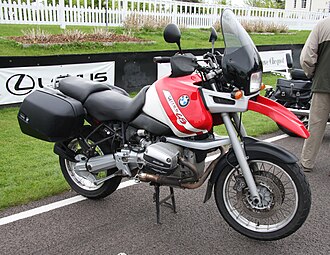
BMW R1100GS – The Motorcycle That Redefined Adventure Touring
There are motorcycles that become successful products, there are motorcycles that become cultural icons, and then there are motorcycles that permanently change the direction of the entire industry. The BMW R1100GS belongs firmly in the final category. Long before adventure motorcycles became the dominant force in the global motorcycle market, before every major manufacturer rushed to create towering dual-sport machines capable of crossing continents, and before social media transformed overland travel into a worldwide lifestyle movement, BMW quietly released a machine that many riders initially did not fully understand. The R1100GS looked unusual, felt different from almost everything else on the road, and ignored many of the traditional rules that defined motorcycles in the early 1990s. Yet that willingness to challenge convention ultimately made it one of the most influential motorcycles ever built.
When the BMW R1100GS appeared in 1994, it represented far more than a simple update of the previous GS models. It was a technological reset for BMW Motorrad. The machine introduced a new oilhead boxer engine, modernized chassis architecture, advanced suspension concepts, and a completely different riding philosophy compared to earlier generations. While older GS models such as the R80GS and R100GS had already established BMW as a serious player in long-distance adventure riding, the R1100GS took the concept into a new era. It transformed the GS from a rugged niche machine into a sophisticated motorcycle capable of serving as commuter, touring bike, canyon carver, gravel explorer, and globe-crossing companion all at once.
At first glance, many riders were uncertain about the design. The asymmetrical front appearance, oversized fuel tank, protruding boxer cylinders, and high stance made the bike look purposeful rather than elegant. But after spending time in the saddle, perceptions changed quickly. Riders discovered exceptional comfort, surprising agility, remarkable reliability, and a sense of mechanical honesty that made the motorcycle feel alive. The bike encouraged exploration. It inspired riders to take roads they normally would have ignored. It transformed long-distance travel from a difficult endurance challenge into something deeply enjoyable.
Today, decades after production ended, the R1100GS still commands enormous respect among enthusiasts. Many examples continue to accumulate massive mileage figures with little more than routine maintenance. Owners frequently describe the bike not merely as transportation but as a trusted companion. In an age dominated by increasingly digital motorcycles loaded with electronics, the analog character of the R1100GS has become even more appealing. It offers a balance between modern capability and mechanical simplicity that many riders believe has disappeared from newer machines.
This article explores the history, engineering, riding experience, strengths, weaknesses, cultural impact, and enduring legacy of the BMW R1100GS. It is not simply a motorcycle review. It is the story of a machine that helped create the modern adventure category and permanently changed how riders think about motorcycling.
The Historical Context – BMW Before the R1100GS
To fully understand the importance of the R1100GS, it is necessary to look at BMW Motorrad during the late 1980s and early 1990s. At that time, the company was respected for engineering quality and durability, but BMW motorcycles occupied a relatively small and somewhat conservative corner of the market. Japanese manufacturers dominated global sales with high-performance sport bikes, affordable commuters, and increasingly refined touring machines. Ducati represented passion and Italian racing spirit, while Harley-Davidson owned the cruiser identity. BMW, meanwhile, was known primarily for practical touring motorcycles ridden by long-distance travelers, police departments, and mature enthusiasts.
However, BMW possessed one enormous advantage: a deep understanding of endurance riding. The company had spent decades refining motorcycles capable of surviving huge distances under difficult conditions. This philosophy culminated in the original R80G/S introduced in 1980. That motorcycle effectively invented the large-capacity adventure bike segment by combining road comfort with genuine off-road ability. The success of the Paris-Dakar Rally further strengthened the GS image. Riders suddenly realized that motorcycles could be both practical and adventurous at the same time.
Yet by the early 1990s, BMW faced major challenges. The air-cooled boxer engines powering its motorcycles were aging. Competitors were embracing liquid cooling, multi-cylinder layouts, modern suspension systems, and aerodynamic designs. BMW needed a dramatic technological leap forward. The company could not rely solely on tradition.
The answer came in the form of the “oilhead” boxer engine platform. Rather than abandoning the iconic boxer twin configuration, BMW evolved it. The company created a partially oil-cooled engine with four valves per cylinder and significantly improved performance characteristics. This new engine formed the foundation for an entirely new generation of motorcycles.
The R1100RS introduced the platform first, but it was the R1100GS that demonstrated the true versatility and brilliance of the design. BMW engineers understood that adventure riders valued durability, torque, comfort, and all-day usability more than peak horsepower figures. Instead of chasing superbike performance, BMW focused on creating a machine that could function everywhere and do almost everything well.
That strategic decision changed motorcycle history.
Design Philosophy – Function Before Fashion
The BMW R1100GS is one of those motorcycles that becomes more attractive the longer you look at it. Unlike many machines designed primarily to impress in showroom lighting, the GS was unapologetically functional. Every line, every component, and every strange-looking detail existed for a reason.
The most visually dominant feature was the massive fuel tank and broad front section. This gave the motorcycle a commanding presence and provided substantial fuel range, a critical requirement for adventure touring. Riders crossing remote areas could travel long distances without worrying about refueling. The tall riding position also delivered excellent visibility in traffic and on winding roads.
Then there was the boxer engine itself. The horizontally opposed cylinders protruding from either side of the motorcycle became both a practical engineering solution and a defining visual signature. The low placement of the cylinders helped keep the center of gravity remarkably low for such a large machine. This meant the R1100GS often felt lighter than its actual weight once moving.
The asymmetrical front design became another hallmark of BMW GS motorcycles. While some riders initially criticized the unusual appearance, the asymmetry reflected BMW’s willingness to prioritize functionality over convention. The front fairing offered effective wind protection without becoming excessively large or heavy.
Perhaps the most radical design element was the Telelever front suspension system. Traditional telescopic forks had dominated motorcycle design for decades, but BMW sought something better for touring and adventure riding. The Telelever separated steering forces from suspension forces, dramatically reducing front-end dive under braking. This gave the bike exceptional stability during aggressive braking maneuvers and on uneven surfaces.
The Paralever rear suspension system also addressed one of the traditional weaknesses of shaft-drive motorcycles. Older shaft-drive bikes often exhibited undesirable suspension movement under acceleration and deceleration. BMW’s Paralever system minimized these effects, creating a more neutral and controlled riding experience.
Taken together, the design philosophy behind the R1100GS reflected a clear message: this motorcycle existed to perform real-world tasks exceptionally well. It was not built for spec-sheet racing. It was built for actual riders covering actual distances.
The Oilhead Boxer Engine – Heart of the Machine
At the center of the BMW R1100GS sits one of the most charismatic motorcycle engines ever created. The 1,085 cc oilhead boxer twin represented a major evolution of BMW’s traditional flat-twin architecture. It retained the soul and character of earlier boxer engines while introducing modern engineering solutions that significantly improved power delivery, efficiency, and reliability.
The engine produced approximately 80 horsepower and around 97 Nm of torque. By modern standards, those numbers may not seem extraordinary, but raw figures never tell the full story of the R1100GS. What mattered was how the power arrived.
The boxer engine delivered strong, immediate torque throughout the rev range. Riders did not need to chase high RPMs to access meaningful acceleration. The motorcycle pulled confidently from low speeds and maintained smooth power delivery during highway cruising. This broad torque curve made the bike exceptionally relaxing to ride over long distances.
One of the defining characteristics of the boxer twin was its distinctive mechanical personality. At idle, the engine rocked gently from side to side due to the rotating mass of the crankshaft. Some riders found this strange initially, but many quickly grew to love it. It gave the motorcycle a sense of life and individuality absent from smoother but less characterful engines.
BMW’s use of oil cooling rather than full liquid cooling represented a careful compromise. Oil cooling allowed improved thermal management while preserving much of the simplicity and visual openness associated with air-cooled boxer engines. This approach reduced mechanical complexity and helped maintain easier maintenance access.
Fuel injection further modernized the platform. Compared with carbureted predecessors, the R1100GS delivered more consistent fueling across different altitudes and weather conditions. For long-distance travelers crossing multiple climates and terrains, this was a major advantage.
Another important aspect of the engine was durability. The oilhead boxer became famous for covering enormous mileages when properly maintained. Stories of R1100GS motorcycles exceeding 200,000 or even 300,000 kilometers are not uncommon. The engine was understressed, robustly built, and engineered for longevity rather than maximum performance.
Of course, the boxer layout also had quirks. Valve adjustments required attention. Some engines developed surging issues at certain throttle positions. The transmission could feel agricultural compared with Japanese motorcycles of the same era. Yet these imperfections became part of the bike’s personality. Riders often describe the R1100GS not as flawless, but as deeply satisfying.
Riding Experience – More Than the Sum of Its Parts
Reading the specifications of the BMW R1100GS does not fully prepare a rider for the actual experience of riding one. On paper, the motorcycle appears heavy, modestly powered, and somewhat unconventional. But once underway, the bike reveals a remarkable coherence that transforms the entire riding experience.
The first thing many riders notice is balance. Despite weighing over 240 kilograms fully fueled, the low center of gravity created by the boxer engine gives the motorcycle surprising agility. At low speeds, the bike feels manageable and predictable. Once moving, it becomes even more impressive.
The riding position is upright, relaxed, and commanding. The wide handlebars provide excellent leverage, making the bike easy to maneuver despite its size. Long-distance comfort is exceptional. Riders can spend entire days in the saddle without the extreme fatigue associated with sport-oriented motorcycles.
Wind protection is another major strength. The front fairing and windshield provide effective shielding from weather and highway turbulence while still maintaining an open, engaging riding experience. Unlike enormous touring motorcycles that isolate riders from their environment, the R1100GS strikes a balance between comfort and connection.
On winding roads, the motorcycle surprises many people. The Telelever front suspension contributes to extraordinary stability during corner entry and braking. Riders accustomed to conventional forks may initially find the reduced front-end dive unusual, but confidence builds quickly. The bike remains composed even when braking aggressively mid-corner.
The torque-rich engine complements the chassis beautifully. Rather than constantly shifting gears, riders can simply surf the engine’s broad torque wave. The motorcycle feels calm and composed at legal road speeds, encouraging smooth and fluid riding.
Off pavement, the R1100GS demonstrates another dimension of its personality. Although large and heavy compared with dedicated dirt bikes, it handles gravel roads, forest trails, and rough surfaces with impressive competence. The suspension absorbs uneven terrain effectively, and the standing riding position feels natural.
Importantly, the R1100GS does not pretend to be a lightweight enduro machine. Instead, it excels as a true adventure motorcycle capable of covering vast distances across mixed terrain. This realistic approach made the bike far more useful for real-world travel than many more specialized machines.
The riding experience ultimately revolves around confidence. The R1100GS encourages riders to keep going, to take detours, to explore unknown roads, and to trust the motorcycle under varied conditions. That emotional quality cannot be measured on a dyno or captured in a specification sheet.
Long-Distance Touring Excellence
One of the greatest achievements of the BMW R1100GS is its extraordinary ability as a long-distance touring motorcycle. While many bikes can handle short recreational rides, relatively few remain genuinely enjoyable after ten or twelve hours in the saddle. The R1100GS excels precisely in these demanding conditions.
Comfort begins with ergonomics. The seating position places minimal strain on wrists, knees, and lower back. Riders sit upright with natural posture, reducing fatigue during extended journeys. The seat itself, while not universally loved, provides adequate support for most riders and can easily be upgraded with aftermarket solutions.
Fuel range also plays a major role in the bike’s touring capability. Depending on riding style and conditions, the large fuel tank allows substantial distances between stops. For riders crossing remote regions, this capability offers both convenience and peace of mind.
Luggage capacity represents another strength. BMW designed the GS platform with travel in mind, and factory panniers integrated effectively with the motorcycle. The sturdy rear subframe handled heavy loads confidently, enabling riders to carry camping gear, tools, clothing, and supplies without compromising stability.
Weather versatility further enhanced the touring experience. The R1100GS remained comfortable across a wide range of conditions, from cold mountain passes to hot desert highways. Heated grips became a beloved option among riders who traveled year-round.
Mechanical accessibility mattered as well. Adventure travelers often venture far from dealerships and workshops. The boxer engine layout simplified many maintenance tasks, allowing owners to perform routine servicing with basic tools. This self-sufficiency strengthened the bike’s appeal among serious travelers.
Perhaps most importantly, the R1100GS possessed a psychological quality ideal for touring: it reduced stress. The bike encouraged a steady, enjoyable rhythm rather than frantic speed. Riders could comfortably cover massive distances while still appreciating scenery, roads, and the overall journey.
Many owners discovered that the motorcycle fundamentally changed how they traveled. Instead of planning routes around perfect pavement, they began embracing secondary roads, gravel tracks, and remote regions. The R1100GS expanded possibilities.
Reliability and Durability – Built for the Long Haul
BMW motorcycles have long enjoyed a reputation for durability, and the R1100GS played a major role in reinforcing that image. While no motorcycle is entirely free from mechanical issues, the R1100GS became famous for surviving extreme mileage and difficult conditions.
The oilhead boxer engine proved remarkably robust when maintained properly. Regular oil changes, valve adjustments, and basic servicing allowed many engines to operate reliably for hundreds of thousands of kilometers. Unlike highly stressed performance engines requiring constant attention, the BMW powerplant felt understressed and overbuilt.
The shaft-drive system also appealed strongly to long-distance riders. Chain maintenance becomes tedious during extended travel, especially in dirty or wet conditions. The enclosed shaft drive reduced routine maintenance requirements and increased convenience.
The overall construction quality reflected BMW’s engineering philosophy. Components felt solid and substantial. Fasteners, frame elements, and mechanical systems were designed with longevity in mind rather than minimum production cost.
However, reliability discussions about the R1100GS must remain honest and balanced. Certain issues became well known within the owner community. Hall effect sensor failures could occur, particularly on older bikes exposed to heat and age. Some motorcycles experienced final drive concerns, although catastrophic failures were less common than internet discussions sometimes suggest.
Transmission behavior also divided opinion. The gearbox could feel clunky, especially compared with Japanese motorcycles. Yet many owners considered this simply part of the bike’s mechanical personality rather than a serious flaw.
Throttle body wear occasionally caused uneven idle or vibration. ABS systems on early examples could become expensive to repair. Electrical gremlins sometimes appeared as motorcycles aged.
Nevertheless, one of the most remarkable aspects of the R1100GS community is how many owners continue trusting these motorcycles for serious travel decades after production ended. That level of confidence says a great deal about the underlying engineering.
Another major factor contributing to durability is owner culture. BMW GS riders tend to maintain their motorcycles carefully. Enthusiast communities share technical knowledge extensively, making troubleshooting and repairs more accessible.
As a result, many surviving R1100GS examples remain in excellent mechanical condition despite significant mileage. In an era increasingly dominated by disposable consumer products, the bike represents a different philosophy: build something to last.
The GS Identity – Adventure as a Lifestyle
The BMW R1100GS did more than transport riders from one place to another. It helped define an entire motorcycling identity centered around adventure, independence, and exploration.
Before the rise of the modern adventure category, motorcycles were often separated into distinct segments. Sport bikes emphasized speed and handling. Cruisers focused on style and relaxed riding. Touring motorcycles prioritized comfort. Dirt bikes specialized in off-road performance.
The GS blurred these boundaries.
Suddenly, riders realized a single motorcycle could perform multiple roles competently. More importantly, the GS encouraged a mindset that valued experience over specialization. Riders stopped worrying about whether a road was paved or unpaved. The destination became less important than the journey itself.
This philosophy resonated strongly during the 1990s and early 2000s, a period when global travel became increasingly accessible and stories of overland motorcycle expeditions captured public imagination. The GS became associated with freedom and possibility.
Adventure motorcycling also appealed to mature riders seeking something beyond pure speed. Many enthusiasts who had spent years riding sport bikes discovered they preferred comfort, versatility, and exploration as they accumulated experience.
BMW successfully cultivated this image through marketing, rally participation, and global travel stories. The GS evolved into more than a motorcycle model; it became a symbol of adventure culture.
The R1100GS occupied a crucial point in this evolution because it modernized the concept. Earlier GS models had already proven the idea, but the R1100GS expanded its appeal to a broader audience. It offered enough comfort and sophistication to function as a daily motorcycle while retaining genuine adventure capability.
Many riders who purchased an R1100GS discovered they rode more frequently and traveled farther than before. Weekend rides became multi-day journeys. Local roads turned into international expeditions.
The emotional bond between owners and their motorcycles became especially strong. Riders often personalized their GS machines with auxiliary lights, crash bars, luggage systems, upgraded seats, navigation equipment, and countless other modifications tailored to specific travel dreams.
This culture remains alive today. Even decades later, the R1100GS still appears at adventure rallies, overland gatherings, and long-distance travel events around the world.
Off-Road Capability – Big Bike, Real Adventure
One of the most fascinating aspects of the BMW R1100GS is the way it challenged assumptions about off-road riding. By dirt bike standards, the motorcycle was undeniably large and heavy. Yet skilled riders repeatedly demonstrated that the GS could tackle surprisingly difficult terrain.
The key lay in understanding the bike’s intended purpose. BMW never designed the R1100GS to compete with lightweight enduro machines on technical single-track trails. Instead, the motorcycle excelled at covering huge distances across mixed surfaces.
Gravel roads, fire trails, rocky mountain passes, desert tracks, and rough secondary routes all fell comfortably within the GS’s capabilities. The long-travel suspension absorbed uneven terrain effectively, while the upright riding position allowed riders to stand naturally when conditions became rough.
The low center of gravity created by the boxer engine also helped significantly off pavement. Although the motorcycle remained physically heavy, the mass distribution improved balance and control at low speeds.
Tires played an important role in determining off-road performance. With more road-oriented tires, the R1100GS behaved like a highly capable touring motorcycle that could handle occasional dirt roads. Equipped with aggressive dual-sport rubber, the bike transformed into a surprisingly competent adventure machine.
Ground clearance was respectable, and the robust chassis tolerated punishment well. Crash bars became popular accessories because drops were inevitable during serious off-road exploration.
Perhaps the most important factor in the GS’s off-road reputation was rider confidence. The motorcycle communicated traction and balance clearly, enabling riders to tackle unfamiliar terrain without excessive fear.
Many famous overland journeys were completed on GS motorcycles, further strengthening the platform’s reputation. Riders crossed Africa, South America, Asia, and remote Arctic regions aboard machines based on the same engineering philosophy established by the R1100GS.
The motorcycle ultimately demonstrated that adventure riding did not require extreme specialization. Instead of choosing between road comfort and off-road capability, riders could enjoy both.
Ownership Experience – Living with the R1100GS
Owning a BMW R1100GS differs significantly from owning many other motorcycles. The relationship tends to become deeply personal over time.
Part of this stems from the bike’s mechanical openness. Unlike fully enclosed motorcycles hiding their engineering beneath layers of bodywork, the GS proudly displays its mechanical components. Owners become familiar with valve covers, throttle bodies, suspension linkages, and driveline elements.
Routine maintenance often becomes part of the ownership experience rather than an unpleasant chore. Valve adjustments, oil changes, and synchronization procedures encourage mechanical understanding. Many owners enjoy this connection with the machine.
The aftermarket ecosystem surrounding the GS platform is enormous. Riders can customize nearly every aspect of the motorcycle to suit specific travel styles and preferences. Touring windscreens, aluminum panniers, upgraded suspension systems, heated seats, auxiliary lighting, navigation mounts, and protective accessories all contribute to personalization.
Community support also represents a major advantage. BMW GS owners form passionate and knowledgeable communities worldwide. Technical advice, travel stories, maintenance guides, and ride planning resources remain widely available.
Insurance costs are often reasonable because the motorcycle attracts mature riders rather than high-risk sport-bike demographics. Fuel economy is respectable for a large adventure machine, and the engine typically runs happily on regular fuel.
Of course, ownership is not entirely inexpensive. Genuine BMW parts can cost more than equivalent Japanese components. Some repairs require specialized knowledge or tools. Older examples may need attention to suspension wear, electrical systems, or aging rubber components.
Yet many owners consider these costs acceptable given the bike’s durability and versatility. A well-maintained R1100GS can function as commuter, touring motorcycle, weekend explorer, and occasional off-road machine simultaneously.
Another fascinating aspect of ownership is the way the bike seems to improve with familiarity. Riders often report that they appreciate the motorcycle more over time rather than less. The unconventional characteristics that initially feel strange gradually become endearing.
The boxer engine’s vibrations, the Telelever suspension feel, the shaft-drive behavior, and the mechanical sounds all contribute to a unique riding experience that many owners struggle to replace with newer motorcycles.
Comparison with Modern Adventure Motorcycles
Looking at the BMW R1100GS from a modern perspective reveals just how visionary the motorcycle truly was. Today, the adventure category dominates global motorcycle sales. Nearly every major manufacturer offers large adventure machines inspired, directly or indirectly, by the GS concept.
Modern motorcycles certainly surpass the R1100GS in several measurable areas. Contemporary engines produce far more horsepower. Electronics packages include traction control, cornering ABS, adaptive suspension, riding modes, radar systems, and advanced connectivity features. Weight reduction and chassis refinement have also improved.
Yet despite these technological advances, many riders continue preferring the older R1100GS for specific reasons.
One major factor is simplicity. Modern adventure motorcycles can feel overwhelmingly complex. While electronic systems offer impressive capability, they also increase potential failure points and maintenance concerns.
The R1100GS occupies a compelling middle ground between old-school mechanical simplicity and modern usability. It provides fuel injection, ABS, and sophisticated suspension design without becoming dependent on extensive digital systems.
Character also matters enormously. Many riders feel modern motorcycles have become too refined and sanitized. The R1100GS retains mechanical texture and individuality.
Weight is another interesting topic. Although the R1100GS is heavy, some modern adventure motorcycles have become even larger and more intimidating. The older bike often feels narrower and more manageable.
Cost represents another important advantage. Used R1100GS models remain relatively affordable compared with new premium adventure bikes. For riders seeking authentic long-distance capability without massive financial investment, the older BMW remains highly attractive.
Importantly, the R1100GS still performs its intended mission extremely well. It can comfortably tour across continents, explore gravel roads, commute daily, and carry substantial luggage. While modern motorcycles may perform these tasks faster or with more electronic assistance, the fundamental experience remains remarkably competitive.
In many ways, the continued relevance of the R1100GS highlights the strength of the original concept. BMW got the formula right.
Cultural Impact and Legacy
Few motorcycles influence the entire industry as profoundly as the BMW R1100GS. Its cultural and commercial impact extends far beyond BMW itself.
The motorcycle helped transform adventure riding from a niche interest into a mainstream phenomenon. Today, adventure motorcycles dominate sales charts worldwide, and nearly every manufacturer competes aggressively within the segment.
Machines such as the Ducati Multistrada, KTM Adventure series, Triumph Tiger lineup, Honda Africa Twin, Yamaha Ténéré, and countless others all exist partly because BMW proved the market potential for large adventure motorcycles.
The GS also changed rider expectations. Motorcyclists increasingly demanded versatility rather than specialization. They wanted machines capable of commuting during the week, touring on weekends, and exploring remote areas during vacations.
Adventure riding media exploded in popularity as well. Books, documentaries, YouTube channels, and travel blogs frequently featured GS motorcycles crossing deserts, mountains, jungles, and continents.
The R1100GS specifically occupies a special place within this history because it established the technological and philosophical foundation for future generations. Later models such as the R1150GS and R1200GS refined and expanded the formula, but the essential DNA was already present in the R1100GS.
The motorcycle also contributed significantly to BMW Motorrad’s identity and financial success. Without the GS platform, BMW’s motorcycle division might look very different today.
Importantly, the R1100GS influenced not only motorcycle design but also rider psychology. It encouraged exploration and self-reliance. It promoted the idea that motorcycling could involve meaningful travel experiences rather than simply speed or recreation.
Even riders who never owned a GS benefited indirectly from its influence because the entire industry shifted toward more comfortable, versatile, and capable motorcycles.
Buying a Used BMW R1100GS Today
For modern riders considering a used adventure motorcycle, the BMW R1100GS remains an intriguing and highly relevant option.
Prices vary depending on mileage, maintenance history, accessories, and overall condition. Well-maintained examples with documented servicing tend to command strong values because demand remains steady.
Potential buyers should pay close attention to maintenance records. Regular servicing matters far more than low mileage. A motorcycle that has been ridden consistently and maintained properly is often preferable to one that sat unused for years.
Common inspection points include final drive play, clutch condition, suspension wear, brake system health, and electrical functionality. Hall effect sensor replacements are considered routine preventive maintenance on older examples.
ABS systems deserve careful evaluation because repairs can become expensive. Some owners choose to bypass failed ABS systems entirely, although many buyers prefer motorcycles with fully functioning original equipment.
Throttle body wear can cause uneven idle or vibration, but rebuild kits and servicing solutions remain available. Oil leaks around seals or gaskets are not uncommon on older machines.
Aftermarket modifications vary widely in quality. Some upgrades significantly improve the motorcycle, while others may indicate hard off-road use or poor maintenance practices.
The good news is that parts availability remains relatively strong thanks to BMW’s support network and the enduring popularity of the platform. Independent specialists also provide extensive technical knowledge.
For riders willing to learn basic maintenance skills, the R1100GS can offer exceptional value. It delivers genuine long-distance capability, enormous character, and historical significance at a fraction of the price of new adventure motorcycles.
Perhaps most importantly, buying an R1100GS often means joining a passionate global community of enthusiasts who continue celebrating the motorcycle decades after its introduction.
Conclusion – Why the BMW R1100GS Still Matters
The BMW R1100GS remains important because it represents a rare combination of innovation, practicality, durability, and emotional appeal. Many motorcycles excel in one or two of these areas, but relatively few achieve balance across all of them.
The motorcycle arrived at a pivotal moment in motorcycling history and fundamentally changed industry direction. BMW demonstrated that riders wanted versatile machines capable of handling real-world travel rather than narrow specialization.
The R1100GS also proved that engineering individuality could succeed commercially. BMW ignored conventional design trends and created something unapologetically different. Instead of chasing sport-bike performance statistics, the company focused on rider experience.
Decades later, the motorcycle continues earning loyalty because the core concept remains valid. Riders still value comfort, reliability, versatility, and authentic mechanical character.
In an increasingly digital world filled with electronic rider aids and software-driven experiences, the analog honesty of the R1100GS feels refreshing. The motorcycle asks riders to participate actively in the experience rather than simply operate a machine.
That quality explains why so many owners struggle to sell their GS motorcycles. The bike becomes woven into personal memories, adventures, friendships, and life experiences.
The BMW R1100GS is not perfect. It is heavy, mechanically quirky, and visually unconventional. Yet those imperfections contribute to its charm. The motorcycle possesses soul.
Ultimately, the R1100GS deserves recognition not merely as a successful motorcycle but as one of the most influential two-wheeled machines ever created. It helped invent the modern adventure category, inspired countless journeys, and proved that motorcycles could serve as tools for genuine exploration.
Long after newer and more technologically advanced motorcycles fade into history, the R1100GS will likely continue carrying riders toward distant horizons.
Technical Specifications – BMW R1100GS
| Parameter | Specification |
|---|---|
| Model | BMW R1100GS |
| Production Years | 1994–1999 |
| Motorcycle Type | Adventure Touring |
| Engine Type | Air/Oil-cooled 4-stroke flat-twin boxer |
| Engine Capacity | 1,085 cc |
| Bore x Stroke | 99 mm × 70.5 mm |
| Compression Ratio | 10.3:1 |
| Valve System | DOHC, 4 valves per cylinder |
| Maximum Power | Approximately 80 hp (59 kW) at 6,750 rpm |
| Maximum Torque | Approximately 97 Nm at 5,250 rpm |
| Fuel System | Electronic fuel injection |
| Cooling System | Air/Oil cooling |
| Transmission | 5-speed manual |
| Final Drive | Shaft drive |
| Front Suspension | BMW Telelever |
| Rear Suspension | BMW Paralever monoshock |
| Front Brake | Dual disc |
| Rear Brake | Single disc |
| ABS | Optional on early models, later widely equipped |
| Front Wheel | 19-inch |
| Rear Wheel | 17-inch |
| Fuel Tank Capacity | Approximately 25 liters |
| Dry Weight | Approximately 229 kg |
| Seat Height | Approximately 840 mm |
| Top Speed | Around 190 km/h |
| Average Fuel Consumption | Approximately 5.5–6.5 L/100 km |
| Typical Fuel Range | 350–450 km |
| Frame Type | Steel tubular frame |
| Starter System | Electric starter |
| Country of Manufacture | Germany |
| Successor Model | BMW R1150GS |
