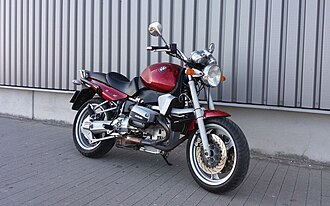
BMW R1100R – The Forgotten Boxer Roadster That Defined a Quiet Revolution
The BMW R1100R is one of those motorcycles that does not immediately demand attention in the way superbikes or aggressively styled naked machines often do. It does not rely on extreme horsepower figures, sharp aerodynamic bodywork, or futuristic styling cues to capture interest. Instead, it represents something far more subtle and arguably more enduring: a deeply engineered, mechanically honest, and profoundly versatile roadster that reflects BMW Motorrad’s unique interpretation of what a standard motorcycle should be.
Introduced in the mid-1990s, the BMW R1100R arrived during a transformative period in motorcycling history. Manufacturers were rapidly embracing liquid-cooled engines, multi-cylinder configurations, and increasingly aggressive performance benchmarks. Sport bikes were becoming faster, lighter, and more technologically complex, while touring motorcycles were evolving into highly refined long-distance machines. In this environment, BMW chose a different path. Rather than abandoning its iconic boxer twin architecture, the company evolved it into a new generation of oilhead engines and built an entire lineup around it. The R1100R stood at the center of this transition.
While the R1100GS often receives more attention due to its adventure-focused identity, the R1100R quietly represents one of the most important interpretations of BMW’s oilhead philosophy. It is the purest expression of the roadster concept in the R1100 series: a motorcycle designed for real-world riding, everyday usability, long-distance comfort, and mechanical durability. It is not a machine built to impress on paper. It is a machine built to function in the real world, across thousands of kilometers, in all conditions, without drama.
What makes the R1100R particularly fascinating today is how relevant it still feels. In an era dominated by electronically controlled ride-by-wire systems, multiple riding modes, and increasingly complex onboard computers, the R1100R stands as a reminder of a more analog approach to motorcycling. It offers fuel injection, ABS, and modern chassis engineering for its time, yet it remains fundamentally mechanical in character. Riders who experience it often describe it as honest, predictable, and deeply satisfying in a way that modern machines sometimes struggle to replicate.
This article explores the BMW R1100R in depth: its origins, engineering philosophy, boxer engine design, riding dynamics, touring capabilities, ownership experience, cultural significance, and long-term legacy. It is not merely a technical overview. It is a detailed exploration of a motorcycle that quietly shaped BMW’s modern identity and helped define the modern roadster class.
The Historical Context – BMW’s Transition Into the Oilhead Era
To understand the BMW R1100R, it is essential to examine the broader context in which it was created. During the late 1980s and early 1990s, BMW Motorrad found itself at a crossroads. The company’s air-cooled boxer engines had served faithfully for decades, powering motorcycles known for their durability, simplicity, and long-distance capability. However, these engines were increasingly viewed as outdated in a rapidly evolving global motorcycle market.
Japanese manufacturers had already established dominance in performance, refinement, and mass-market appeal. Bikes from Honda, Yamaha, Suzuki, and Kawasaki offered liquid cooling, higher revving engines, and significantly more horsepower. Meanwhile, European competitors were pushing boundaries in both performance and design. BMW needed to evolve or risk becoming irrelevant outside its loyal niche audience.
Rather than abandoning its core identity, BMW chose to modernize it. The result was the oilhead boxer engine platform, which retained the horizontally opposed twin-cylinder configuration but introduced partial oil cooling, four-valve cylinder heads, fuel injection, and significantly improved performance characteristics. This engineering approach allowed BMW to preserve the signature boxer character while meeting modern expectations for power and efficiency.
The first motorcycles to feature this new platform included the R1100RS and R1100GS. The R1100R followed shortly after, representing the most traditional road-oriented interpretation of the new engine architecture. Unlike the RS, which leaned toward sport touring, and the GS, which focused on adventure riding, the R1100R was designed as a pure roadster: a versatile, upright motorcycle intended for everyday use and real-world riding conditions.
The introduction of the R1100R marked a turning point in BMW’s design philosophy. It demonstrated that the company could evolve technologically without abandoning its core mechanical identity. The motorcycle was not intended to compete directly with high-revving Japanese roadsters on raw performance. Instead, it focused on torque delivery, stability, comfort, and durability.
Design Philosophy – Functional Minimalism with Mechanical Pride
The BMW R1100R embodies a design philosophy that can best be described as functional minimalism. Unlike many motorcycles of its era, it does not rely on aggressive styling or exaggerated visual elements to communicate performance. Instead, its design is grounded in mechanical honesty and practical usability.
The most immediately recognizable feature of the R1100R is the exposed boxer engine. The horizontally opposed cylinders extend outward from the frame, creating a wide visual stance and a unique mechanical signature. This configuration is not merely aesthetic. It provides a low center of gravity, improved cooling efficiency, and easier maintenance access.
The motorcycle’s overall silhouette is clean and upright. There is no excessive bodywork or unnecessary aerodynamic sculpting. The small front fairing provides basic wind protection without overwhelming the minimalist roadster identity. This balance allows the R1100R to function effectively in urban environments, suburban commuting, and long-distance touring without compromising comfort.
The frame design supports both rigidity and stability. BMW’s engineering focus during this period emphasized chassis balance rather than outright lightness. As a result, the R1100R feels substantial without being unwieldy. The weight distribution, combined with the boxer engine’s low mounting position, creates a sense of grounded stability that becomes particularly noticeable at highway speeds.
Another defining element of the design is the Telelever front suspension system. This unconventional architecture separates braking forces from suspension movement, significantly reducing front-end dive during braking. While it may feel unusual to riders accustomed to traditional telescopic forks, it contributes to exceptional stability and predictability under load.
At the rear, the Paralever system ensures smooth shaft-driven performance with minimal torque reaction. This engineering solution eliminates many of the handling quirks traditionally associated with shaft-drive motorcycles, resulting in a more neutral and refined riding experience.
Overall, the design of the R1100R reflects BMW’s commitment to engineering integrity over visual aggression. It is a motorcycle designed to function first and impress second.
The Oilhead Boxer Engine – Character, Torque, and Durability
At the heart of the BMW R1100R lies the 1,085 cc oilhead boxer engine, one of the most distinctive powerplants in motorcycle history. This engine represents a careful evolution of BMW’s traditional air-cooled boxer twin, incorporating modern technology while preserving the essential characteristics that define the platform.
The engine produces approximately 80 horsepower and around 97 Nm of torque, depending on tuning and model year. While these figures may appear modest compared with contemporary sport-oriented motorcycles, they do not fully capture the engine’s real-world performance characteristics.
The defining feature of the boxer engine is its torque delivery. Rather than requiring high RPMs to generate usable power, the engine delivers strong, consistent torque from low and mid-range revs. This makes the motorcycle exceptionally flexible in everyday riding conditions. Whether navigating city traffic, accelerating on rural roads, or cruising on highways, the engine provides smooth and predictable power.
The horizontally opposed configuration also contributes to the engine’s unique feel. The alternating piston movement creates a distinctive rhythmic vibration at idle, which becomes a subtle but recognizable part of the riding experience. Unlike the refined smoothness of inline-four engines, the boxer twin offers mechanical character that many riders find deeply engaging.
BMW’s decision to implement partial oil cooling was a significant engineering advancement. This system improves thermal stability while maintaining much of the simplicity associated with air-cooled engines. The result is a powerplant that can handle sustained loads and varied environmental conditions without overheating or performance degradation.
Fuel injection replaced carburetors in this generation, improving throttle response, altitude compensation, and overall reliability. While early fuel injection systems lacked the refinement of modern ride-by-wire technology, they represented a major step forward in consistency and efficiency.
The engine is also widely regarded for its durability. When properly maintained, the oilhead boxer is capable of extremely high mileage. It is not uncommon to find R1100R motorcycles with well over 200,000 kilometers still operating reliably. This longevity is a direct result of conservative tuning, robust engineering, and BMW’s focus on long-term usability rather than peak performance.
Riding Experience – Stability, Predictability, and Real-World Usability
Riding the BMW R1100R is an experience defined by stability and predictability. From the moment the engine starts, the motorcycle communicates a sense of mechanical confidence. The boxer twin settles into a steady idle rhythm, and the machine feels ready for extended use rather than short bursts of performance.
One of the most immediately noticeable characteristics is balance. Despite its substantial weight, the low center of gravity created by the engine layout makes the motorcycle feel more manageable than expected. At low speeds, the R1100R is stable and controlled. At higher speeds, it becomes impressively composed.
The upright riding position contributes significantly to comfort. The handlebars are positioned for natural arm alignment, and the seat height allows a relaxed posture suitable for long rides. This ergonomic design reduces fatigue and encourages extended periods in the saddle.
On winding roads, the R1100R reveals a different personality. While not a lightweight sport machine, it handles curves with confidence and stability. The Telelever front suspension ensures that braking does not dramatically alter chassis geometry, allowing riders to maintain consistent cornering behavior even under aggressive deceleration.
The shaft-driven rear system also contributes to smooth power delivery. Unlike chain-driven motorcycles that may require frequent adjustment and lubrication, the shaft drive provides consistent performance with minimal maintenance. This makes the R1100R particularly appealing for touring and long-distance use.
In urban environments, the motorcycle’s torque-rich engine allows easy navigation through traffic without constant gear changes. On highways, it settles into a comfortable cruising rhythm, where engine vibration, wind protection, and stability combine to create a relaxed riding experience.
Overall, the R1100R prioritizes usability over excitement, but this does not mean it lacks enjoyment. Instead, it offers a different kind of satisfaction: one rooted in confidence, control, and mechanical harmony.
Touring Capability – The Underrated Strength of the R1100R
Although the BMW R1100R is primarily classified as a roadster, its touring capabilities are often underestimated. In reality, it is a highly competent long-distance motorcycle.
Comfort is one of its strongest attributes. The upright ergonomics, stable chassis, and smooth torque delivery make it well-suited for extended highway travel. Riders can spend hours in the saddle without excessive fatigue.
Fuel capacity provides a reasonable touring range, allowing for extended travel between refueling stops. Combined with efficient fuel consumption for its class, the R1100R is capable of covering significant distances with ease.
Luggage systems designed for BMW motorcycles integrate effectively with the R1100R platform. Side cases and top cases can be mounted securely, transforming the roadster into a capable touring machine. The frame and rear subframe are robust enough to handle additional weight without compromising stability.
Weather protection is moderate due to the minimal fairing design. While not as protective as full touring motorcycles, aftermarket windshields can significantly improve comfort in adverse conditions.
The motorcycle’s mechanical simplicity compared with modern touring bikes also enhances its appeal for long-distance riders. Fewer electronic systems mean fewer potential points of failure during extended travel.
Ownership Experience – Mechanical Connection and Long-Term Reliability
Owning a BMW R1100R often becomes a long-term relationship rather than a simple transactional experience. The motorcycle’s mechanical nature encourages familiarity and involvement.
Routine maintenance includes valve adjustments, oil changes, and periodic inspection of shaft drive components. While these tasks require some mechanical understanding, they are generally straightforward and well-documented.
The aftermarket and enthusiast community surrounding BMW boxer engines is extensive. Owners have access to technical forums, service guides, and experienced mechanics familiar with the platform.
Reliability is generally strong, although certain age-related issues can appear in older examples. These may include electrical sensor failures, clutch wear, or suspension component degradation. However, none of these issues are unique to the R1100R and are typical for motorcycles of its era.
One of the most appreciated aspects of ownership is the engine’s longevity. With proper care, the oilhead boxer can provide decades of service. This durability contributes significantly to the motorcycle’s long-term value.
Cultural Position – The Quiet Member of the GS Family
While the R1100GS often receives attention for its adventure heritage, the R1100R occupies a quieter but equally important role in BMW’s motorcycle history. It represents the pure roadster interpretation of the oilhead platform.
Its cultural identity is less about exploration and more about everyday usability. It is a motorcycle for riders who value mechanical integrity, long-term reliability, and balanced performance over specialization.
The R1100R also reflects a transitional moment in BMW design philosophy, bridging the gap between traditional air-cooled boxers and modern electronically advanced motorcycles.
Conclusion – Why the BMW R1100R Still Deserves Attention
The BMW R1100R may not be the most famous motorcycle in BMW’s lineup, but it remains one of the most balanced and thoughtfully engineered machines the company has ever produced. It embodies a philosophy of functional design, mechanical honesty, and long-term usability.
In a modern motorcycling world increasingly dominated by complexity and electronic systems, the R1100R stands as a reminder that simplicity, durability, and character still matter. It is not a motorcycle that seeks to overwhelm the rider. Instead, it builds trust over time.
For riders who appreciate torque-rich engines, stable handling, and mechanical authenticity, the BMW R1100R remains a deeply rewarding machine. It is a motorcycle that does not try to be everything at once, but excels at being what it is: a reliable, comfortable, and deeply capable roadster.
Technical Specifications – BMW R1100R
| Parameter | Specification |
|---|---|
| Model | BMW R1100R |
| Production Years | 1994–2001 |
| Motorcycle Type | Roadster / Standard |
| Engine Type | Air/Oil-cooled 4-stroke flat-twin boxer |
| Engine Capacity | 1,085 cc |
| Bore x Stroke | 99 mm × 70.5 mm |
| Compression Ratio | 10.3:1 |
| Valve System | DOHC, 4 valves per cylinder |
| Maximum Power | ~80 hp (59 kW) at 6,750 rpm |
| Maximum Torque | ~97 Nm at 5,250 rpm |
| Fuel System | Electronic fuel injection |
| Cooling System | Air/Oil cooling |
| Transmission | 5-speed manual |
| Final Drive | Shaft drive |
| Front Suspension | BMW Telelever |
| Rear Suspension | BMW Paralever monoshock |
| Front Brake | Dual disc |
| Rear Brake | Single disc |
| ABS | Optional |
| Front Wheel | 17-inch |
| Rear Wheel | 17-inch |
| Fuel Tank Capacity | ~20 liters |
| Dry Weight | ~220 kg |
| Seat Height | ~800 mm |
| Top Speed | ~185–200 km/h |
| Fuel Consumption | ~5.5–6.5 L/100 km |
| Frame Type | Steel tubular frame |
| Starter | Electric |
| Country of Manufacture | Germany |
| Successor | BMW R1150R |
