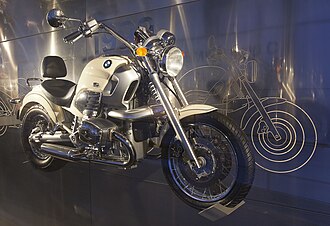
BMW R1200C: The Cruiser That Dared to Be Different
The history of motorcycles is filled with machines that followed established formulas. Sport motorcycles became faster and more aggressive, touring motorcycles became larger and more luxurious, and cruisers generally remained faithful to the traditions established by American V-twin manufacturers. Every so often, however, a company decides to ignore expectations and create something completely different. The BMW R1200C was one of those rare motorcycles.
When it was introduced during the second half of the 1990s, the R1200C represented one of the boldest decisions ever made by BMW Motorrad. The German manufacturer was already highly respected for its touring motorcycles, adventure bikes, and boxer-powered roadsters, but it had never seriously entered the global cruiser market. That segment was largely dominated by machines built around a simple formula: a large V-twin engine, abundant chrome, relaxed ergonomics, and styling that celebrated American motorcycling culture.
BMW approached the challenge from an entirely different direction.
Instead of copying established conventions, the engineers and designers in Munich asked themselves a simple question: what would a cruiser look like if it were designed according to BMW principles? The answer was a motorcycle that combined the company’s traditional boxer engine, shaft drive, advanced suspension technology, and meticulous engineering with a low-slung riding position and elegant custom-inspired styling.
The result was a machine unlike anything else on the road.
Some riders immediately embraced its originality, while others found it almost impossible to compare with traditional cruisers. The exposed horizontally opposed cylinders, the distinctive front suspension, the flowing bodywork, and the unmistakable German attention to detail ensured that the R1200C would never disappear into a crowd.
Its reputation grew even further when it appeared in the James Bond film “Tomorrow Never Dies,” introducing millions of people to one of the most unusual motorcycles BMW had ever produced.
Today, decades after production ended, the BMW R1200C has become something of a cult classic. It represents a fascinating moment when one of the world’s most conservative motorcycle manufacturers decided to take a creative risk and build a cruiser that reflected its own identity rather than simply following market trends.
The motorcycle may not have become a commercial revolution, but it succeeded in creating something far more valuable: a machine with genuine individuality.
The Motorcycle Industry During the 1990s
The Rise of the Cruiser Market
The 1990s were an interesting period for motorcycle manufacturers. Sport bikes continued their rapid technological development, adventure motorcycles slowly gained popularity, and touring machines became increasingly sophisticated. At the same time, the cruiser segment experienced enormous growth.
Many riders were attracted by relaxed ergonomics, low seat heights, and motorcycles that emphasized style and enjoyment over outright performance. The image associated with cruisers—long roads, freedom, and mechanical simplicity—proved highly appealing.
Japanese manufacturers entered the segment aggressively with their own interpretations of the American V-twin formula.
BMW, however, had never built anything remotely similar.
The company was known for practical engineering, reliability, and boxer engines. Most customers associated the BMW name with police motorcycles, cross-country tourers, and long-distance adventurers.
Entering the cruiser market appeared almost unthinkable.
Why BMW Took the Risk
BMW executives understood that relying exclusively on traditional customer groups could eventually limit growth.
The company wanted to reach new riders while demonstrating that its engineering philosophy could adapt to different styles of motorcycling.
Rather than competing directly with established American manufacturers, BMW decided to reinterpret the cruiser concept.
The goal was not imitation.
The goal was innovation.
Development of the R1200C
Building a Cruiser the BMW Way
Engineers faced a difficult challenge.
The motorcycle needed to offer the relaxed riding experience expected from a cruiser while preserving the technical identity that made BMW unique.
The famous boxer twin engine remained central to the project.
Unlike a V-twin, the horizontally opposed layout lowered the center of gravity significantly, contributing to excellent balance at low speeds.
The company also retained shaft drive, eliminating the maintenance requirements associated with chains and belts.
BMW’s commitment to engineering excellence influenced every decision throughout development.
Rather than creating a motorcycle designed primarily for appearance, the engineers sought to build one that would remain satisfying to own for decades.
A New Interpretation of Luxury
The R1200C was intended to feel refined.
Its controls operated with precision.
The fit and finish reflected BMW’s high manufacturing standards.
Chrome surfaces were used thoughtfully rather than excessively.
Even the smallest details received careful attention.
This approach created a motorcycle that felt more like a premium European grand tourer than a traditional American-style cruiser.
Design and Styling
A Motorcycle Unlike Any Other
The first impression created by the R1200C is impossible to forget.
Its sweeping fuel tank flows naturally into the low seat, while the exposed boxer cylinders dominate the motorcycle’s silhouette.
The front suspension, featuring BMW’s Telelever technology, gives the motorcycle an unmistakable appearance.
The large front fender and elegant alloy wheels contribute to an overall design language that feels both classic and futuristic.
Many motorcycles attempt to blend into established categories.
The R1200C refuses.
It proudly displays its engineering heritage.
The Beauty of Mechanical Honesty
BMW designers resisted the temptation to hide mechanical components behind decorative panels.
The engine remains fully visible.
The shaft drive becomes part of the overall aesthetic.
The frame itself contributes to the motorcycle’s visual identity.
This honesty gives the R1200C an authenticity that many custom-inspired motorcycles struggle to achieve.
The design was controversial when new.
Today, it appears remarkably timeless.
The Legendary Boxer Engine
A Century of Evolution
At the heart of the R1200C lies BMW’s famous air-and-oil-cooled boxer twin.
Displacing 1,170 cubic centimeters, the engine produces approximately 61 horsepower and around 98 Newton meters of torque.
These figures may appear modest by modern standards, but the motorcycle was never intended to deliver explosive acceleration.
Instead, the engine emphasizes smoothness, flexibility, and character.
Torque arrives early and remains available throughout the rev range.
The rider rarely needs to chase maximum engine speed.
The motorcycle simply flows forward with calm confidence.
Character That Cannot Be Measured
One of the boxer engine’s defining characteristics is its personality.
Pressing the starter button awakens the horizontally opposed cylinders with a gentle sideways movement.
A slight rocking sensation accompanies throttle inputs at idle.
Far from being a flaw, this behavior reminds the rider that the machine possesses a unique mechanical identity.
The exhaust note is equally distinctive.
Deep, controlled, and refined, it avoids unnecessary aggression while remaining unmistakably BMW.
Telelever Suspension and Shaft Drive
Reinventing Front Suspension
Traditional cruisers almost universally employ conventional telescopic forks.
BMW chose another path.
The Telelever front suspension separates steering and suspension functions through a dedicated control arm and centrally mounted shock absorber.
The system dramatically reduces front-end dive during braking.
The result is greater stability and confidence.
Although the sensation differs from traditional cruiser designs, many riders quickly appreciate its advantages.
The Practical Benefits of Shaft Drive
BMW’s shaft-drive system perfectly matches the cruiser philosophy.
Owners never need to clean or lubricate chains.
Long-distance touring becomes simpler.
Maintenance requirements remain low.
The Paralever rear suspension further improves the riding experience by minimizing the unwanted chassis reactions traditionally associated with shaft-driven motorcycles.
Riding Experience
Comfort Above All
The R1200C was designed to make every journey relaxing.
The low seat height inspires confidence.
The forward-mounted foot controls encourage a natural riding posture.
The wide handlebars provide excellent leverage during low-speed maneuvers.
The motorcycle feels welcoming rather than intimidating.
Long hours in the saddle become surprisingly effortless.
Urban Riding
Despite its cruiser proportions, the R1200C performs well in city traffic.
The boxer engine’s low center of gravity helps the motorcycle feel lighter than expected.
Strong low-end torque minimizes shifting.
The upright riding position provides excellent visibility.
Parking lot maneuvers become easy thanks to the motorcycle’s balance.
Open Roads
The motorcycle truly comes alive on scenic country roads.
Rather than encouraging aggressive riding, it invites the rider to slow down and appreciate the surroundings.
The engine settles into a smooth rhythm.
The shaft drive operates almost invisibly.
The Telelever suspension absorbs imperfections while maintaining excellent stability.
The R1200C transforms ordinary journeys into enjoyable experiences.
The James Bond Connection
One of the most significant moments in the R1200C’s history came with its appearance in the 1997 James Bond film “Tomorrow Never Dies.”
During an unforgettable chase sequence, the motorcycle was ridden by James Bond and his companion through crowded streets, rooftops, and narrow alleys.
The scene introduced millions of viewers to BMW’s unconventional cruiser.
Although the movie sequence involved spectacular stunts, it also highlighted the motorcycle’s distinctive appearance.
For many people, the R1200C became forever associated with cinematic sophistication.
The Bond connection helped establish the motorcycle as more than simply another production model.
It became a cultural icon.
Variants and Model Evolution
BMW eventually expanded the R1200C family to appeal to different riders.
The Montauk version offered revised styling and ergonomics.
The Independent introduced additional luxury elements.
The Avantgarde featured distinctive finishes and equipment.
Each variant preserved the essential character of the original while offering subtle differences in personality.
This flexibility demonstrated BMW’s willingness to experiment within the cruiser segment.
Reliability and Ownership
Built for the Long Term
BMW motorcycles have long enjoyed a reputation for durability, and the R1200C continues that tradition.
The boxer engine is capable of extremely high mileage with routine maintenance.
Valve adjustments remain relatively simple due to the exposed cylinder heads.
The shaft drive eliminates one of the most common maintenance tasks found on many motorcycles.
Owners frequently describe the motorcycle as dependable and remarkably well engineered.
Everyday Practicality
Unlike some cruisers that become uncomfortable after extended use, the R1200C functions effectively as a daily motorcycle.
It starts reliably.
It handles changing weather conditions well.
Its maintenance requirements remain modest.
Many owners discover that the motorcycle becomes a trusted companion rather than an occasional weekend toy.
Why the BMW R1200C Was Misunderstood
The motorcycle entered a market strongly influenced by tradition.
Many cruiser buyers expected large V-twin engines and styling directly inspired by American motorcycles.
The BMW offered something entirely different.
Rather than copying established formulas, it celebrated German engineering and individuality.
This originality confused some buyers.
Years later, however, many enthusiasts began to appreciate exactly what BMW had accomplished.
The R1200C was never intended to imitate anyone else.
It was designed to create its own identity.
Collector Status
Today, the R1200C occupies a unique position in the collector market.
Its relatively limited production numbers, distinctive styling, James Bond connection, and historical significance have all contributed to growing interest.
Well-maintained examples attract enthusiasts who value originality.
As modern motorcycles become increasingly dependent on electronics, the R1200C’s mechanical simplicity becomes even more appealing.
Many collectors believe its importance within BMW history will continue to grow.
The Legacy of the BMW R1200C
The R1200C proved that BMW was willing to challenge expectations.
It demonstrated that a cruiser could be elegant, technically sophisticated, and unmistakably European.
Although it never became the company’s highest-volume model, it succeeded in broadening the public’s perception of what BMW Motorrad could create.
More importantly, it encouraged individuality.
The motorcycle appealed to riders who wanted something unique rather than conventional.
That spirit remains one of its greatest strengths.
Conclusion
The BMW R1200C remains one of the boldest motorcycles ever to emerge from Bavaria.
It entered a highly traditional market and refused to abandon the engineering principles that had defined BMW for generations.
Its boxer engine delivered smooth and satisfying performance.
Its Telelever suspension introduced genuine innovation to the cruiser segment.
Its shaft drive offered practicality rarely found among competing motorcycles.
Its styling ensured that nobody would mistake it for anything else.
Most importantly, it demonstrated that originality often matters more than conformity.
The R1200C may never have achieved universal acceptance during its production years, but time has been exceptionally kind to its reputation.
Today, it stands not merely as a cruiser, but as a statement of confidence from a manufacturer willing to build motorcycles according to its own vision.
For riders who appreciate character, craftsmanship, and individuality, the BMW R1200C remains one of the most fascinating motorcycles ever created.
Technical Specifications
| Parameter | Specification |
|---|---|
| Manufacturer | BMW Motorrad |
| Model | BMW R1200C |
| Production years | 1997–2004 |
| Motorcycle category | Cruiser |
| Engine type | Air/oil-cooled, four-stroke, two-cylinder boxer |
| Engine displacement | 1,170 cc |
| Bore × Stroke | 101 mm × 73 mm |
| Compression ratio | 10.3:1 |
| Maximum power | 61 hp (45 kW) @ 5,000 rpm |
| Maximum torque | 98 Nm @ 3,000 rpm |
| Fuel system | Electronic fuel injection |
| Ignition | Digital electronic ignition |
| Cooling system | Air and oil cooling |
| Transmission | 5-speed manual |
| Final drive | Shaft drive |
| Clutch | Single dry plate hydraulic clutch |
| Frame | Steel tubular frame |
| Front suspension | BMW Telelever |
| Rear suspension | BMW Paralever single-sided swingarm |
| Front brake | Dual 305 mm discs, 4-piston calipers |
| Rear brake | Single 285 mm disc |
| ABS | Optional (depending on version) |
| Front tire | 110/80 R18 |
| Rear tire | 170/80 R15 |
| Wheelbase | 1,640 mm |
| Seat height | Approximately 740 mm |
| Fuel tank capacity | 17 liters |
| Dry weight | Approximately 256 kg |
| Top speed | Around 180 km/h |
| Average fuel consumption | 5.5–6.5 l/100 km |
| Typical touring range | 250–300 km |
| Country of manufacture | Germany |
| Notable feature | Featured in the James Bond film Tomorrow Never Dies |
