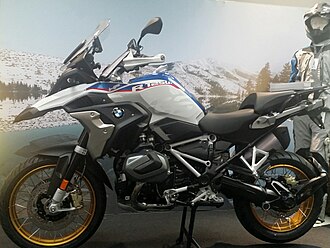
BMW R1250GS: The Adventure Motorcycle That Perfected the Formula
There are motorcycles that achieve commercial success, motorcycles that become engineering milestones, and then there are motorcycles that fundamentally shape the direction of an entire industry. The BMW R1250GS belongs to that final category. It is not simply the successor to a long line of successful adventure motorcycles; it represents the culmination of more than four decades of continuous development, refinement, and innovation within the legendary GS family.
Few motorcycles have earned a reputation as broad and as enduring as the GS. Riders have crossed continents, deserts, mountain ranges, and remote wilderness trails aboard boxer-powered BMWs. They have commuted through crowded cities, explored forgotten roads, and traveled around the world with little more than a map, a set of aluminum panniers, and the confidence that their motorcycle could carry them almost anywhere.
When BMW introduced the R1250GS, expectations were enormous. The outgoing R1200GS had become one of the most successful motorcycles in the company’s history and had effectively defined the modern adventure category. Replacing such an icon required more than simply increasing engine displacement or adding a few electronic features.
BMW engineers chose a different path.
Rather than reinventing the concept, they refined every aspect of the motorcycle while introducing one of the most significant technological advances ever applied to a production boxer engine: ShiftCam variable valve timing.
The result was a motorcycle that offered stronger performance, improved fuel efficiency, smoother power delivery, and even greater versatility without sacrificing the unique personality that had always distinguished BMW’s horizontally opposed twin-cylinder machines.
Today, the R1250GS stands as one of the most recognizable motorcycles in the world. It has become a favorite among long-distance travelers, commuters, professional adventurers, and weekend riders alike. It is equally at home navigating urban traffic, climbing alpine passes, crossing gravel roads, or covering hundreds of highway kilometers in a single day.
Perhaps that extraordinary flexibility explains why the motorcycle has become so influential. It does not force the rider to choose between comfort and excitement, between technology and tradition, or between pavement and wilderness.
Instead, it offers all of these experiences in one remarkably complete package.
The Origins of the GS Philosophy
From Desert Racing to Global Exploration
The story of the R1250GS begins many years before the motorcycle itself entered production.
During the late twentieth century, long-distance rally events such as the Paris-Dakar Rally captured the imagination of riders around the world. These competitions demanded motorcycles capable of surviving extreme terrain while maintaining reliability over thousands of kilometers.
BMW recognized that its boxer engine offered unique advantages.
The low center of gravity improved balance.
The shaft drive reduced maintenance requirements.
The rugged construction suited difficult conditions.
These qualities inspired the original R80G/S, a motorcycle that introduced the idea that one machine could successfully combine off-road capability with genuine touring comfort.
The initials GS came from the German words “Gelände” and “Straße,” meaning “terrain” and “road.”
Those two words would eventually define an entirely new category of motorcycling.
The Evolution Toward the R1250GS
Over several decades, BMW continuously refined the GS concept.
The R100GS expanded its abilities.
The R1100GS introduced fuel injection and Telelever suspension.
The R1150GS became famous through global adventure expeditions.
The R1200GS reduced weight while increasing power and technological sophistication.
Each generation built upon the strengths of its predecessor.
By the time development of the R1250GS began, BMW engineers understood that the challenge was not to create an entirely different motorcycle.
The challenge was to perfect one that had already become legendary.
Design Philosophy
Function Creates Beauty
The R1250GS does not attempt to hide its purpose.
Its large fuel tank, upright windscreen, exposed boxer cylinders, broad handlebars, and long-travel suspension immediately communicate that this motorcycle was built for exploration.
Unlike many modern motorcycles that rely heavily on decorative styling elements, almost every visible component of the GS serves a practical function.
The windscreen protects the rider.
The engine guards shield vulnerable components.
The tall suspension improves versatility.
The boxer cylinders lower the center of gravity.
The result is a motorcycle that looks purposeful rather than fashionable.
Years after its introduction, the design remains instantly recognizable.
Confidence Through Ergonomics
One of the secrets behind the GS family’s success is its riding position.
The upright posture reduces fatigue during long journeys.
The wide handlebars provide excellent control at low speeds and on rough surfaces.
The seat offers generous support for both rider and passenger.
BMW engineers understood that adventure motorcycles often spend entire days in motion.
Comfort therefore becomes a performance feature rather than a luxury.
The Revolutionary ShiftCam Boxer Engine
A New Chapter in Boxer History
The centerpiece of the R1250GS is its 1,254 cubic centimeter liquid-cooled boxer twin.
Producing approximately 136 horsepower and 143 Newton meters of torque, the engine delivers substantially stronger performance than previous generations.
However, raw numbers tell only part of the story.
BMW introduced ShiftCam technology, a variable valve timing and valve lift system that changes camshaft profiles according to engine load and speed.
At lower revolutions, the system prioritizes smoothness, efficiency, and torque.
At higher engine speeds, it shifts to a more aggressive cam profile that maximizes performance.
The rider experiences this transition as a seamless wave of acceleration.
Character That Technology Cannot Replace
Despite its advanced engineering, the boxer engine retains the personality that enthusiasts have always loved.
A slight sideways movement accompanies throttle inputs while stationary.
The exhaust note remains deep and mechanical.
Power delivery feels substantial rather than frantic.
The engine encourages smooth riding rather than constant high-rev aggression.
Many owners believe the ShiftCam boxer represents the finest evolution of BMW’s century-old engine architecture.
Telelever and Paralever Suspension
Rethinking Motorcycle Dynamics
BMW continues to use its famous Telelever front suspension system.
Unlike conventional forks, the Telelever separates steering from suspension functions through an additional control arm connected to a central shock absorber.
This dramatically reduces front-end dive during heavy braking.
The result is improved stability and greater rider confidence.
The motorcycle remains composed even when fully loaded with luggage and a passenger.
Shaft Drive Refined
The Paralever rear suspension works together with BMW’s low-maintenance shaft drive.
Adventure riders often travel enormous distances through challenging environments.
Chains require lubrication, cleaning, and adjustment.
The shaft drive largely eliminates these concerns.
BMW engineers also minimized the suspension reactions historically associated with shaft-driven motorcycles.
The result is smooth, predictable power delivery under virtually all conditions.
Technology and Electronics
The Digital Adventure Motorcycle
The R1250GS demonstrates how modern electronics can enhance rather than diminish the riding experience.
Multiple riding modes allow the motorcycle to adapt to changing surfaces.
Traction control improves safety.
Cornering ABS provides additional confidence.
Dynamic Electronic Suspension Adjustment continuously modifies damping characteristics according to road conditions and riding style.
Cruise control, heated grips, hill start control, tire pressure monitoring, and a large TFT display further improve everyday usability.
Importantly, these systems remain largely invisible during normal riding.
The motorcycle never feels dominated by computers.
Instead, technology quietly supports the rider.
Riding Experience
Urban Environments
Despite its substantial dimensions, the R1250GS performs remarkably well in city traffic.
The upright seating position provides excellent visibility.
The low center of gravity makes the motorcycle feel lighter than expected.
The broad torque curve minimizes gear changes.
Filtering through traffic becomes surprisingly manageable.
Many owners use the motorcycle for everyday commuting.
Mountain Roads
Twisting roads reveal another side of the GS.
The chassis feels balanced and predictable.
The boxer engine delivers immediate acceleration out of corners.
The Telelever suspension maintains exceptional composure during braking.
The motorcycle flows naturally from one bend to the next.
Its confidence inspires riders to travel farther and explore unfamiliar routes.
Long-Distance Touring
Perhaps nowhere does the R1250GS excel more convincingly than on extended journeys.
The ergonomics reduce fatigue.
The wind protection remains effective.
The large fuel tank allows impressive range.
Factory luggage integrates cleanly into the design.
Many owners regularly travel thousands of kilometers without discomfort.
The motorcycle transforms long distances into enjoyable experiences.
Beyond the Asphalt
Although many examples spend most of their lives on paved roads, the R1250GS remains a genuinely capable adventure motorcycle.
Gravel roads, dirt tracks, forest trails, and mountain paths fall comfortably within its abilities.
The long suspension travel absorbs rough terrain.
The ShiftCam engine delivers smooth low-speed control.
The standing riding position feels natural thanks to the wide handlebars and narrow midsection.
Experienced riders have taken the motorcycle across deserts, remote mountain ranges, and international expeditions.
It was designed for exactly this purpose.
Reliability and Ownership
BMW’s boxer engines have earned a reputation for exceptional longevity.
The R1250GS continues that tradition.
Routine maintenance remains relatively straightforward.
The exposed cylinder heads simplify valve servicing.
The shaft drive minimizes drivetrain maintenance.
Owners frequently accumulate enormous mileage while maintaining confidence in the motorcycle’s dependability.
Many examples are expected to remain operational for decades.
Why the R1250GS Dominates the Adventure Segment
The motorcycle succeeds because it refuses to specialize.
It is comfortable enough for touring.
Fast enough for spirited riding.
Capable enough for adventure travel.
Practical enough for daily commuting.
Advanced enough to satisfy technology enthusiasts.
Mechanical enough to satisfy traditionalists.
Very few motorcycles achieve such balance.
The R1250GS does not simply perform many tasks adequately.
It performs nearly all of them exceptionally well.
The Legacy of the BMW R1250GS
Future historians of motorcycling will likely view the R1250GS as one of the defining motorcycles of the early twenty-first century.
It perfected an idea that BMW had been developing for more than forty years.
It demonstrated that innovation and tradition could exist together.
It proved that adventure riding is not necessarily about speed or competition.
Instead, adventure is about possibility.
The possibility of taking a different road.
The possibility of crossing a border simply because curiosity demands it.
The possibility of discovering places that would otherwise remain unknown.
The R1250GS embodies that philosophy better than almost any motorcycle ever built.
Conclusion
The BMW R1250GS represents the culmination of decades of engineering evolution.
Its ShiftCam boxer engine delivers extraordinary flexibility.
Its Telelever and Paralever suspension systems provide stability and confidence.
Its electronics improve safety without overwhelming the rider.
Its ergonomics make impossible distances seem ordinary.
Most importantly, it creates a sense of freedom that few machines can match.
The motorcycle does not merely transport its rider.
It encourages exploration.
It invites adventure.
It transforms ordinary roads into opportunities for discovery.
That is why the BMW R1250GS has become more than simply another successful motorcycle.
It has become one of the defining symbols of modern motorcycling.
Technical Specifications
| Parameter | Specification |
|---|---|
| Manufacturer | BMW Motorrad |
| Model | BMW R1250GS |
| Production start | 2018 |
| Motorcycle category | Adventure / Dual-Sport Touring |
| Engine type | Four-stroke, liquid-cooled boxer twin with ShiftCam |
| Engine displacement | 1,254 cc |
| Bore × Stroke | 102.5 mm × 76 mm |
| Compression ratio | 12.5:1 |
| Maximum power | 136 hp (100 kW) @ 7,750 rpm |
| Maximum torque | 143 Nm @ 6,250 rpm |
| Valve system | DOHC, BMW ShiftCam variable valve timing |
| Fuel system | Electronic fuel injection |
| Cooling system | Liquid cooling with precision cooling concept |
| Transmission | 6-speed manual |
| Final drive | Shaft drive |
| Clutch | Wet multi-plate slipper clutch |
| Frame | Two-section steel bridge frame |
| Front suspension | BMW Telelever |
| Rear suspension | BMW Paralever EVO |
| Front wheel travel | 190 mm |
| Rear wheel travel | 200 mm |
| Front brake | Dual 305 mm discs, radial four-piston calipers |
| Rear brake | Single 276 mm disc |
| ABS | BMW Motorrad Integral ABS Pro |
| Front tire | 120/70 R19 |
| Rear tire | 170/60 R17 |
| Wheelbase | 1,525 mm |
| Seat height | 850–870 mm (adjustable) |
| Fuel tank capacity | 20 liters |
| Wet weight | Approximately 249 kg |
| Maximum speed | Over 200 km/h |
| Average fuel consumption | Approximately 4.8–5.3 l/100 km |
| Estimated touring range | 350–400 km |
| Instrumentation | 6.5-inch TFT display |
| Standard riding modes | Rain, Road, Eco |
| Optional riding modes | Dynamic, Enduro, Enduro Pro |
| Country of manufacture | Germany |
| Distinguishing technology | BMW ShiftCam variable valve timing |
