Boeing B-50 Superfortress – The Powerful Evolution of the Legendary B-29 Bomber
The Boeing B-50 Superfortress represents one of the most important transitional aircraft in the history of strategic aviation. Developed immediately after the Second World War, the B-50 was an advanced evolution of the famous Boeing B-29 Superfortress, incorporating stronger construction, more powerful engines, improved systems, and increased operational capability. Although it was eventually replaced by the jet-powered Boeing B-47 Stratojet and Boeing B-52 Stratofortress, the B-50 played a crucial role during the early Cold War period and helped establish the United States Air Force’s long-range strategic bombing capability.
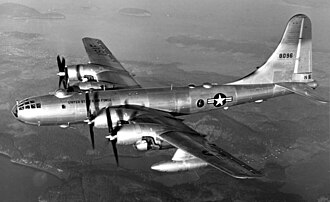
At first glance, the B-50 appeared similar to the B-29 that preceded it. Both aircraft shared the same general appearance, including a large pressurized fuselage, swept tail surfaces, four-engine configuration, and long-range mission capability. However, the B-50 was far more than a simple modification. Engineers redesigned major portions of the aircraft, strengthening the structure, increasing fuel capacity, improving aerodynamics, and installing significantly more powerful engines. These improvements transformed the aircraft into a more capable strategic bomber suitable for the demanding requirements of the nuclear age.
The B-50 arrived during a period of extraordinary change in military aviation. The Second World War had demonstrated the importance of long-range bombing, but the arrival of nuclear weapons and rapidly developing jet technology created new challenges. Strategic bombers needed greater range, higher altitude capability, improved reliability, and the ability to deliver increasingly powerful weapons. The B-50 served as a bridge between the piston-powered bombers of World War II and the jet-powered strategic aircraft that would define the Cold War.
Although overshadowed by the later B-52 Stratofortress, the Boeing B-50 deserves recognition as a significant achievement in aerospace engineering. It extended the useful life of the Superfortress concept while introducing many innovations that influenced future aircraft development. The aircraft performed bombing, reconnaissance, weather research, tanker, and experimental missions, demonstrating remarkable versatility throughout its operational career.
This article explores the fascinating history of the Boeing B-50 Superfortress, including its development, engineering improvements, operational service, specialized variants, and lasting contribution to aviation history.
The Origins of the Boeing B-50 Superfortress
Building Upon the Success of the B-29
The origins of the Boeing B-50 can be traced directly to the success of the Boeing B-29 Superfortress during the Second World War. The B-29 had been one of the most advanced aircraft of its time, introducing features such as pressurized crew compartments, remote-controlled defensive gun turrets, advanced navigation equipment, and exceptional long-range capability. It became the primary American strategic bomber in the Pacific Theater and played a major role in the final stages of the war.
However, by the end of the war, engineers recognized that the B-29 design could be improved. Aviation technology had advanced rapidly, and new engines, materials, and manufacturing techniques offered opportunities to increase performance. The original B-29 was designed around the limitations of the wartime period, and the postwar environment demanded even greater capability.
Boeing engineers began investigating improvements that would allow the Superfortress design to remain competitive. Rather than creating an entirely new aircraft, they developed a significantly modified version that retained the proven characteristics of the B-29 while incorporating major upgrades.
The project was initially designated the B-29D, suggesting that it was simply another version of the Superfortress. However, the extent of the changes was so significant that the aircraft was redesignated as the B-50 in 1946. This new designation reflected the fact that the aircraft represented a major evolution rather than a minor improvement.
Development of the B-50 Design
The development of the Boeing B-50 focused primarily on improving power, strength, and operational flexibility. The most important change was the installation of new Pratt & Whitney R-4360 Wasp Major radial engines. These engines were among the most powerful piston engines ever developed and provided a substantial increase in performance compared with the B-29’s original powerplants.
The new engines required significant modifications to the aircraft structure. The wings, engine mounts, and supporting components were strengthened to handle the increased power output. The aircraft also received improved aerodynamic features and redesigned vertical stabilizers to enhance stability.
Another major improvement involved the use of stronger aluminum alloys and advanced construction techniques. These changes allowed the aircraft to operate with increased weight while maintaining structural integrity. The result was a bomber capable of carrying larger payloads over longer distances while operating at higher altitudes.
The prototype B-50 first flew on 25 June 1947. Testing demonstrated that the aircraft offered substantial improvements over the B-29, including better climb performance, higher speed, increased range, and improved reliability.
The United States Air Force approved production, and the first operational aircraft entered service in 1948. The B-50 became one of the first major strategic bombers of the newly established United States Air Force, which had been created as an independent military branch in 1947.
Airframe Improvements and Structural Changes
A Stronger and More Capable Superfortress
Although the B-50 retained the overall appearance of the B-29, its airframe incorporated numerous structural improvements. Engineers redesigned many components to support the increased performance requirements of the postwar strategic environment.
The fuselage was strengthened to accommodate heavier loads and improved equipment. The aircraft retained its pressurized crew compartments, which allowed operations at high altitude without requiring crew members to wear pressure suits. This feature remained one of the defining characteristics of the Superfortress family.
The wings received extensive modifications to handle the more powerful engines. Stronger materials and improved internal structures increased durability while allowing the aircraft to carry greater fuel and weapons loads.
The tail assembly was also redesigned. A larger vertical stabilizer improved directional stability, especially with the more powerful engines installed. This change contributed to safer handling characteristics and better control during long-range missions.
The landing gear system was improved to support the increased weight of the aircraft. Stronger components were necessary because the B-50 operated with higher maximum takeoff weights than the original B-29.
The Pratt & Whitney R-4360 Wasp Major Engines
One of the Most Powerful Piston Engines Ever Built
The heart of the Boeing B-50’s improved performance was the Pratt & Whitney R-4360 Wasp Major engine. This enormous 28-cylinder radial engine represented one of the highest achievements of piston-engine technology.
Each engine produced approximately 3,500 horsepower, giving the B-50 a total power output of around 14,000 horsepower. This represented a dramatic improvement over the B-29 and allowed the aircraft to carry heavier loads while maintaining excellent speed and altitude performance.
The R-4360 used a complex four-row radial configuration, with cylinders arranged around the central crankshaft. Although extremely powerful, the engine was also mechanically complicated and required careful maintenance.
The engine’s development reflected the final peak of piston-powered aircraft technology. Shortly after the B-50 entered service, jet engines began transforming military aviation. However, during the late 1940s, the R-4360 provided the performance needed to keep the B-50 competitive.
The successful integration of these engines was one of the aircraft’s greatest engineering achievements. Without the increased power provided by the Wasp Major, the B-50 would not have achieved the range, payload, and altitude capabilities required for strategic missions.
Performance Improvements Over the B-29
The Boeing B-50 offered significant performance improvements compared with the B-29 Superfortress. The increased engine power allowed the aircraft to fly faster, climb more efficiently, and carry heavier loads.
The maximum speed increased to approximately 634 kilometers per hour, providing a noticeable improvement over the earlier aircraft. The operational ceiling was also improved, allowing the bomber to operate at altitudes that complicated interception by many contemporary fighters.
Range was another important improvement. Strategic bombing missions required the ability to travel long distances without relying on numerous overseas bases. The B-50’s increased fuel capacity and improved engines provided greater flexibility for global operations.
These improvements made the aircraft especially valuable during the early Cold War, when the United States required reliable long-range bombers capable of delivering nuclear weapons.
The Role of the B-50 During the Early Cold War
The arrival of the Boeing B-50 coincided with the beginning of the Cold War and the development of nuclear deterrence strategies. Strategic bombers became a central component of American military planning, and the B-50 served as one of the primary aircraft responsible for maintaining long-range strike capability.
The aircraft entered service at a time when international tensions were increasing and the United States required aircraft capable of reaching distant targets. Before the widespread adoption of intercontinental ballistic missiles and advanced jet bombers, aircraft such as the B-50 provided the primary means of delivering nuclear weapons over long distances.
The B-50’s combination of range, payload capacity, and reliability made it an important part of the Strategic Air Command during its early years. It helped establish procedures, tactics, and organizational structures that shaped American strategic aviation for decades.
Cockpit, Crew Systems, and Life Inside the Boeing B-50
A Large Crew for a Complex Strategic Mission
The Boeing B-50 Superfortress was a highly complex aircraft that required a large and specialized crew to operate effectively. Unlike modern aircraft that rely heavily on automated systems, the B-50 depended on a coordinated team of aviators, navigators, engineers, and defensive specialists. Each crew member had a specific responsibility, and successful missions required precise cooperation between everyone onboard.
A typical B-50 crew consisted of approximately ten personnel, including the pilot, co-pilot, navigator, bombardier, flight engineer, radio operator, and gunners responsible for defensive systems. The aircraft was essentially a flying workplace, with each crew station connected through communication systems that allowed coordination during long-range missions.
The pilot and co-pilot occupied the forward pressurized cockpit, which provided excellent visibility compared with many earlier bombers. The cockpit contained a large collection of analog instruments, navigation equipment, and engine monitoring systems. Flying the B-50 required constant attention because the aircraft’s four massive radial engines, heavy weight, and long endurance missions placed significant demands on the crew.
The flight engineer played a particularly important role. Managing four Pratt & Whitney R-4360 engines was a demanding task, and the engineer monitored temperatures, pressures, fuel systems, and engine performance throughout the mission. The complexity of the Wasp Major engines meant that careful management was essential for safe and efficient operation.
Long-range missions could last many hours, requiring careful planning of crew comfort and endurance. The B-50 included pressurized compartments, heating systems, and basic facilities that allowed crews to operate effectively during extended flights.
Bombing Capability of the Boeing B-50 Superfortress
Strategic Bomb Delivery in the Nuclear Age
The primary purpose of the Boeing B-50 was strategic bombing. During the early Cold War period, the ability to deliver nuclear weapons over long distances was a central element of American defense strategy. The B-50 was designed to carry large bomb loads and operate from distant bases to reach potential targets.
The aircraft featured a large internal bomb bay inherited from the B-29 design. This allowed it to carry conventional bombs as well as early nuclear weapons. The bomb bay was divided into sections and designed to accommodate different weapon configurations depending on mission requirements.
As nuclear weapons technology evolved, the B-50 received modifications that allowed it to carry newer and heavier weapons. These upgrades helped extend the aircraft’s usefulness during a period when strategic requirements were changing rapidly.
The bombardier occupied a specialized position in the forward section of the aircraft. Using advanced optical bombsights and navigation information, the bombardier was responsible for accurately releasing weapons on target. Although later aircraft would introduce more advanced electronic systems, the B-50 represented the highest level of bombing technology available during the early postwar period.
Defensive Armament and Protection Systems
Like the B-29 before it, the Boeing B-50 was equipped with defensive weapons designed to protect the aircraft from enemy fighters. During the early Cold War, long-range bombers were expected to operate without fighter escorts in some situations, making defensive capability an important consideration.
The aircraft originally featured remote-controlled defensive gun turrets. These systems allowed gunners to aim weapons from protected positions inside the pressurized fuselage rather than operating exposed gun stations.
The standard defensive arrangement included multiple .50-caliber machine guns mounted in remotely operated turrets. These weapons provided protection against attacking aircraft approaching from different directions. A tail turret gave additional defensive capability against rear attacks, which were considered a major threat during the bomber era.
However, advances in jet fighter technology quickly reduced the effectiveness of traditional defensive guns. By the 1950s, high-speed interceptors and surface-to-air missiles were becoming more significant threats, leading strategic bombers to rely increasingly on speed, altitude, electronic systems, and defensive tactics rather than heavy gun armament.
Operational Service With the United States Air Force
Strategic Air Command and the Early Cold War
The Boeing B-50 became one of the first major bombers operated by the newly created United States Air Force. Many aircraft were assigned to the Strategic Air Command (SAC), which was responsible for maintaining America’s long-range nuclear strike capability.
During the late 1940s and early 1950s, the B-50 formed an important part of SAC’s bomber fleet. It provided the United States with the ability to project strategic power across long distances and played a key role in nuclear deterrence planning.
The aircraft was deployed at numerous bases in the United States and overseas locations. Crews conducted training missions, navigation exercises, and simulated bombing operations designed to maintain readiness.
Although the B-50 never dropped a weapon in combat, its presence contributed significantly to Cold War deterrence. The ability to maintain a constant force of long-range bombers demonstrated American strategic capability and helped shape international military calculations during a tense period.
Global Missions and Long-Range Operations
One of the defining characteristics of the B-50 was its ability to perform extremely long-range missions. These operations demonstrated the aircraft’s endurance and helped establish concepts that would later become standard in strategic aviation.
The aircraft participated in numerous record-setting flights designed to test range, endurance, and operational capability. These missions showed that large piston-engine aircraft could travel vast distances and operate globally.
One of the most famous achievements involving the B-50 was the first nonstop circumnavigation of the world by an aircraft. In 1949, a specially modified B-50A named “Lucky Lady II” completed the journey with aerial refueling support. This mission demonstrated the revolutionary potential of in-flight refueling and proved that aircraft could achieve almost unlimited range when supported by tanker aircraft.
The success of these long-distance missions influenced future military aviation planning. The combination of strategic bombers and aerial refueling became a fundamental element of American global air power.
The Development of B-50 Specialized Variants
B-50A
The B-50A was the first major production version of the aircraft. It introduced the improved airframe, powerful R-4360 engines, and enhanced systems that distinguished the aircraft from the B-29.
Many B-50As served with Strategic Air Command during the early Cold War period. These aircraft established the operational procedures that would later be refined with more advanced bombers.
B-50B
The B-50B incorporated additional improvements and increased operational capability. It featured structural changes and equipment updates designed to enhance mission effectiveness.
Although produced in limited numbers, the B-50B contributed to the continued development of the Superfortress family.
B-50D
The B-50D became the most numerous and important bomber variant. It included improved equipment, additional fuel capacity, and modifications that allowed it to carry newer nuclear weapons.
The aircraft represented the peak bomber version of the B-50 family and served as the backbone of SAC’s piston-powered strategic bomber force before the arrival of large jet bombers.
RB-50 Reconnaissance Variants
A significant number of B-50 aircraft were converted into reconnaissance platforms. These versions were designated RB-50 and performed intelligence-gathering missions during the early Cold War.
Reconnaissance aircraft carried specialized cameras, electronic equipment, and sensors designed to collect information about potential adversaries. Their missions were extremely important because intelligence played a central role in Cold War planning.
RB-50 aircraft operated alongside other reconnaissance platforms and contributed valuable information before the introduction of more advanced aircraft such as the Boeing RB-47 and Lockheed U-2.
The Boeing B-50 as an Airborne Tanker
Supporting the Age of Global Air Power
The development of aerial refueling dramatically changed strategic aviation. Aircraft no longer needed to rely only on internal fuel capacity, allowing bombers to travel much greater distances. The B-50 played an important role in developing this capability.
Several B-50 aircraft were converted into tanker versions designated KB-50. These aircraft carried refueling equipment that allowed them to support fighter aircraft and other bombers during long-range missions.
The KB-50 demonstrated the flexibility of the Superfortress design. An aircraft originally developed as a bomber could be adapted successfully for entirely different missions, extending its operational usefulness.
Weather Research and Special Missions
Beyond bombing and reconnaissance, the B-50 family also performed scientific and experimental missions. Weather research versions collected atmospheric data and studied conditions important for aviation and military planning.
These aircraft contributed to improved understanding of weather patterns, high-altitude conditions, and atmospheric phenomena. Such research supported both military operations and civilian aviation development.
The versatility of the B-50 demonstrated the strength of its basic design. Its large fuselage, long range, and powerful engines made it suitable for many specialized roles beyond strategic bombing.
The Boeing B-50 Compared With Other Strategic Bombers
Boeing B-50 Versus Boeing B-29 Superfortress
The Boeing B-50 Superfortress is often compared directly with the B-29 because the two aircraft shared a common lineage. The B-50 was not a completely new design but rather a deeply improved evolution of the wartime bomber. The similarities between the two aircraft are obvious, yet the differences were significant enough that Boeing and the United States Air Force treated the B-50 as a separate aircraft type.
The most important improvement was the increase in engine power. The B-29 used Wright R-3350 engines that provided approximately 2,200 horsepower each, while the B-50 introduced the much more powerful Pratt & Whitney R-4360 Wasp Major engines. This additional power improved takeoff performance, climbing ability, speed, and payload capability.
The B-50 also benefited from stronger materials and structural improvements. These changes allowed the aircraft to operate with greater weight while maintaining reliability. The redesigned tail, improved wings, and updated systems made the aircraft better suited for the demanding requirements of Cold War strategic aviation.
However, the B-50 retained many characteristics of the B-29, including its basic fuselage arrangement, pressurized crew compartments, and general mission profile. This allowed Boeing and the Air Force to develop an improved aircraft without the enormous cost and time required for a completely new bomber.
Boeing B-50 Versus Boeing B-47 Stratojet
The B-50 entered service during a period when jet propulsion was rapidly transforming military aviation. The arrival of the Boeing B-47 Stratojet introduced a completely different approach to strategic bombing. With swept wings and jet engines, the B-47 offered much higher speed and represented the future direction of bomber design.
Compared with the B-47, the B-50 was slower and more vulnerable to increasingly advanced interceptor aircraft. However, the B-50 had advantages during its early service years, including proven reliability, long endurance, and the ability to operate from existing bases and infrastructure.
The B-50 therefore served as a critical interim aircraft. It provided the United States with a capable strategic bomber force while jet technology matured. Without aircraft such as the B-50, the transition from piston-powered bombers to advanced jet bombers would have been more difficult.
The B-50’s Role in the Development of Aerial Refueling
Changing the Concept of Strategic Range
One of the most important contributions of the Boeing B-50 was its role in demonstrating the potential of aerial refueling. Before widespread tanker operations, aircraft range was limited primarily by internal fuel capacity. Even the largest bombers had practical limits on how far they could travel.
The B-50 helped prove that in-flight refueling could dramatically expand strategic capability. The famous “Lucky Lady II” mission in 1949 demonstrated that a bomber could complete a nonstop trip around the world with the assistance of tanker aircraft. This achievement represented a major milestone in aviation history.
The success of these missions influenced future American military planning. Strategic aircraft would no longer be limited only by fuel capacity, allowing bombers to maintain global reach from bases located far from potential conflict areas.
The techniques developed through B-50 operations became the foundation for the tanker-supported strategic aviation system used by the United States for decades. Later aircraft such as the B-52 Stratofortress depended heavily on aerial refueling concepts that were proven during the B-50 era.
Cold War Reconnaissance Operations
The RB-50 Intelligence Mission
During the Cold War, intelligence gathering became one of the most important military activities. Understanding the capabilities, locations, and movements of potential adversaries was essential for strategic planning. The Boeing B-50 proved highly adaptable for reconnaissance missions, leading to the development of several RB-50 variants.
These aircraft replaced bombing equipment with specialized cameras, electronic sensors, and communication systems. Their missions involved collecting information about foreign military activity and monitoring global regions of strategic importance.
RB-50 crews operated in demanding conditions, often flying long missions far from friendly territory. Their work contributed significantly to early Cold War intelligence efforts before more advanced reconnaissance aircraft became available.
The reconnaissance versions demonstrated the flexibility of the B-50 design. An aircraft originally developed as a strategic bomber could be transformed into a sophisticated intelligence platform, extending its operational usefulness well beyond its original purpose.
Experimental and Specialized B-50 Versions
EB-50 and Research Aircraft
The large size, long endurance, and powerful engines of the B-50 made it useful for experimental aviation programs. Several aircraft were modified for research purposes, including testing new technologies and studying aircraft performance.
These experimental versions contributed to the development of future aerospace systems. During the early Cold War, military aviation organizations frequently used existing aircraft as test platforms because they provided reliable and flexible flying laboratories.
WB-50 Weather Reconnaissance Aircraft
The WB-50 was a weather reconnaissance version designed to collect atmospheric data. These aircraft supported meteorological research and military planning by gathering information from high-altitude environments.
Weather data collected by these aircraft improved forecasting capabilities and helped support aviation operations. The missions were especially valuable during a period when accurate global weather information was becoming increasingly important.
KB-50 Tanker Aircraft
The KB-50 tanker variant extended the operational life of the aircraft by converting it into an aerial refueling platform. These aircraft supported fighters and other military aircraft by providing additional fuel during long-range operations.
The tanker conversion demonstrated the adaptability of the B-50 design. Instead of being retired after bomber service, many aircraft continued serving in important support roles.
The Decline of the Boeing B-50 Superfortress
Despite its impressive capabilities, the Boeing B-50 was eventually overtaken by rapid advances in aviation technology. The development of jet bombers, especially the Boeing B-47 Stratojet and later the Boeing B-52 Stratofortress, changed the requirements for strategic aircraft.
Jet-powered bombers offered significantly higher speeds and improved survivability against increasingly advanced air defenses. As a result, piston-powered aircraft like the B-50 became less suitable for frontline strategic missions.
The B-50 began leaving strategic bomber service during the mid-1950s. Many aircraft were replaced by newer jet bombers, while others continued serving in reconnaissance, tanker, and specialized roles for several more years.
By the early 1960s, most B-50 aircraft had been retired. However, the aircraft’s contribution to aviation history remained significant because it helped bridge the gap between World War II bombers and modern Cold War strategic aircraft.
Surviving Boeing B-50 Aircraft Today
Because the B-50 was produced in limited numbers compared with aircraft such as the B-29 and B-52, surviving examples are rare. Preserved aircraft are considered valuable historical artifacts because they represent an important period of aviation development.
Restoration of a B-50 is extremely challenging due to the aircraft’s size, complexity, and the scarcity of original parts. Preservation organizations often rely on historical documentation, engineering drawings, and specialized restoration techniques to maintain these aircraft.
Museum examples allow visitors to understand the scale and complexity of early strategic bombers. The aircraft’s enormous wingspan, large engines, and spacious crew areas demonstrate the engineering achievements of the late 1940s.
Technical Specifications of the Boeing B-50 Superfortress
| Specification | Boeing B-50 Superfortress |
|---|---|
| Manufacturer | Boeing Aircraft Company |
| Aircraft Type | Four-engine strategic bomber |
| First Flight | 25 June 1947 |
| Introduction Into Service | 1948 |
| Primary Operator | United States Air Force |
| Production Period | 1947–1953 |
| Total Production | Approximately 370 aircraft |
| Crew | Approximately 10 personnel |
| Length | 30.18 metres |
| Wingspan | 43.05 metres |
| Height | 11.17 metres |
| Wing Area | 156.1 square metres |
| Empty Weight | Approximately 36,000 kg |
| Maximum Takeoff Weight | Approximately 76,200 kg |
| Engines | 4 × Pratt & Whitney R-4360 Wasp Major radial engines |
| Engine Power | Approximately 3,500 horsepower each |
| Total Power Output | Approximately 14,000 horsepower |
| Maximum Speed | Approximately 634 km/h |
| Cruising Speed | Approximately 460 km/h |
| Range | Approximately 8,600 km |
| Service Ceiling | Approximately 12,000 metres |
| Armament | Remote-controlled .50 caliber machine gun turrets on early versions |
| Bomb Load | Up to approximately 9,000 kg depending on mission configuration |
| Construction | All-metal pressurized aircraft structure |
| Major Variants | B-50A, B-50B, B-50D, RB-50, KB-50, WB-50 |
Conclusion – The Strategic Bridge Between Two Aviation Eras
The Boeing B-50 Superfortress was one of the most important aircraft of the early Cold War period. Although it is often overshadowed by the famous B-29 that came before it and the legendary B-52 that followed, the B-50 played a vital role in the development of modern strategic aviation.
By combining the proven Superfortress design with more powerful engines, improved structures, and advanced systems, Boeing created an aircraft capable of meeting the challenges of the postwar world. It provided the United States with a reliable strategic bomber during a critical period of international tension.
The B-50 also helped establish technologies that became fundamental to modern air power, particularly aerial refueling and long-range global operations. Its reconnaissance, tanker, and research variants demonstrated remarkable versatility and extended its usefulness far beyond its original bombing mission.
Today, the Boeing B-50 Superfortress remains an important symbol of aviation innovation. It represents the final achievement of the great piston-powered bomber era and the transition toward the jet-powered aircraft that would dominate the decades that followed.
.jpg)