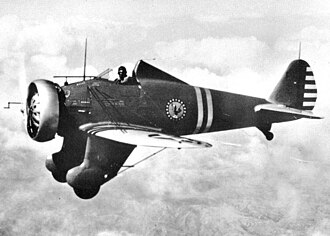
Boeing P-26 Peashooter – The Fighter That Bridged the Era Between Biplanes and Modern Combat Aircraft
The Boeing P-26 Peashooter occupies a fascinating and important position in aviation history. Although it is often remembered as an outdated aircraft when compared with the advanced fighters that appeared only a few years later, the P-26 represented a major technological step forward during the early 1930s. It was the first all-metal monoplane fighter to enter service with the United States Army Air Corps and introduced a new generation of aircraft design that would eventually replace traditional fabric-covered biplane fighters.
At first glance, the Boeing P-26 appears almost simple compared with later fighters of the Second World War. It had an open cockpit, fixed landing gear, external wing bracing, and a relatively small airframe. However, these characteristics reflected the transitional period in which it was developed. Aviation technology was changing rapidly, and engineers were experimenting with new concepts that would define the future of military aircraft. The P-26 was one of the aircraft that helped prove the advantages of speed, streamlined construction, and monoplane layouts.
The aircraft earned the nickname “Peashooter” because of its unusual appearance. Its short fuselage, open cockpit, exposed wheels, and compact design gave it a somewhat toy-like appearance compared with larger fighters that followed. Despite its unusual looks, the P-26 was a serious combat aircraft for its time. It was fast, maneuverable, heavily armed for the early 1930s, and represented the cutting edge of American fighter development when it first entered service.
The Boeing P-26 also represents the end of one aviation era and the beginning of another. It was the final operational fighter produced by Boeing for the U.S. Army Air Corps before the company shifted toward bomber and transport aircraft development. It arrived just before the revolutionary generation of fighters such as the Curtiss P-36, North American P-51 Mustang, and other streamlined aircraft that would dominate the skies during World War II.
This article explores the history, engineering, operational career, and lasting legacy of the Boeing P-26 Peashooter, examining why this small fighter remains one of the most significant aircraft designs of the interwar period.
The Development of the Boeing P-26 Peashooter
Aviation Technology in the Early 1930s
The early 1930s were a period of dramatic change in military aviation. During the First World War and the decade that followed, fighter aircraft were primarily lightweight biplanes constructed from wood, fabric, and metal tubing. These aircraft were highly maneuverable but limited in speed, altitude capability, and structural strength. As engine technology improved and aerodynamic knowledge expanded, designers began exploring new concepts that promised much greater performance.
The development of reliable air-cooled radial engines provided aircraft designers with more power than ever before. At the same time, advances in aluminum alloy construction allowed engineers to create stronger and lighter airframes. These developments encouraged manufacturers to move away from traditional biplane designs toward streamlined monoplanes capable of higher speeds.
Boeing was already an experienced aircraft manufacturer with a strong reputation for innovation. The company had produced successful military aircraft during the 1920s, including fighters and observation aircraft for the United States military. Recognizing the direction in which aviation technology was moving, Boeing began developing a new fighter design that would demonstrate the advantages of the monoplane configuration.
The result was the Boeing Model 248, which became the foundation for the P-26 Peashooter. The prototype first flew on 20 March 1932 and immediately demonstrated impressive performance compared with existing Army Air Corps fighters. After successful testing, the aircraft was ordered into production as the P-26.
The first production aircraft entered service with the U.S. Army Air Corps in 1933. At the time, the P-26 represented the most modern American fighter available and established a new standard for performance and construction methods.
Design Philosophy – Creating a New Generation Fighter
Moving Beyond the Biplane Era
The primary goal behind the Boeing P-26 was to create a fighter that combined the maneuverability expected from earlier biplanes with the speed advantages of modern monoplane construction. Engineers understood that future aerial combat would increasingly favor aircraft capable of flying faster and higher while carrying more powerful weapons.
The transition from biplanes to monoplanes was not without challenges. Biplanes provided excellent low-speed handling and structural strength because of their multiple wings and external support structures. However, the additional drag created by two wings limited speed and efficiency. The P-26 demonstrated that a carefully designed monoplane could provide acceptable maneuverability while offering significantly improved performance.
Boeing engineers focused on reducing weight and aerodynamic resistance. The aircraft featured a compact fuselage, a streamlined nose, and a low-wing configuration that reduced drag compared with earlier designs. These features allowed the P-26 to achieve speeds that were impressive for the period.
The aircraft’s design philosophy reflected a compromise between proven technology and future innovation. While it introduced modern concepts, it retained certain features that were becoming outdated, such as an open cockpit and fixed landing gear. These compromises were partly due to the limitations of available technology and partly due to military requirements at the time.
Airframe Construction and Engineering
The Boeing P-26 was revolutionary because it was the first all-metal fighter aircraft to enter service with the United States Army Air Corps. Its fuselage used a semi-monocoque aluminum structure, providing improved strength and durability compared with the fabric-covered aircraft it replaced.
The use of metal construction offered several advantages. The aircraft was less vulnerable to weather damage, required less maintenance, and could withstand higher aerodynamic stresses. This allowed engineers to create a stronger airframe capable of operating at higher speeds.
The wings were also constructed primarily from metal, although fabric covering was still used in some areas. The low-wing design contributed to aerodynamic efficiency and improved visibility for the pilot. The wings were supported by external bracing wires, a feature that reflected the transitional nature of the aircraft’s design.
The landing gear was fixed rather than retractable. While this increased aerodynamic drag, it simplified construction and reduced weight. During the early 1930s, retractable landing gear technology was still developing, and many aircraft designers considered fixed gear an acceptable compromise.
The compact size of the P-26 contributed to its distinctive appearance. The aircraft had a short fuselage and relatively small wingspan, creating a lightweight and agile fighter. This compact design helped produce excellent climb performance and maneuverability.
Aerodynamics and Performance Characteristics
The Boeing P-26 represented a major improvement in aerodynamic efficiency compared with earlier fighters. Its streamlined fuselage and monoplane wing arrangement reduced drag, allowing the aircraft to achieve much higher speeds than contemporary biplanes.
The aircraft could reach a maximum speed of approximately 234 miles per hour (377 km/h), making it one of the fastest fighters in American service when introduced. Although this speed would soon become modest as aviation technology advanced, it represented a significant improvement during the early 1930s.
The low-wing configuration also improved high-speed stability. The aircraft handled predictably at cruising speeds and provided pilots with a more modern flying experience compared with older biplanes. However, the P-26 retained excellent maneuverability, allowing it to perform effectively in close-range combat training exercises.
One unusual aerodynamic feature was the aircraft’s externally braced wings. While these support structures increased drag, they allowed engineers to maintain a lightweight and strong wing design without the complexity of fully cantilevered structures. Later aircraft would eliminate external bracing entirely as materials and manufacturing techniques improved.
The Pratt & Whitney Engine and Propulsion System
A Reliable Radial Powerplant
The Boeing P-26 was powered by the Pratt & Whitney R-1340 Wasp, one of the most successful radial engines of the era. This nine-cylinder air-cooled engine produced approximately 550 horsepower and provided the aircraft with reliable performance under a wide range of operating conditions.
The R-1340 engine was already proven in numerous military and civilian applications. Its reliability made it particularly suitable for fighter operations, where engine failure could have serious consequences. The air-cooled radial design also simplified maintenance compared with liquid-cooled alternatives.
The engine was mounted at the front of the aircraft inside a streamlined cowling that improved airflow and reduced drag. A three-blade propeller converted engine power into thrust, allowing the lightweight fighter to accelerate quickly and climb efficiently.
Although later fighters would use much more powerful engines, the R-1340 provided an excellent balance of power, reliability, and simplicity for the early 1930s. It contributed significantly to the P-26’s reputation as a dependable aircraft.
Flight Characteristics and Pilot Experience
Pilots who flew the Boeing P-26 often appreciated its responsiveness and performance. The aircraft was relatively easy to control and provided excellent visibility from the open cockpit, allowing pilots to observe surrounding airspace during combat operations.
The lightweight design gave the P-26 impressive maneuverability. It could perform rapid turns, climbs, and dives, making it effective in the close-range aerial combat style that dominated fighter doctrine during the early 1930s.
However, the aircraft also presented challenges. The open cockpit exposed pilots to wind, cold temperatures, and weather conditions. The fixed landing gear reduced performance compared with future fighters, and the relatively short fuselage required careful handling during takeoff and landing.
Despite these limitations, the P-26 represented a major improvement over previous Army Air Corps fighters and provided valuable experience for pilots transitioning from biplanes to modern monoplanes.
Armament and Combat Capability of the Boeing P-26 Peashooter
Although the Boeing P-26 Peashooter was developed during a transitional period in fighter aviation, it carried a respectable armament package for the early 1930s. At the time of its introduction, aerial combat doctrine still emphasized close-range engagements where pilots used machine guns mounted in the aircraft’s nose and synchronized to fire through the propeller arc. The P-26 followed this approach and was equipped with forward-firing weapons that allowed pilots to attack enemy aircraft directly from the cockpit.
The standard armament consisted of two Browning M1919 .30-caliber machine guns mounted in the upper forward fuselage. Some aircraft were equipped with one .30-caliber and one larger .50-caliber machine gun, providing increased firepower against enemy aircraft. The guns were synchronized with the propeller, allowing bullets to pass safely between the rotating blades. This technology had already become common among fighter aircraft but remained a critical advancement compared with earlier designs.
The placement of the weapons was carefully chosen to improve accuracy. Instead of mounting guns in the wings, where convergence issues could affect aiming, the P-26 allowed pilots to aim naturally along the aircraft’s centerline. This arrangement became increasingly common on later fighters and contributed to improved effectiveness during aerial combat.
The aircraft could also carry limited external bomb loads for ground attack missions. While the P-26 was primarily designed as an interceptor and air-superiority fighter, its versatility allowed it to perform additional roles when required. These missions reflected the broader responsibilities expected of fighters during the interwar period, when aircraft were often required to perform multiple tasks.
Service With the United States Army Air Corps
Introduction Into Operational Units
When the Boeing P-26 entered service in 1933, it represented the most advanced fighter available to the United States Army Air Corps. It replaced older biplane fighters and introduced pilots to a completely different style of aircraft operation. Squadrons receiving the P-26 had to adapt to higher speeds, different handling characteristics, and new maintenance requirements associated with all-metal construction.
The aircraft was assigned primarily to pursuit squadrons, which were the Army Air Corps designation for fighter units before the term “fighter” became standard. Several prominent units operated the P-26, including squadrons based in the continental United States and overseas territories.
For many pilots, the P-26 served as an important transition aircraft between older biplanes and the much more advanced fighters that appeared later in the decade. It provided valuable experience with monoplane performance and helped prepare aviators for the next generation of combat aircraft.
Operational Training and Readiness
During its service career, the P-26 was primarily used for training, air defense exercises, and routine operational duties. Although it was not involved in major combat operations for the United States, it played an important role in maintaining fighter readiness during a period of rapid technological development.
The aircraft participated in military exercises designed to test air combat tactics and demonstrate the capabilities of modern monoplanes. These exercises helped the Army Air Corps evaluate how fighter doctrine needed to evolve as aircraft became faster and more powerful.
The experience gained from operating the P-26 influenced later aircraft development. Pilots and engineers identified both the advantages and limitations of the design, providing valuable lessons that shaped future American fighters.
The Boeing P-26 in the Philippines
The most significant combat history of the Boeing P-26 occurred outside the United States, particularly with the Philippine Army Air Corps. During the late 1930s, several P-26 aircraft were supplied to the Philippines as part of efforts to develop local air defense capabilities.
When Japanese forces attacked the Philippines in December 1941, the remaining Philippine-operated P-26 fighters became involved in combat operations. Despite being significantly outclassed by modern Japanese aircraft such as the Mitsubishi A6M Zero, the small force attempted to defend the islands during the opening stages of the Pacific War.
The Philippine pilots who flew the P-26 demonstrated considerable courage despite operating obsolete aircraft against a technologically superior enemy. Their aircraft lacked the speed, armor protection, and advanced equipment of newer fighters, yet they continued to perform reconnaissance, interception, and defensive missions.
Many of the Philippine P-26s were destroyed during the Japanese invasion, either in aerial combat or on the ground. However, their service remains an important chapter in aviation history because they represented one of the final combat uses of this early monoplane fighter.
International Operators of the Boeing P-26
Although the majority of P-26 aircraft served with the United States Army Air Corps, the type also attracted interest from foreign operators. Its advanced design and relatively strong performance made it appealing to countries seeking modern fighter aircraft during the 1930s.
The most notable international operator was the Philippine Army Air Corps, which received several aircraft before the Second World War. Other countries also evaluated or operated related export versions, demonstrating the international interest in Boeing’s monoplane fighter concept.
The aircraft’s limited export success reflected both its strengths and the rapid pace of aviation development. By the late 1930s, many nations were seeking more advanced fighters with enclosed cockpits, retractable landing gear, improved armor protection, and significantly greater performance.
Variants of the Boeing P-26 Peashooter
Boeing Model 248 Prototype
The Boeing Model 248 was the prototype that led directly to the production P-26. It was developed to demonstrate the advantages of a modern monoplane fighter design for the United States Army Air Corps.
The prototype featured the same general layout as the production aircraft, including a low-wing configuration, open cockpit, radial engine, and fixed landing gear. Testing showed that the design offered significant improvements over existing biplane fighters.
P-26A
The P-26A was the primary production version and the aircraft most commonly associated with the Peashooter name. It featured the Pratt & Whitney R-1340 engine, two machine guns, and the improved construction techniques that made it revolutionary at the time.
A total of 111 P-26A aircraft were produced, making it one of the most important American fighter types of the early 1930s. These aircraft served as the backbone of Army Air Corps pursuit units during the middle of the decade.
P-26B
The P-26B introduced fuel injection technology, replacing the carbureted engine system used on earlier aircraft. Only a small number were produced because fuel injection technology was still developing.
Although the P-26B offered potential improvements in engine performance, the complexity and limited availability of the system prevented widespread adoption.
P-26C
The P-26C was a further development featuring additional engine and equipment changes. It was designed to improve reliability and simplify production, although only a limited number were completed.
The Transition From the P-26 to Modern Fighters
The Boeing P-26 represented the beginning of the monoplane fighter era, but aviation technology advanced rapidly during the 1930s. Within only a few years of its introduction, newer aircraft designs appeared with features that made the Peashooter increasingly outdated.
Aircraft such as the Curtiss P-36 Hawk and other late-1930s fighters introduced enclosed cockpits, retractable landing gear, improved engines, greater range, and heavier armament. These developments reflected the changing nature of aerial warfare and demonstrated how quickly fighter technology was evolving.
The P-26’s open cockpit, fixed landing gear, and limited protection became disadvantages as aircraft speeds increased. However, its role as a pioneering design remained significant. It provided the foundation for lessons learned during the development of later American fighters.
Boeing itself moved away from fighter production after the P-26 and focused on other aircraft categories, including bombers and transports. The company would later become famous for aircraft such as the B-17 Flying Fortress and numerous commercial airliners.
The Boeing P-26 as a Training Aircraft
After newer fighters replaced it in frontline service, many P-26 aircraft continued to serve in secondary roles. Training units used the aircraft to introduce pilots to monoplane flight characteristics and higher-performance aircraft operations.
This training role extended the useful life of the P-26 and allowed the Army Air Corps to gain additional value from existing aircraft. Although no longer considered a frontline fighter, it remained a valuable educational tool during a period of rapid technological change.
The experience gained from operating the aircraft helped prepare pilots for the advanced fighters that would dominate the Second World War. In this way, the P-26 contributed indirectly to the development of American air power.
Comparison With Contemporary Fighter Aircraft
Boeing P-26 Versus Traditional Biplane Fighters
The Boeing P-26 represented a major departure from the biplane fighters that had dominated military aviation during the 1920s and early 1930s. Aircraft such as the Boeing F4B and other contemporary biplanes were highly maneuverable and relatively easy to fly, but their aerodynamic limitations prevented them from achieving the speeds that modern warfare would soon require.
Compared with these earlier aircraft, the P-26 offered significantly improved speed and aerodynamic efficiency. Its low-wing monoplane design reduced drag and allowed it to fly faster while using the same general class of radial engine. The all-metal structure also provided greater durability and better resistance to environmental conditions.
However, the transition to monoplane fighters involved compromises. Traditional biplanes offered excellent low-speed handling, short takeoff distances, and strong structural characteristics. The P-26 required pilots to adapt to different handling qualities and demanded greater care during takeoff and landing.
The aircraft therefore represented a bridge between two eras. It retained some characteristics of earlier fighters while introducing the technologies that would define future combat aircraft.
Boeing P-26 Versus Late 1930s Fighters
By the end of the 1930s, fighter aircraft development had advanced dramatically. New designs from the United States, Europe, and Japan incorporated enclosed cockpits, retractable landing gear, more powerful engines, and heavier weapons. Compared with these aircraft, the P-26 appeared increasingly outdated.
The difference was especially clear when compared with aircraft such as the Curtiss P-36 Hawk, Messerschmitt Bf 109, and Supermarine Spitfire. These fighters featured much higher speeds, improved protection, greater range, and more advanced aerodynamic designs.
Despite these disadvantages, the P-26 should be judged within the context of its introduction. When it first flew, it was among the most advanced fighters in the world. Its limitations appeared only because aviation technology progressed at an extraordinary pace during the decade that followed.
The Historical Importance of the Boeing P-26 Peashooter
The Boeing P-26 Peashooter was not the most powerful fighter of its generation, nor was it the most successful in terms of combat victories or production numbers. Its importance comes from its role as a technological pioneer. It proved that the future of fighter aviation belonged to fast, streamlined monoplanes rather than traditional biplanes.
The aircraft demonstrated that all-metal construction could be practical for military fighters. This was a major development because it allowed engineers to design stronger aircraft capable of handling increased speeds and more powerful engines.
The P-26 also influenced military thinking. Its performance encouraged air forces to reconsider fighter tactics and emphasized the importance of speed and energy in aerial combat. The aircraft helped begin the transition toward the high-performance fighters that would dominate the Second World War.
Although its service career was relatively short, the lessons learned from the P-26 were valuable. Engineers, pilots, and military planners gained important experience that contributed to the development of later aircraft.
Surviving Boeing P-26 Aircraft and Museum Examples
Because only a limited number of Boeing P-26 fighters were produced and many were lost during their operational careers, surviving examples are extremely rare. The remaining aircraft are considered valuable pieces of aviation history and are preserved by museums and restoration organizations.
Restoring a Boeing P-26 requires extensive research because original components are difficult to locate. Restoration specialists often rely on historical photographs, engineering drawings, and surviving aircraft parts to recreate missing components.
Preserved P-26 aircraft provide visitors with a unique opportunity to experience the appearance and scale of an early modern fighter. Their compact size highlights how much aircraft design changed between the 1930s and the advanced fighters of the Second World War.
Museum examples also serve an educational purpose by demonstrating the technological transition that occurred during one of aviation’s most important periods. They show how engineers experimented with new ideas and gradually developed the aircraft concepts that define modern aviation.
The Boeing P-26’s Influence on Boeing’s Aviation Development
The Boeing P-26 was the company’s last fighter design produced for the United States Army Air Corps before Boeing shifted its focus toward other aircraft categories. Although the company did not continue producing frontline fighters, the experience gained from projects such as the P-26 contributed to Boeing’s broader engineering expertise.
During the years following the P-26, Boeing became one of the world’s leading aircraft manufacturers. The company developed legendary aircraft including the B-17 Flying Fortress, B-29 Superfortress, and later generations of commercial airliners.
The engineering principles explored during the P-26 program, including lightweight metal structures, aerodynamic efficiency, and advanced manufacturing techniques, influenced Boeing’s future aircraft development.
In this sense, the P-26 represents an important step in Boeing’s transformation from a manufacturer of early military aircraft into one of the most influential aerospace companies in history.
Technical Specifications of the Boeing P-26 Peashooter
| Specification | Boeing P-26 Peashooter |
|---|---|
| Manufacturer | Boeing Airplane Company |
| Aircraft Type | Single-seat pursuit fighter |
| First Flight | 20 March 1932 |
| Introduction Into Service | 1933 |
| Primary Operator | United States Army Air Corps |
| Production Period | 1933–1936 |
| Total Production | Approximately 151 aircraft including variants |
| Crew | 1 pilot |
| Length | 7.18 metres |
| Wingspan | 8.52 metres |
| Height | 3.04 metres |
| Wing Area | 13.9 square metres |
| Empty Weight | Approximately 996 kg |
| Maximum Takeoff Weight | Approximately 1,340 kg |
| Engine | 1 × Pratt & Whitney R-1340-27 Wasp radial engine |
| Engine Power | 550 horsepower |
| Maximum Speed | Approximately 377 km/h |
| Cruising Speed | Approximately 320 km/h |
| Range | Approximately 580 km |
| Service Ceiling | Approximately 8,350 metres |
| Rate of Climb | Approximately 11 m/s |
| Armament | Two .30-caliber machine guns or one .30-caliber and one .50-caliber machine gun |
| Bomb Capacity | Small external bomb load capability |
| Construction | All-metal semi-monocoque fuselage with metal and fabric-covered wings |
| Landing Gear | Fixed tailwheel landing gear |
| Major Variants | P-26A, P-26B, P-26C, export versions |
Conclusion – The Small Fighter That Changed Aviation
The Boeing P-26 Peashooter may appear modest when viewed alongside the famous fighters of the Second World War, but its historical importance is far greater than its size suggests. It was the aircraft that helped move American fighter aviation away from the biplane era and toward the modern monoplane designs that would define future combat aircraft.
Its all-metal construction, streamlined design, powerful radial engine, and improved performance demonstrated that a new generation of fighters was possible. Although later aircraft quickly surpassed it, the P-26 played a crucial developmental role and provided valuable lessons for engineers, pilots, and military planners.
The aircraft also represents an important moment in Boeing’s history. As the company’s final U.S. Army Air Corps fighter, it marked the end of one chapter while contributing knowledge that supported Boeing’s later success in military and commercial aviation.
Today, the Boeing P-26 Peashooter remains a symbol of innovation during one of aviation’s most exciting periods. It reminds historians and aviation enthusiasts that progress often comes through transitional designs—aircraft that may not achieve legendary battlefield records but nevertheless open the path toward the future.
The P-26 was not simply an old fighter aircraft. It was the bridge between two worlds: the world of wooden biplanes and the world of high-performance metal fighters. For that reason, it remains one of the most important aircraft in the history of American aviation.
