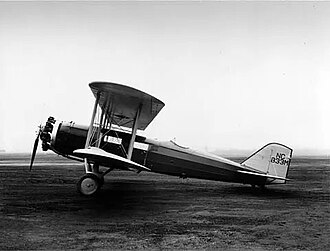
Boeing Model 40 – The Aircraft That Helped Create American Air Mail
The Boeing Model 40 is one of the most important aircraft in the early history of American aviation, not because it was a military aircraft or because it introduced revolutionary aerodynamic concepts, but because it helped transform a small aircraft manufacturer into one of the most influential aerospace companies in the world. Developed during the late 1920s, the Model 40 became the foundation upon which Boeing built its commercial aviation empire. It was the aircraft that connected Boeing with the rapidly expanding United States air mail system, created the company’s first successful passenger service, and demonstrated that aviation could become a practical and profitable form of transportation.
At first glance, the Boeing Model 40 appeared to be a conventional fabric-covered biplane typical of the era. It used a traditional wooden wing structure, an open cockpit, and a fixed landing gear arrangement. Yet beneath this familiar appearance was an aircraft that represented a major turning point in aviation history. Its development occurred during a period when aviation was transitioning from a largely experimental field dominated by military applications into a commercial industry focused on transporting mail, passengers, and goods across increasingly connected air routes.
The success of the Boeing Model 40 was closely connected with the growth of the United States airmail network. By securing contracts to operate mail routes, Boeing gained a reliable source of income that allowed the company to expand its manufacturing capabilities and invest in future aircraft designs. The experience gained through operating the Model 40 directly influenced Boeing’s later aircraft, including the famous Boeing 247, which helped introduce modern airliner concepts such as all-metal construction, enclosed cabins, and advanced aerodynamic design.
Today, the Boeing Model 40 is remembered as a milestone aircraft that helped define the future of commercial aviation. Its importance extends far beyond its technical specifications because it represents the moment when Boeing moved from being primarily an aircraft manufacturer into becoming an integrated aviation company involved in aircraft production, airline operations, and transportation infrastructure.
The Changing Aviation Landscape of the 1920s
The decade following the First World War was a period of dramatic change in aviation. During the war years, aircraft development had advanced rapidly because military forces demanded faster, stronger, and more capable machines. However, once the conflict ended in 1918, aircraft manufacturers faced uncertainty. Military orders declined, and companies had to search for new markets if they wanted to survive. Many turned their attention toward commercial aviation, particularly the transportation of mail.
Air mail became one of the first practical commercial applications of aviation. Governments recognized that aircraft could deliver letters and documents much faster than traditional transportation methods, especially across long distances. In the United States, the Post Office Department developed an expanding network of air routes during the 1920s, creating opportunities for private companies capable of operating reliable aircraft.
Early air mail aircraft were often modified military designs or lightweight experimental machines. While these aircraft proved that aerial mail delivery was possible, they were not always optimized for commercial operations. They lacked the reliability, payload capacity, and operational efficiency needed for a sustainable aviation business. This created demand for purpose-built mail aircraft designed specifically around the requirements of civilian transportation.
Boeing recognized this opportunity. Under the leadership of William Boeing, the company began moving beyond experimental aircraft and military contracts toward a future built around commercial aviation. The Model 40 became the aircraft that allowed Boeing to make this transition successfully.
The Origins of Boeing’s Commercial Ambitions
William Boeing’s Vision
William Edward Boeing had always viewed aviation as more than a technological curiosity. From the company’s earliest days, he believed aircraft would eventually become essential tools for transportation and communication. While many observers in the 1920s still considered commercial aviation uncertain, Boeing invested in developing aircraft capable of performing practical economic tasks.
The company had already gained valuable experience producing military aircraft and mail planes, but Boeing needed a breakthrough design that would establish its long-term commercial credibility. The opportunity arrived when the United States government reorganized its air mail operations and encouraged private contractors to operate routes. These contracts provided manufacturers with an incentive to develop specialized aircraft.
The First Boeing Model 40
The original Boeing Model 40 was designed in response to a 1925 requirement from the United States Post Office for a mail aircraft capable of carrying significant payloads over long distances. The first version was a relatively conventional design powered by the Liberty L-12 engine, a wartime-derived powerplant widely used in American aircraft.
Although the aircraft successfully performed its intended role, the original Model 40 did not immediately become a commercial success. Its performance was adequate, but the aircraft faced competition from other designs and changing requirements. Boeing engineers recognized that improvements would be necessary if the aircraft was to become the foundation of a profitable air transportation system.
The Development of the Boeing Model 40A
The true breakthrough came with the improved Boeing Model 40A, introduced in the late 1920s. This version incorporated several major changes that transformed the aircraft from a simple mail carrier into a practical commercial transport machine. The most significant improvement was the replacement of the heavy Liberty engine with the lighter and more efficient Pratt & Whitney Wasp radial engine.
The new engine provided several advantages. It reduced aircraft weight, improved reliability, simplified maintenance, and increased available payload capacity. The radial engine configuration also offered better cooling characteristics compared with some earlier liquid-cooled designs, making it especially suitable for commercial operations where reliability was more important than maximum speed.
The Model 40A also introduced a passenger cabin behind the pilot. Although small and relatively basic by modern standards, this cabin allowed Boeing to transport paying passengers in addition to mail. This decision was strategically important because it created an entirely new source of revenue and helped establish the idea that aircraft could serve as commercial transportation vehicles rather than simply mail carriers.
Design and Construction
A Traditional but Effective Biplane
The Boeing Model 40 featured a conventional biplane configuration that reflected the engineering practices of the 1920s. Two wings provided excellent lift and structural strength, allowing the aircraft to operate from relatively short airfields that were common during the early development of commercial aviation. While later aircraft would adopt monoplane designs for improved aerodynamic efficiency, the biplane arrangement remained practical and reliable during this period.
The wings consisted of wooden spars and ribs covered with fabric. This construction method had been refined during the First World War and remained widely used because it offered a favorable balance between strength, weight, and manufacturing simplicity. Skilled craftsmen could repair damaged components relatively easily, an important consideration for aircraft expected to operate frequently.
Steel Tube Fuselage
One of the Model 40’s important structural features was its welded steel-tube fuselage. This approach provided greater durability than traditional wooden fuselage structures while allowing engineers to create a strong framework without excessive weight. The fuselage was covered with fabric, producing a lightweight but robust structure suitable for commercial operations.
The aircraft’s construction demonstrated Boeing’s growing expertise in combining proven materials and manufacturing techniques with practical operational requirements. Reliability and ease of maintenance were essential because commercial operators needed aircraft that could complete daily schedules with minimal downtime.
The Role of the Model 40 in Air Mail Operations
The Boeing Model 40 became famous primarily because of its connection with the United States air mail system. In 1927, the newly established Boeing Air Transport company received the contract to operate the Chicago-to-San Francisco air mail route. This achievement marked a major milestone because it allowed Boeing not only to manufacture aircraft but also to operate an airline.
The route was challenging. Aircraft had to cross thousands of miles of varied terrain, including mountains, deserts, and unpredictable weather conditions. Reliable equipment was essential, and the Model 40 proved capable of handling these demanding conditions. Its combination of range, payload capacity, and operational dependability made it well suited for long-distance mail transportation.
The success of Boeing Air Transport demonstrated that aviation could become a commercially viable industry. The company gained valuable experience managing flight schedules, maintaining aircraft, training pilots, and developing operational procedures. These experiences later influenced the creation of larger and more advanced Boeing airliners.
Passenger Service and Early Commercial Aviation
One of the most significant aspects of the Boeing Model 40 was its role in introducing passengers to scheduled air travel. The passenger cabin was small, typically accommodating only two travelers, but it represented a major conceptual shift. Aircraft were no longer merely transporting cargo; they were becoming vehicles for human transportation.
Passenger comfort was understandably limited compared with modern aircraft. The cabin was compact, and flights could be noisy and affected by vibration. However, passengers benefited from dramatic reductions in travel time compared with rail transportation. A journey that previously required several days could be completed in a fraction of the time.
The Model 40 helped demonstrate that people were willing to pay for faster transportation, providing valuable evidence that commercial aviation had a viable future. This realization encouraged further investment in passenger aircraft development throughout the 1930s.
Operational Experience and Reliability
Commercial aviation demanded a different level of reliability compared with military aviation. A fighter aircraft might be evaluated primarily on speed and maneuverability, while a commercial aircraft needed to operate safely and consistently according to scheduled services. The Boeing Model 40 helped establish many of the operational standards required for successful airline operations.
Pilots valued the aircraft’s predictable handling characteristics and stable flight behavior. Maintenance crews appreciated the straightforward construction and accessibility of important components. These qualities contributed to high levels of operational availability and helped Boeing build confidence among commercial customers.
The experience gained through operating Model 40 aircraft also contributed to improvements in aviation infrastructure. Boeing developed better maintenance systems, flight planning methods, and operational procedures that influenced the broader airline industry.
Boeing Air Transport and the Growth of Boeing
The success of the Model 40 directly contributed to Boeing’s expansion during the late 1920s. The company became involved not only in aircraft manufacturing but also in airline operations, creating an integrated aviation organization. This strategy gave Boeing greater control over the entire transportation process, from aircraft design to route management.
Boeing Air Transport eventually became part of a larger corporate structure that contributed to the formation of United Airlines. This connection between aircraft manufacturing and airline operations gave Boeing valuable insight into the needs of commercial operators and passengers.
The lessons learned from the Model 40 period influenced Boeing’s later commercial aircraft designs. Engineers understood the importance of reliability, passenger comfort, operational efficiency, and maintenance simplicity. These principles became central features of Boeing’s future airliners.
Variants of the Boeing Model 40
Boeing Model 40
The initial Model 40 was designed primarily as an air mail aircraft. It used the Liberty L-12 engine and provided the foundation for later improvements. Although not produced in large numbers, it demonstrated the feasibility of a dedicated commercial mail aircraft.
Boeing Model 40A
The Model 40A became the most successful version. Powered by the Pratt & Whitney Wasp radial engine, it offered improved performance and reliability. The addition of passenger accommodation transformed it into a true commercial transport aircraft.
Boeing Model 40B and Later Versions
Additional variants introduced further refinements, including improved engines, structural changes, and operational enhancements. These versions extended the aircraft’s service life and allowed Boeing to adapt the design to changing commercial requirements.
Comparison with Contemporary Aircraft
During the late 1920s, the Boeing Model 40 competed with several other mail and passenger aircraft designs. Many competitors were modified military aircraft or smaller purpose-built machines. The Model 40 distinguished itself through its combination of payload capacity, reliability, and commercial flexibility.
Although it lacked the advanced aerodynamic features that would appear in later all-metal monoplanes, the Model 40 was exceptionally well suited to its era. It represented the highest level of practical biplane commercial aircraft development before aviation moved toward more modern configurations.
The End of the Model 40 Era
By the early 1930s, aviation technology had advanced significantly. Aircraft manufacturers began introducing enclosed cabins, metal structures, retractable landing gear, and more efficient monoplane designs. These innovations made aircraft faster, safer, and more comfortable for passengers.
The Boeing Model 40 gradually became outdated as newer aircraft entered service. However, its retirement did not diminish its importance. Instead, it marked the successful completion of an important chapter in aviation history and provided the knowledge required to create more advanced aircraft.
Historical Legacy
The Boeing Model 40 remains one of the most significant aircraft in Boeing’s history because it transformed the company from a small aircraft manufacturer into a major aviation organization. It created the foundation for Boeing’s involvement in commercial air transportation and demonstrated that aviation could become a practical business.
The aircraft’s influence can be seen in every later Boeing airliner. The emphasis on reliability, efficiency, and passenger service established during the Model 40 era continued through generations of aircraft, from early airliners to modern wide-body jets.
Although few people today recognize the Model 40 compared with famous Boeing aircraft, its contribution was fundamental. Without this pioneering mail plane, the development of Boeing’s commercial aviation legacy might have taken a very different path.
Technical Specifications
| Specification | Boeing Model 40A |
|---|---|
| Manufacturer | Boeing Airplane Company |
| Country of Origin | United States |
| First Flight | 1925 |
| Role | Mail aircraft and passenger transport |
| Crew | 1 pilot |
| Passenger Capacity | 2 passengers |
| Length | 33 ft 2 in (10.11 m) |
| Wingspan | 44 ft 2 in (13.46 m) |
| Height | 10 ft 6 in (3.20 m) |
| Wing Area | approximately 547 sq ft (50.8 m²) |
| Empty Weight | approximately 3,300 lb (1,497 kg) |
| Maximum Takeoff Weight | approximately 6,000 lb (2,722 kg) |
| Powerplant | 1 × Pratt & Whitney Wasp radial engine |
| Engine Power | 425 hp (317 kW) |
| Maximum Speed | approximately 128 mph (206 km/h) |
| Cruising Speed | approximately 105 mph (169 km/h) |
| Range | approximately 650 miles (1,046 km) |
| Service Ceiling | approximately 14,500 ft (4,420 m) |
| Construction | Steel tube fuselage with fabric covering and wooden wings |
| Landing Gear | Fixed conventional tailwheel landing gear |
| Primary Operator | Boeing Air Transport |
| Production | Approximately 80 aircraft of all variants |
| Status | Retired |
