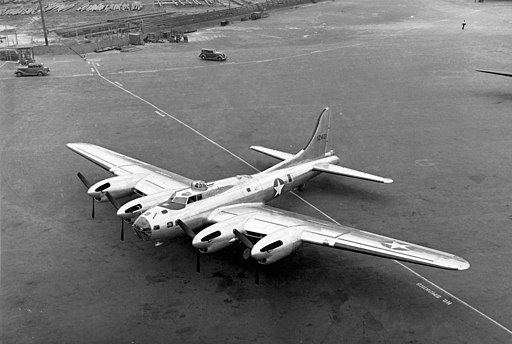
Boeing XB-38 Flying Fortress
The Boeing XB-38 Flying Fortress stands as a testament to the innovative spirit and experimental drive of aviation during World War II. Born from the necessity to explore alternative powerplant options for the legendary B-17 Flying Fortress, the XB-38 represented a bold departure from convention. Equipped with four Allison V-1710 liquid-cooled V-12 engines, a departure from the radial engines typical of the B-17, the XB-38 sought to improve upon the performance and reliability of its predecessor. This experimental variant underwent rigorous testing to evaluate its feasibility as a potential enhancement to the B-17 fleet.
Despite its ambitious aims, the XB-38 project faced numerous challenges and setbacks. While the liquid-cooled Allison engines offered advantages in terms of power output and aerodynamic efficiency, they also introduced complexities and reliability issues that proved difficult to overcome. Engine cooling and maintenance requirements posed significant hurdles, and the experimental nature of the program meant that development timelines were prolonged. Additionally, the outbreak of World War II and the urgent demands for aircraft production shifted priorities away from experimental projects like the XB-38, leading to its eventual cancellation.
Although the Boeing XB-38 Flying Fortress never reached full-scale production or operational deployment, its legacy endures as a pivotal chapter in the evolution of aviation technology. The lessons learned from the XB-38 program contributed to advancements in aircraft design and propulsion systems, shaping the future development of heavy bombers and military aircraft. While the XB-38 may not have achieved its intended objectives, its role as a testbed for innovative engineering concepts underscores the importance of experimentation and perseverance in pushing the boundaries of aeronautical science.
Boeing XB-38 Flying Fortress parameters
The Boeing XB-38 Flying Fortress was an experimental variant of the B-17 Flying Fortress, modified to test alternative powerplants. Here are the parameters of the Boeing XB-38:
- Dimensions:
- Wingspan: Approximately 31.63 meters (104 feet)
- Length: Approximately 22.78 meters (74 feet 9 inches)
- Height: Approximately 5.82 meters (19 feet 1 inch)
- Weight:
- Empty Weight: Around 16,300 kilograms (36,000 pounds)
- Maximum Takeoff Weight: Approximately 29,500 kilograms (65,000 pounds)
- Engines:
- The Boeing XB-38 was equipped with four Allison V-1710 liquid-cooled V-12 engines, each producing approximately 1,325 horsepower.
- These engines were different from the standard Pratt & Whitney R-1830 radial engines used in the B-17.
- Performance:
- Maximum Speed: Approximately 286 miles per hour (460 kilometers per hour)
- Range: Around 2,000 miles (3,200 kilometers)
- Service Ceiling: Approximately 35,000 feet (10,670 meters)
- Armament:
- The XB-38 retained the same defensive armament as the B-17, typically featuring machine guns mounted in various positions throughout the aircraft for self-defense against enemy fighters.
- Capacity:
- Crew: Similar to the B-17, the XB-38 likely accommodated a crew of ten, including pilots, navigators, bombardiers, and gunners.
- Modifications:
- The primary modification in the XB-38 was the replacement of the standard radial engines with liquid-cooled Allison V-1710 engines in an attempt to improve performance and reliability.
- The experimental nature of the XB-38 program meant that only a small number of prototypes were produced, and the aircraft did not enter production or see operational service.
These parameters represent the general specifications of the Boeing XB-38 Flying Fortress, which was developed as an experimental variant to explore alternative powerplant options for the B-17.
