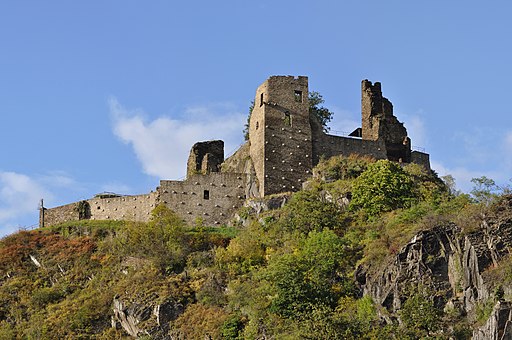
Burg Are is a historic castle located near the town of Altenahr in the Ahr Valley of Rhineland-Palatinate, Germany. Perched atop a hill overlooking the surrounding vineyards and the meandering Ahr River, Burg Are stands as a striking example of medieval architecture and strategic fortification. The castle has long served as a symbol of regional power and resilience, drawing visitors interested in history, architecture, and breathtaking panoramic views. Its scenic location and rich historical significance make it one of the most notable castles in the region.
Historical Background
Burg Are was constructed in the 12th century by the noble family of Are, one of the prominent dynasties in the Rhineland during the medieval period. The castle was built primarily as a defensive stronghold to protect the surrounding lands and to assert the family’s influence over the region. Over the centuries, Burg Are witnessed numerous political conflicts, territorial disputes, and changes in ownership that reflect the turbulent history of medieval Germany.
Throughout its history, the castle served both military and administrative purposes. It was a residence for the ruling family and a center for local governance. During times of conflict, its fortified walls and elevated position made it a formidable defensive structure against invading forces. Burg Are’s history is deeply intertwined with the broader historical developments of the Ahr Valley and the Rhineland.
Architectural Features
Burg Are is an excellent example of medieval fortification architecture, blending functionality with aesthetic appeal. The castle features a prominent keep, thick stone walls, and a series of defensive towers that provided surveillance and protection. Its strategic hilltop location allowed defenders to spot approaching enemies from a great distance and maintain control over the valley below.
The castle complex also includes residential quarters, courtyards, and a chapel, showcasing the dual purpose of Burg Are as both a fortress and a noble residence. Architectural modifications over the centuries reflect changing styles and technological advancements, including enhancements to fortifications during the late medieval period and subtle Renaissance influences in later residential areas.
Role in Regional History
Burg Are played a vital role in the history of the Ahr Valley and the surrounding regions. It acted as a center of power for the Are family and served as a key defensive site during numerous regional conflicts. The castle’s control over trade routes and river crossings in the valley made it strategically and economically important.
During periods of political upheaval, Burg Are often became a focal point for local disputes and sieges. Despite these challenges, the castle managed to retain its significance, serving as both a stronghold and a symbol of authority in the region. Its presence influenced the development of nearby settlements, contributing to the growth of Altenahr and other communities in the valley.
Decline and Restoration
Like many medieval castles, Burg Are experienced periods of decline, particularly during the late Middle Ages and early modern era. Changes in military technology, such as the introduction of artillery, reduced the strategic importance of hilltop fortresses, leading to partial abandonment. Over time, portions of the castle fell into ruin, though its main structures remained intact enough to convey its historical significance.
In recent decades, restoration efforts have aimed to preserve Burg Are for future generations. Conservation work has focused on stabilizing the remaining structures, restoring key architectural features, and making the site accessible to visitors. These efforts ensure that Burg Are continues to serve as a window into the region’s medieval past.
Tourism and Visitor Experience
Burg Are is a popular destination for tourists seeking history, culture, and natural beauty. Visitors can explore the castle ruins, climb the keep for panoramic views of the Ahr Valley, and walk along the castle walls to appreciate its strategic location. Informative plaques and guided tours provide insights into the castle’s history, architecture, and the lives of its former inhabitants.
The surrounding landscape, including vineyards and river valleys, enhances the visitor experience, offering opportunities for hiking, photography, and relaxation. Cultural events and medieval-themed activities are sometimes hosted at the site, allowing guests to immerse themselves in the atmosphere of the past.
Cultural and Historical Significance
Burg Are remains a symbol of regional heritage, reflecting the power, influence, and lifestyle of medieval nobility in the Rhineland. Its history offers valuable insights into the social, political, and military structures of the time. The castle also serves as a reminder of the challenges and resilience of communities that developed around fortified structures.
In addition to its historical importance, Burg Are contributes to local identity and pride. It is featured in regional literature, art, and tourism promotion, highlighting its enduring relevance. Visitors leave with not only an appreciation for medieval architecture but also an understanding of the cultural and historical legacy of the Ahr Valley.
Conclusion
Burg Are stands as a testament to the enduring legacy of medieval fortresses in Germany. From its construction by the noble Are family to its role in regional defense, governance, and culture, the castle embodies centuries of history. Today, it continues to captivate visitors with its architectural charm, scenic vistas, and historical significance. Exploring Burg Are provides a unique opportunity to connect with the past and appreciate the resilience, culture, and strategic ingenuity of medieval Europe.
