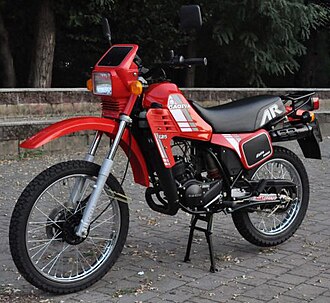
The Cagiva Aletta Rossa and the Spirit of the 1980s
The Cagiva Aletta Rossa is one of those motorcycles that perfectly captures the enthusiasm, creativity, and adventurous spirit of the Italian motorcycle industry during the 1980s. Compact yet imposing in appearance, practical enough for everyday journeys, and equipped with technology that made it stand out among many smaller-capacity motorcycles of its time, the Aletta Rossa became a memorable name among enthusiasts of lightweight enduro machines. Introduced in 1983, the motorcycle arrived at a moment when the tastes of younger riders were changing rapidly. Traditional small-capacity road bikes were increasingly competing with motorcycles inspired by off-road competition, long-distance adventure riding, and the spectacular rally machines that were attracting attention across Europe. Cagiva recognized this change and responded with a motorcycle that combined the visual appeal of a full-sized enduro with the accessibility of a 125 cc engine.
What made the Aletta Rossa particularly interesting was that it was not simply designed to look adventurous. Its liquid-cooled two-stroke engine, six-speed gearbox, front disc brake, and distinctive rear suspension represented a serious attempt to bring contemporary engineering to a motorcycle intended for a broad audience. It offered young riders the feeling of owning a sophisticated machine without requiring the financial commitment or physical demands associated with larger motorcycles. Its tall stance, large front wheel, elevated front mudguard, and purposeful bodywork created a convincing enduro silhouette, while its comfortable seat and road-oriented practicality made it suitable for commuting, weekend excursions, and journeys beyond the city limits.
Today, the Cagiva Aletta Rossa deserves attention not only as a nostalgic motorcycle but also as an important example of how manufacturers adapted to changing expectations during a particularly competitive period in motorcycling history. Its appeal lies in the combination of Italian styling, accessible performance, distinctive mechanical character, and the memories associated with an era when a 125 cc motorcycle could represent independence, identity, and an entire world of possibilities. Understanding the Aletta Rossa means looking beyond its engine capacity and considering the technical decisions, cultural influences, design philosophy, and historical circumstances that helped make it memorable.
The History of the Cagiva Aletta Rossa
Cagiva and the transformation of the Italian motorcycle industry
The story of the Aletta Rossa begins with Cagiva, a manufacturer that emerged as an increasingly influential force in Italian motorcycling during the late 1970s and early 1980s. The company was established under the leadership of the Castiglioni family and developed its motorcycle identity during a period of intense competition between European and Japanese manufacturers. Italy already possessed a rich motorcycling tradition, with numerous companies competing through distinctive designs, racing experience, and specialized engineering. However, the market was changing, and younger customers were becoming interested in motorcycles that combined everyday usefulness with the styling and excitement of competition machinery.
Cagiva’s response was to develop a recognizable family of motorcycles that could appeal to different types of riders while maintaining a strong visual identity. Small-capacity machines were especially important because they offered a relatively accessible introduction to motorcycling and attracted young people who wanted something more exciting than basic transportation. The manufacturer understood that this audience cared about more than displacement or maximum speed. Styling, equipment, handling, and the impression created by the motorcycle were equally important. The Aletta Rossa reflected this philosophy by presenting a compact 125 cc machine with proportions and technical features that suggested a much larger motorcycle.
The model also demonstrated the company’s willingness to modernize existing concepts rather than simply repeat familiar designs. By building on the foundations of the earlier SXT 125 and introducing important technical changes, Cagiva created a motorcycle that retained the practical qualities of its predecessor while moving toward the expectations of a new generation. This combination of development and reinvention was characteristic of the period, when manufacturers frequently introduced substantial improvements within relatively short product cycles.
The arrival of the Aletta Rossa in 1983
The Cagiva Aletta Rossa 125 appeared in 1983 and quickly established a distinctive position in the Italian lightweight enduro market. It arrived during a period when the enduro category was becoming increasingly fashionable, particularly among younger riders who admired motorcycles associated with desert rallies and demanding off-road adventures. The Aletta Rossa translated some of that visual excitement into a smaller, more accessible format. Its tall front wheel, elevated mudguards, high-mounted bodywork, and upright riding position gave it the appearance of a serious trail motorcycle, even though its everyday role was considerably broader than competition use.
One of the most significant developments was the adoption of liquid cooling for its 124.63 cc two-stroke engine. The predecessor, the SXT 125, provided the basic platform, but the newer model represented a more modern interpretation of the lightweight enduro concept. Liquid cooling helped manage engine temperature under varying operating conditions, while the reed-valve induction system and separate oil-injection arrangement contributed to the motorcycle’s technical appeal. A six-speed gearbox allowed the rider to make better use of the engine’s operating range, and the front disc brake provided a braking system that felt modern for a motorcycle of this size.
The commercial response reflected the popularity of the new concept. A retrospective account published by the Italian motorcycle magazine inSella reports that Cagiva received approximately 12,000 orders during the autumn of 1983, illustrating the immediate interest generated by the model. Although exact figures should always be interpreted in their historical context, the response helps explain why the Aletta Rossa became so closely associated with the motorcycle culture of the decade. It was not simply another small enduro introduced into an already crowded market; it was a motorcycle that successfully connected technical modernization with a strong sense of youthful aspiration.
The relationship with the Cagiva SXT 125
To understand the Aletta Rossa properly, it is important to recognize its relationship with the Cagiva SXT 125. Rather than being an entirely unrelated design, the Aletta Rossa developed the earlier motorcycle’s basic concept, retaining much of its underlying chassis architecture while introducing changes that improved its modernity and visual identity. This approach allowed Cagiva to build on an established platform while concentrating attention on features that mattered increasingly to customers, especially cooling, suspension design, and styling.
The change from an air-cooled predecessor to a liquid-cooled engine was particularly significant because it reflected the broader direction of the 125 cc market. Manufacturers were investing in more sophisticated small-capacity engines, and buyers were becoming accustomed to technical features that had previously been more closely associated with larger or more specialized motorcycles. The Aletta Rossa also benefited from a more developed rear suspension arrangement, giving it a more contemporary specification and reinforcing its position as a modern enduro-inspired machine.
The result was a motorcycle that occupied an interesting middle ground. It retained the uncomplicated proportions and practical purpose of a traditional lightweight trail bike, yet its engineering and presentation suggested that it belonged to a new generation. This balance between familiar foundations and modern improvements is one of the reasons the Aletta Rossa remains historically interesting to collectors and enthusiasts. It demonstrates how an established design could be transformed into something that felt fresh without abandoning the practical qualities that made the original concept successful.
Design and Styling: An unmistakably Italian enduro
Bodywork inspired by adventure motorcycles
The design of the Cagiva Aletta Rossa was closely connected to the growing popularity of rally-inspired motorcycles during the 1980s. Large adventure and enduro machines were developing a visual language that emphasized tall front ends, elevated mudguards, upright handlebars, substantial fuel tanks, and bodywork designed to look ready for long journeys over difficult terrain. The Aletta Rossa translated these characteristics into a more compact motorcycle, giving riders the impression that they were participating in the same adventure-oriented culture.
Its overall proportions were carefully suited to this purpose. The large front wheel helped create the appearance of a genuine off-road machine, while the high front mudguard and relatively narrow bodywork reinforced its functional character. The headlight and small surrounding fairing gave the front of the motorcycle a distinctive profile, and the elevated stance made the bike appear taller and more substantial than its displacement alone might suggest. The design was not excessively complicated, but its individual elements worked together to create a recognizable identity.
The result was a motorcycle that looked equally appropriate outside a school, parked on a narrow country road, or standing beside a trail at the edge of a forest. Its styling communicated freedom and versatility rather than specialization. It suggested that a rider could use the same machine for routine transportation during the week and exploratory rides during the weekend. That versatility was central to the appeal of lightweight enduro motorcycles, and the Aletta Rossa expressed it particularly well.
Colours, finishes, and visual identity
The Aletta Rossa is especially associated with its red bodywork, which became one of the most recognizable expressions of the model’s identity. Period examples were also available in white and black configurations, with contrasting frame and seat colours depending on the version. These combinations gave the motorcycle a strong visual personality while allowing buyers to choose between a more traditional red appearance and alternatives that offered a different character.
The red version with a black seat and frame is particularly memorable because it matched the model’s name and emphasized the purposeful lines of the tank and side panels. White examples with contrasting red details created a lighter, more distinctive appearance, while black versions offered a darker interpretation of the same basic design. Although paintwork and decals may differ between individual surviving motorcycles, the original colour schemes remain important when evaluating authenticity during a restoration.
Beyond colour, the motorcycle’s proportions were a major part of its appeal. The long seat, relatively narrow central section, and upright handlebar arrangement gave it a practical appearance without making it look plain. The instruments and front fairing also helped distinguish it from simpler trail bikes. Taken together, these details created an impression of sophistication that was especially attractive in a market where buyers increasingly expected small motorcycles to offer the visual impact and equipment of more expensive machines.
Ergonomics and everyday comfort
The riding position of the Cagiva Aletta Rossa was designed around versatility rather than the extreme demands of competition. Its upright handlebars allowed the rider to maintain a relatively natural posture, while the long seat accommodated different riding positions and could support two occupants where permitted and appropriate. The tall front wheel and elevated stance contributed to the enduro riding experience, but the motorcycle’s proportions also made sense on ordinary roads.
This combination was valuable because many owners used their motorcycles for far more than recreational trail riding. A 125 cc motorcycle could serve as personal transportation, a means of reaching school or work, and a vehicle for exploring surrounding countryside. Comfort therefore mattered almost as much as the appearance of the machine. A long seat and an upright riding position could make the motorcycle more pleasant on mixed journeys, while the relatively narrow layout helped preserve a feeling of accessibility and control.
The original seat height was approximately 820 mm in commonly published specifications, which gave the motorcycle a distinctly tall stance compared with conventional road-oriented 125 cc models. That height suited its enduro styling and ground clearance, although riders of shorter stature may find that stopping and maneuvering require more care. As with any motorcycle now several decades old, the actual riding experience depends heavily on suspension condition, tyre choice, seat modifications, and whether the machine retains its original dimensions.
Engine and Mechanical Engineering
The 124.63 cc liquid-cooled two-stroke engine
At the heart of the Cagiva Aletta Rossa was a single-cylinder, liquid-cooled, two-stroke engine with a displacement of 124.63 cc. This configuration gave the motorcycle a mechanical personality that differs substantially from that of modern four-stroke 125 cc machines. Two-stroke engines are known for their relatively simple operating cycle, compact construction, and ability to produce lively performance from a small displacement. Their character can be especially engaging when combined with a close-ratio gearbox and a lightweight chassis.
The Aletta Rossa’s engine used reed-valve induction, which helped control the movement of the incoming air-fuel mixture and supported the engine’s performance characteristics. Liquid cooling represented a major improvement over the air-cooled arrangement of the earlier SXT, allowing heat to be carried away through a radiator and coolant circuit. A water pump circulated the coolant, and the system required appropriate maintenance to remain effective over time. For a modern owner, this means that the cooling system deserves the same attention as the engine’s internal components, particularly because hoses, seals, pumps, and radiators can deteriorate after decades of use.
The engine’s character was part of the motorcycle’s appeal. Rather than delivering power in the smooth, linear manner associated with many contemporary four-stroke engines, a two-stroke motor typically rewards the rider for understanding its operating range and selecting the appropriate gear. Acceleration, engine sound, throttle response, and the sensation of mechanical activity all contribute to the experience. The Aletta Rossa therefore offered something that cannot be described fully through numerical specifications: a direct, engaging connection between the rider and the machine.
Power delivery and riding character
Published historical descriptions place the Aletta Rossa 125’s output at a little over 15 horsepower at approximately 7,000 rpm, although figures vary between sources and may refer to different specifications or measurement conventions. The engine was intended to provide lively performance within the restrictions and expectations of the 125 cc class, rather than the sustained high-speed power of a larger road motorcycle. Its six-speed gearbox was particularly useful because it allowed the rider to keep the engine within a suitable operating range during acceleration, climbing, and changes in road speed.
In practical terms, the motorcycle’s riding character depends on how the rider uses the gearbox. Two-stroke engines often feel less responsive when operated outside their preferred rev range, while selecting the correct gear can make the same engine feel considerably more energetic. This quality gives the Aletta Rossa a more involved riding experience than a modern commuter motorcycle designed primarily for effortless low-speed operation. It also makes correct carburettor adjustment, ignition condition, and general engine health important to the way the machine performs.
A maximum speed of approximately 114 km/h is frequently quoted for the 125 cc model in historical descriptions, although actual performance will depend on mechanical condition, gearing, rider weight, weather, and the accuracy of the speedometer. It would be unwise to assume that every surviving example can still achieve its original performance. A machine with worn piston rings, a carbon-restricted exhaust, incorrect carburettor settings, or a tired cooling system may perform very differently from a properly maintained example. For a classic motorcycle, smooth running and mechanical reliability are generally more valuable than chasing a headline speed figure.
Six-speed transmission and clutch
The six-speed manual gearbox was an important part of the Aletta Rossa’s mechanical package. It gave the rider a useful selection of ratios for balancing acceleration and cruising speed, which suited a motorcycle expected to operate in both urban and rural environments. On narrow roads or undulating terrain, the ability to choose a suitable gear could make the engine feel more responsive and help maintain momentum without excessive strain.
The clutch used a multidisc arrangement operating in an oil bath, a familiar solution for motorcycles of this type. Proper clutch adjustment and suitable lubricant are essential for predictable operation, particularly on an older machine that may have spent years in storage or undergone incomplete maintenance. A clutch that slips under acceleration, drags when disengaged, or engages inconsistently can reduce the enjoyment of riding and may indicate worn friction plates, incorrect adjustment, or other internal problems.
For prospective owners, the gearbox and clutch should be assessed together during a test ride. Each gear should engage predictably, the transmission should not jump out of gear under load, and the clutch should transmit power without slipping. A well-preserved example should feel mechanically coherent, even if its controls are less refined than those of a modern motorcycle. These details are often more important to long-term ownership satisfaction than small differences in advertised horsepower.
Carburettor, lubrication, and fuel requirements
The original 125 cc Aletta Rossa specification included a Dell’Orto PHBL 24 BD carburettor. This component was responsible for metering the fuel and air entering the engine, and its condition can have a considerable effect on starting, idle quality, throttle response, and overall performance. Carburettors that have remained unused for long periods may develop blocked passages, hardened seals, or deposits caused by old fuel. Cleaning and adjustment should therefore be approached carefully, using the correct specifications for the particular version of the motorcycle.
Another important feature was the separate oil-injection system. Instead of requiring the rider to mix all the lubricating oil directly into the petrol, the system used a pump to deliver oil according to operating requirements. This arrangement was convenient for everyday use, but it introduces another component that must be inspected and maintained. On a motorcycle that has been stored for many years, the oil pump, delivery lines, and associated connections should be checked before the engine is run normally. A malfunctioning lubrication system can cause serious engine damage, so it should never be assumed to be working simply because the motorcycle starts.
The fuel system and lubrication arrangement illustrate the difference between preserving a vintage motorcycle and merely getting it running. Replacing deteriorated hoses, inspecting the oil pump, checking the carburettor, and confirming the cooling system’s integrity are essential parts of responsible recommissioning. These tasks may not be visible in photographs or advertisements, but they have a much greater influence on the motorcycle’s long-term reliability than cosmetic improvements alone.
Chassis, Suspension, and Braking
The steel double-cradle frame
The Cagiva Aletta Rossa used a steel double-cradle frame with an upper connecting member, an arrangement that provided a solid structural foundation for the engine and suspension. This type of chassis was well suited to a lightweight enduro motorcycle because it combined practical manufacturing methods with the strength required for mixed road and trail use. It also gave the motorcycle the proportions expected of a proper enduro, with a relatively narrow central area and room for the large-diameter front wheel.
A sound frame is particularly important when evaluating a surviving example. Years of use, accidental damage, poor repairs, or prolonged exposure to moisture can affect the condition of the metal, especially around welded joints, mounting points, and areas hidden by bodywork. A prospective buyer should check whether the frame appears straight, whether welds look consistent with the original construction, and whether the steering and suspension components align correctly. Fresh paint can make an old frame look attractive, but it should not replace a careful structural inspection.
The frame also contributes to the motorcycle’s overall character. Unlike a modern machine designed around electronic rider aids and highly integrated components, the Aletta Rossa reflects an era when the interaction between frame geometry, suspension, tyres, and rider technique played a central role in the experience. Its chassis is part of what makes it interesting as a historical motorcycle, especially for riders who appreciate direct mechanical feedback.
Front forks and Soft Damp rear suspension
At the front, the Aletta Rossa used a hydraulic telescopic fork. This conventional arrangement provided suspension movement while maintaining a straightforward mechanical layout that could be serviced without the complexity associated with many modern electronically controlled systems. The fork’s condition has a direct influence on steering stability, braking behavior, and comfort, so worn seals, contaminated oil, bent components, and excessive play should be addressed before regular riding.
The rear suspension was one of the model’s more distinctive features. Cagiva employed its Soft Damp arrangement, using a swingarm and a centrally positioned shock absorber within a linkage-based suspension system. The design helped the motorcycle present a more sophisticated suspension package than a simple pair of conventional rear shocks. In a lightweight enduro, rear-wheel control is important not only for rough surfaces but also for maintaining predictable behavior on uneven roads, where bumps can otherwise disturb the motorcycle’s balance.
However, the performance of an original suspension system depends heavily on its present condition. After decades of service, the shock absorber may have lost damping effectiveness, seals may have deteriorated, and linkage bearings may have become worn or corroded. Rebuilding or replacing worn components with suitable parts can transform the riding experience, but owners seeking historical authenticity should check compatibility and preserve original pieces wherever practical. A correctly functioning original design is often more rewarding than an attractive motorcycle whose suspension no longer works as intended.
Front disc brake and rear drum brake
The braking system combined a front disc measuring approximately 240 mm with a rear drum brake. The front disc, associated with Brembo hardware in historical descriptions, represented an important feature for a 125 cc enduro of the period. Disc brakes generally offer consistent braking response and can dissipate heat effectively, although performance still depends on pad condition, rotor condition, hydraulic integrity, and tyre grip. On an older motorcycle, the brake fluid, hoses, seals, and caliper should be checked before the machine is returned to the road.
The rear drum brake provided a simpler complementary braking arrangement. Drum brakes were common on motorcycles of this class, and their performance can be entirely adequate when the internal components are clean, correctly adjusted, and in good condition. Nevertheless, worn shoes, contaminated friction surfaces, corroded pivots, and incorrectly adjusted linkages can reduce braking effectiveness. A drum brake that has remained unused for years may need more than a quick adjustment before it can be trusted.
The original braking equipment should always be evaluated as a complete system rather than judged by appearance alone. A polished front disc and freshly painted caliper do not guarantee good braking, just as an original drum brake is not automatically unsafe. Correct servicing, suitable replacement components, and careful testing are the foundation of dependable operation. For a motorcycle that may be ridden on modern roads, brake inspection should be among the first priorities of any restoration.
Wheels, tyres, and ground clearance
The Aletta Rossa’s wheel arrangement was typical of enduro motorcycles of its period, with a 21-inch front wheel and an 18-inch rear wheel. This combination helped establish the motorcycle’s tall stance and supported its intended versatility on uneven surfaces. The larger front wheel was particularly important to the visual identity of the bike, distinguishing it from road motorcycles with smaller wheels and reinforcing its connection to the off-road world.
The commonly listed original tyre sizes were 2.75-21 at the front and 3.50-18 at the rear. Modern replacement tyres should be chosen with attention to the exact size, load rating, speed rating, intended use, and compatibility with the original rims. A tyre that physically fits may not necessarily be the most suitable choice, particularly if its construction or profile differs significantly from the original specification.
Ground clearance was approximately 195 mm in commonly published measurements, giving the motorcycle enough space beneath its chassis for occasional rough surfaces and uneven tracks. This should not be confused with the capability of a modern competition enduro. The Aletta Rossa was a versatile lightweight motorcycle with enduro styling and useful suspension travel, not an extreme off-road racing machine. Its strengths were balance, accessibility, and the ability to combine everyday road use with moderate exploration away from paved surfaces.
Riding the Cagiva Aletta Rossa
Performance on ordinary roads
On paved roads, the Aletta Rossa offered the appeal of a light, narrow motorcycle with a lively two-stroke engine and an upright riding position. Its 125 cc displacement placed it in a class where performance depended strongly on engine condition and gear selection, but the combination of six ratios and relatively modest weight made it suitable for a wide range of everyday journeys. Its tall front end and enduro-oriented geometry gave it a different feel from a small sport motorcycle, favoring visibility, an upright posture, and a sense of maneuverability.
The experience would naturally differ from that of a modern motorcycle. Steering, suspension damping, braking feel, and engine response reflect the technology and expectations of the 1980s. The rider is more directly involved in choosing gears, maintaining momentum, and interpreting mechanical feedback. Rather than relying on electronic assistance or a broad, effortless torque curve, the Aletta Rossa rewards familiarity with its engine and an understanding of its operating characteristics.
For a contemporary enthusiast, this is part of the attraction. The motorcycle offers a more active and mechanical riding experience, particularly on quiet roads where there is time to appreciate its engine sound, lightweight feel, and historical character. Nevertheless, a classic machine should not be expected to match modern motorcycles in braking performance, refinement, emissions, or maintenance intervals. Riding it responsibly means respecting both its original design and the condition of the individual example.
Light trails and countryside exploration
The Aletta Rossa’s enduro configuration also makes it suitable for exploring appropriate unpaved roads and relatively easy trails, provided the motorcycle is mechanically sound and local regulations permit such use. The large front wheel, ground clearance, upright handlebars, and suspension layout offer advantages when travelling over uneven surfaces. Its relatively narrow profile can also make it easier to maneuver than a larger adventure motorcycle, especially at modest speeds.
However, its capabilities should be assessed realistically. A machine designed several decades ago will not necessarily provide the suspension travel, tyre performance, ground protection, or specialized components of a modern enduro. Steep technical climbs, deep mud, severe rocks, and demanding competition-style terrain can place significant stress on an old motorcycle. Owners who want to preserve an original example may prefer gentle tracks and scenic countryside routes rather than situations that risk damaging rare bodywork or difficult-to-replace mechanical components.
The most rewarding way to use an Aletta Rossa today is arguably to embrace its original versatility. It can connect ordinary roads with the quieter landscapes beyond them, providing a reminder of the period when the lightweight enduro was conceived as an everyday motorcycle with a spirit of adventure. For collectors who prefer not to ride their motorcycles extensively, even occasional short journeys can be satisfying, provided maintenance, insurance, registration, and safety checks are properly addressed.
Fuel consumption and practical range
Fuel consumption on a vintage two-stroke motorcycle can vary considerably according to carburettor adjustment, engine condition, gearing, riding style, road speed, and the amount of time spent accelerating. A historical figure of approximately 3.7 litres per 100 kilometres is quoted in some detailed accounts of the Aletta Rossa, but this should be treated as a period reference rather than a guaranteed result for every surviving motorcycle. An engine with incorrect jetting or worn components may consume considerably more fuel, while steady riding and good mechanical condition can improve efficiency.
The original fuel tank capacity is commonly listed at approximately 10.8 litres, including a reserve of around 1.7 litres in the later WSXT 125 specification. This provides a reasonable practical range for a lightweight motorcycle, although the actual distance between refuelling stops depends on consumption and the usable quantity of fuel. Owners should also remember that old fuel tanks can develop internal corrosion, while aged fuel taps, hoses, and seals may leak or restrict flow.
For longer rides, it is sensible to plan refuelling conservatively rather than relying on theoretical maximum range. A motorcycle that has been recently restored may still need several adjustments before its fuel consumption becomes predictable. Monitoring consumption over several tanks, inspecting the spark plug, and ensuring that the carburettor and air intake are correctly configured can provide useful information about engine health and help prevent avoidable problems.
Maintenance and Reliability of a Vintage Aletta Rossa
Why condition matters more than age alone
The Cagiva Aletta Rossa is now a classic motorcycle, and the condition of each individual example is more important than the model’s original reputation. Two motorcycles of the same year may offer very different experiences depending on how they were stored, how often they were ridden, whether their maintenance was documented, and whether previous repairs were carried out correctly. A machine that has remained in dry storage with regular attention may be a better starting point than one that has been cosmetically restored without a thorough mechanical inspection.
The two-stroke engine requires particular attention to lubrication, carburation, ignition, and cooling. A motorcycle that starts easily is not necessarily mechanically healthy, and a short demonstration may not reveal a failing water pump, worn crankshaft bearings, a tired gearbox, or an oil-injection problem. Before extended use, the engine should be assessed by someone familiar with older two-stroke motorcycles, with particular attention to any unusual noises, inconsistent running, overheating, or signs of inadequate lubrication.
The chassis deserves equally careful examination. Suspension linkages, wheel bearings, steering-head bearings, brake components, cables, electrical connections, and rubber parts can all deteriorate through age, even if mileage is low. For a classic motorcycle, preventative maintenance is often more economical and enjoyable than waiting for a small defect to cause a larger failure. A systematic inspection also provides a clearer picture of the motorcycle’s authenticity and helps establish a realistic restoration budget.
Cooling system and engine protection
Because the Aletta Rossa uses liquid cooling, the condition of the radiator, hoses, pump, seals, and coolant passages is fundamental to engine longevity. Old coolant can lose its protective properties, while rubber hoses may harden or crack and metal components may corrode internally. A blocked radiator or failing water pump can prevent the engine from operating within a safe temperature range, potentially causing severe damage to a two-stroke engine.
Before the first serious ride after a long period of storage, the cooling system should be inspected and serviced as necessary. The correct coolant type and mixture should be selected with regard to the materials in the system, and the system should be checked for leaks and proper circulation. If overheating occurs, the cause should be identified rather than treated as an inconvenience that can be ignored during short journeys.
Engine lubrication is just as important. The original separate oil-injection arrangement should be verified rather than assumed to be operational, and its hoses and pump should be examined carefully. Where an owner or specialist chooses to alter the lubrication system, the decision should be based on a clear understanding of the engine’s requirements and the consequences for originality. Improvised modifications can compromise reliability and make future diagnosis more difficult.
Spare parts and restoration challenges
Finding parts for a motorcycle produced during the 1980s can be more difficult than maintaining a modern machine, especially when the required component is specific to one model or production series. Routine consumables such as suitable tyres, chain components, bearings, and certain brake parts may be obtainable through specialist suppliers, while original body panels, decals, instruments, suspension components, and model-specific engine parts may require more patience.
Before purchasing an Aletta Rossa for restoration, it is worth identifying which parts are missing and determining whether replacements are available. A complete motorcycle with an imperfect finish can sometimes be a better project than a beautifully painted example missing its original instruments, radiator components, or distinctive bodywork. Originality matters particularly to collectors, and replacing rare pieces with unsuitable modern alternatives can reduce the historical coherence of the finished motorcycle.
A sensible restoration usually begins with documentation, photographs, and an inventory of components. The frame and engine identification numbers should be checked, the mechanical condition assessed, and the availability of essential parts investigated before major work begins. Keeping removed original parts, recording repairs, and using components appropriate to the particular model will make the project easier to understand and maintain in the future.
Electrical equipment and long-term storage
The electrical system of an older motorcycle may appear simple compared with modern electronics, but age can still create a range of problems. Corroded connectors, damaged insulation, weak grounds, deteriorated switches, and previous modifications can lead to intermittent faults that are difficult to diagnose. Before replacing components unnecessarily, it is useful to inspect the wiring carefully and compare it with the correct wiring diagram for the motorcycle’s production series.
Long-term storage should also be approached carefully. Fuel should not be left to deteriorate in the carburettor, the motorcycle should be stored in a dry and ventilated location, and the tyres should be protected from unnecessary deterioration. The chain, cables, and exposed metal parts benefit from appropriate maintenance, while the cooling and lubrication systems should be checked periodically. If the motorcycle will remain unused for an extended period, a specialist can advise on the most suitable preservation procedure for its particular mechanical condition.
For owners who intend to ride regularly, a written maintenance record is extremely useful. Recording oil changes, coolant replacement, carburettor work, ignition adjustments, tyre installation, and repairs creates a reliable history that helps identify recurring problems. It also provides useful documentation if the motorcycle is later sold or passed to another enthusiast.
Buying a Cagiva Aletta Rossa Today
Originality, completeness, and documentation
Buying a Cagiva Aletta Rossa is as much an exercise in evaluating history as it is in evaluating mechanical condition. The first step is to identify the exact model and production series, since specifications and components can differ between early and later versions. The WSXT 125 is the best-known configuration, but the Aletta Rossa name has also been associated with other engine capacities and related models. Advertisements may use names and specifications loosely, so identification should be based on the frame and engine numbers, reliable documentation, and the motorcycle’s actual components.
Originality is particularly important when the intention is to create a historically accurate restoration. Correct body panels, factory-style colours, original instruments, the proper suspension arrangement, and model-specific details all contribute to the motorcycle’s identity. However, originality should not automatically take priority over safety or mechanical soundness. A machine with carefully documented, reversible improvements may be more practical to ride than an example that has been preserved cosmetically but neglected mechanically.
Documentation is equally valuable. Registration records, historical photographs, old invoices, workshop manuals, and evidence of previous ownership can help establish the motorcycle’s history. In countries where classic vehicle registration or historic status is available, buyers should confirm the applicable requirements before completing a purchase. A motorcycle that cannot be legally registered or whose identification numbers raise questions may become a much more complicated project than its asking price initially suggests.
Mechanical inspection before purchase
A pre-purchase inspection should begin with the engine and its supporting systems. The engine should be examined for leaks, unusual noises, damaged cooling components, poor starting behavior, and signs of improvised repairs. The carburettor, oil pump, fuel tap, radiator, exhaust, and ignition system all deserve attention because problems in these areas can range from relatively inexpensive repairs to substantial engine work.
The gearbox and clutch should be checked during a cautious test ride if the motorcycle is safe and legal to operate. Gears should engage cleanly, the clutch should not slip under load, and the engine should accelerate without persistent misfiring or abnormal mechanical sounds. A seller who cannot demonstrate the motorcycle running should not automatically be considered dishonest, but the uncertainty should be reflected in the price and in the buyer’s repair budget.
The frame, wheels, suspension, and brakes should then be inspected carefully. Signs of collision damage, badly repaired welds, bent forks, leaking shock absorbers, excessive bearing play, and corroded brake components are reasons to investigate further. Finally, compare the motorcycle’s appearance and equipment with reliable photographs and model records. This can reveal whether apparently minor differences are original production variations or evidence of incomplete restoration.
Restoration budget and ownership expectations
The purchase price is only one part of the cost of owning a classic motorcycle. A machine that needs tyres, brake servicing, suspension rebuilding, engine work, electrical repairs, and cosmetic restoration may ultimately cost considerably more than a better-preserved example. Before buying, it is sensible to prepare a realistic budget that includes specialist labour, transport, registration, insurance, replacement parts, and a reserve for unexpected problems.
A restoration can be rewarding when the owner enjoys the process of researching, repairing, and preserving a historic machine. However, it is less suitable for someone who needs completely dependable daily transportation and has no access to specialist assistance. The Aletta Rossa is best approached as a classic motorcycle whose ownership combines riding enjoyment with ongoing mechanical care. Even a well-restored example will require attention to age-related components, particularly if it is used regularly.
The most satisfying purchase is usually one that matches the buyer’s intentions. A collector seeking an authentic display motorcycle may prioritize original paintwork and completeness, while a rider may prefer a mechanically excellent example with sympathetic maintenance. Someone starting a restoration may deliberately choose a less expensive project, but should first confirm that its essential components can be sourced. In every case, a careful inspection and a clear understanding of the motorcycle’s history are more valuable than an optimistic assumption that an old machine will be inexpensive simply because its engine is small.
The Cagiva Aletta Rossa in Motorcycle History
A symbol of youthful independence
The Aletta Rossa’s cultural significance is closely connected to the role that 125 cc motorcycles played in the lives of young riders during the 1980s. In many European markets, this category offered an important step toward independent mobility, allowing riders to travel without relying entirely on family transport or public services. A motorcycle was not merely a practical purchase; it could also become an expression of personal taste, independence, and social identity.
The Aletta Rossa was especially suited to this role because it looked adventurous without demanding the size, weight, or running costs of a large motorcycle. Its styling suggested distant roads and open countryside, while its displacement kept it within a category familiar to younger riders. It combined the practical dimensions of a small motorcycle with design cues borrowed from much larger machines, allowing owners to experience a sense of adventure through an accessible and recognizable product.
That cultural role helps explain why the model continues to attract interest decades after its introduction. Enthusiasts may remember seeing it on the streets, reading about it in period magazines, or encountering it through family and friends. Others discover it through the wider history of Italian motorcycles and become interested in its distinctive combination of technology and styling. In both cases, the Aletta Rossa represents more than a collection of mechanical components; it reflects a period when small motorcycles occupied a particularly visible place in youth culture.
Its place among Italian 125 cc motorcycles
The Aletta Rossa emerged during a competitive period in which Italian and international manufacturers were continually improving their small-capacity motorcycles. Buyers could choose from roadsters, sport-oriented machines, traditional trail bikes, and increasingly sophisticated enduro models. Manufacturers were competing not only on performance but also on styling, equipment, reliability, and the feeling that each motorcycle offered something distinctive.
Cagiva’s contribution was to combine liquid cooling, a reed-valve two-stroke engine, a six-speed gearbox, a front disc brake, and a distinctive rear suspension arrangement within a visually convincing enduro package. These features did not make the Aletta Rossa unique in every individual respect, but their combination helped give the motorcycle a clear identity. It reflected the wider development of the 125 cc class, in which technical sophistication and attractive design were becoming increasingly important.
The model also helps illustrate how rapidly expectations changed during the decade. A motorcycle that appeared modern in 1983 could soon be challenged by competitors with newer engine technologies, more elaborate bodywork, or improved chassis components. This constant development was part of what made the period so exciting for enthusiasts. The Aletta Rossa remains a valuable reference point for understanding that transition from relatively simple lightweight motorcycles toward the more sophisticated machines that followed.
From Aletta Rossa to later Cagiva models
The Aletta Rossa formed part of a broader family of Cagiva motorcycles that helped establish the manufacturer’s identity during the 1980s. Its enduro-inspired design was followed by other models that continued to explore the relationship between small-capacity engines, adventurous styling, and practical versatility. The Cagiva Elefant 125, for example, developed the rally-inspired appearance further, while later Cagiva road and sport motorcycles would demonstrate the company’s growing interest in more specialized performance categories.
The Aletta Rossa’s historical importance therefore extends beyond its own production period. It represents a stage in the evolution of the company’s products, when the manufacturer was establishing a recognizable design language and responding to a rapidly changing market. The motorcycle also demonstrates how a successful model could help create demand for related machines by introducing buyers to the brand and encouraging them to consider other products within its range.
For collectors, this broader context can make the Aletta Rossa more interesting than a simple vintage enduro. It connects the practical world of lightweight trail motorcycles with the development of the more ambitious and technically elaborate Cagiva machines that followed. Preserving an original example helps maintain a tangible link with that period of Italian motorcycle history.
Why the Cagiva Aletta Rossa Still Matters
The enduring appeal of the Cagiva Aletta Rossa comes from the balance it achieved between practical engineering and emotional appeal. Its 124.63 cc liquid-cooled two-stroke engine offered an engaging mechanical character, while its six-speed gearbox and relatively lightweight chassis made it versatile enough for everyday use. The enduro styling gave it a strong visual identity, and the combination of a 21-inch front wheel, elevated mudguards, upright handlebars, and distinctive rear suspension communicated a sense of adventure that was central to the motorcycle culture of the 1980s.
Its importance also lies in the way it represents a particular stage of technological development. Liquid cooling and reed-valve induction reflected the growing sophistication of small-capacity engines, while the Soft Damp rear suspension and front disc brake helped position the motorcycle as a modern alternative to more basic trail machines. These features should not be exaggerated into claims that the Aletta Rossa was a competition motorcycle or that it could match every larger enduro in difficult terrain. Its real achievement was making contemporary engineering and adventure-inspired design accessible within the 125 cc category.
For present-day enthusiasts, the Aletta Rossa offers several different kinds of value. It can be a restoration project, a collectible example of Italian engineering, a reminder of youthful independence, or a machine for occasional rides along quiet roads and gentle trails. Its age means that careful maintenance is essential, and the availability of original parts can influence both the cost and difficulty of ownership. Nevertheless, a complete and properly maintained example can provide an unusually direct connection with the design priorities and riding experiences of its era.
Ultimately, the Cagiva Aletta Rossa deserves its place in the story of 1980s motorcycling because it understood what its intended riders wanted. It was compact without appearing insignificant, practical without looking ordinary, and technically interesting without losing the simplicity that made a lightweight motorcycle attractive. More than four decades after its introduction, the Aletta Rossa remains a compelling example of Italian motorcycle design: a small-capacity machine with a distinctive personality, an adventurous silhouette, and a history that continues to interest riders and collectors.
Cagiva Aletta Rossa 125: Technical Specifications
The following table summarizes the commonly documented specifications of the Cagiva Aletta Rossa WSXT 125, particularly the 1983-era model. Some measurements and performance figures differ between historical references and production versions, so the figures should be treated as representative rather than guaranteed for every motorcycle carrying the Aletta Rossa name.
| Specification | Cagiva Aletta Rossa 125 |
|---|---|
| Manufacturer | Cagiva, Italy |
| Model designation | WSXT 125 / Aletta Rossa |
| Introduction | 1983 |
| Model family production period | 1983–1987 for the 125 cc version commonly documented |
| Motorcycle category | Lightweight enduro / dual-purpose |
| Engine type | Single-cylinder, two-stroke |
| Cooling system | Liquid-cooled |
| Displacement | 124.63 cc |
| Bore and stroke | Approximately 50.6 × 50.6 mm |
| Induction | Reed-valve |
| Carburettor | Dell’Orto PHBL 24 BD |
| Lubrication | Separate oil-injection system |
| Ignition | Electronic flywheel ignition, Motoplat |
| Maximum power | A little over 15 hp, approximately 7,000 rpm |
| Transmission | Six-speed manual |
| Clutch | Wet multidisc |
| Final drive | Chain |
| Frame | Steel, double-cradle construction |
| Front suspension | Hydraulic telescopic fork |
| Rear suspension | Swingarm with Soft Damp linkage and central shock absorber |
| Front brake | Hydraulic disc, approximately 240 mm |
| Rear brake | Drum, approximately 125 mm |
| Front wheel | 21-inch spoked wheel |
| Rear wheel | 18-inch spoked wheel |
| Front tyre | 2.75-21 |
| Rear tyre | 3.50-18 |
| Overall length | Approximately 2,090 mm |
| Overall width | Approximately 880 mm |
| Overall height | Approximately 1,160 mm |
| Wheelbase | Approximately 1,380 mm |
| Seat height | Approximately 820 mm |
| Ground clearance | Approximately 195 mm |
| Dry weight | Approximately 115–120 kg, depending on the reference and version |
| Fuel tank capacity | Approximately 10.8 litres |
| Fuel reserve | Approximately 1.7 litres |
| Engine oil reservoir | Approximately 1.2 litres |
| Cooling system capacity | Approximately 1.1–1.15 litres |
| Quoted maximum speed | Approximately 114 km/h |
| Historical fuel consumption reference | Approximately 3.7 L/100 km |
| Original colour schemes | Red, white, and black combinations, varying by version |
Final thoughts
The Cagiva Aletta Rossa remains a memorable motorcycle because it brought together the qualities that defined a successful lightweight enduro in the 1980s: an engaging two-stroke engine, a modern-for-its-time cooling system, a useful six-speed transmission, distinctive suspension, and styling inspired by larger adventure motorcycles. Its historical significance lies not in being the fastest or most specialized machine of its generation, but in offering a convincing combination of practicality, personality, and technical ambition.
For anyone researching, restoring, or considering purchasing an Aletta Rossa today, the most important advice is to identify the exact version, verify its mechanical condition, and distinguish original specifications from later modifications. With careful maintenance and realistic expectations, this Italian 125 cc motorcycle can remain an enjoyable classic and a tangible reminder of a particularly exciting chapter in European motorcycling history.
