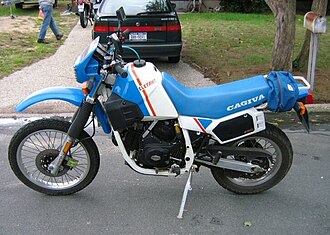
The Cagiva Elefant 650 and the Birth of a Distinctive Adventure Motorcycle
The Cagiva Elefant 650 is one of those motorcycles that perfectly captures the character of Italian engineering during the 1980s: bold, mechanically distinctive, visually unconventional, and designed for riders who wanted more than a machine built exclusively for paved roads. Introduced in the mid-1980s, the Elefant 650 arrived at a time when manufacturers were exploring new possibilities in the growing dual-purpose and adventure-touring categories. Riders were increasingly interested in motorcycles that could cover long distances comfortably, deal with imperfect roads, and provide enough off-road capability to make remote destinations accessible. Rather than following the traditional formula of a lightweight, single-cylinder enduro motorcycle, Cagiva took a different approach by combining an adventure-oriented chassis with a powerful 649 cc Ducati-derived V-twin engine. The result was a motorcycle that looked ready for exploration but retained the performance, sound, and mechanical personality associated with Italian road machines.
What makes the Cagiva Elefant 650 particularly interesting is that it was not simply an early attempt at building a modern adventure motorcycle. It represented a different interpretation of the concept, one in which road performance, long-distance comfort, and the ability to travel beyond smooth asphalt were combined without making extreme off-road performance the primary objective. Its tall stance, large front wheel, substantial frame, and distinctive twin-cylinder engine gave it a presence that separated it from many contemporary dual-sport motorcycles. At the same time, its weight and dimensions made it a more demanding machine than smaller trail bikes, especially when the road became rough or technical. This combination of strengths and compromises is a significant part of its appeal today. The Elefant 650 was not designed to be the easiest motorcycle for every rider, but it offered a compelling alternative for those who valued versatility, mechanical character, and the freedom to travel across different types of terrain.
The model also occupies an important place in Cagiva’s history because it illustrates the company’s willingness to experiment with engine configurations and compete against established manufacturers in a developing market. The Ducati connection gave the Elefant a technical identity that distinguished it from conventional Japanese adventure-oriented motorcycles, while its overall design reflected the growing influence of rally raids and long-distance off-road competition. Decades later, the Cagiva Elefant 650 remains an intriguing classic for motorcycle enthusiasts interested in Italian engineering, Ducati-powered machines, and the early evolution of adventure touring. Its significance lies not only in its specifications but also in the way it brought together several different motorcycling traditions in one distinctive package.
The History of the Cagiva Elefant 650
Cagiva’s Ambitions During the 1980s
Cagiva began as an Italian industrial company before expanding into motorcycle manufacturing and developing its own identity in a competitive European market. During the 1980s, the company pursued an ambitious strategy that combined Italian styling, sporting engineering, and an interest in emerging motorcycle categories. Adventure-oriented motorcycles were becoming increasingly attractive because they offered a practical alternative to conventional touring bikes while retaining the rugged appearance and versatility associated with off-road machines. Manufacturers were beginning to recognize that many riders did not necessarily want a specialist competition enduro; they wanted a motorcycle capable of commuting during the week, touring on weekends, and exploring unpaved roads whenever the opportunity arose. Cagiva saw an opportunity in this developing market and introduced the Elefant family as part of its effort to establish a distinctive position in the segment.
The Elefant name was particularly appropriate for a motorcycle designed around substantial dimensions and a strong visual presence. Its upright proportions, tall suspension, and large front wheel communicated a sense of adventure, while its engine choice immediately separated it from the single-cylinder machines that dominated much of the traditional enduro market. Cagiva was not attempting to build a small, lightweight trail motorcycle that could be thrown around narrow woodland paths with minimal effort. Instead, the company created a larger, more powerful dual-purpose machine intended to cover ground efficiently, provide confident road performance, and handle gravel roads and less demanding off-road routes. This philosophy made the Elefant an interesting alternative to motorcycles such as the BMW R80 G/S and contemporary large-displacement trail bikes, even though each model approached the adventure concept differently.
The Ducati Connection
One of the defining characteristics of the Cagiva Elefant 650 was its use of a Ducati-derived 649 cc, 90-degree V-twin engine from the Pantah family. The relationship between Cagiva and Ducati was especially important during this period, as the two Italian motorcycle manufacturers were becoming increasingly connected through corporate ownership and engineering. The Ducati engine brought a level of technical sophistication and personality that was unusual among adventure-oriented motorcycles of the era. Instead of relying on a large single-cylinder engine, the Elefant used two cylinders arranged in an L configuration, giving it a distinctive sound, a different power delivery, and the kind of mechanical identity that enthusiasts often associate with Italian motorcycles.
The engine’s desmodromic valve system was another important part of its character. In a conventional valve arrangement, springs close the valves after the camshaft opens them. Ducati’s desmodromic system uses mechanical actuation to control both the opening and closing of the valves, making it one of the company’s most recognizable engineering features. The Elefant’s air-cooled engine also used a single overhead camshaft per cylinder head and two valves per cylinder, combining relatively straightforward architecture with a distinctive Italian design philosophy. The engine was not tuned solely for low-speed trail riding. It delivered useful torque across the rev range while retaining the ability to produce stronger performance at higher engine speeds, making it well suited to a motorcycle expected to spend substantial time on paved roads.
This engine choice gave the Elefant 650 a different personality from many competing machines. Large single-cylinder motorcycles often deliver a strong, direct pulse of torque and relatively simple mechanical construction, but a V-twin can provide a different balance of smoothness, power delivery, and high-speed cruising ability. The Ducati-derived engine gave the Cagiva an unmistakable character, although its size and mass also influenced the motorcycle’s overall dimensions and handling. The Elefant was therefore a product of compromise in the best sense of the word: it combined the qualities Cagiva wanted with the practical consequences of fitting a substantial twin-cylinder engine into an adventure-oriented chassis.
The Early Elefant and Its Place in Motorcycle History
The Cagiva Elefant 650 appeared in the middle of the 1980s, with early examples commonly associated with the 1985 and 1986 model years and related versions appearing in subsequent listings depending on the market. The motorcycle belonged to a transitional period in which adventure touring had not yet become the highly standardized category it is today. Manufacturers were still experimenting with engine layouts, wheel sizes, suspension designs, and bodywork, and there was no single formula that defined the ideal adventure motorcycle. Some models prioritized lightweight off-road ability, others emphasized touring comfort, and a third group attempted to combine these characteristics in larger, more road-oriented machines.
The Elefant 650 was firmly part of this experimental period. Its large engine, long chassis, tall seat, and substantial weight made it more suitable for open roads and flowing gravel tracks than for highly technical terrain. However, these same qualities helped make it an appealing long-distance motorcycle for riders who wanted something more distinctive than a conventional road tourer. Its place in history is therefore not based on being the lightest, fastest, or most capable off-road motorcycle of its era. Instead, it demonstrated that an adventure-oriented machine could use a sophisticated Italian twin-cylinder engine and deliver a broader riding experience than a specialist trail bike. That idea would become increasingly important as the adventure motorcycle market developed in the years that followed.
Engine and Mechanical Design
The 649 cc Ducati-Derived V-Twin
At the heart of the Cagiva Elefant 650 is a 649 cc, four-stroke, air-cooled, 90-degree V-twin engine with desmodromic valve actuation. The commonly listed bore and stroke dimensions are approximately 82 mm and 61.5 mm respectively, producing an engine that balances a relatively large bore with a shorter stroke. The configuration belongs to the Ducati Pantah engine family, a design lineage known for its belt-driven overhead camshafts and distinctive valve-control system. In the Elefant, this architecture gave the motorcycle a combination of usable midrange performance and the ability to rev more freely than many large single-cylinder alternatives. It also created a distinctive mechanical sound and vibration pattern that contributed substantially to the bike’s personality.
The engine’s air-cooling system reflects the engineering priorities of the period. Without a liquid-cooling circuit, radiator, coolant hoses, or associated components, the design avoids some of the additional complexity found on modern motorcycles. However, air-cooled engines depend more heavily on airflow, ambient conditions, correct mixture settings, and suitable maintenance to control operating temperatures. On a motorcycle intended for both road use and occasional off-road riding, this makes sensible operating habits particularly important. Extended periods at low speed in hot conditions can create a different thermal environment from steady cruising on open roads, so owners of surviving examples should pay attention to the condition of the cooling fins, lubrication system, and carburetion.
The engine’s twin-cylinder layout also has practical consequences for packaging and maintenance. Compared with a large single, a V-twin requires more space and introduces additional components, but it offers a different balance of smoothness and performance. Its character is particularly attractive when the motorcycle is used for mixed riding, because the engine can provide relaxed progress at moderate speeds while retaining enough power for overtaking and faster road sections. The Elefant 650 is not a modern high-output adventure motorcycle, but its engine was a serious and distinctive choice for a mid-1980s dual-purpose machine.
Desmodromic Valve Actuation and Belt-Driven Camshafts
Desmodromic valve actuation is one of the most recognizable aspects of Ducati engineering, and it gives the Cagiva Elefant 650 a direct connection to the Italian manufacturer’s sporting heritage. Rather than relying entirely on valve springs to close the valves, the desmodromic arrangement uses dedicated mechanical components to control both opening and closing. This system has long been associated with Ducati’s approach to engine design and helps distinguish the Elefant from many motorcycles using more conventional valve mechanisms. For an owner or enthusiast, it is an important part of the machine’s historical appeal, although it also means that correct adjustment and knowledgeable maintenance are essential to preserving the engine’s intended operation.
The engine also uses toothed belts to drive the overhead camshafts, another characteristic of the Ducati Pantah family. Belt-driven camshafts differ from the chain-driven systems commonly found in many other motorcycle engines and require attention to belt condition, age, tension, and replacement intervals. On a classic motorcycle, this is especially important because a machine may have covered relatively few kilometres while still carrying old rubber components. A seller’s claim that a motorcycle has been ridden very little should never replace documented evidence of appropriate servicing. Prospective owners should establish when the belts were last replaced, whether the valve clearances were checked, and whether the engine has a reliable maintenance history.
These mechanical features give the Elefant a strong identity, but they also explain why ownership requires more consideration than simply buying an inexpensive old motorcycle and riding it without preparation. A well-maintained example can provide a rewarding combination of traditional engineering and engaging performance. A neglected example, on the other hand, may require specialist work before it becomes dependable. The most sensible approach is to treat the engine as a piece of classic Italian engineering that deserves informed maintenance rather than assuming that its age and relatively simple air-cooled construction make it maintenance-free.
Power Delivery and Riding Character
Published specifications for the Elefant 650 commonly place maximum output at around 50 horsepower at approximately 8,400 rpm, although figures vary among sources and model versions. Some references list different output measurements, so individual figures should be interpreted in the context of the exact year and specification. Regardless of the precise number, the important point is that the engine was powerful for a large dual-purpose motorcycle of its time and offered a broader performance range than many single-cylinder rivals. The bike could accelerate briskly when the engine was allowed to work through its rev range, while its twin-cylinder configuration also suited more relaxed cruising.
The engine’s personality is one of the reasons the Elefant remains interesting to enthusiasts. It does not behave like a modern electronically managed adventure motorcycle with multiple riding modes, traction control, and highly refined fuel injection. Instead, throttle response and power delivery are shaped by carburetion, mechanical condition, engine temperature, and the rider’s control inputs. A properly maintained example can feel lively and responsive, but the experience is more mechanical and direct than that of a contemporary touring machine. This is part of the appeal for classic motorcycle riders, who often value the connection between engine, gearbox, chassis, and rider as much as outright performance.
For everyday riding, the engine’s versatility is more significant than its peak output. A motorcycle in this category needs to move confidently through traffic, accelerate when entering faster roads, and maintain a comfortable pace over longer distances. The Elefant 650 was developed with those requirements in mind, although its weight and dimensions mean it should not be confused with a lightweight enduro. Its strongest qualities emerge when the rider understands its size, uses the engine smoothly, and chooses terrain that suits the motorcycle’s design.
Chassis, Suspension, and Braking
A Substantial Steel Frame
The Cagiva Elefant 650 uses a steel frame designed to support a large twin-cylinder engine and provide the structural strength required for a motorcycle intended to travel over a mixture of paved and unpaved surfaces. Its overall proportions are notably substantial, with a long wheelbase and a tall riding position that give it a purposeful appearance. Contemporary test reporting described the motorcycle as a large and heavy dual-purpose machine rather than a lightweight dirt bike, an assessment that remains useful when considering its intended role. The design favors stability and confidence on open roads over the rapid direction changes associated with much smaller off-road motorcycles.
The frame’s dimensions also help explain the Elefant’s behavior at low speeds. A tall seat, considerable mass, and a relatively high center of gravity can make a large motorcycle feel intimidating when maneuvering through a parking area, turning around on a narrow road, or placing a foot down on uneven ground. Riders accustomed to lighter enduro motorcycles may find that the Elefant requires more planning and deliberate inputs. Once moving, however, its size can become an advantage on appropriate surfaces, helping the motorcycle feel settled on sweeping roads and long gravel sections. As with many motorcycles from this era, the key is understanding the relationship between chassis geometry, suspension setup, rider experience, and the terrain being covered.
Front and Rear Suspension
The front suspension is commonly described as a pair of approximately 42 mm telescopic forks, with some sources listing air adjustment and front travel of roughly 229 mm. This arrangement reflects the period’s interest in giving large trail motorcycles enough suspension movement to cope with rough roads and occasional off-road use without sacrificing all-road stability. The long-travel front end provides useful capacity for absorbing uneven surfaces, but its actual performance on a surviving example depends heavily on the condition of the fork seals, internal components, oil, springs, and bushings. A motorcycle that appears complete and original may still require suspension servicing before it can deliver predictable handling.
At the rear, the Elefant uses a swingarm and a single shock absorber, with adjustment features depending on the version and fitted equipment. The rear suspension is intended to accommodate the demands of a relatively heavy motorcycle, including luggage and changes in road surface. As with the front forks, age can significantly affect its behavior. A worn shock absorber may allow excessive movement, reduce stability over repeated bumps, and make the motorcycle less confidence-inspiring when carrying additional weight. Riders considering a long-distance trip on a classic Elefant should therefore evaluate the suspension as a functional system rather than judging it solely by appearance or originality.
The overall suspension package suits the motorcycle’s mixed-use mission, but it should not be interpreted as evidence that the Elefant is a modern enduro in disguise. Its weight and chassis proportions place clear limits on how quickly it can be handled over technical trails. It is better understood as a road-capable adventure motorcycle that can make sensible use of gravel roads, country tracks, and rougher routes when the rider exercises appropriate judgment.
Braking System and Wheels
Specifications for the Cagiva Elefant 650 commonly describe a 21-inch front wheel and a 17-inch rear wheel, a combination that became strongly associated with trail and adventure motorcycles. The large front wheel helps the motorcycle negotiate uneven surfaces and small obstacles more naturally than a smaller road-oriented wheel, while the rear wheel supports the balance between road handling and the availability of suitable tyres. Exact tyre specifications can vary among references and markets, so owners should verify the correct sizes and approved alternatives for their particular model rather than relying exclusively on generic online listings.
The braking equipment requires particular care when assessing different versions of the Elefant 650. Some commonly published specifications describe a 260 mm front disc and a 240 mm rear disc, while other references record different rear-brake arrangements for particular model years or versions. This variation is a reminder that classic motorcycle specifications should not be treated as identical across every production example. Before purchasing replacement parts, confirm the installed components and the exact model specification. On an older motorcycle, brake performance also depends on the condition of discs, calipers, master cylinders, hoses, seals, pads, and fluid, all of which may require attention regardless of the bike’s mileage.
Modern braking systems offer clear advantages in consistency and control, but the Elefant’s original equipment must be evaluated in the context of the 1980s. A properly maintained motorcycle can still be enjoyable and predictable, yet it does not provide the electronic assistance or advanced braking technology found on contemporary adventure machines. Riders should leave adequate stopping distances, especially when carrying luggage or riding on loose surfaces, and should ensure that every part of the braking system is in sound condition before using the motorcycle regularly.
Design and Ergonomics
The Tall and Purposeful Adventure Profile
The visual identity of the Cagiva Elefant 650 is built around height, length, and a distinctive mixture of road-bike and trail-bike proportions. Its large front wheel, high stance, protective bodywork, and upright riding position communicate a clear intention to explore beyond the city and the highway. Although it lacks the elaborate aerodynamic fairings and electronic equipment associated with later adventure motorcycles, its silhouette already contains many of the characteristics that would become familiar in the segment. The Elefant looks practical rather than delicate, and its design gives it a rugged appearance without completely abandoning the visual language of Italian sporting motorcycles.
The motorcycle’s styling also reflects the era in which it was developed. During the 1980s, manufacturers were experimenting with the relationship between function and appearance, and trail motorcycles increasingly adopted more substantial bodywork and larger engines. The Elefant’s proportions were a consequence of genuine engineering decisions, particularly the need to accommodate the Ducati-derived twin-cylinder powerplant. Rather than concealing this fact, the motorcycle’s design makes its size part of its identity. That visual confidence is one reason the Elefant continues to attract attention among classic motorcycle enthusiasts, especially those who appreciate machines that do not resemble contemporary mass-market designs.
Riding Position and Seat Height
The Elefant’s upright ergonomics are intended to give the rider a commanding view of the road and enough freedom of movement to handle changing surfaces. Its tall seat is one of the most important practical considerations, with period test reporting listing a seat height of approximately 34.5 inches, while other specifications give figures closer to 905 mm. These measurements are broadly consistent with a tall motorcycle, although exact values can differ by source, model version, suspension condition, and measurement method. For taller riders, the position can feel natural and spacious, while shorter riders may struggle to place both feet securely on the ground at a stop.
Seat height matters particularly on a motorcycle with substantial mass. The challenge is not simply reaching the ground but managing the bike’s balance when stopping on sloping roads, turning on uneven gravel, or maneuvering with luggage. Prospective owners should ideally sit on the motorcycle and assess their ability to move it confidently before making a purchase. Lowering the suspension may appear to be an easy solution, but poorly chosen modifications can reduce ground clearance, change steering geometry, and compromise the suspension’s intended operation. A careful setup suited to the rider is preferable to modifications made without understanding their consequences.
Comfort on Longer Journeys
The Elefant 650 was designed to do more than travel short distances between trails. Its engine and chassis make it capable of covering significant distances on paved roads, while its suspension and riding position help it cope with imperfect surfaces that would be uncomfortable on a low-slung road motorcycle. The ability to move from urban streets to open highways and then onto a gravel road is central to its appeal. A rider can use the machine for a broad range of journeys without needing to transport a dedicated off-road motorcycle or accept the limited road performance of a specialist competition enduro.
However, comfort on a classic motorcycle is strongly influenced by individual condition and setup. Seat foam can deteriorate over decades, suspension components can lose their effectiveness, and engine vibration may become more noticeable when the motorcycle is not operating correctly. Wind protection is also more limited than on many modern touring machines, and luggage capacity depends on the racks and accessories fitted to the individual example. The Elefant is best regarded as a versatile classic tourer rather than a luxury touring motorcycle. With suitable maintenance, a well-prepared example can make rewarding journeys, but long-distance plans should include realistic expectations about comfort, servicing, and the availability of parts.
Riding the Cagiva Elefant 650
On Paved Roads
On paved roads, the Cagiva Elefant 650 makes the most of its twin-cylinder engine and substantial chassis. The engine offers enough performance to keep pace with traffic and undertake overtaking maneuvers when used appropriately, while the long wheelbase contributes to a stable feel on flowing roads. Its riding position provides a broad view of surrounding traffic, and the motorcycle’s suspension gives it the ability to cope with damaged asphalt, potholes, and uneven country roads. These characteristics make it an appealing machine for riders who enjoy exploring secondary roads rather than concentrating exclusively on high-speed highway travel.
The motorcycle’s weight is more noticeable during slow maneuvers and quick changes of direction than during steady cruising. A rider cannot expect the same immediate response from the Elefant that would be available from a smaller single-cylinder dual-sport machine. Instead, the bike rewards smooth steering inputs, good observation, and anticipation. Once the rider adapts to its dimensions, the combination of engine character and road stability can become one of its strongest qualities. The Elefant is not intended to feel like a lightweight sports motorcycle, but its performance and handling give it enough versatility to make ordinary road journeys engaging.
On Gravel and Unpaved Roads
The Elefant’s 21-inch front wheel, long-travel suspension, upright position, and rugged construction allow it to tackle gravel roads and reasonably smooth unpaved tracks with more confidence than a conventional road motorcycle. Its large front wheel is helpful when crossing shallow ruts and uneven surfaces, while the suspension can absorb moderate irregularities when correctly maintained. For riders who enjoy scenic back roads, rural routes, and exploratory journeys that include sections of loose gravel, these characteristics can significantly expand the range of destinations available to them.
Nevertheless, the Elefant’s mass is a major limitation when terrain becomes difficult. Deep sand, muddy tracks, steep rocky climbs, and tight technical trails demand more effort and experience than the motorcycle’s adventurous appearance might suggest. A heavy machine can become difficult to recover after a fall, particularly on a slope or in soft ground, and its substantial engine can make low-speed balance more demanding. The most rewarding approach is to choose terrain that matches the bike’s strengths rather than attempting to turn it into a specialist enduro. The Elefant is a capable exploratory motorcycle when used thoughtfully, but it is not a substitute for a lightweight off-road machine.
Highway Touring and Everyday Use
The Cagiva Elefant 650 can serve as a practical classic for riders who want to combine weekend touring with occasional everyday use. Its engine has sufficient power for normal road travel, and its upright riding position provides a useful view in traffic. The chassis is suited to covering distance, while the motorcycle’s distinctive appearance and engine character make even ordinary journeys feel different from riding a modern commuter. For enthusiasts who enjoy the process of operating and maintaining a classic motorcycle, the Elefant can offer a rewarding connection to a period when manufacturers were still exploring the possibilities of the adventure-touring concept.
Everyday ownership, however, involves compromises. Fuel economy depends on mechanical condition, carburetor adjustment, riding style, and the type of roads being used. Older electrical systems and mechanical components may require periodic attention, and parts availability can be less predictable than for current motorcycles. Long highway journeys also expose the rider to wind and weather more directly than on a fully faired touring machine. The Elefant therefore makes the most sense for someone who values its character and is prepared to accept the practical demands of an older motorcycle. It can be used regularly, but it should not be purchased under the assumption that age, originality, or relatively modest power automatically make ownership inexpensive or effortless.
Cagiva Elefant 650 Compared With Its Rivals
The BMW R80 G/S
The BMW R80 G/S is one of the most relevant comparisons for understanding the Elefant 650’s place in the 1980s motorcycle market. Both motorcycles combined road-going capability with an appetite for unpaved travel, and both occupied a space between conventional touring motorcycles and specialist off-road machines. However, their engineering approaches were different. BMW used a horizontally opposed boxer twin, while the Cagiva relied on a Ducati-derived 90-degree V-twin. This difference influenced engine packaging, overall character, and the way each motorcycle delivered its power.
The BMW became especially influential in the development of the adventure-touring category, while the Cagiva offered an alternative with a more explicitly Italian sporting identity. Neither motorcycle was a lightweight dirt bike, and both required riders to understand the limits imposed by their dimensions and weight. For enthusiasts comparing the two today, the decision often comes down to mechanical preference, condition, parts access, and the type of riding experience they want. The Elefant offers the attraction of Ducati-derived desmodromic engineering, while the BMW appeals to riders drawn to the boxer engine and the extensive historical significance of the GS family.
Japanese Dual-Purpose Motorcycles
Japanese dual-purpose motorcycles of the same period often relied on large single-cylinder engines and placed greater emphasis on simplicity, relatively low mass, and straightforward trail riding. Models from manufacturers such as Honda and Yamaha provided alternatives for riders who wanted a capable motorcycle for both paved roads and unpaved terrain. Compared with many of these machines, the Elefant 650 offered a more unusual engine configuration and a distinctive approach to road performance. Its twin-cylinder engine made it feel closer to a touring-oriented motorcycle in some respects, while its tall stance and large front wheel retained the visual and functional qualities of a trail bike.
The trade-off was that the Cagiva was heavier and more physically demanding than many smaller dual-purpose motorcycles. On narrow, technical trails, a lightweight single-cylinder machine can be easier to balance, recover, and maneuver. On faster roads, however, the Elefant’s twin-cylinder layout and substantial chassis can provide a different kind of confidence and flexibility. The better motorcycle therefore depends on the rider’s priorities. Someone who spends most of their time on difficult trails may prefer a lighter alternative, while a rider who values road performance, distinctive engineering, and the ability to explore gravel routes may find the Elefant more appealing.
Why the Elefant Still Stands Out
The Cagiva Elefant 650 remains distinctive because it did not simply reproduce the formula used by its rivals. Its Ducati-derived engine, desmodromic valve system, tall proportions, and substantial road-oriented chassis gave it a recognizable identity. The motorcycle belongs to a generation of machines that helped establish the idea that adventure riding could be about travel and exploration rather than competition alone. Its character is inseparable from its compromises, but those compromises also make it an interesting example of motorcycle development during a period of rapid experimentation.
Today, its appeal is less about outperforming modern motorcycles and more about offering an experience that feels mechanically direct and historically specific. The Elefant represents a time when manufacturers were finding their own answers to the question of what an adventure motorcycle should be. For collectors, classic motorcycle enthusiasts, and riders who appreciate unusual engineering choices, that individuality can be more compelling than a long list of modern electronic features.
Buying a Used Cagiva Elefant 650
Overall Condition and Documentation
Buying a Cagiva Elefant 650 requires careful evaluation because age, maintenance history, and previous repairs can have a greater influence on reliability than the model’s published specifications. A motorcycle that has been regularly serviced and stored correctly may be a far better purchase than a cheaper example that has spent years outdoors or has been modified without proper documentation. Before committing to a purchase, inspect the frame for signs of damage or poor repairs, examine the wheels and suspension for wear, and check that the steering and swingarm move smoothly without excessive play. Evidence of a fall, corrosion in structural areas, or inconsistent workmanship deserves careful investigation.
Documentation is particularly valuable for a classic Italian motorcycle. Service receipts, previous ownership records, registration documents, and evidence of major maintenance can help establish whether the bike has been looked after. Originality can be desirable to collectors, but it should not automatically outweigh mechanical condition. A well-documented motorcycle with sympathetic repairs and correctly maintained components may be a more sensible purchase than a cosmetically immaculate example with unknown mechanical history. If the bike has been unused for an extended period, budget for a comprehensive inspection and recommissioning rather than assuming that it is ready for the road.
Engine, Belts, and Valve Maintenance
The engine deserves special attention because its distinctive construction requires appropriate servicing. Ask when the timing belts were last replaced and whether the valve clearances have been checked by someone familiar with Ducati-derived desmodromic engines. Inspect for oil leaks, unusual mechanical noises, poor starting behavior, irregular idle, and signs that the carburetors need cleaning or adjustment. A cold start can reveal useful information about the engine’s condition, although one successful start is not proof of overall reliability. If possible, arrange for a knowledgeable mechanic to inspect the motorcycle before purchase and assess the engine’s operation once it reaches normal temperature.
The timing belts are especially important because age and storage conditions can affect rubber components even when mileage is low. If there is no reliable evidence of recent replacement, include the work in the purchase budget. The same principle applies to fuel lines, seals, hoses, and other aging components. Correct maintenance may appear expensive relative to the value of an older motorcycle, but neglect can create more substantial costs later. A realistic ownership plan includes preventive servicing before major trips, especially when the motorcycle is expected to cover long distances away from home.
Carburetors, Clutch, Gearbox, and Electrical System
The original carburetion system should be inspected for leaks, worn components, blocked passages, and signs of poor adjustment. Uneven running, hesitation, hanging idle, or excessive fuel consumption can indicate problems that require more than a quick adjustment. Check throttle operation carefully and ensure that the controls return freely. Period road testing reported clutch and throttle concerns on some examples, which makes these components particularly sensible areas to inspect, although individual motorcycles may have been repaired or updated during their lives. A test ride should reveal whether the clutch disengages cleanly, whether neutral can be selected without excessive difficulty, and whether the gearbox shifts predictably through all gears.
The electrical system also merits close attention. Examine the battery, charging system, wiring connectors, switches, lighting, and ignition components, looking for corrosion, improvised connections, or evidence of poorly executed modifications. Older motorcycles can develop electrical problems through age alone, and previous owners may have introduced additional issues while trying to repair them. Verify that all lights and instruments operate correctly and that the battery remains charged during normal operation. Before purchasing, it is sensible to identify local specialists and parts suppliers who understand older Cagiva and Ducati-based machines. Access to informed technical support can make a considerable difference to the long-term enjoyment of ownership.
Parts Availability and Ownership Costs
The cost of owning a Cagiva Elefant 650 cannot be judged from the purchase price alone. Routine service items may be manageable, but specific bodywork, original components, and model-dependent parts can be more difficult to source than parts for common modern motorcycles. Some components may be shared with other machines or available through specialist suppliers, while others may require patience, refurbishment, or careful searching among classic motorcycle communities. Availability can also vary significantly by country, so prospective owners should investigate the market in their region before buying.
A sensible budget should include an initial mechanical inspection, overdue maintenance, tyres, brake servicing, suspension work where necessary, and a reserve for unexpected repairs. If originality matters, restoration costs may be considerably higher than the cost of making the motorcycle safe and dependable for regular use. The best purchase is usually an example with sound structure, a healthy engine, and a clear maintenance history, even if its cosmetics are not perfect. The Elefant rewards informed ownership, and a careful assessment before purchase can help ensure that its distinctive engineering remains a source of enjoyment rather than a recurring financial burden.
Maintaining a Classic Cagiva Elefant 650
Preventive Maintenance and Regular Inspection
Regular maintenance is central to keeping an older Elefant dependable. Owners should follow the correct service information for their exact version, paying attention to engine oil, valve clearances, timing belts, carburetor condition, ignition components, and the overall health of the lubrication system. The motorcycle should also be checked for deteriorating hoses, cracked rubber parts, loose fasteners, corroded connectors, and leaks that may have developed during storage. Because the bike combines classic engine technology with a relatively substantial chassis, it is important to consider the motorcycle as a complete system rather than concentrating only on the engine.
Before long trips, inspect the tyres, brakes, chain, wheel bearings, suspension, steering head, lighting, and battery. Tyres can become unsuitable through age even when tread depth appears adequate, and brake fluid or rubber hoses may require replacement because of deterioration. Chain tension and lubrication should be checked according to the correct service guidance, while the wheel and steering bearings should be examined for excessive play or roughness. These basic checks are particularly important when travelling on remote roads, where even a relatively small mechanical problem can disrupt a journey.
Storage and Seasonal Use
Storage conditions can have a major effect on the condition of a classic motorcycle. Whenever possible, keep the Elefant in a dry, well-ventilated location and protect it from prolonged exposure to moisture. If the motorcycle is stored for an extended period, follow appropriate procedures for fuel, battery care, tyre loading, and corrosion prevention. Fuel systems should not be left in a condition that encourages deposits to form, and the battery should be maintained using suitable equipment. When returning the motorcycle to service after months of inactivity, inspect it thoroughly rather than assuming that previous mechanical condition has been preserved.
Seasonal use also provides an opportunity to plan maintenance before problems become urgent. Replacing aging components, checking adjustment, and documenting work can make the motorcycle more dependable and preserve its history for future owners. For collectors, a detailed maintenance record can also help distinguish a carefully maintained example from a machine that has merely received cosmetic attention. The Elefant is old enough that preservation and regular mechanical care are now essential parts of responsible ownership.
Is the Cagiva Elefant 650 Worth Buying Today?
The Cagiva Elefant 650 can be an excellent choice for the right enthusiast, but its appeal depends on realistic expectations. It offers an unusual combination of Italian design, Ducati-derived engineering, an air-cooled desmodromic V-twin, and adventure-oriented proportions. These qualities make it far more distinctive than many ordinary motorcycles from the same period, and they give it a strong historical identity among early adventure-tourers. For someone who enjoys classic motorcycles and wants a machine that can travel on roads while exploring suitable gravel routes, the Elefant has a great deal to offer.
It is less suitable for a rider who wants a lightweight off-road motorcycle, inexpensive routine ownership, or the refinement and electronic assistance of a modern adventure bike. Its size can make difficult terrain physically demanding, and its age means that mechanical condition and parts availability must be taken seriously. Buyers should be prepared to learn about the engine, plan preventive maintenance, and seek specialist help when necessary. The motorcycle’s character is part of the attraction, but that character should not be mistaken for freedom from practical limitations.
For collectors, the Elefant 650 offers an opportunity to own a motorcycle that represents a particularly interesting stage in Cagiva’s development and the evolution of adventure touring. For riders, it offers a more direct and mechanically engaging experience than most current machines. Whether it makes sense as a purchase ultimately depends on condition, budget, intended use, and the availability of support in the owner’s region. A well-maintained example bought with clear expectations can provide years of satisfying classic motorcycling, while a neglected motorcycle may demand substantial work before it can deliver the experience its reputation suggests.
Technical Specifications of the Cagiva Elefant 650
The following table summarizes commonly published specifications for the mid-1980s Cagiva Elefant 650. Exact details can vary by production year, market, and version, and some historical reference sources disagree about output, weight, braking equipment, and individual components. The figures below should therefore be treated as a useful general reference rather than a definitive specification for every surviving motorcycle.
| Specification | Cagiva Elefant 650 |
|---|---|
| Manufacturer | Cagiva, Italy |
| Model period | Mid-1980s; commonly listed as 1985–1986, with related versions in later listings |
| Motorcycle category | Dual-purpose / enduro / adventure touring |
| Engine type | Four-stroke, 90-degree L-twin / V-twin |
| Engine origin | Ducati Pantah family |
| Displacement | 649 cc (approximately 649.5 cc in some references) |
| Cooling system | Air-cooled |
| Valve system | Desmodromic |
| Camshaft arrangement | SOHC, belt-driven camshafts |
| Valves | 2 per cylinder, 4 total |
| Bore × stroke | 82 × 61.5 mm |
| Compression ratio | Approximately 10:1 |
| Fuel system | Two Dell’Orto carburetors, commonly listed as 36 mm |
| Maximum power | Approximately 50 hp / 36.5–37 kW at 8,400 rpm; figures vary by source and version |
| Maximum torque | Approximately 54 Nm at 6,200 rpm in some published specifications |
| Transmission | 5-speed manual |
| Final drive | Chain |
| Frame | Steel |
| Front suspension | Telescopic forks, commonly listed at approximately 42 mm |
| Rear suspension | Swingarm with single shock absorber |
| Front brake | Commonly listed as a 260 mm disc |
| Rear brake | Version-dependent; references list a 240 mm disc or a drum on some specifications |
| Front wheel | 21-inch |
| Rear wheel | 17-inch |
| Fuel tank capacity | Approximately 17.5–18 litres, depending on version |
| Dry weight | Approximately 191 kg in several references |
| Wet / ready-to-ride weight | Approximately 208 kg in several references |
| Seat height | Approximately 875–905 mm, depending on source and version |
| Wheelbase | Approximately 1,520–1,535 mm |
| Published maximum speed | Approximately 168–175 km/h, depending on source and version |
| Starting system | Electric starter; kick-start provision listed for some versions |
Conclusion: An Italian Adventure Motorcycle With Lasting Character
The Cagiva Elefant 650 is an important example of how motorcycle manufacturers approached adventure riding before the category became as standardized as it is today. Its combination of a Ducati-derived 649 cc V-twin, desmodromic valve actuation, tall suspension, large front wheel, and substantial chassis gave it a personality unlike that of many contemporary dual-purpose motorcycles. It was capable of comfortable road travel, spirited performance, and exploration on appropriate unpaved routes, while its weight and dimensions made it less suited to demanding technical off-road riding. Rather than hiding these compromises, the Elefant’s character emerges from the way its different qualities work together.
For modern enthusiasts, the motorcycle’s attraction is both mechanical and historical. It recalls a period when Italian manufacturers were experimenting with new combinations of sporting engines and adventure-oriented chassis, creating machines that were distinctive even when they did not follow the most obvious formula. The Elefant 650 is not the right motorcycle for every rider, and a surviving example deserves careful inspection and informed maintenance. Yet for someone who appreciates classic Italian engineering and wants a machine with genuine personality, it remains a compelling piece of motorcycling history. Its lasting appeal comes from the experience it offers: a direct connection to the road, a distinctive engine, and the freedom to take the longer route whenever the opportunity arises.
