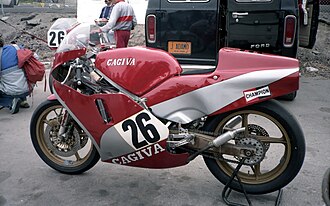
Understanding the Cagiva C10
The name Cagiva C10 is associated with two different chapters in the history of Italian motorcycling: the ambitious Cagiva Grand Prix racing machine developed during the 1980s and the road-going Cagiva Freccia C10R, a fully faired 125 cc sports motorcycle from the same era. Although they belong to different categories, both reflect the engineering ambition, distinctive styling, and competitive spirit that made Cagiva an important name among European motorcycle manufacturers. For enthusiasts researching the Cagiva C10, distinguishing between these machines is essential, because their engines, purposes, technical specifications, and historical roles are not interchangeable.
Cagiva entered the motorcycle industry in the late 1970s and steadily built a reputation for combining Italian design with a willingness to challenge established manufacturers. Rather than limiting itself to practical commuter motorcycles, the company pursued off-road competition, sporty small-capacity road bikes, and the demanding world of Grand Prix racing. This approach gave the brand a distinctive identity: Cagiva motorcycles often looked dramatic, featured unconventional engineering solutions, and aimed to offer more character than their engine capacity alone might suggest. The C10 name belongs to that period of experimentation, when racing development and the market for high-performance 125 cc motorcycles were both moving forward rapidly.
It is worth clarifying the terminology at the outset. In Grand Prix history, the Cagiva C10 was a 500 cc-class racing prototype associated with the company’s mid-1980s effort to compete in the premier class of motorcycle road racing. In the road-bike world, the Cagiva Freccia C10R was a 125 cc two-stroke sports motorcycle introduced as an evolution of the earlier Freccia C9. The following article explores both interpretations, explains their respective importance, and presents a separate technical-specification summary for each so that the two models are not confused.
The History of Cagiva and Its Racing Ambitions
From an Italian manufacturer to a racing challenger
Cagiva’s rise took place during a period when European motorcycle manufacturers were competing with powerful Japanese brands that had substantial engineering resources and extensive racing experience. The Italian company, founded by the Castiglioni family, built its identity around design, technical experimentation, and sporting ambition. Racing was more than a marketing exercise: it offered a way to test engineering ideas under demanding conditions, attract skilled riders and technicians, and demonstrate that a relatively smaller manufacturer could challenge better-funded competitors.
The 500 cc Grand Prix category was particularly difficult. The motorcycles were purpose-built racing machines, designed to deliver extreme performance over a race distance rather than to satisfy the requirements of ordinary road use. Their engines were highly stressed, their chassis needed to balance rigidity with feedback, and their performance demanded exceptional rider skill. For Cagiva, entering this environment meant taking on manufacturers with years of accumulated experience. The C10 was one of the machines developed during that early learning period, when the company was trying to turn ambitious engineering concepts into a consistently competitive racing package.
Why the C10 mattered in the Grand Prix programme
The Cagiva C10 represented an important step in the company’s development of a 500 cc Grand Prix motorcycle. Historical accounts describe the C10 as part of the evolution toward a more compact, modern V4 two-stroke configuration and an aluminium beam-style chassis influenced by the structural concepts then becoming increasingly important in high-performance racing. The programme required the company to solve several problems simultaneously: producing strong power from a small-displacement racing engine, managing the delivery of that power, keeping the motorcycle stable at high speed, and ensuring that the chassis remained predictable when riders accelerated hard or changed direction.
Those challenges were especially demanding in the 1980s, when two-stroke Grand Prix engines delivered their performance in a very different manner from modern four-stroke road engines. Power could arrive sharply as engine speed rose into the effective operating range, making throttle control and chassis balance crucial. A racing motorcycle could possess impressive peak output yet remain difficult to ride if the power delivery, suspension, tyres, and geometry were not working together. Cagiva’s development process therefore involved much more than increasing horsepower: the C10 and its successors formed part of a continuing effort to make the whole motorcycle faster, more reliable, and more manageable.
The Cagiva C10 Grand Prix Racing Motorcycle
Engine architecture and two-stroke performance
The Grand Prix C10 belongs to the world of specialist competition machinery rather than everyday transportation. Unlike the road-going Freccia, which used a single-cylinder 125 cc engine, the racing C10 was a 500 cc-class prototype designed around a high-performance two-stroke V4 engine. Historical descriptions of the early C10 identify a 90-degree V4 layout with two crankshafts, a technically ambitious configuration intended to meet the performance and packaging demands of top-level racing. Cagiva’s later development work changed engine layouts and supporting systems as the company searched for a more competitive combination of power, response, and reliability.
A V4 configuration offered the potential to produce substantial power within a relatively compact engine package, but it also created complex engineering demands. Crankshaft arrangement, intake design, exhaust tuning, ignition, cooling, and transmission characteristics all affected the way the motorcycle behaved on track. In a two-stroke racing engine, exhaust design was particularly important because the expansion chambers helped control the movement of exhaust gases and influenced the engine’s power characteristics. The result was a machine that required careful setup and specialist maintenance, with performance strongly dependent on engine condition and the precision of its mechanical systems.
It is important not to apply the specifications of a later Cagiva 500 GP machine to the C10 without qualification. The Grand Prix motorcycles evolved substantially from one season to the next, and a later engine’s output, weight, or configuration does not automatically describe the earlier prototype. Published historical summaries do not always present a complete, consistent factory specification for every C10 development version. For that reason, the technical summary below identifies the broad architecture and racing role rather than assigning an unsupported single horsepower figure to every version of the machine.
Chassis, handling, and rider demands
In Grand Prix racing, the chassis is as important as the engine. A powerful motorcycle must remain composed under acceleration, braking, and cornering, while communicating enough information for the rider to understand how much grip remains available. The C10’s development reflected the period’s movement toward modern racing-frame concepts, including the use of a lightweight alloy beam-style structure in the evolving Cagiva 500 cc programme. The design goal was to create a structure that combined strength with low mass and controlled flex, allowing the tyres to maintain contact with the track while the rider made rapid changes in direction.
Suspension and steering geometry also played essential roles. A racing motorcycle needs stability at high speed without becoming reluctant to turn, and it must cope with braking forces that transfer substantial load onto the front tyre. Too much rigidity can reduce feedback over an uneven surface, while too much movement can make the motorcycle vague when pushed hard. Engineers therefore have to balance steering angle, wheelbase, suspension settings, weight distribution, and frame behaviour. The C10 should be understood as part of this iterative development process, rather than as a finished design that immediately solved every problem facing Cagiva’s racing department.
The rider was central to this process. Test riders and Grand Prix competitors had to explain how the machine reacted under conditions that could not be fully reproduced on a workshop stand. Their feedback helped engineers identify whether a problem came from engine response, suspension setup, tyre behaviour, braking stability, or the relationship between these systems. As Cagiva accumulated experience, lessons from each race and test session informed subsequent prototypes. The importance of the C10 is therefore not measured solely by its results in a particular event, but also by its place in the technical progression that followed.
Cagiva’s Grand Prix Development During the 1980s
From experimentation to a more mature racing effort
Cagiva’s first years in the premier Grand Prix class were marked by experimentation and gradual learning. A new manufacturer entering the 500 cc category had to develop engines, chassis, electronics, workshop procedures, and race operations at the same time. It also had to understand how to translate promising test results into repeatable performance over an entire race weekend. In that environment, a prototype such as the C10 was part of a wider programme in which the engineers were continually refining the engine layout, power delivery, frame design, and reliability.
The company gradually developed a more organised approach to competition, bringing together specialist technical personnel, riders, and team management. These changes mattered because Grand Prix success depends on the coordination of many small details. An engine that performs well on a test bench may not offer the same advantage if it is difficult to tune between sessions, while a fast chassis is of limited value if the motorcycle cannot complete the race. Reliable data collection, disciplined setup work, and a clear development direction were therefore crucial as Cagiva moved beyond its early prototypes.
The road toward later Cagiva GP machines
The C10 was followed by further developments in Cagiva’s 500 cc racing family. Over subsequent seasons, the company continued to refine engine architecture, induction systems, chassis design, and the organisation of its racing effort. These later motorcycles became better known for delivering more consistent competition results, eventually allowing Cagiva to establish itself as a credible participant against established Grand Prix teams. The later successes should not be attributed to the C10 alone, but they illustrate why early development models matter: they provide the technical foundation on which more successful designs can be built.
Cagiva’s wider Grand Prix story reached a major milestone when Eddie Lawson secured the company’s first 500 cc Grand Prix victory in 1992. The team later achieved further notable results, including a strong championship challenge with John Kocinski in 1994. Those achievements came years after the original C10 era, but they show the long-term value of the company’s commitment to racing. The C10 is best viewed as an early link in that chain of development, representing the difficult phase when Cagiva was still building the engineering knowledge and operational experience needed to compete at the highest level.
The Cagiva Freccia C10R: The Road-Going 125 cc Sports Motorcycle
A different C10 with a very different purpose
The Cagiva Freccia C10R is a separate motorcycle from the 500 cc Grand Prix C10. Designed for public roads, it was a fully faired 125 cc sports bike created for riders who wanted the visual drama and sporting feel of a larger motorcycle in a lightweight, learner-friendly displacement class, depending on local licensing rules. The Freccia family became known for its angular bodywork, aerodynamic appearance, and strong connection to the style of late-1980s Italian sport motorcycles. Unlike a Grand Prix prototype, the Freccia had to function in everyday traffic, tolerate ordinary riding conditions, and offer practical equipment such as lights, road-legal brakes, and a usable fuel supply.
The C10R developed the earlier Freccia C9 concept, retaining the broad identity of a compact, fully faired Italian sports motorcycle while receiving significant changes to its appearance and mechanical specification. Sources describing the model identify revisions to the engine and exhaust system, changes to steering geometry and suspension setup, and styling updates that gave the motorcycle a more modern appearance. The model was part of a fiercely competitive period for European 125 cc motorcycles, when manufacturers sought to combine distinctive design with lively two-stroke performance and chassis components that felt sophisticated for the class.
Styling and aerodynamic design
The Freccia C10R’s design reflects the angular styling language that defined many Italian motorcycles during the 1980s. Rather than relying on a simple exposed frame and minimal bodywork, it used full fairings and a sharply shaped profile to create a cohesive, purposeful appearance. The bodywork gave the motorcycle a more substantial visual presence than its 125 cc displacement might suggest, while the front fairing and windscreen helped shelter the rider from some wind pressure. The resulting design was unmistakably of its era, with geometric surfaces and a compact silhouette that made the Freccia stand out among more conventional small-capacity motorcycles.
The C10R’s styling also served as a reminder that the 125 cc class was not merely an entry-level market. For many young riders, a 125 cc sports bike represented their first opportunity to experience a motorcycle with a racing-inspired riding position, a multi-speed gearbox, and a high-revving engine. Manufacturers competed through design as well as performance, and the Freccia’s appearance helped distinguish it from practical commuter machines. Today, this period styling is one of the main reasons that enthusiasts remember the model: it captures a time when compact sports motorcycles were designed to look like miniature superbikes rather than basic transport.
Engine, gearbox, and riding character
The road-going Freccia C10R used a liquid-cooled, single-cylinder, two-stroke engine with a displacement of approximately 125 cc. Period and retrospective specifications commonly place its output in the high-20-horsepower range, although exact figures can vary with market, model year, and the source consulted. This was a substantial output for a small-capacity road motorcycle of the period, and it helped give the Freccia a lively character when ridden in the engine’s effective rev range. Like other two-stroke sports bikes, it rewarded the rider for understanding the relationship between engine speed, gear selection, and acceleration.
A six-speed manual transmission allowed the rider to keep the engine within its useful power band while accelerating or climbing through the gears. This gearbox was an important part of the motorcycle’s sporting personality: the rider had to work actively with the engine rather than relying on the broad, low-speed torque typical of many larger four-stroke machines. The liquid-cooling system helped manage engine temperature during spirited riding, while the carburettor supplied the air-fuel mixture. The overall package was built around responsiveness and compactness rather than relaxed low-rev cruising, making the C10R most at home when ridden with attention to its gearing and engine speed.
Frame, suspension, and brakes
The Freccia C10R used a steel double-beam frame, a layout intended to provide the structural support required by a sporty road motorcycle. Although its construction differed from the alloy chassis associated with Grand Prix prototypes, the frame’s design was part of the same broader engineering goal: providing predictable handling and enough rigidity for confident cornering. Contemporary accounts describe revised steering geometry compared with the earlier C9, along with suspension adjustments intended to alter the motorcycle’s road behaviour. These changes were significant because even modest alterations to steering angle and suspension tuning can influence turn-in, stability, and the way a motorcycle responds to uneven pavement.
Braking was provided by disc brakes at both ends, giving the C10R a more sporting specification than motorcycles that relied on a rear drum brake. Its wheels and tyre dimensions were also characteristic of the compact sports-bike design of the period. However, the behaviour of an older motorcycle today depends heavily on its present condition: brake hoses, calipers, discs, fork seals, shock absorbers, tyres, bearings, and frame alignment may have changed during decades of use. A well-maintained example can provide an engaging classic riding experience, but a neglected machine may not perform as its original specification suggests.
Riding and Owning a Cagiva C10R Today
What to expect from a classic two-stroke 125
A surviving Freccia C10R should be approached as a classic motorcycle rather than as a modern 125 cc commuter. Its two-stroke engine has a different sound, response, and maintenance profile from a contemporary four-stroke engine, and its performance depends on correct carburettor setup, ignition condition, compression, cooling, and exhaust health. When properly maintained, the engine can feel lively and engaging, especially when the rider uses the gearbox effectively. At the same time, the motorcycle’s age means that seals, rubber parts, electrical connectors, fuel lines, and cooling-system components deserve careful attention before regular use.
Riding style matters. Two-stroke engines of this type often deliver their strongest performance at higher engine speeds, so smooth gear changes and sensible throttle control are important. A rider who expects strong acceleration from very low revs may find the engine less flexible than a modern four-stroke, while a rider who enjoys managing revs and selecting the right gear may appreciate its character. The chassis and fairing create a compact sports-bike experience, but comfort, wind protection, braking performance, and handling will also depend on the rider’s size and the condition of the individual machine.
Maintenance and parts availability
Maintenance is one of the most important considerations when buying a classic Cagiva. The engine should be assessed for compression, unusual mechanical noise, signs of overheating, and evidence of poor previous repairs. The carburettor and intake system need to be clean and correctly configured, while the cooling system should be free of leaks and blockages. On a two-stroke motorcycle, the condition and specification of the lubrication system are particularly important because inadequate lubrication can lead to serious engine damage. Owners should follow appropriate model-specific workshop information and use suitable fluids, parts, and adjustment procedures rather than relying on generic advice intended for a different engine.
Parts availability can be more challenging than for common modern motorcycles. Some consumables and generic components may be obtainable, but model-specific body panels, trim, engine internals, electrical components, and original fittings can require patient searching through specialist suppliers, owners’ groups, and classic motorcycle networks. Before purchasing an incomplete project, it is sensible to identify which parts are missing and verify that replacements can be sourced. Original bodywork and correct period details can have a significant effect on restoration costs, especially when a motorcycle has suffered accident damage or has been modified over the years.
Buying checklist for enthusiasts
A careful inspection should begin with documentation, frame and engine identification, and the overall completeness of the motorcycle. The buyer should check whether the model is correctly identified as a Freccia C10R or another Cagiva variant, because similar names and shared family features can cause confusion. The condition of the fairings deserves particular attention: cracks, missing mounting points, and unavailable original panels can make a seemingly inexpensive project costly to restore. Mechanical checks should include a cold start where possible, inspection for fluid leaks, assessment of the gearbox and clutch, and a test of the electrical system and lights.
A road test, where legal and safe, can reveal problems that are difficult to identify while the motorcycle is stationary. The engine should accelerate cleanly through its useful rev range, the gearbox should select gears correctly, and the motorcycle should track straight without suspicious vibration or steering resistance. Braking should be progressive and predictable, while the suspension should operate without excessive bouncing, leaking seals, or unusual noises. Because these motorcycles are now old enough for restoration history to matter as much as original specification, a well-documented and carefully maintained example may be a better choice than a superficially attractive machine with an uncertain mechanical past.
Collectibility and Historical Importance
Why enthusiasts still remember the C10 name
The Cagiva C10 remains interesting because it represents the experimental side of the company’s history. The Grand Prix C10 belongs to the period when Cagiva was trying to establish itself in the most demanding category of motorcycle road racing, while the Freccia C10R represents the company’s ability to translate Italian sports-bike styling and two-stroke engineering into a road-going 125 cc package. They are different machines, but both reflect Cagiva’s willingness to pursue ambitious designs and compete in areas where established rivals were already strong.
For collectors, the appeal depends on which C10 is under discussion. A Grand Prix prototype is a rare piece of racing history, with its value influenced by provenance, authenticity, development history, and documented competition use. A road-going Freccia C10R is more accessible in concept, but finding an original and complete example can still be challenging. Its value is shaped by condition, originality, documentation, the availability of bodywork, and the quality of any restoration. In either case, a clear understanding of the model’s identity is essential before making comparisons or assessing technical details.
Restoration versus preservation
Restoring a Cagiva can mean returning it to its original specification, preserving a surviving example with minimal intervention, or rebuilding it for reliable occasional use. Each approach has advantages. A faithful restoration can recover the motorcycle’s intended appearance and operation, but it may require hard-to-find original components and considerable expense. Preservation can retain the authenticity of an unrestored motorcycle, especially if its original finishes and fittings remain intact, although safety-critical items may still need attention. A practical rider-focused rebuild may use carefully selected replacement parts, but any deviations from factory specification should be documented clearly.
The most successful projects begin with research. Photographs, period brochures, workshop manuals, parts catalogues, and specialist owner communities can help establish what belongs on a particular model and year. This is especially important when previous owners have exchanged components or when retrospective online specifications disagree. The goal is not simply to make the motorcycle look old or run again, but to understand which version it is, how it was originally constructed, and which changes are appropriate for the intended use.
Conclusion: Two C10 Stories Within Cagiva’s History
The Cagiva C10 is a name that needs context. In Grand Prix racing, it refers to an early 500 cc prototype from Cagiva’s determined effort to enter the premier class during the 1980s. Its importance lies in the engineering lessons it represents: experimenting with V4 two-stroke power, developing a modern racing chassis, and building the knowledge required to challenge experienced manufacturers. The C10 was one step in a longer process that eventually produced much more competitive Cagiva Grand Prix motorcycles.
The road-going Cagiva Freccia C10R tells a different but equally revealing story. Its 125 cc liquid-cooled two-stroke engine, six-speed transmission, full fairing, steel double-beam frame, and disc brakes placed it firmly within the sporting ambitions of late-1980s Italian motorcycling. It offered a distinctive alternative to ordinary small-capacity transportation and remains an appealing example of the era’s angular design and high-revving engineering. Whether the interest is racing history or classic road bikes, the C10 name provides a useful window into Cagiva’s ambition, technical creativity, and lasting place in motorcycle culture.
Technical Specifications Summary
Because “Cagiva C10” can refer to two different motorcycles, the specifications are separated below. The Grand Prix C10’s exact figures varied during prototype development and are not consistently documented in accessible sources, so unverified values are deliberately omitted.
Cagiva C10 Grand Prix prototype
| Specification | Details |
|---|---|
| Motorcycle type | 500 cc-class Grand Prix racing prototype |
| Era | Mid-1980s development |
| Engine type | Two-stroke V4 |
| Configuration | Early C10 descriptions identify a 90-degree V4 with twin crankshafts |
| Cooling | Liquid-cooled racing-engine design |
| Transmission | Multi-speed racing gearbox; exact C10-specific details vary by account |
| Chassis | Racing prototype; alloy beam-style frame reported in historical descriptions |
| Intended use | Closed-circuit Grand Prix competition |
| Power output | No single verified figure provided here |
| Weight | No single verified figure provided here |
| Road legality | Not intended for ordinary public-road use |
Cagiva Freccia C10R road motorcycle
| Specification | Details |
|---|---|
| Motorcycle type | Fully faired road-going sports motorcycle |
| Model family | Cagiva Freccia |
| Engine | Single-cylinder, two-stroke |
| Displacement | Approximately 125 cc |
| Cooling | Liquid-cooled |
| Induction | Carburettor |
| Maximum power | Commonly reported at approximately 27 hp; figures vary by source and version |
| Transmission | 6-speed manual |
| Final drive | Chain |
| Frame | Steel double-beam frame |
| Front suspension | Telescopic fork; period specifications vary in detail |
| Rear suspension | Monoshock |
| Front brake | Disc |
| Rear brake | Disc |
| Front tyre | Commonly listed as 100/80-16 |
| Rear tyre | Commonly listed as 120/80-17 |
| Fuel capacity | Approximately 16 litres in commonly published specifications |
| Weight | Approximately 128–140 kg, depending on source and measurement convention |
| Production period | Late 1980s; C12R replaced the C10R in 1989 according to specialist model history |
