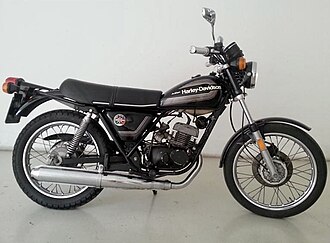
The Cagiva SST belongs to an important but sometimes overlooked chapter in the history of Italian motorcycles. Long before the company became famous for machines such as the Freccia, Mito and Elefant, Cagiva was establishing itself with a range of relatively simple, lightweight motorcycles that combined Italian styling with increasingly capable two-stroke engineering. The SST was one of the most interesting products of this early period. Produced in several capacities, including 125, 250 and 350 cc versions, it was designed as a practical road motorcycle but retained enough sporting character to distinguish it from more conventional commuter machines. The SST 350 is particularly notable because its 342 cc single-cylinder engine delivered roughly 27 horsepower while the motorcycle retained a relatively straightforward chassis, five-speed gearbox and traditional suspension layout. Historical Cagiva documentation identifies the SST 350 as a 341.8 cc air-cooled two-stroke single with a 34 mm Dell’Orto carburetor, five-speed transmission and double-cradle steel frame, illustrating how much engineering was packed into what was essentially an uncomplicated classic road motorcycle.
The Origins of the Cagiva SST
Cagiva’s early motorcycle ambitions
Cagiva’s motorcycle history began during a period when Italy had a particularly vibrant motorcycle industry, but the company itself was not originally founded as a motorcycle manufacturer. It had its roots in industrial production before moving into motorcycles, and by the late 1970s Cagiva was beginning to establish a recognizable identity of its own. The SST appeared in this formative period, with production beginning in 1978 according to model histories. Rather than attempting to compete immediately with the most sophisticated superbikes, Cagiva concentrated on relatively lightweight motorcycles that could appeal to everyday riders while still carrying the distinctive character expected from an Italian machine. The SST range consequently became one of the foundations on which Cagiva could build its later reputation.
The model range was particularly interesting because Cagiva did not restrict the SST name to one engine size. The SST 125 used a 122 cc air-cooled two-stroke single and a five-speed gearbox, while the SST 250 used a 243 cc two-stroke single. At the top of the range was the SST 350, powered by a substantially larger 342 cc single-cylinder engine. This approach allowed Cagiva to use the same general motorcycle philosophy across several markets and rider requirements. The smaller machines were accessible and relatively economical, while the 350 offered substantially stronger performance without abandoning the simple mechanical character of the range.
The Cagiva SST 350
A large single-cylinder two-stroke
The SST 350 is arguably the most fascinating member of the family because its 342 cc two-stroke single gives it a very distinctive mechanical identity. The engine used an 80 mm bore and 68 mm stroke, giving it a relatively short-stroke configuration for a large single-cylinder two-stroke. Cagiva’s historical registry records a 9.6:1 compression ratio, automatic oil mixing, a 34 mm Dell’Orto PHBE carburetor and electronic DANSI ignition on the 1983 version. Power is commonly quoted at approximately 27 horsepower, although some period and later references give figures in the 25–27 horsepower range depending on model year and market.
The engine’s character was very different from that of a modern four-stroke 350. A two-stroke single produces a power stroke every revolution, giving the engine a lively response and distinctive exhaust note. At the same time, the relatively large piston and single-cylinder configuration give the motorcycle a mechanical personality that is impossible to mistake for a multi-cylinder machine. The SST 350 was not designed to be a high-speed superbike, but its approximately 27 horsepower was enough to give the relatively light motorcycle useful performance for the roads of its period. Some published specifications put maximum speed at approximately 136 km/h, although figures for an old motorcycle such as this should be regarded as period estimates rather than laboratory measurements.
Five gears and straightforward transmission
Cagiva paired the 350 engine with a five-speed manual gearbox and chain final drive. The five-speed arrangement was entirely conventional for the era, but it suited the character of the engine well. The rider could make use of the two-stroke’s useful mid-range while selecting lower gears when stronger acceleration was required. The gearbox also contributed to the SST’s usability as an everyday road motorcycle, where an overly close racing transmission would have been unnecessary.
The wet multi-plate clutch was cable operated, while the historical Cagiva documentation records automatic oil mixing for the engine. This is an important detail because it made the motorcycle considerably more practical than a two-stroke requiring the rider to manually measure oil into every fuel tank. For everyday riding, the combination of automatic lubrication, electric starting on later documentation and a five-speed transmission gave the SST a degree of convenience that balanced its distinctly old-school engine design.
The SST Chassis
A traditional steel frame
The chassis of the SST 350 was deliberately straightforward. The 1983 factory information identifies a double-cradle frame made from steel tubing, with a telescopic front fork and a swingarm equipped with twin hydraulic rear shocks. This was conventional motorcycle engineering for the period, but it also contributed to the SST’s durability and relatively uncomplicated maintenance requirements. There were no exotic electronic systems or highly specialized suspension components to distract from the basic mechanical layout.
The wheelbase was approximately 1,435 mm according to several published specifications, giving the motorcycle a stable foundation while remaining compact enough for urban riding. The riding position was upright and practical rather than aggressively crouched, making the SST more suitable for everyday road use than a dedicated sports machine. The combination of relatively narrow tyres, conventional suspension and a simple frame also gave the motorcycle the visual character associated with classic Italian standards of the late 1970s and early 1980s.
Braking and suspension
The SST’s braking equipment was typical of its era. The front wheel was equipped with a single disc brake, while the rear used a drum. The 1983 Cagiva registry specifies a Brembo front disc and a 180 mm rear expansion brake. This combination may look modest by modern standards, but it was entirely appropriate for a lightweight motorcycle producing around 27 horsepower and weighing substantially less than contemporary large-capacity machines.
The suspension likewise emphasized simplicity. At the front was a telescopic fork with hydraulic damping, while the rear used twin hydraulic shocks with adjustable load settings. The absence of modern cartridge technology, linkage systems or electronic adjustment should not be interpreted as a defect; these components reflect the engineering priorities of the period. The objective was to provide predictable road manners with equipment that could be serviced relatively easily and withstand normal everyday use.
The Different SST Models
SST 125 and SST 250
The SST name covered considerably more than the 350. The SST 125 represented the entry point to the range and used a 122 cc air-cooled two-stroke single producing a claimed 10 horsepower at 7,000 rpm. It had a five-speed transmission, cast-alloy wheels, telescopic front suspension, twin rear shocks and a front disc paired with a rear drum. Its relatively modest performance made it a practical choice for riders who wanted an Italian motorcycle with sporting styling without moving into the larger-capacity classes.
The SST 250 occupied the middle of the family. Its 243 cc air-cooled two-stroke single was claimed to produce around 17 horsepower at 7,000 rpm, again using a five-speed gearbox. Like the 125, it combined a straightforward chassis with a front disc and rear drum. The 250 is particularly interesting because it demonstrates how Cagiva could scale the same basic concept across different engine capacities without turning the SST into a radically different motorcycle.
The SST 350, however, developed a more substantial mechanical presence. Its 342 cc engine was significantly larger than the other versions, and later examples received detailed equipment including the 34 mm Dell’Orto carburetor, electronic ignition and automatic oil mixing. It consequently became the version most likely to appeal to riders who wanted the characteristic immediacy of a two-stroke but needed more performance for open-road riding.
The Character of the SST 350
A motorcycle from the pre-superbike era
One of the most appealing aspects of the SST 350 is that it belongs to a period before motorcycles became as specialized as they are today. A modern motorcycle is often designed around a very specific role, whether that means sport riding, adventure touring, commuting or long-distance travel. The SST was much more general-purpose. Its upright ergonomics, moderate performance and relatively simple suspension allowed it to handle commuting and recreational riding without pretending to be a dedicated race replica.
This versatility is part of the reason the SST makes sense as a classic motorcycle. It does not need to be judged by modern standards of acceleration or braking performance. Its appeal lies in the way the components work together and in the mechanical experience of riding an air-cooled two-stroke single. The engine’s vibration, exhaust note, direct throttle response and relatively lightweight chassis create an experience that is fundamentally different from the smooth multi-cylinder motorcycles that would dominate the market later.
Italian styling without unnecessary complexity
Cagiva also understood that styling mattered. The SST used a simple but recognizable design language, with a round headlight, relatively broad handlebars and a traditional two-person seat. The overall appearance was functional rather than extravagant, but details such as the frame finish, exhaust system and wheel design gave it the visual character expected of an Italian motorcycle. The 350 in particular could look substantial without being physically large, helped by the presence of its single-cylinder engine and conventional road-bike proportions.
That balance between simplicity and personality would become increasingly important in Cagiva’s later products. The company eventually became associated with much more adventurous styling and sophisticated motorcycles, but the SST demonstrates that the foundation of Cagiva’s identity was already being established in these earlier models.
The SST in Cagiva’s Development
A bridge toward more sophisticated Cagivas
The SST is significant because it represents Cagiva before the company became internationally famous for its more advanced motorcycles. The later Freccia and Mito would demonstrate just how far Cagiva could push small-capacity two-stroke technology, while the Elefant would establish the company’s reputation in the adventure category. The SST belongs to the earlier stage of that progression, when Cagiva was learning how to develop, manufacture and market motorcycles under its own name.
The technical simplicity of the SST should therefore be seen in context. A double-cradle steel frame, twin shocks and air-cooled single-cylinder engine may seem basic compared with the aluminum frames, liquid-cooled engines and advanced suspension of later Cagivas, but these early motorcycles established the practical experience and brand identity that allowed the company to develop more ambitious machines. The SST was part of the groundwork for the Cagiva that enthusiasts would come to know in the 1980s and 1990s.
Cagiva SST 350 Technical Specifications
Because the SST was produced in several capacities and evolved during its production life, specifications can vary according to year and market. The table below uses the 1983 SST 350 as the primary reference because Cagiva’s historical registry provides a detailed period specification for that model. Other sources list minor differences in weight, tyre sizes and claimed power for earlier versions.
| Specification | Cagiva SST 350 |
|---|---|
| Production era | Late 1970s–early 1980s |
| Engine | Single-cylinder, 2-stroke |
| Cooling | Air-cooled |
| Displacement | 341.8–342 cc |
| Bore × stroke | 80 × 68 mm |
| Compression ratio | 9.6:1 |
| Carburetor | Dell’Orto PHBE 34 BD |
| Lubrication | Automatic oil mixing |
| Ignition | Electronic DANSI, 12 V |
| Maximum power | Approximately 25–27 hp |
| Peak power speed | Approximately 5,750 rpm |
| Maximum torque | Approximately 32 Nm |
| Transmission | 5-speed manual |
| Clutch | Wet multi-plate |
| Final drive | Chain |
| Frame | Steel double-cradle |
| Front suspension | Telescopic hydraulic fork |
| Rear suspension | Twin hydraulic shocks |
| Front brake | Single Brembo disc |
| Rear brake | Drum, 180 mm on 1983 model |
| Front tyre | Approximately 3.25 × 18/19 |
| Rear tyre | Approximately 4.00 × 18 |
| Fuel capacity | Approximately 14–15 litres |
| Dry weight | Approximately 129–133 kg |
| Ready-to-ride weight | Approximately 145 kg in some references |
| Wheelbase | Approximately 1,435 mm |
| Top speed | Approximately 136 km/h |
The variation in published figures is typical of a motorcycle that existed across multiple model years and markets. For example, Cagiva’s historical registry gives the 1983 model a dry weight of 129 kg and 15-litre tank, while other databases list approximately 133 kg dry or 145 kg with fluids. Likewise, some references quote 25 hp while others give 27 hp. These differences should be treated as specification variations rather than evidence that one source necessarily describes the wrong motorcycle.
Why the Cagiva SST Still Deserves Attention
The Cagiva SST may not have the instant recognition of a Cagiva Mito or Elefant, but its place in the company’s history makes it a fascinating classic. It represents the period when Cagiva was developing from an emerging Italian motorcycle manufacturer into a company capable of producing technically distinctive machines across several categories. The SST’s combination of two-stroke performance, uncomplicated chassis engineering and practical road manners gave it a character that is increasingly unusual today.
For enthusiasts, the SST 350 is particularly appealing because it combines the immediacy of a large two-stroke single with the simplicity of a traditional motorcycle. There is no need to look for advanced electronics or complicated rider aids to understand what makes it interesting. The engine, carburetor, gearbox, frame, suspension and brakes are all mechanically comprehensible, and the rider remains closely connected to the machine.
The model also provides an important reminder that Cagiva’s history did not begin with its most famous motorcycles. Before the Freccia became a symbol of Italian 125 performance and before the Mito turned that formula into a legend, Cagiva was building machines such as the SST and establishing its reputation one motorcycle at a time. The SST therefore deserves to be remembered not merely as an old two-stroke, but as one of the motorcycles that helped create the foundations of the Cagiva brand.
Conclusion
The Cagiva SST is a fascinating example of early Cagiva engineering and of the distinctive character that Italian motorcycles could offer during the late 1970s and early 1980s. Available in 125, 250 and 350 cc forms, the family provided riders with relatively simple, accessible motorcycles while retaining the distinctive sound and responsiveness of two-stroke engines. The SST 350 was the most substantial member of the family, using a 342 cc air-cooled single, five-speed gearbox and steel double-cradle chassis to produce approximately 25–27 horsepower in a lightweight package.
Its importance ultimately lies in what it represents. The SST came before Cagiva’s best-known performance motorcycles, but it already demonstrated several characteristics that would become central to the company: lightweight construction, Italian styling, willingness to experiment with engine technology and an emphasis on motorcycles that were engaging to ride. The SST may be less famous than the Mito or Freccia, but it occupies an important place in the story that connects Cagiva’s early motorcycles with the much more ambitious machines that followed.
For anyone interested in classic Italian motorcycles, the SST offers an especially interesting glimpse into Cagiva’s formative years. It is uncomplicated without being dull, practical without being anonymous and distinctly Italian without relying on excessive complexity. Above all, it is a reminder of how much personality could be built into a motorcycle when a simple air-cooled two-stroke single, a five-speed gearbox and a conventional steel frame were enough to create a machine with its own unmistakable identity.
