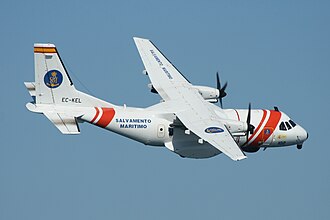
CASA/IPTN CN-235: The International Transport Aircraft Designed for Versatility
The CASA/IPTN CN-235 is a twin-engine turboprop transport aircraft developed through an unusual and influential partnership between Spain and Indonesia. Designed to bridge the gap between smaller utility aircraft and larger military transports, the CN-235 combines a pressurized cabin, high-mounted wings, retractable landing gear, and a rear cargo ramp in a platform capable of performing a wide variety of transportation and specialist missions. It has been used for military logistics, regional passenger services, freight transportation, maritime patrol, search and rescue, medical evacuation, and other government operations. Its versatility reflects a central principle of transport-aircraft design: an aircraft becomes especially valuable when it can carry different types of payloads, reach a variety of destinations, and adapt to changing operational requirements without needing a completely new airframe for every mission.
The aircraft’s story is also significant because it represents international industrial cooperation rather than the work of a single manufacturer in a single country. Spain’s Construcciones Aeronáuticas S.A. (CASA) and Indonesia’s Industri Pesawat Terbang Nusantara (IPTN), later known as Indonesian Aerospace or PT Dirgantara Indonesia, established a joint development program that resulted in one of the world’s established medium-sized tactical turboprop transports. The first prototype flew in November 1983, and the aircraft entered service in 1988. Over time, the CN-235 became available in numerous variants, ranging from basic transport aircraft to specialized maritime surveillance platforms. Its development also paved the way for the larger C-295, illustrating how a successful aircraft program can provide the technical and industrial foundation for subsequent generations of aviation products.
What Is the CASA/IPTN CN-235?
The CASA/IPTN CN-235 is a medium-sized, twin-engine turboprop aircraft intended primarily for military transport and other missions requiring flexible payload capacity. The letters in its designation are associated with the CASA-IPTN partnership, while the number reflects the aircraft program’s identity within the manufacturers’ product history. Unlike a conventional airliner designed exclusively to carry passengers between major airports, the CN-235 was developed to accommodate different operating environments and payload requirements, including military cargo, personnel, airborne deployment, and specialized equipment.
Its defining characteristics include a high-wing configuration, a relatively spacious pressurized fuselage, a rear cargo ramp, and two General Electric CT7-series turboprop engines on many production variants. The pressurized cabin allows it to operate at higher altitudes than an unpressurized utility aircraft while maintaining a more comfortable cabin environment for passengers and crew. The rear ramp provides a convenient route for loading cargo and equipment and supports approved military configurations for airborne operations. Together, these features make the aircraft useful for organizations that require a flexible transport platform rather than an aircraft optimized for a single narrow purpose.
The CN-235 occupies an important position between smaller aircraft such as the CASA C-212 Aviocar and larger tactical transports such as the Airbus C-295. It provides greater carrying capacity and a more substantial cabin than the C-212, while retaining a smaller overall footprint than many heavier military transports. This middle ground has made it attractive to operators that need to move moderate loads over regional distances, transport troops and supplies, or carry specialized mission systems without the expense and infrastructure requirements of a much larger aircraft. Its adaptability is one of the principal reasons the aircraft has served in both military and civilian aviation.
Why Was the CN-235 Developed?
During the late 1970s, manufacturers and operators identified a need for a modern transport aircraft capable of carrying approximately 30 to 40 passengers while also performing cargo and military support duties. Smaller utility aircraft could not always accommodate the required loads, while larger transport aircraft could be unnecessarily expensive or inefficient for routine regional missions. The proposed CN-235 offered a way to address these needs through a medium-sized platform combining practical cargo handling with the speed, range, and cabin environment required for longer regional journeys.
The program also offered strategic advantages for its two partner countries. Spain brought established aerospace design and manufacturing experience through CASA, while Indonesia sought to develop its own aviation industry and acquire expertise in designing and manufacturing complete aircraft. Sharing the development effort allowed the partners to distribute technical responsibilities, manufacturing work, and investment. It also created an opportunity to market the aircraft internationally, rather than limiting production to the requirements of a single national customer.
The resulting aircraft was intended to be versatile from the outset. Its cabin could be configured for passengers or cargo, and the basic airframe could accommodate military or specialist equipment. Rather than treating civilian transportation and military logistics as completely separate markets, the program recognized that many of their requirements overlap: both need reliable propulsion, useful payload, practical loading arrangements, and the ability to serve destinations that may not have major-airport infrastructure.
History and Development of the CN-235
The CASA and IPTN Partnership
The origins of the CN-235 program lie in cooperation between CASA in Spain and IPTN in Indonesia. The two organizations established Airtech, the joint venture responsible for developing the aircraft, in October 1979. Preliminary design work began around 1980, leading to a program that combined the partners’ technical capabilities and industrial objectives.
The partnership was notable because it connected an established European aerospace manufacturer with an Indonesian organization seeking to expand its ability to develop complete aircraft. Cooperation extended beyond the basic exchange of technical information to include manufacturing responsibilities and the development of industrial expertise. This arrangement helped both partners participate in a project intended for international sales and gave Indonesia an important role in the development of a sophisticated transport aircraft.
The program was divided between Spanish and Indonesian production activities. The Spanish-built prototype, known as Elena, made its first flight on 11 November 1983. The Indonesian-built prototype, Tetuko, followed in December of the same year. These milestones demonstrated that the partnership had moved beyond planning and design into the construction and testing of actual aircraft. Subsequent development led to serial production beginning in 1986, followed by entry into service in 1988.
First Flight and Entry into Service
The first flight on 11 November 1983 marked the beginning of the CN-235’s flight-test and evaluation phase. Prototype testing was necessary to establish the aircraft’s flight characteristics, structural performance, systems behavior, and suitability for its intended missions. As with any new aircraft program, development required the partners to refine the design and demonstrate that it could meet the relevant performance and certification requirements.
The aircraft entered service in 1988, marking the transition from a development project to an operational transport platform. Military and civilian operators could then begin using the aircraft for the roles for which it had been designed, while subsequent production versions incorporated improvements based on engineering development and operational experience. Its pressurized cabin and rear cargo ramp helped distinguish it from smaller, less capable utility transports, and its twin turboprop configuration provided an appropriate balance between speed, fuel efficiency, and practical operating costs.
The CN-235’s entry into service also provided a foundation for the continuing development of the aircraft family. Improvements to engines, structural strength, avionics, and mission equipment resulted in multiple variants, while the underlying airframe remained recognizable. This incremental approach helped preserve the program’s original advantages while allowing manufacturers to respond to changing customer requirements.
International Production and Industrial Cooperation
The CN-235’s manufacturing history is a particularly important part of its identity. Spanish production continued under CASA and its aerospace successors, while Indonesian production evolved through IPTN and the organization now known as PT Dirgantara Indonesia. Although the two production streams share the same aircraft lineage, their variant designations and equipment packages are not always identical.
For example, the CN-235-100 series is associated with Spanish production, while the CN-235-110 was produced in Indonesia. Similarly, the -200 and -220 designations generally distinguish improved Spanish and Indonesian production variants. These differences reflect the way the aircraft program developed within two industrial environments, each with its own manufacturing arrangements and customer requirements.
The partnership has also continued through broader industrial cooperation. PT Dirgantara Indonesia reports that the two companies have exchanged manufactured aircraft structures and components as part of their collaborative activities. This demonstrates that the program’s importance extends beyond the completed aircraft themselves: it has also supported the development of manufacturing capabilities, engineering expertise, and long-term relationships between aerospace organizations.
Airframe Design and Structural Features
High-Wing Configuration
One of the most recognizable characteristics of the CN-235 is its high-mounted wing. This configuration is particularly useful for a transport aircraft because it allows a large, relatively unobstructed cabin beneath the wing while providing good ground clearance for the engines and propellers. It also helps keep the wing structure away from some of the hazards encountered during loading and unloading, particularly at airfields where ground equipment and handling conditions may differ from those at major commercial airports.
The wing is designed to support the aircraft’s transport mission rather than maximize high-speed aerodynamic performance. Its configuration contributes to lift generation, handling characteristics, and the ability to operate at the relatively low speeds associated with tactical transportation and short-field operations. Combined with suitable high-lift devices, the wing helps the aircraft balance cruise efficiency with the need to take off and land at a broad range of suitable airfields.
The high-wing layout is not unique to the CN-235, but its integration with the aircraft’s pressurized fuselage and rear cargo ramp is an important part of the overall design. The result is a practical arrangement that supports passenger seating, cargo handling, and the installation of specialist equipment without requiring major changes to the aircraft’s basic structure for every mission.
Pressurized Fuselage and Cabin Layout
The CN-235 differs from smaller unpressurized utility aircraft by having a pressurized cabin. Pressurization helps maintain a more suitable cabin environment when the aircraft operates at higher altitudes, reducing the need to remain at lower altitudes solely to accommodate occupants. This is especially beneficial for regional passenger transportation and longer transport missions, where cabin comfort and the ability to use higher cruising altitudes can contribute to operational flexibility.
The fuselage is designed around a useful rectangular cargo and passenger space. This shape makes it easier to accommodate personnel, baggage, freight, medical equipment, and certain types of military cargo. In passenger configurations, the interior can be fitted with seats, while cargo configurations can prioritize floor space and approved restraint systems. Medical and surveillance versions may include specialist equipment that changes the interior arrangement and affects the available payload.
A pressurized cabin does not mean that the aircraft offers the same passenger experience as a modern commercial jet. Cabin noise, seating density, interior fittings, and flight duration all depend on the specific configuration and operating environment. Nevertheless, pressurization gives the CN-235 a useful advantage over many smaller transport aircraft, particularly when it must perform a combination of regional passenger and military missions.
Rear Cargo Ramp and Loading System
The rear cargo ramp is among the CN-235’s most important functional features. Instead of relying solely on side doors, the aircraft can load approved cargo through a large opening at the rear of the fuselage. This arrangement supports the handling of bulky equipment and palletized freight and can simplify the loading process when appropriate ground equipment is available.
For military operators, the ramp provides additional flexibility in transporting supplies and personnel. The aircraft can be configured for approved airborne deployment missions, and its loading system can accommodate certain standard cargo pallets. Depending on the configuration and mission, the cabin may also be arranged for casualty evacuation or other specialist duties. The rear loading system therefore supports more than simple freight transportation; it helps make the CN-235 a multipurpose platform.
However, the existence of a rear ramp does not mean that every cargo item or vehicle can be carried. Dimensions, loading limits, floor strength, tie-down arrangements, center of gravity, and total aircraft weight all determine whether a particular load is suitable. The aircraft’s cargo capability must always be evaluated against its approved operating limitations and the requirements of the specific mission.
Retractable Landing Gear and Runway Performance
Unlike the fixed landing gear of the smaller C-212 Aviocar, the CN-235 uses retractable tricycle landing gear. Retracting the landing gear during flight reduces aerodynamic drag, helping the aircraft achieve more efficient cruise performance. This feature is appropriate for a larger transport designed to travel longer distances and operate at higher altitudes than many basic utility aircraft.
The landing gear is also designed to support the aircraft’s weight during ground operations and provide the necessary clearance for its engines and propellers. Combined with the wing design and suitable high-lift systems, the aircraft can operate from relatively short runways when conditions and performance calculations permit. This is valuable for tactical transportation, disaster response, and missions involving smaller regional airfields.
Short-takeoff-and-landing capability should nevertheless be understood in context. The actual runway distance required depends on aircraft weight, runway elevation, temperature, wind, surface condition, obstacles, and the particular aircraft variant. An airfield that is suitable for a lightly loaded aircraft in favorable conditions may not be suitable for the same aircraft carrying a heavier load on a hot day. The CN-235’s runway flexibility is a useful capability, not an exemption from operational planning.
Engines and Flight Performance
General Electric CT7 Turboprop Engines
The CASA/IPTN CN-235 is powered by two General Electric CT7-series turboprop engines. Many later production configurations use the CT7-9C or CT7-9C3, with representative published takeoff ratings of approximately 1,750 shaft horsepower per engine. The precise engine model and rating depend on the aircraft’s variant and configuration, so a technical description of an individual CN-235 should always identify the specific powerplant installed.
Turboprop propulsion is well suited to the CN-235’s operational requirements because it combines useful power with efficient performance over regional distances. Unlike a pure jet engine, which produces most of its thrust through the exhaust stream, a turboprop uses a gas turbine to drive a propeller. This arrangement is particularly effective at the relatively moderate speeds associated with regional transportation, cargo delivery, and tactical airlift. It also provides the low-speed operating characteristics needed for an aircraft expected to use a variety of airfields.
The engines drive four-bladed propellers on representative production versions. These propellers convert engine power into thrust and are designed to operate efficiently across different phases of flight, including takeoff, climb, cruise, and descent. Engine and propeller performance are central to the aircraft’s ability to carry substantial payloads while maintaining the speed and range expected of a medium-sized tactical transport. Their performance also influences takeoff distance, climb capability, fuel consumption, and the aircraft’s ability to continue operating safely under abnormal conditions.
Cruising Speed and Operational Efficiency
The CN-235 is considerably faster than many basic utility aircraft, although it is not designed to compete with modern jet transports in maximum speed. Representative specifications place its cruising speed at approximately 420–450 km/h, or about 227–243 knots, depending on the version, altitude, and operating conditions. These speeds allow it to cover regional distances efficiently while retaining the handling and loading characteristics needed for transport work.
The aircraft’s performance is particularly relevant for missions in which the distance is too long for an economical helicopter operation but does not justify deploying a large strategic transport. For example, military organizations may use a CN-235 to connect regional bases, transport personnel between installations, or deliver supplies to smaller airfields. Civilian operators can also benefit from the combination of turboprop efficiency and a pressurized cabin when serving regional passenger routes.
Operational efficiency depends on much more than cruising speed. Aircraft weight, fuel reserves, payload, altitude, weather, maintenance condition, and route structure all affect the economics of a flight. A cargo aircraft carrying a heavy load may have a different range and climb performance from the same aircraft operating with fewer occupants and less freight. For this reason, general performance figures should be treated as reference values rather than guarantees of what an aircraft can achieve on every mission.
Range, Endurance, and Service Ceiling
The CN-235’s range varies according to variant and mission profile. Published reference figures for some versions reach approximately 2,350 nautical miles, or 4,355 km, under specified conditions. However, maximum range should not be confused with the distance available when carrying the maximum payload, operating in adverse weather, or complying with required fuel reserves. The aircraft’s practical mission radius can be considerably shorter than its maximum published range.
This distinction is particularly important for military and humanitarian transportation. A flight may require a substantial cargo load, a diversion to an alternate airfield, and enough fuel to accommodate changes in weather or destination availability. An aircraft that can fly a long distance with a reduced payload may not be able to carry its maximum cargo over that same distance. Effective planning therefore requires a balance between fuel, cargo, passengers, and the conditions expected along the route.
The service ceiling of representative CN-235 variants is often quoted at around 25,000–30,000 feet, depending on the specification and aircraft configuration. Operating at altitude can improve efficiency and help the aircraft avoid some weather or terrain-related constraints, while pressurization maintains a more suitable cabin environment. The actual operating altitude remains subject to aircraft limitations, atmospheric conditions, air traffic requirements, and the mission’s demands.
Major Variants of the CASA/IPTN CN-235
The CN-235 has developed into a family of aircraft rather than a single uniform model. Changes in engines, structural design, avionics, environmental systems, and mission equipment have produced variants that retain the same general airframe but differ in operational capabilities. Understanding these distinctions is essential when comparing technical specifications or evaluating the history of a particular aircraft.
CN-235-10: The Initial Production Version
The CN-235-10 was the first major production version of the aircraft. It established the basic configuration that would define the family, including the pressurized fuselage, twin turboprop engines, high wing, and rear cargo ramp. The initial series was produced in both Spain and Indonesia, reflecting the international nature of the program from its earliest production stages.
This version was developed to satisfy the original requirements for a medium-sized transport that could perform passenger, cargo, and military missions. Its cabin offered substantially more space than that of the smaller C-212, while its overall size remained appropriate for operators that did not require a heavy transport aircraft. The initial production series provided a basis for subsequent improvements as manufacturers gained experience and customer requirements became more clearly defined.
CN-235-100 and CN-235-110
The CN-235-100 and CN-235-110 introduced improvements over the original series, including revised engine installations and enhancements to aircraft systems. The -100 is associated with Spanish production, while the -110 represents the corresponding Indonesian-built development. Although the variants share a common design lineage, equipment details and production specifications should be checked individually.
These versions helped broaden the aircraft’s usefulness by improving aspects of propulsion and operational systems without changing its fundamental purpose. They retained the same basic transport configuration and remained suitable for personnel movement, cargo delivery, and specialized missions. The improvements also provided a foundation for later models, which further enhanced structural performance and avionics.
CN-235-200 and CN-235-220
The CN-235-200 and CN-235-220 represented further developments of the aircraft. The -200 was associated with Spanish production, while the -220 was developed in Indonesia. Improvements included structural refinements and aerodynamic changes intended to support increased operating weights and improve performance under demanding conditions.
These developments were important because a transport aircraft’s usefulness depends not only on its internal volume but also on how much weight it can carry under particular conditions. Strengthening the structure and refining the aerodynamic configuration can expand the range of missions that an aircraft is able to undertake within its approved limitations. The improved variants retained the CN-235’s flexible loading arrangements and continued to serve military and civilian operators.
CN-235-300 and CN-235-330
The CN-235-300 was a Spanish-developed refinement of the -200 series, incorporating upgraded avionics and improvements to systems such as cabin pressurization. The Indonesian CN-235-330 was developed as a related evolution for that country’s production program. These versions demonstrate how the aircraft family continued to evolve through changes in systems and equipment rather than relying solely on a new airframe design.
Avionics improvements can be especially valuable for transport aircraft because they affect navigation, communication, situational awareness, and the workload of the flight crew. Modernized systems may also help operators meet changing regulatory or mission requirements. Nevertheless, avionics and equipment packages can differ between individual aircraft, particularly when military operators have installed their own mission systems.
CN-235 Maritime Patrol Aircraft
The maritime patrol versions of the CN-235 are designed for missions that differ substantially from ordinary cargo transportation. Their purpose is to monitor coastal waters, offshore areas, shipping routes, and other maritime environments. Depending on the operator and aircraft configuration, they may carry specialized sensors, radar, electro-optical equipment, communications systems, and mission workstations.
A maritime patrol aircraft may spend several hours monitoring a broad area, identifying vessels, tracking activity, or supporting search-and-rescue operations. This requires a combination of endurance, suitable observation equipment, and the ability to transmit information to other agencies. The CN-235’s relatively spacious cabin provides room for mission operators and equipment, while the underlying turboprop platform supports the regional and low-altitude flight profiles often associated with patrol work.
Mission-specific installations can add weight and alter the available cabin space, so a maritime patrol CN-235 should not be assumed to have exactly the same payload or range as a standard transport model. Its capabilities depend on the particular sensors, fuel arrangements, equipment, and operational approvals associated with the aircraft.
HC-144 Ocean Sentry
The HC-144 Ocean Sentry is a United States Coast Guard maritime surveillance aircraft derived from the CN-235 family. It illustrates how the basic transport design can be adapted to a specialized government mission in which observation, communications, and coordination are more important than carrying the maximum quantity of cargo.
In Coast Guard service, the aircraft has been associated with maritime patrol, search and rescue, law-enforcement support, and other missions involving surveillance over water. Specialized mission equipment allows the crew to gather information and coordinate activities with ships, helicopters, and ground-based agencies. Its lineage demonstrates that a transport aircraft can become a valuable surveillance platform when the airframe, endurance, and cabin layout are combined with appropriate sensors and communications systems.
The HC-144 should be understood as a specialized derivative rather than an ordinary CN-235 with no modifications. Government mission equipment and system integration can significantly change an aircraft’s role, operational procedures, and maintenance requirements.
Military Applications of the CN-235
Tactical Airlift and Logistics
Tactical airlift is one of the CN-235’s primary applications. Military forces frequently need to move equipment and personnel between bases, remote installations, and operational areas without deploying large transport aircraft for every assignment. The CN-235 provides a practical solution for many of these tasks by combining moderate payload capacity with regional range and a useful cargo cabin.
The aircraft can carry supplies, spare parts, communications equipment, baggage, and other materials that are essential to military operations. Its rear cargo ramp helps simplify loading when appropriate equipment and ground handling facilities are available, while its pressurized cabin supports longer flights than those typically associated with smaller unpressurized utility aircraft. Depending on the mission, the cabin can be configured for passengers, cargo, or other approved loads.
The CN-235 is not intended to replace heavy strategic transports. Instead, it fills an intermediate role by moving loads that are too substantial for many light utility aircraft but do not require the capacity of a much larger military transport. This can be particularly useful when an organization operates a mixed fleet and wants to match aircraft size to mission requirements.
Troop Transport and Paratrooper Operations
The aircraft can be configured to transport military personnel and, when appropriately equipped and approved, support parachute operations. Its cabin layout and rear access arrangement make it suitable for moving troops between locations, while specialized configurations can support airborne training and deployment.
Personnel capacity depends on seating arrangements, equipment, weight limits, and the specific version. Military transport configurations may also require space for personal equipment, safety systems, and cargo restraints, which affects the number of people that can be carried. A maximum seating figure should therefore not be treated as a universal troop capacity for every mission.
Paratrooper operations involve additional requirements relating to aircraft configuration, exit procedures, crew coordination, and mission planning. The CN-235’s design provides a useful platform for approved airborne tasks, but the aircraft must be equipped and operated according to the relevant procedures and limitations.
Medical Evacuation
The CN-235 can be configured for casualty evacuation and medical transportation. Its cabin volume allows medical personnel to install suitable stretcher arrangements and carry equipment needed to transport patients from remote or operational locations to medical facilities. This can be valuable when ground transportation is slow, infrastructure has been damaged, or a patient needs to be moved over a considerable distance.
The precise medical capability depends on the aircraft’s configuration. A basic casualty-evacuation aircraft may provide space for stretchers and medical attendants, while a more specialized air ambulance may include additional monitoring equipment, oxygen systems, and other medical facilities. These configurations can differ substantially in terms of payload, equipment, and clinical capability.
Medical evacuation also requires careful planning of loading arrangements, patient security, onboard equipment, and the destination’s ability to receive the patient. The CN-235’s value in this role comes from its adaptable cabin and transportation capability, not from any assumption that all versions provide the same level of medical care.
Special Operations and Government Support
The CN-235 has also been used for specialized military and government missions. Such tasks may include moving small teams, transporting sensitive equipment, supporting communications, and carrying mission-specific systems. The flexibility of the aircraft allows operators to adapt it to roles that would be difficult to accommodate with a standard passenger aircraft.
Some operators have developed specialized configurations for electronic surveillance, intelligence-related work, and other missions that depend on additional sensors or communications equipment. These adaptations can involve changes to the cabin, antennas, external fittings, and onboard workstations. The capabilities of any particular aircraft depend on the systems installed and the approvals under which it operates.
The CN-235’s adaptability is therefore one of its central advantages. A transport aircraft can provide the basic airframe, payload, and endurance, while mission equipment gives it the ability to carry out more specialized work. This approach can be more practical than developing an entirely new aircraft for every government or military requirement.
Civilian and Humanitarian Applications
Regional Passenger Transportation
Although the CN-235 is strongly associated with military aviation, its original design also accommodates civilian passenger transportation. Its pressurized cabin, twin turboprop engines, and relatively substantial passenger capacity make it suitable for regional services where demand may not justify the use of a larger airliner. It can connect smaller communities, industrial locations, islands, and regional centers while offering greater cabin capacity than many light utility aircraft.
Regional aviation often involves routes where the practical challenge is not simply moving passengers quickly, but providing dependable service to destinations that have limited infrastructure or relatively low passenger demand. A medium-sized turboprop can serve these markets with an aircraft appropriately matched to the route, although the economics depend on fuel consumption, maintenance costs, seating configuration, utilization, and local airport charges. The CN-235’s flexibility can also help an operator adapt to changing demand by using a passenger configuration for one type of service and a cargo configuration for another, where the aircraft’s approved arrangements permit it.
The passenger experience differs from that of a modern jet airliner. The CN-235 generally operates at lower speeds, and its cabin, seating layout, noise levels, and onboard facilities depend on the specific aircraft and operator. Its attraction is therefore not luxury or high-speed travel, but the ability to offer practical regional transportation with an aircraft originally designed to handle a broader range of duties.
Cargo and Freight Transportation
Cargo transportation is another major application of the CN-235. The aircraft’s rear loading ramp, spacious cabin, and ability to accommodate approved palletized loads make it suitable for transporting supplies, equipment, spare parts, parcels, and other freight. These capabilities can be especially valuable when deliveries need to reach destinations that are poorly served by roads or where transportation by sea would take too long.
A cargo aircraft must accommodate the physical dimensions of a load as well as its weight. The CN-235’s cabin and loading arrangements help operators handle certain bulky items more conveniently than would be possible through a conventional passenger door. Its floor and restraint systems can support approved cargo arrangements, while the rear ramp simplifies loading when suitable ground equipment is available.
The aircraft’s maximum payload is not available under every combination of range and fuel requirements. Operators must account for takeoff weight, landing weight, cargo distribution, center of gravity, runway conditions, and required fuel reserves. A load that fits through the ramp may still be unsuitable because of its weight, dimensions, or restraint requirements. The CN-235 is a capable medium transport, but its cargo operations remain subject to careful weight-and-balance planning.
Humanitarian Relief and Disaster Response
Humanitarian aviation depends on aircraft that can transport supplies and personnel when conventional transportation networks are disrupted. Following floods, earthquakes, storms, or other disasters, an aircraft such as the CN-235 can help move medical equipment, emergency supplies, food, communications equipment, and relief workers between functioning airfields and affected regions.
The aircraft’s medium-sized cabin provides a useful compromise between carrying capacity and access to regional airfields. It may be capable of transporting loads that would be inefficient to move using a smaller utility aircraft, without requiring the infrastructure and operating resources associated with a much larger transport. Its ability to carry personnel and cargo also gives relief organizations flexibility when mission priorities change rapidly.
The Spanish Air Force has documented the use of CN-235 aircraft in humanitarian support operations in Indonesia following the devastating tsunami of 26 December 2004. This illustrates the importance of transport aircraft in emergency response, where moving supplies and personnel efficiently can support the work of medical teams, relief agencies, and local authorities.
Search and Rescue Support
Search and rescue missions often require aircraft to cover extensive areas, communicate with several agencies, and transport personnel or equipment to suitable locations. The CN-235 can support these activities through its endurance, cabin volume, and adaptability to mission-specific equipment. Depending on the configuration, it can provide transportation for rescue teams, support maritime searches, and assist in coordinating emergency responses.
Specialized surveillance versions can carry equipment that improves the crew’s ability to observe the sea, identify objects, and transmit information to rescue coordinators. This makes the aircraft useful for maritime search and rescue, coastal observation, and related government operations. It can complement helicopters, ships, and other aircraft by providing regional coverage and transportation capability.
The aircraft is not a universal solution for every rescue situation. Helicopters may be better suited to hovering or recovering people directly from the water, while other fixed-wing aircraft may offer greater range or more specialized sensors. The CN-235’s contribution depends on the nature of the emergency, the aircraft’s equipment, weather, and the coordination of the wider rescue operation.
Maritime Patrol and Surveillance Capabilities
Monitoring Coastal Waters and Shipping Routes
Maritime patrol is one of the most distinctive specialist applications of the CN-235 family. Coastal authorities and naval organizations must monitor large maritime areas for activities such as illegal fishing, smuggling, pollution, unauthorized entry, and distress incidents. A turboprop aircraft with suitable sensors can cover these areas more quickly than many surface vessels and provide information to agencies responsible for responding.
CN-235 maritime patrol variants can be equipped with surveillance radar, electro-optical and infrared systems, communications equipment, and mission workstations, depending on the operator’s requirements. These systems enable the crew to observe vessels, collect information, and coordinate with ships or shore-based control centers. The airframe’s cabin provides room for mission operators and equipment, making it adaptable to different surveillance arrangements.
The aircraft’s usefulness in this role depends on the quality and integration of its mission systems, not simply its underlying airframe. Two aircraft from the same family may have substantially different surveillance capabilities because of differences in sensors, software, communications, and equipment configuration. Consequently, it is more accurate to assess a particular maritime patrol variant than to assume that every CN-235 has the same operational capabilities.
Environmental Monitoring and Law Enforcement
Maritime surveillance also supports environmental protection and law enforcement. Aircraft can help authorities observe suspected pollution, monitor fishing activity, identify vessels of interest, and provide information about conditions over large coastal areas. A suitably equipped CN-235 can be used as part of an integrated surveillance system involving aircraft, ships, satellites, and land-based agencies.
The aircraft’s ability to carry mission equipment and operate for extended periods makes it a practical platform for some of these tasks. The precise endurance and coverage depend on fuel load, equipment, altitude, weather, and the flight profile. The operational benefit comes from combining a suitable aircraft with effective sensors and trained personnel.
Environmental monitoring can also support the observation of coastal habitats and other areas of interest. Although such tasks may not require the same equipment as military surveillance, they still benefit from an aircraft capable of carrying specialist instruments and providing a stable working environment for the mission crew.
CASA/IPTN CN-235 vs. Other Transport Aircraft
The CN-235 is best understood by comparing it with aircraft that serve similar transportation markets. Such comparisons highlight its place between smaller utility aircraft and larger tactical transports.
CN-235 vs. CASA C-212 Aviocar
The CASA C-212 Aviocar is smaller than the CN-235 and was designed primarily for light transport duties. Both aircraft feature high-mounted wings and twin turboprop engines, but the CN-235 has a larger pressurized fuselage, retractable landing gear, and a greater overall transport capacity.
The C-212 is particularly suitable for missions where a relatively small load must be carried into a remote location. The CN-235 is more appropriate when additional payload, cabin volume, or regional range is required. Its pressurized cabin also makes it better suited to operations involving higher cruising altitudes and longer journeys, although the practical advantage depends on the specific mission.
The two aircraft are complementary rather than direct substitutes in every situation. A fleet containing both types can assign lighter missions to the C-212 and more demanding transportation tasks to the CN-235, helping operators match aircraft capacity to operational requirements.
CN-235 vs. Airbus C-295
The Airbus C-295 is a larger aircraft developed from the CN-235 design lineage. It retains the broad concept of a twin-engine turboprop transport with a useful cargo cabin and rear loading access, but offers greater carrying capacity and improved performance in several areas.
The C-295 can transport heavier loads and accommodate more personnel than the CN-235, making it attractive to operators that require additional airlift capability. However, greater capacity is not always necessary. For missions involving moderate loads, the smaller CN-235 may be an appropriate solution, depending on operating costs, aircraft availability, runway requirements, and the particular payload.
The relationship between these aircraft illustrates how manufacturers develop transport families to address different market segments. The CN-235 established a medium-sized platform, while the C-295 expanded the concept to meet requirements for greater capacity. Both demonstrate the enduring value of twin turboprop aircraft in military logistics and specialist transportation.
CN-235 vs. Heavy Military Transports
Heavy military transports are designed to carry substantially larger payloads, including heavy vehicles, bulky equipment, and large quantities of supplies. They can provide capabilities beyond those of the CN-235, particularly when supporting major deployments or moving cargo over long distances.
However, larger aircraft require more resources and may need longer runways, more substantial ground-handling equipment, and higher operating expenditure. Using a heavy transport for every routine regional delivery would not necessarily be efficient. A medium-sized aircraft such as the CN-235 allows military organizations to move smaller loads without committing the resources required for a larger transport.
The most effective fleet strategy often combines several aircraft types. Heavy transports can handle large strategic movements, medium transports can distribute supplies regionally, and smaller utility aircraft can serve locations with particularly limited infrastructure. The CN-235’s role is to provide useful capacity and flexibility between these extremes.
Advantages and Limitations of the CN-235
Principal Advantages
The CN-235’s principal advantage is its combination of payload capacity, pressurization, and adaptable mission configuration. Its spacious cabin can accommodate passengers, freight, and specialist equipment, while the rear cargo ramp supports practical loading arrangements. These features make the aircraft useful across military logistics, regional transportation, medical evacuation, and surveillance.
A second advantage is the twin turboprop configuration. It provides a practical balance between cruise performance and the low-speed characteristics needed for transport operations. The aircraft can serve regional routes and suitable smaller airfields without requiring the infrastructure associated with many larger transports. Its retractable landing gear also supports efficient flight performance relative to a comparable fixed-gear configuration.
A third advantage is the aircraft’s international industrial history. The joint Spanish-Indonesian program established a manufacturing lineage that supported the development of related aircraft and broader aerospace capabilities. The continuing presence of the CN-235 family in military and government aviation demonstrates that a versatile transport design can retain value across different operating environments and national requirements.
Operational Limitations
Despite its versatility, the CN-235 is not the ideal aircraft for every mission. Its turboprop cruising speed is lower than that of many jet aircraft, and its payload capacity is limited compared with larger tactical transports. These constraints matter when an operator needs to move very heavy equipment, carry a large number of passengers, or cover long distances under tight time requirements.
Operating economics also depend on more than fuel consumption. Maintenance, engine support, spare parts, avionics upgrades, crew training, and regulatory compliance contribute to the total cost of ownership. Older aircraft may require additional attention to structural condition, corrosion prevention, and the availability of replacement components. The economics of a particular aircraft therefore depend on its condition, configuration, operating environment, and maintenance arrangements.
Finally, mission-specific equipment can affect payload and performance. A maritime patrol aircraft carrying surveillance systems and additional operators may have different weight and endurance characteristics from a basic cargo aircraft. The CN-235’s flexibility should be viewed as the ability to accommodate different approved configurations, not as an ability to maximize every performance characteristic simultaneously.
The Future and Legacy of the CN-235
The CN-235 remains significant because it represents a practical approach to transport-aircraft design and a successful example of international industrial cooperation. Its service history demonstrates that aircraft do not need to be the largest or fastest in their class to provide lasting value. A well-designed medium transport can meet a broad range of requirements when its payload, cabin, loading system, and flight performance are matched to the mission.
Its legacy extends beyond the aircraft itself. The joint development program helped build manufacturing and engineering expertise in both Spain and Indonesia, while the resulting design became the foundation for subsequent aircraft development. The larger C-295 is the most visible example of this progression, retaining the broad tactical transport concept while offering greater capacity and updated capabilities.
The long-term outlook for the CN-235 family will depend on operator requirements, maintenance costs, modernization opportunities, and the availability of newer aircraft. Some operators may continue to modernize existing airframes, while others may replace them with newer transports as budgets and mission needs evolve. Specialized maritime patrol and government roles may also support the continued use of particular aircraft even when their original transport duties change.
Ultimately, the CN-235 demonstrates the value of designing an aircraft around a clear operational purpose. Its combination of useful cabin volume, pressurization, twin turboprop propulsion, and flexible loading arrangements has allowed it to serve both conventional transportation and specialized missions. The aircraft’s history shows how a medium-sized transport can become an enduring part of military and civilian aviation through adaptability, industrial cooperation, and incremental development.
CASA/IPTN CN-235 Technical Specifications Summary
The table below provides a general reference for the aircraft’s dimensions, propulsion, capacity, and performance. Figures vary among production versions and mission configurations, so the table should not be treated as the definitive specification for every CN-235.
| Specification | Representative value |
|---|---|
| Aircraft designation | CASA/IPTN CN-235 |
| Aircraft category | Medium twin-engine turboprop transport |
| Countries of origin | Spain and Indonesia |
| Original development partnership | CASA and IPTN through Airtech |
| First flight | 11 November 1983 |
| Entry into service | 1988 |
| Crew | Typically 2 pilots; additional mission crew may be required |
| Passenger capacity | Up to approximately 44–51, depending on configuration |
| Paratrooper capacity | Approximately 35 in a representative configuration |
| Maximum cargo payload | Approximately 6,000 kg in representative specifications |
| Length | Approximately 21.35–21.40 m |
| Wingspan | Approximately 25.81 m |
| Height | Approximately 8.17–8.18 m |
| Wing area | Approximately 59.1 m² |
| Powerplant | 2 × General Electric CT7-series turboprop engines |
| Representative engine rating | Approximately 1,750 shp per engine for CT7-9C3 configurations |
| Propellers | Four-bladed on representative versions |
| Empty weight | Approximately 8,600–9,800 kg, depending on variant and definition |
| Maximum takeoff weight | Approximately 16,000–16,500 kg, depending on variant |
| Maximum cruising speed | Approximately 450 km/h for representative versions |
| Typical cruising speed | Approximately 420–450 km/h, depending on conditions |
| Published range | Up to approximately 4,355 km under specified conditions |
| Service ceiling | Approximately 25,000–30,000 ft, depending on variant |
| Landing gear | Retractable tricycle landing gear |
| Cabin | Pressurized |
| Loading arrangement | Rear cargo ramp |
| Runway capability | Designed for tactical and short-field operations; actual requirements vary |
| Primary military roles | Tactical airlift, troop transport, cargo, parachute operations |
| Specialist roles | Maritime patrol, surveillance, search and rescue, medical evacuation |
| Civilian roles | Regional passenger transportation, freight, charter services |
| Related aircraft | Airbus C-295; HC-144 Ocean Sentry as a specialized derivative |
Technical references: The Spanish Air and Space Force, PT Dirgantara Indonesia, Airbus historical material, and published aircraft specifications. Published values vary between aircraft series and mission configurations.
Conclusion
The CASA/IPTN CN-235 is an important medium-sized transport aircraft whose success rests on versatility, practical engineering, and an international development program that connected Spanish and Indonesian aerospace industries. Since its first flight in 1983 and entry into service in 1988, the aircraft has served a wide variety of military, civilian, and government users. Its pressurized cabin, twin turboprop engines, retractable landing gear, and rear cargo ramp provide a combination of features suited to transporting personnel, cargo, and specialist equipment.
The aircraft’s contribution extends beyond conventional airlift. Maritime patrol versions support coastal surveillance and search-and-rescue missions, while suitable transport configurations can serve humanitarian relief, medical evacuation, and regional passenger operations. Its development into a family of improved variants also demonstrates how a proven design can evolve to meet changing requirements without losing the characteristics that made it useful in the first place.
Although the CN-235 cannot match larger transports in payload or jet aircraft in speed, it occupies a valuable position in the aviation market. Its size, flexibility, and mission adaptability make it an effective choice for organizations that need more capability than a light utility aircraft can provide without requiring the capacity of a heavy transport. The continuing legacy of the CN-235 and its relationship to the C-295 illustrate the lasting importance of aircraft designed around practical, clearly defined operational needs.
.jpg)