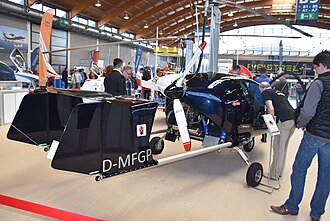
The Celier Xenon 4, also known as the Xenon IV, is an interesting example of modern gyrocopter engineering, combining an aerodynamic design, an enclosed cockpit, practical flight characteristics, and a distinctive approach to recreational and professional aviation. Developed by Celier Aviation, the Xenon 4 belongs to a category of aircraft that offers an alternative to conventional fixed-wing airplanes and helicopters. Its design focuses on providing the advantages of rotor-based flight while maintaining a relatively compact structure and an accessible operating concept for qualified pilots.
What makes the Xenon 4 particularly interesting is its side-by-side seating arrangement, which allows the pilot and passenger to sit next to each other rather than in a traditional tandem configuration. This arrangement contributes to a more conventional cockpit experience, makes communication between occupants easier, and gives the aircraft a distinctive appearance. Combined with its enclosed cabin, panoramic glazing, rear-mounted propulsion system, and carefully designed tail assembly, the Xenon 4 presents a recognizable combination of practicality and modern aviation styling.
The aircraft is part of the wider development of the Celier Xenon family, which includes earlier models and several versions designed for different operational requirements. The fourth-generation model introduced a substantially revised fuselage and improvements intended to enhance construction quality, handling characteristics, comfort, and overall usability. Although specifications can vary depending on the version, engine installation, equipment, and certification category, the Xenon 4 has become particularly associated with its 135-horsepower turbocharged engine configuration and its maximum take-off weight of approximately 560 kilograms.
For aviation enthusiasts, prospective owners, and anyone interested in unusual aircraft designs, the Celier Xenon 4 provides an excellent subject for understanding how modern autogyros combine traditional rotor technology with contemporary materials, engineering, and cockpit design.
What Is the Celier Xenon 4?
Understanding the Autogyro Concept
Before examining the Xenon 4 in detail, it is useful to understand the basic principles behind an autogyro, also known as a gyrocopter or gyroplane. Although autogyros and helicopters both use rotating blades to generate lift, their operating principles are fundamentally different. A helicopter normally uses an engine-driven main rotor to provide lift and control the aircraft, whereas an autogyro uses an unpowered rotor that rotates through autorotation as air moves upward through the rotor disc during forward flight.
The Xenon 4 follows this traditional autogyro principle. Its engine powers a rear-mounted propeller, which produces forward thrust and moves the aircraft through the air. As the aircraft gains forward speed, airflow passes through the freely rotating main rotor, allowing the rotor blades to generate aerodynamic lift. This arrangement creates an aircraft that combines a relatively simple propulsion system with the distinctive flight characteristics of a rotary-wing machine.
The distinction is important because an autogyro does not operate like a helicopter during normal flight. Its main rotor is not continuously driven by the engine in the same way as a helicopter rotor. Instead, the airflow maintains rotor rotation through autorotation. This gives the aircraft a different set of aerodynamic characteristics, operating procedures, and performance limitations.
The Xenon 4 uses this principle within an enclosed, streamlined aircraft structure. Its configuration is intended to provide a more comfortable and practical experience than many traditional open-cockpit gyrocopters, while retaining the fundamental characteristics that make autogyros attractive to aviation enthusiasts.
The Development of the Xenon Family
The Celier Xenon 4 is part of a development process that began with earlier Xenon models. The original family helped establish the concept of an enclosed, side-by-side autogyro, offering an alternative to the more familiar tandem-seat arrangements commonly found in smaller rotorcraft.
The Xenon 4 represented a substantial evolution rather than simply a cosmetic update. The manufacturer introduced a redesigned fuselage, a longer tail structure, and improvements to various aircraft components. These changes were intended to produce a more refined aircraft with improved construction quality and a more contemporary appearance.
The aircraft was presented publicly during the Aero 2013 aviation exhibition, attracting attention because of its updated appearance and revised design. Subsequent development and certification work helped establish the Xenon 4 as a distinct member of the Celier product family.
An important milestone was its German type certification in June 2015, which made it possible for the aircraft to operate within the applicable German ultralight gyroplane regulatory framework. The aircraft subsequently attracted attention in specialist aviation publications, particularly because of its relatively high permitted take-off weight and its enclosed side-by-side cockpit.
Exterior Design and Aerodynamic Construction
A Distinctive Fuselage
One of the most recognizable features of the Celier Xenon 4 is its fuselage. Unlike simple open-frame gyrocopters, the aircraft uses an enclosed body designed to integrate the cockpit, engine installation, landing gear, and aerodynamic surfaces into a cohesive structure.
The fuselage construction uses composite materials, including carbon-fibre-reinforced components, together with aluminium structural elements. This combination allows designers to balance structural strength, weight, durability, and aerodynamic efficiency. Composite materials are particularly useful in small aircraft because they can be formed into smooth, complex shapes without requiring the numerous individual components that might be needed for a conventional metal structure.
The enclosed fuselage also provides protection from the surrounding airflow and weather conditions. For occupants, this is an important practical advantage during longer flights, particularly when compared with open-cockpit aircraft. The shape of the cabin and its extensive glazing contribute to the Xenon 4’s distinctive appearance, giving it a profile that is closer to a compact helicopter than to a traditional ultralight gyrocopter.
The manufacturer’s approach to construction reflects the broader development of recreational aviation, where aircraft designers increasingly focus on combining aerodynamic functionality with passenger comfort, modern materials, and attractive finishing.
Rotor System and Aerodynamic Characteristics
The main rotor is the most important aerodynamic component of the Xenon 4. It generates lift through autorotation and allows the aircraft to maintain flight without a conventional fixed wing. Depending on the certified version and configuration, published technical information identifies rotor diameters of approximately 8.6 or 8.8 metres.
The larger rotor configuration provides a substantial rotor disc area, helping the aircraft generate the lift required to support its structure, occupants, fuel, and installed equipment. The rotor system is designed around aerodynamic principles that balance lift generation, rotational behaviour, structural loading, and operational requirements.
A rotor diameter of approximately 8.8 metres corresponds to a disc area of around 60.8 square metres. This is a considerable aerodynamic surface for an aircraft of this size and illustrates how rotor geometry influences the performance of a gyrocopter.
The rotor blades operate under changing aerodynamic conditions throughout a flight. During acceleration, the rotor must reach the appropriate rotational speed before the aircraft transitions into normal flight. During cruise, the rotor continues rotating through autorotation, generating the lift necessary to support the aircraft.
Understanding the rotor system is essential when evaluating the Xenon 4 because the rotor, propulsion system, fuselage, and tail assembly work together as an integrated aerodynamic design.
Tail Assembly and Stability
Another distinctive element of the Xenon 4 is its twin-tailboom configuration. Instead of using a simple single vertical fin, the aircraft features two rear tail structures with vertical stabilizing surfaces and rudders, together with a horizontal stabilizing surface.
This arrangement contributes to directional and longitudinal stability. The tail surfaces help the aircraft maintain its intended flight attitude and respond appropriately to control inputs. Their position and geometry are important because the aircraft uses a rear-mounted propeller and must maintain predictable aerodynamic behaviour across a range of operating conditions.
The tail structure also gives the Xenon 4 a distinctive silhouette. Together with the enclosed fuselage and large rotor, it creates an appearance that separates the aircraft from many smaller autogyros.
Cockpit Design and Passenger Comfort
Side-by-Side Seating Arrangement
One of the strongest selling points of the Celier Xenon 4 is its side-by-side cockpit. The pilot and passenger occupy adjacent seats, making the cabin feel more spacious and facilitating communication during flight.
This layout is particularly appealing for recreational flying because the passenger can share the experience from a position similar to the pilot’s own. It also allows instructors and students to communicate more naturally when the aircraft is configured and approved for training operations.
The cabin is designed around a relatively wide internal space, with manufacturer and technical references describing an interior width of approximately 130 centimetres. This helps distinguish the Xenon 4 from narrow tandem-seat aircraft.
Depending on the model and installed equipment, cockpit appointments can include adjustable seating, heating, ventilation, sound insulation, modern instrumentation, and additional electrical accessories. Higher-specification versions may also feature more elaborate interior finishing and upgraded control equipment.
It is important to remember that equipment levels are not identical across all Xenon 4 aircraft. A used aircraft may have been delivered with a different specification from another example of the same model, so prospective buyers should always check the individual equipment list.
Visibility and Cabin Glazing
Visibility is another important aspect of the Xenon 4’s design. Its enclosed cabin features extensive glazing, including front-facing windows that provide a broad field of view.
Good visibility is particularly valuable in an autogyro because the pilot must maintain awareness of surrounding airspace, traffic, terrain, and landing areas. The cockpit glazing also contributes to the aircraft’s distinctive appearance, creating a more open visual environment than would be possible with a heavily enclosed conventional cabin.
The design combines visibility with weather protection, making the Xenon 4 suitable for a wider range of recreational flying conditions than many open-frame gyrocopters, subject to applicable operating limitations.
Instrumentation and Controls
The instrument panel is designed to provide the pilot with access to the information required for safe aircraft operation. Depending on the configuration, the cockpit can include conventional flight instruments, engine monitoring equipment, navigation devices, and electronic displays.
Some versions and equipment packages have been designed to accommodate multifunction displays and additional navigation technology. This makes the aircraft adaptable to different owner preferences and operational requirements.
However, the precise avionics installation should not be assumed from the model designation alone. Buyers should inspect the actual cockpit, confirm the equipment’s certification and condition, and verify that all installed instruments are suitable for the intended operation.
Engine and Propulsion System
The Rear-Mounted Engine Configuration
The Celier Xenon 4 uses a pusher propulsion configuration, meaning that its engine drives a propeller positioned behind the main fuselage. This is a familiar arrangement in autogyro design because it allows the aircraft to generate forward thrust without placing a conventional tractor propeller at the front of the cockpit.
The pusher configuration also contributes to the Xenon 4’s distinctive appearance and helps preserve the forward visibility provided by its enclosed cabin. The engine and propeller assembly are integrated into the rear section of the aircraft, behind the occupants and in front of the tail assembly.
Depending on the version, the Xenon 4 has been offered with different engine installations. Early configurations included Rotax 912 and Rotax 914-based powerplants, while the better-known Executive configuration uses the Celier CA 912 ULST turbocharged engine.
The turbocharged engine configuration is particularly interesting because it provides greater power than a standard naturally aspirated 100-horsepower Rotax 912 installation. The engine is based on the Rotax 912 ULS architecture and incorporates modifications developed for the Celier installation.
Celier CA 912 ULST Turbocharged Engine
The CA 912 ULST is one of the most frequently associated powerplants with the Xenon 4 Executive. Its maximum installed power is approximately 135 horsepower, equivalent to around 100 kW.
The engine uses four cylinders and combines liquid and air cooling. Its turbocharging system is designed to improve power availability compared with a naturally aspirated engine, particularly as atmospheric pressure decreases with increasing altitude.
This additional power can be valuable in an aircraft that must carry two occupants, fuel, baggage, and equipment while maintaining satisfactory climb performance. Nevertheless, actual performance depends on aircraft weight, atmospheric conditions, engine condition, and the operating limitations established by the manufacturer.
The engine installation also includes a cooling and exhaust arrangement adapted to the aircraft. Depending on the selected configuration, the propeller may be a ground-adjustable composite unit or an optional variable-pitch system.
Propeller System
The Xenon 4 uses a rear-mounted three-bladed propeller. Published specifications for the Executive configuration identify a Kaspar composite propeller with a diameter of approximately 1.72 metres.
The propeller converts engine power into forward thrust. Its design and adjustment influence acceleration, climb performance, cruising efficiency, noise, and engine operating characteristics.
A ground-adjustable propeller offers a relatively straightforward mechanical arrangement. An optional variable-pitch or constant-speed system provides a different approach, allowing propeller pitch to be adjusted to suit changing flight conditions.
These differences can influence the aircraft’s operating characteristics, so the installed propeller should be considered when comparing individual Xenon 4 aircraft.
Flight Performance and Handling Characteristics
Cruising Speed and Maximum Speed
The Celier Xenon 4 Executive is generally associated with a cruising speed of approximately 160 km/h. Published specifications also indicate a maximum speed of approximately 195 km/h for certain configurations.
These figures make the aircraft interesting for recreational cross-country flying, particularly when compared with slower, basic ultralight gyrocopters.
Cruising speed is especially important because it determines how efficiently an aircraft can cover distances during normal operations. For example, a theoretical flight of 400 kilometres at a constant speed of 160 km/h would require approximately two and a half hours, excluding climb, descent, route deviations, and other operational considerations.
The maximum speed should not be confused with the permitted operating speed or the never-exceed speed. Different documents may list different speed limits depending on the particular version and certification basis. Pilots must always follow the approved flight manual for the specific aircraft.
Climb Performance
Climb performance is another important factor when evaluating the Xenon 4. The turbocharged engine provides a power reserve intended to support the aircraft during take-off and climb, although actual performance varies considerably with aircraft loading, density altitude, temperature, and engine condition.
Published figures for some Executive configurations indicate climb rates in the region of 5 metres per second, while other reports and aircraft listings provide different values. These numbers should therefore be treated as configuration-dependent reference figures rather than guaranteed performance.
The ability to climb efficiently is relevant not only for recreational flying but also for operations involving changing terrain, obstacle clearance, and transitions between different operating altitudes.
Take-Off and Landing Characteristics
The Xenon 4 benefits from the aerodynamic characteristics of an autogyro rotor system. Its take-off performance depends on rotor pre-rotation, wind conditions, aircraft mass, engine output, and runway surface.
Published technical information for the Executive version indicates a take-off run of approximately 50–60 metres under suitable conditions. Other publications provide broader figures, reflecting differences in equipment, loading, and test conditions.
Landing performance is also an important characteristic of the aircraft. Some published specifications indicate a landing distance of approximately 0–5 metres, but this should not be interpreted as a universal operational figure or as permission to land anywhere without considering obstacles, wind, surface conditions, and pilot technique.
The actual take-off and landing distances must always be established using the approved aircraft documentation and the conditions of the intended flight.
Flight Range and Fuel Consumption
The Xenon 4 Executive is commonly associated with a maximum range of approximately 640 kilometres in published specification summaries. This figure is dependent on the selected engine, fuel capacity, cruising settings, aircraft weight, weather, and operational reserves.
The fuel capacity of the commonly documented configuration is approximately 84–85 litres, depending on the reference and installation.
Fuel consumption is another important consideration for owners planning longer journeys. Specialist aircraft reports have quoted consumption figures of approximately 18–20 litres per hour for particular configurations. Actual consumption can vary with power settings, altitude, propeller installation, and operating conditions.
Range figures should never be used as a substitute for proper flight planning. Pilots must account for reserve fuel, alternate landing locations, weather conditions, and all applicable regulatory requirements.
Celier Xenon 4 Versions and Configurations
The Xenon 4 family includes several configurations intended for different users and operational purposes. Although they share a common design philosophy, their seating arrangements, engine installations, equipment, and performance characteristics can differ.
Xenon 4 Sport
The Xenon 4 Sport represents the entry-level configuration of the family. It is generally associated with a two-seat side-by-side cockpit and a naturally aspirated Rotax 912S engine producing approximately 100 horsepower.
This configuration is aimed at owners who want the basic Xenon 4 design without necessarily choosing the higher-powered turbocharged engine and more extensive equipment package associated with the Executive.
Its lower engine output and different permitted weight figures mean that the Sport should not automatically be compared with the Executive using identical performance expectations.
For pilots interested in recreational flying, the Sport offers an opportunity to experience the Xenon design in a comparatively straightforward configuration.
Xenon 4 Executive
The Xenon 4 Executive is the better-equipped configuration and one of the most widely documented versions of the aircraft.
It is associated with the turbocharged CA 912 ULST engine producing approximately 135 horsepower and a maximum take-off weight of 560 kilograms under the relevant certification configuration.
The Executive package can include an upgraded landing gear and braking system, improved cabin equipment, and additional comfort features. Its higher power output and equipment specification make it particularly interesting to owners looking for a more extensively equipped aircraft.
The Executive is also the configuration most commonly associated with published performance figures such as a cruising speed of approximately 160 km/h and a maximum speed approaching 195 km/h.
Xenon 4 XL
The Xenon 4 XL represents an extended configuration within the Xenon family. Unlike the conventional two-seat arrangement, this version has been associated with a three-seat layout using a 1+2 seating configuration.
The additional seating capacity makes the XL particularly interesting from a design perspective because accommodating another occupant requires careful attention to cabin layout, structural considerations, aircraft weight, and loading limits.
Published information indicates that the XL can have a different empty weight and performance profile from the standard Executive.
Prospective owners should pay particular attention to the aircraft’s approved seating configuration and maximum permitted weight rather than assuming that every Xenon 4 model has the same passenger capacity.
Xenon 4 GEO
The GEO version was developed for specialist applications, including aerial photography, land surveying, and observation-related tasks.
These activities require a different equipment approach from ordinary recreational flying. Aerial survey operations may involve cameras, measurement systems, navigation equipment, and additional electrical installations.
The Xenon 4’s enclosed cockpit and rotary-wing characteristics provide an interesting platform for such work. Nevertheless, the precise suitability of an individual aircraft depends on its equipment, approved configuration, operational permissions, and the requirements of the intended mission.
Other Special-Purpose Configurations
The wider Xenon family has also been associated with special-purpose versions, including the CA-22 military-oriented configuration and the C-22 VIP concept.
These aircraft illustrate how the underlying design can be adapted to different requirements. However, special-purpose models should not be confused with the standard civilian Xenon 4 Executive or Sport.
Their equipment, structural configuration, operating limitations, and certification status must be evaluated separately.
Safety, Maintenance, and Ownership Considerations
Understanding Autogyro Safety
The Celier Xenon 4 is an aircraft that requires appropriate training, knowledge, and operational discipline. Although autogyros have a different aerodynamic operating principle from helicopters and fixed-wing aircraft, they are still complex flying machines that must be operated within clearly defined limits.
Pilots need to understand rotor behaviour, autorotation, weight and balance, engine management, weather conditions, and emergency procedures.
The enclosed cockpit and modern appearance should not create the impression that the aircraft is suitable for inexperienced operators without specialist training. Proper instruction and familiarity with the aircraft’s approved flight manual are essential.
Maintenance Requirements
Maintenance is a central part of aircraft ownership. The Xenon 4 combines composite structures, aluminium components, a rotor system, an engine, a propeller, control systems, and landing gear.
Each of these systems requires appropriate inspection and maintenance. Particular attention should be given to rotor blades, rotor head components, control linkages, engine mounts, cooling systems, propeller condition, and structural attachment points.
The turbocharged engine installation also requires attention to its specific components and maintenance procedures. Maintenance should be carried out in accordance with the manufacturer’s instructions and the applicable aviation regulations.
For second-hand aircraft, a detailed technical inspection is particularly important. Prospective buyers should review the maintenance history, engine hours, rotor hours, previous repairs, accident history, and available airworthiness documentation.
Buying a Used Celier Xenon 4
The used aircraft market can offer opportunities to acquire a Xenon 4 at a lower price than purchasing a newly manufactured aircraft. However, the condition and equipment of individual examples can differ substantially.
A well-maintained aircraft with complete documentation may be a more attractive purchase than a cheaper example requiring extensive repairs or component replacement.
Buyers should examine several important areas:
-
Engine condition: Verify engine hours, maintenance history, turbocharger condition, and documentation.
-
Rotor system: Inspect the rotor blades, rotor head, bearings, and control mechanisms.
-
Airframe: Look for structural damage, composite repairs, corrosion, and signs of previous accidents.
-
Propeller: Check the condition, installation, adjustment, and maintenance records.
-
Avionics: Confirm that all installed instruments and electrical equipment function correctly.
-
Documentation: Verify registration, certification, flight manuals, maintenance records, and applicable operating permissions.
-
Weight and balance: Confirm the actual empty weight and permitted loading for the individual aircraft.
The aircraft’s configuration should also be checked carefully. A Sport, Executive, and XL may look similar at first glance, but their engines, weight limits, seating arrangements, and performance characteristics are not necessarily interchangeable.
Advantages and Disadvantages of the Celier Xenon 4
Main Advantages
The Xenon 4 has several characteristics that make it attractive within the gyrocopter market.
First, its enclosed side-by-side cockpit provides a more conventional passenger experience than many open-frame autogyros. The cabin offers protection from the airflow and gives occupants an opportunity to enjoy the flight together.
Second, the aircraft uses a distinctive composite and aluminium construction that supports a modern exterior design. The streamlined fuselage, extensive glazing, twin-tailboom arrangement, and rear-mounted propulsion system create a recognizable aircraft profile.
Third, the availability of different engine and equipment configurations provides flexibility. The Sport, Executive, and specialist versions address different priorities, from relatively simple recreational operation to higher-powered and more specialized applications.
Finally, the Xenon 4 Executive’s approximately 135-horsepower engine and 560-kilogram maximum take-off weight provide a useful combination of power and carrying capacity within the relevant certification framework.
Potential Disadvantages
Despite its attractive characteristics, the Xenon 4 also has limitations that prospective owners should consider.
The first is complexity. Compared with a very basic open-frame gyrocopter, the enclosed aircraft has more systems and components that require inspection and maintenance. Its composite fuselage, cabin equipment, engine installation, and rotor assembly all contribute to ownership responsibilities.
Another consideration is operating cost. Fuel consumption, engine maintenance, replacement parts, hangar storage, insurance, and scheduled inspections can make ownership more expensive than some buyers initially expect.
The aircraft’s performance also depends heavily on its specific configuration. Figures published for the Executive should not automatically be applied to the Sport, XL, or other versions.
Availability of specialist maintenance and replacement parts may also vary depending on the owner’s country and the current support arrangements. Before purchasing, it is sensible to identify qualified maintenance providers and confirm access to the necessary technical documentation.
Finally, the Xenon 4 is not a helicopter. Its flight characteristics and operating procedures are different, and pilots must understand the limitations of the autogyro concept.
Who Is the Celier Xenon 4 Suitable For?
The Celier Xenon 4 is primarily interesting to experienced aviation enthusiasts, qualified autogyro pilots, and aircraft owners who appreciate the combination of rotary-wing flight characteristics and an enclosed cockpit.
For recreational pilots, the aircraft offers an opportunity to explore local landscapes, undertake cross-country journeys, and enjoy flying with a passenger seated alongside them. Its cabin arrangement and visibility make it particularly appealing to people who prefer a more enclosed and comfortable flying environment.
It may also interest aviation businesses involved in aerial observation, photography, and surveying, particularly when considering appropriately equipped specialist configurations. The GEO version demonstrates the potential for adapting the basic platform to applications beyond ordinary recreational flying.
However, the Xenon 4 is not necessarily the right choice for every pilot. Anyone considering ownership should evaluate the aircraft’s purchase price, maintenance requirements, operating costs, local certification rules, and availability of qualified technical support.
Celier Xenon 4 Compared With Traditional Gyrocopters
The Xenon 4 demonstrates how much the design of recreational autogyros has evolved. Traditional gyrocopters often feature exposed structural frames, relatively simple seating arrangements, and minimal cockpit protection. These characteristics can make them lightweight and mechanically straightforward, but they may provide fewer comfort features.
The Xenon 4 takes a different approach by integrating the main aircraft systems into an enclosed fuselage. The cabin is designed to accommodate occupants side by side, while the aerodynamic exterior and extensive glazing provide a more refined appearance.
Its rear-mounted propulsion system also contributes to the aircraft’s distinctive configuration. Instead of a front-mounted propeller, the engine drives a pusher propeller positioned behind the cabin.
The Xenon 4 therefore occupies an interesting position between traditional open-frame autogyros and more elaborate enclosed rotorcraft. It retains the basic operating principle of an autogyro while offering a more contemporary combination of materials, equipment, and passenger accommodation.
It is important, however, not to confuse a more sophisticated appearance with helicopter-like operating capabilities. The Xenon 4 remains an autogyro, and its performance and operating characteristics must be understood within that category.
Is the Celier Xenon 4 Still an Interesting Aircraft?
The Celier Xenon 4 remains an interesting aircraft for anyone studying the development of modern gyrocopters. Its design brings together several important ideas: an enclosed cabin, side-by-side seating, composite construction, a pusher propulsion system, and a relatively large rotor.
The aircraft also demonstrates how different configurations can serve different purposes. The Sport emphasizes a more basic recreational approach, while the Executive combines higher engine power with additional equipment. The XL and GEO configurations illustrate how the platform can be adapted to other seating and operational requirements.
From a technical perspective, the most interesting aspect is the integration of these elements into a relatively compact aircraft. The Xenon 4 is not simply a conventional gyrocopter with a cabin added around it. Its fuselage, tail arrangement, rotor system, propulsion installation, and cockpit have been developed as parts of a coordinated design.
For potential buyers, the most important consideration is to identify the exact aircraft version and its approved configuration. Performance figures, maximum take-off weight, seating capacity, and installed equipment can vary. A detailed inspection and review of the aircraft’s documentation are therefore essential before making a purchasing decision.
Conclusion
The Celier Xenon 4 is a distinctive modern autogyro that combines traditional autorotation technology with an enclosed cockpit, contemporary construction materials, and a carefully integrated propulsion system. Developed as an evolution of the earlier Xenon family, it introduced important design improvements and established a recognizable position in the European gyrocopter market.
Its side-by-side seating arrangement, extensive cockpit glazing, composite fuselage, twin-tailboom configuration, and rear-mounted propeller make it particularly recognizable. The Executive version is especially notable for its turbocharged 135-horsepower engine, approximately 160 km/h cruising speed, and maximum take-off weight of 560 kilograms.
The availability of different versions also makes the Xenon 4 family interesting to a broad range of aviation enthusiasts. Whether the priority is recreational flying, passenger comfort, additional engine power, or specialist applications, the different configurations demonstrate the flexibility of the basic design.
Nevertheless, aircraft ownership involves much more than attractive specifications. Maintenance, pilot training, certification, operating costs, and individual aircraft condition must all be considered carefully. Anyone interested in purchasing a Xenon 4 should consult the appropriate manufacturer documentation and the approved flight manual for the specific aircraft.
Overall, the Celier Xenon 4 represents an interesting chapter in modern autogyro development and demonstrates how rotary-wing aviation can combine distinctive flight characteristics with modern cockpit design and practical engineering.
Celier Xenon 4: Technical Specifications Summary
The following table summarizes commonly published specifications for the Xenon 4, particularly the Executive configuration. Figures can differ between variants and individual aircraft.
| Technical specification | Published value |
|---|---|
| Manufacturer | Celier Aviation |
| Aircraft model | Celier Xenon 4 / Xenon IV |
| Aircraft category | Autogyro / Gyroplane |
| Configuration | Single main rotor, pusher |
| Crew | 1 pilot |
| Passenger capacity | 1 passenger (standard two-seat version) |
| Construction | Composite materials and aluminium |
| Fuselage | Enclosed cabin |
| Seating arrangement | Side by side |
| Overall length | 5.10 m |
| Overall height | 2.80 m |
| Overall width | 2.20 m |
| Main rotor diameter | 8.60–8.80 m |
| Main rotor area | Approximately 58–61 m² |
| Engine (Executive) | Celier CA 912 ULST |
| Engine configuration | Four-cylinder, four-stroke, turbocharged |
| Cooling system | Liquid and air cooled |
| Maximum engine power | Approximately 135 hp (101 kW) |
| Propeller | Three-bladed composite |
| Propeller diameter | Approximately 1.72 m |
| Empty weight | Approximately 295 kg |
| Maximum take-off weight | 560 kg |
| Fuel capacity | Approximately 84–85 litres |
| Maximum speed | Approximately 195 km/h |
| Cruising speed | Approximately 160 km/h |
| Fuel consumption | Approximately 18–20 litres/hour |
| Maximum range | Approximately 640 km |
| Climb rate | Approximately 5 m/s (published reference) |
| Take-off distance | Approximately 50–60 m |
| Landing distance | Approximately 0–5 m (published reference) |
| Rotor configuration | Two-bladed main rotor |
| Landing gear | Tricycle configuration |
| Main variants | Sport, Executive, XL, GEO |
Specifications are compiled from published aircraft references and certification information. They are not a substitute for the approved flight manual. Individual aircraft specifications and operating limitations may differ.
