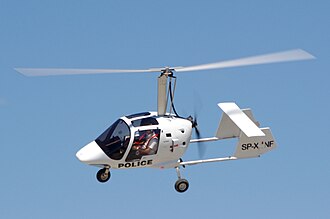
Celier Xenon 2: Design, Development, Performance, and the Legacy of a Modern Gyroplane
The Celier Xenon 2 is a distinctive two-seat gyroplane that brought together modern composite construction, an enclosed side-by-side cockpit, and the unusual flight characteristics of a rotorcraft that does not require a powered main rotor in normal flight. Designed by French aviation designer Raphaël Celier and developed through the Celier Aviation programme, the Xenon 2 became known for its streamlined appearance, practical cockpit layout, and range of engine options. Its design reflects an important period in the development of recreational gyroplanes, when manufacturers were working to make these aircraft more comfortable, capable, and accessible to private pilots.
Unlike a conventional helicopter, a gyroplane uses an unpowered main rotor that turns through autorotation as air flows upward through the rotor disc during forward flight. Propulsive thrust is provided by a separate engine-driven propeller. The Xenon 2 uses this principle in a compact, fully enclosed aircraft with two seats arranged alongside each other. Its pusher-engine configuration, tricycle landing gear, twin-tailboom arrangement, and prominent rotor system give it a recognisable silhouette that is quite different from that of a fixed-wing light aircraft.
The Xenon 2 was designed for recreational flying, touring, observation, and other light aviation activities. Its enclosed cabin and side-by-side seating distinguish it from many earlier gyroplanes, which often had open cockpits or tandem seating. The aircraft was also offered with different engine configurations, allowing buyers to select a version that matched their performance expectations and operating requirements. Models associated with the Xenon 2 name included naturally aspirated and turbocharged installations, and the aircraft was supplied in kit form as well as in completed configurations.
Although production and company arrangements changed over time, the Xenon design helped establish a recognizable identity in the European gyroplane market. Its development also provided a foundation for later members of the Xenon family. For aviation enthusiasts, the Xenon 2 is an interesting example of how modern materials, careful cockpit design, and established rotorcraft principles can be combined in a compact recreational aircraft.
Historical Background and Development
The origins of the Xenon project
The Xenon project is associated with Raphaël Celier, a French aviation designer and entrepreneur who developed a family of gyroplanes under the Celier name. The design work began in the late 1990s, with the prototype reported to have flown in 2003. The aircraft was intended to offer a modern alternative to more basic recreational autogyros, combining an enclosed cabin with a relatively streamlined exterior and a practical two-person layout.
The first Xenon designs established the main visual and technical characteristics of the family. The aircraft used a single main rotor, a rear-mounted engine and propeller, and a twin-tailboom arrangement supporting the tail surfaces. This layout gave the aircraft a distinctive appearance while keeping the propeller behind the cockpit. The Xenon 2 developed the concept into a side-by-side configuration, providing a different cockpit experience from the tandem-seat arrangements found in other gyroplane designs.
The project developed during a period when interest in recreational gyroplanes was expanding in Europe and elsewhere. Improvements in lightweight engines, composite materials, instrumentation, and manufacturing techniques helped make enclosed gyroplanes more practical for private owners. The Xenon 2 reflected these developments by combining a modern cabin structure with a familiar rotor-and-propeller arrangement.
Production in France and Poland
The early Xenon aircraft were associated with French development and production, but manufacturing activity moved to Poland in 2006. The Polish production phase was connected with the cooperation between Raphaël Celier and Artur Trendak, and the aircraft became part of the growing Polish light-aviation and gyroplane industry. The relocation helped establish the Xenon as an internationally marketed design rather than a small local project.
The change in production location was an important part of the aircraft’s history. Poland had an active and developing sector for ultralight aircraft and gyroplanes, supported by specialist manufacturers, suppliers, and flying communities. The Xenon benefited from this environment and became available to customers in a number of markets. Its enclosed cockpit and modern appearance helped it stand out in a category that included many simpler and more exposed designs.
The relationship between the people and companies involved in the Xenon programme later changed, and the design’s development continued through subsequent versions and related aircraft. The history of the Xenon name therefore involves several stages of design, manufacturing, and commercial activity. When researching an individual aircraft, it is useful to distinguish the original Xenon 2 from later Xenon models and from aircraft developed by companies that continued or adapted elements of the original concept.
The Xenon 2 and the evolution of the family
The Xenon 2 became one of the principal two-seat versions of the family. Its side-by-side cabin was a defining feature, making it suitable for pilots who preferred to share the cockpit with a passenger seated next to them. The aircraft’s layout also provided a wide enclosed cabin, generous glazing, and space for luggage behind the seats.
The Xenon design subsequently developed into larger and more refined aircraft, including the Xenon 3 and Xenon 4 family. These later models should not be confused with the Xenon 2, as their seating arrangements, dimensions, and technical characteristics differ. Nevertheless, the Xenon 2 helped establish the basic design language that made the family recognizable: an enclosed composite cockpit, a pusher powerplant, a single main rotor, and a twin-boom tail.
Design and Construction
Composite fuselage and airframe
One of the most important features of the Celier Xenon 2 is its composite construction. Composite materials allow aircraft designers to create smooth external surfaces and complex shapes while keeping structural weight relatively low. In the Xenon 2, the composite fuselage forms the central body of the aircraft and provides the structure around the cockpit, engine installation, and associated systems.
The use of composite materials contributes to the aircraft’s modern appearance. The fuselage can be shaped to accommodate the enclosed cabin, doors, glazing, and internal equipment without the same external construction features that might be visible on a metal-tube or fabric-covered aircraft. The smooth exterior also helps give the Xenon 2 its distinctive streamlined profile.
Composite construction does not mean that the aircraft is maintenance-free. Composite structures require appropriate inspection methods and repair procedures, particularly following impacts, hard landings, or suspected structural damage. Repairs must be performed using approved materials and techniques, because the quality of a composite repair can be difficult to assess from external appearance alone. Owners should therefore use maintenance personnel familiar with the aircraft’s construction and applicable technical documentation.
Cockpit design and side-by-side seating
The Xenon 2’s two-seat cockpit is one of its defining characteristics. Instead of placing the occupants one behind the other, the aircraft accommodates the pilot and passenger side by side. This layout creates a more sociable flying environment and makes communication between occupants straightforward. It also allows the passenger to share the forward view and participate more directly in the experience of the flight.
The cockpit is fully enclosed, with substantial glazing intended to provide good visibility. Large windows are particularly valuable in a gyroplane because the aircraft is often used for recreational sightseeing and low-level observation where permitted by operating rules. The enclosed structure also provides protection from wind and weather compared with open-cockpit gyroplanes, making the aircraft more comfortable during ordinary touring flights.
The seats are designed around the compact dimensions of a light gyroplane. The cockpit arrangement includes controls, instruments, and restraint systems that must be configured for the specific aircraft and its approved operating requirements. Equipment levels can vary between examples, especially where owners have installed different avionics, navigation systems, or optional accessories. A used aircraft should therefore be assessed according to its actual cockpit equipment rather than a generic description of the model.
Visibility and cabin comfort
The Xenon 2’s extensive glazing is an important part of its appeal. The enclosed cabin offers a broad view of the surrounding environment, making the aircraft suitable for recreational flying and observation. The forward and side windows provide a sense of openness that contrasts with the relatively compact external dimensions of the aircraft.
Cabin comfort is influenced by more than the amount of glazing. Seat adjustment, ventilation, heating where installed, noise levels, vibration, and the position of the controls all affect the experience of a flight. These factors can vary between individual aircraft depending on their age, equipment, and modifications. Prospective buyers should inspect the cabin carefully and, where possible, experience the aircraft in flight before making an ownership decision.
The cabin also includes space for luggage behind the seats. This is a useful feature for short recreational trips, although the amount of baggage that can be carried is limited by the aircraft’s maximum authorised weight and centre-of-gravity envelope. The available space should never be treated as permission to carry an unlimited load. Every flight must remain within the approved loading limits.
Twin-tailboom configuration
The Xenon 2 uses a twin-tailboom arrangement at the rear of the aircraft. Two structural booms extend aft from the fuselage and support the vertical tail surfaces, while the horizontal tailplane is mounted between them. This layout gives the aircraft its distinctive twin-tail appearance and provides a structure for the tail surfaces without placing a conventional single fin directly behind the propeller.
The twin-boom configuration is a practical design solution for a pusher gyroplane. It allows the engine and propeller to occupy the rear fuselage area while positioning the tail surfaces around the propeller’s airflow. The design also gives the aircraft a recognisable profile, with the tail assembly appearing separated from the main cabin by the open space around the rear-mounted powerplant.
The tail surfaces are important to the aircraft’s stability and control. Their design, position, and interaction with the propeller slipstream must be considered as part of the complete aerodynamic configuration. The tail assembly should be inspected for damage, loose fittings, corrosion in metallic components, and any evidence of previous repairs. Its structural condition is essential to safe operation.
Tricycle landing gear
The Xenon 2 uses fixed tricycle landing gear, with two main wheels and a nosewheel. This arrangement is familiar to pilots who have experience with many modern light aircraft. It also provides a stable ground stance and makes taxiing more intuitive for pilots accustomed to nosewheel aircraft.
The landing gear is designed to support the aircraft during taxiing, take-off, and landing. Its condition is particularly important because gyroplanes operate in a different aerodynamic environment from fixed-wing aircraft, and the transition between ground movement and rotor-borne flight involves specific procedures. The nosewheel, main wheels, tyres, brakes, and associated attachments should be maintained in accordance with the manufacturer’s documentation.
The fixed landing gear is a relatively straightforward arrangement compared with retractable systems. However, simplicity does not remove the need for inspection. Wear, damage, incorrect alignment, and deterioration of components can all affect ground handling. Owners should ensure that the landing gear is inspected at the required intervals and after any abnormal landing or ground event.
Rotor System and Gyroplane Flight Principles
Understanding autorotation
The most important difference between the Xenon 2 and a conventional fixed-wing aircraft is its main rotor. A gyroplane’s rotor is not normally driven by the engine in flight. Instead, the airflow through the rotor disc causes the blades to rotate through a process known as autorotation. The engine drives a separate propeller, which provides the forward thrust required to move the aircraft through the air.
This arrangement distinguishes a gyroplane from a helicopter. A helicopter uses engine power to drive its main rotor in normal powered flight, allowing it to generate lift while hovering. A conventional gyroplane relies on forward movement and airflow through the rotor to maintain autorotation. It therefore cannot hover like a helicopter, although its rotor system provides distinctive take-off, landing, and low-speed characteristics compared with fixed-wing aircraft.
The principle of autorotation is central to understanding how the Xenon 2 operates. The rotor blades are designed to maintain rotation as the aircraft moves through the air, and the pilot controls the aircraft through the rotor system and associated flight controls. The exact procedures for rotor pre-rotation, take-off, flight, and landing must be learned from an appropriately qualified instructor and followed according to the approved flight manual.
Main rotor dimensions
Reference technical information for the Xenon 2 commonly lists a main rotor diameter of approximately 8.4 metres and a rotor disc area of about 55.4 square metres. These dimensions give an indication of the scale of the rotor system relative to the compact fuselage. The rotor is a central part of the aircraft’s identity and has a major influence on its aerodynamic behaviour.
The rotor blades on the Xenon 2 are associated with aluminium construction. Aluminium rotor blades require careful inspection for surface damage, corrosion, cracks, and other conditions that could affect their structural integrity. Rotor components are subject to substantial aerodynamic and centrifugal loads, so their condition is critical. Any maintenance or adjustment must follow the manufacturer’s approved procedures.
Rotor diameter alone does not describe the complete performance of a gyroplane. Rotor blade design, blade condition, rotor-head geometry, loading, airspeed, and atmospheric conditions all influence the aircraft’s behaviour. The rotor system must be considered as an integrated assembly rather than as a single component with a simple dimensional specification.
Rotor pre-rotation and take-off
Gyroplanes commonly use a rotor pre-rotation system to bring the rotor up to an appropriate rotational speed before the take-off run. This helps reduce the distance required for the rotor to reach the operating conditions needed for flight. The details of the system and the permitted operating procedure depend on the particular model and equipment installation.
The Xenon 2’s take-off performance is often discussed as one of its appealing characteristics. Some contemporary reports highlighted short take-off capability, although actual ground roll depends on aircraft weight, engine condition, wind, temperature, runway surface, density altitude, and pilot technique. A short take-off figure from a demonstration or favourable test condition should not be treated as a guaranteed operational distance.
Pilots must use the aircraft’s approved performance data and apply the appropriate safety margins. Take-off planning should account for obstacles, runway condition, wind changes, and the possibility of reduced engine or rotor performance. Gyroplane training is particularly important because the aircraft’s take-off and landing procedures differ from those of conventional aeroplanes.
Landing characteristics
The gyroplane’s autorotating rotor also influences its landing behaviour. Unlike a fixed-wing aircraft, a gyroplane can use its rotor system to manage energy during the approach and landing. However, this does not mean that every landing is automatically short or simple. The aircraft must be flown within its approved operating envelope, and the pilot must understand the correct approach, flare, and touchdown procedures.
The Xenon 2’s tricycle landing gear provides a conventional ground-contact arrangement, but pilots still need to manage airspeed, rotor energy, alignment, and landing attitude carefully. Crosswind conditions, gusts, runway surface, and aircraft loading can all affect the landing. Training and experience are essential to developing safe and consistent technique.
Engine and Propulsion System
Rear-mounted pusher configuration
The Celier Xenon 2 uses a pusher configuration, with the engine and propeller installed behind the cockpit. The propeller pushes the aircraft forward rather than pulling it from the nose. This layout is common among gyroplanes because it leaves the forward fuselage area available for the cockpit and provides a clear view ahead.
The pusher arrangement contributes to the Xenon 2’s distinctive appearance. The engine is positioned behind the occupants, while the propeller operates aft of the cabin. The twin-tailboom design accommodates the rear structure and tail surfaces around this installation. The arrangement is compact, but it requires careful attention to cooling airflow, propeller clearance, structural attachment, and the interaction between the propeller slipstream and tail surfaces.
The propulsion system is separate from the main rotor in normal flight. The engine drives the propeller, while the rotor autorotates as the aircraft moves through the air. This separation of functions is fundamental to gyroplane design and is one of the main reasons the Xenon 2 should not be described as a helicopter.
Rotax engine options
The Xenon 2 family was offered with a range of Rotax engine installations. These included naturally aspirated and turbocharged configurations, with published descriptions commonly identifying the Rotax 912 series and Rotax 914 as principal engine choices. The exact power rating depends on the engine model and installation.
The naturally aspirated Rotax 912ULS installation is commonly associated with approximately 100 horsepower. It provides a relatively simple and widely recognized engine option for a light gyroplane. The turbocharged Rotax 914 installation is commonly listed at approximately 115 horsepower and was used in the Xenon 2 RT. Turbocharging can help maintain engine power at higher altitudes compared with a naturally aspirated engine, although the actual benefit depends on operating conditions and the engine’s approved limits.
Some Xenon 2 RST documentation describes a modified Rotax 912-based installation with a turbocharger and a stated output of approximately 122 horsepower. This should not be confused with the standard Rotax 912ULS or Rotax 914 figures. Engine designations and power ratings should always be checked against the aircraft’s engine records and approved documentation, especially when dealing with modified or specially configured aircraft.
Propeller system
The Xenon 2 uses a rear-mounted propeller to provide thrust. Depending on the engine and aircraft configuration, the propeller may be a composite design from a specialist manufacturer. The propeller diameter and blade arrangement are selected to work with the engine’s power output and the aircraft’s operating requirements.
The propeller is a critical component of the propulsion system. Damage, imbalance, incorrect pitch, or deterioration can cause vibration and reduce performance. Maintenance must follow the propeller manufacturer’s instructions and the aircraft’s approved documentation. Owners should also pay attention to the engine mounts and surrounding structure, as these components transmit the loads generated by the engine and propeller.
Fuel capacity and consumption
Published Xenon 2 RT reference data commonly lists a fuel capacity of approximately 85 litres. Some aircraft configurations and technical documents may show different arrangements, so the actual capacity must be confirmed for the individual aircraft. Fuel quantity is a major factor in determining useful load, range, and endurance.
Fuel consumption varies with engine type, power setting, altitude, aircraft weight, and operating conditions. A turbocharged engine may offer different performance and fuel-consumption characteristics from a naturally aspirated engine. Pilots should use reliable data for the exact engine installation and maintain the required fuel reserves rather than relying on broad advertised range figures.
Performance and Flight Characteristics
Cruising speed
The Xenon 2 was designed as a recreational and touring gyroplane rather than a high-speed aircraft. Reference figures for the Xenon 2 RT commonly list a cruise speed of approximately 160 km/h, or about 86 knots. This provides a useful indication of the aircraft’s intended operating range, although actual cruise speed varies with power setting, atmospheric conditions, aircraft weight, and engine configuration.
The naturally aspirated Xenon 2 variants may have different performance figures from the turbocharged RT. Higher-powered versions can offer improved climb and maximum-speed capability, but the exact result depends on the aircraft’s configuration and operating limitations. It is therefore important to identify the engine variant before comparing performance data.
Maximum speed
The Xenon 2 RT is commonly listed with a maximum speed of approximately 195 km/h, equivalent to about 105 knots. This is a reference figure associated with the turbocharged version and should not be assumed to apply to every Xenon 2. The aircraft’s approved maximum operating speeds and never-exceed limits must be taken from the relevant flight manual.
A gyroplane’s performance is influenced by the rotor system as well as the engine and propeller. Increasing engine power does not automatically produce a proportional increase in speed, because aerodynamic drag, rotor characteristics, and structural operating limits also matter. The aircraft must always be operated within its approved speed range.
Climb performance
Reference specifications for the Xenon 2 RT list a rate of climb of approximately 8 metres per second, or around 1,575 feet per minute. This is a published reference value and should not be interpreted as a guaranteed climb rate in everyday conditions. Aircraft weight, temperature, density altitude, engine condition, and pilot technique can all influence the actual rate of climb.
Climb performance is particularly important when operating from short or confined airfields. Pilots must consider terrain, obstacles, weather, and the possibility of reduced performance. A gyroplane’s ability to take off in a relatively short distance does not eliminate the need for careful departure planning and suitable safety margins.
Range and endurance
A commonly published reference figure for the Xenon 2 RT gives a range of approximately 600 kilometres, or around 324 nautical miles. This value is dependent on the aircraft’s configuration and assumptions about fuel capacity, power setting, reserves, and operating conditions. It should be treated as a reference rather than a guaranteed journey distance.
Endurance is similarly dependent on engine type and fuel consumption. Some descriptions of the aircraft list several hours of flight endurance, but the practical duration of a flight must be calculated using the actual aircraft’s fuel system, engine data, weather, and required reserve. For touring pilots, a realistic flight plan should include alternative landing options and a conservative fuel policy.
Cockpit Equipment and Avionics
Conventional and modern instrument layouts
The Xenon 2 has been equipped with a variety of cockpit instrument arrangements. Depending on the year and specification, an aircraft may have conventional analogue instruments, electronic engine monitoring, modern navigation equipment, or a glass-cockpit display. This flexibility reflects the aircraft’s role in the recreational aviation market, where buyers often select equipment according to their preferences and budget.
A modern avionics installation can improve situational awareness and make navigation more convenient. However, equipment upgrades must be installed correctly and must be compatible with the aircraft’s electrical system and approved operating category. The presence of a modern display does not replace the need for pilot training or a clear understanding of the aircraft’s limitations.
Engine monitoring and flight information
Engine monitoring is particularly important in a compact aircraft with a rear-mounted engine. Pilots need reliable information about engine temperature, oil pressure, fuel quantity, and other operating parameters appropriate to the installed powerplant. A well-configured instrument panel makes it easier to monitor the engine while maintaining attention on flight conditions.
The rotor system also requires the pilot to understand the relevant rotor-speed and operating indications where fitted. The specific instruments and warning systems differ between aircraft. Owners should ensure that the equipment is functional, properly documented, and suitable for the aircraft’s approved configuration.
Operational Roles and Uses
Recreational flying
The Xenon 2’s primary appeal is recreational flying. Its enclosed cabin, side-by-side seating, and distinctive rotorcraft flight experience make it attractive to pilots who want something different from a conventional fixed-wing aircraft. The broad field of view and relatively compact airframe contribute to its appeal for sightseeing and leisure flights.
The aircraft is particularly suited to pilots who enjoy the unique characteristics of gyroplane flight. It offers a different relationship with the air from that of an aeroplane, combining a free-turning rotor with engine-driven forward propulsion. This makes the Xenon 2 an interesting option for experienced recreational pilots as well as those entering the gyroplane world through proper training.
Touring and cross-country flying
The Xenon 2 can also be used for short and medium-distance touring, subject to its approved range, payload, and operating limitations. Its enclosed cabin offers a more sheltered environment than an open gyroplane, while the luggage space behind the seats provides room for modest baggage.
Touring requires careful planning. The aircraft’s actual fuel capacity, fuel consumption, payload, weather limitations, and available landing sites must all be considered. The pilot should use the aircraft’s approved performance and loading data and should not assume that the published maximum range can be achieved under every condition.
Observation and aerial activities
The Xenon 2’s visibility and relatively slow operating speeds can make it useful for certain observation and aerial recreational activities, where permitted by local regulations. The side-by-side cockpit allows both occupants to share the view, while the rotorcraft configuration provides a different perspective from a conventional light aircraft.
Any specialist operation must be conducted within the aircraft’s approved role and applicable regulations. The suitability of an aircraft for observation does not automatically mean that it is approved for commercial aerial work, photography, survey, or other specialised missions. Such operations may require additional approvals, equipment, training, and operational procedures.
Safety, Maintenance, and Ownership
Rotor system inspections
The rotor system is one of the most important areas to inspect on any gyroplane. Blades, rotor-head components, bearings, control linkages, attachment points, and associated hardware must be maintained in accordance with the manufacturer’s documentation. Damage to a rotor blade or a critical rotor-head component can have serious consequences, so inspection standards must be rigorous.
The Xenon 2’s rotor blades and control system should be examined for signs of impact damage, corrosion, cracks, loose fittings, and abnormal wear. Any suspected damage must be assessed by a suitably qualified maintenance specialist. Rotor repairs and adjustments should never be improvised or carried out using methods that are not approved for the aircraft.
Composite structure maintenance
The composite fuselage requires maintenance methods appropriate to its construction. Inspections should consider the external skin, internal structure, attachment points, cockpit frame, engine support structure, and areas exposed to vibration or repeated loading. A visual inspection may not reveal every type of internal damage, so specialist assessment may be necessary after a significant impact.
Owners should retain a complete record of repairs, modifications, inspections, and component replacements. This documentation is particularly valuable for older aircraft, where the original equipment may have been changed or upgraded. A complete and consistent maintenance history can make it easier to assess the aircraft’s condition and determine whether it remains in an approved configuration.
Engine and propeller maintenance
The Rotax engines used in the Xenon 2 family require maintenance according to the applicable engine documentation. Operating hours, calendar time, temperature history, storage conditions, and previous maintenance all contribute to the engine’s condition. A prospective buyer should examine the logbooks and confirm that scheduled inspections and required maintenance have been completed.
The propeller should also be inspected for damage, surface deterioration, imbalance, and evidence of previous repairs. Because the engine and propeller are mounted behind the cockpit, their condition and the state of the surrounding structure are important parts of the overall airworthiness assessment. Any abnormal vibration should be investigated rather than treated as an ordinary characteristic of the aircraft.
Training and pilot qualification
Flying a gyroplane requires specific knowledge and skills. Pilots transitioning from fixed-wing aircraft must learn the differences in rotor behaviour, pre-rotation procedures, take-off technique, approach planning, and landing. Familiarity with aeroplane controls alone is not sufficient preparation for safe gyroplane operation.
Training should be conducted with a qualified instructor using an aircraft and syllabus appropriate to the pilot’s licence and local regulations. The Xenon 2’s enclosed cockpit and modern appearance should not lead a pilot to underestimate the specialised nature of gyroplane handling. Thorough training, regular practice, and compliance with the flight manual are essential.
Buying a used Xenon 2
A used Xenon 2 should be assessed as an individual aircraft rather than simply by its model name. Potential buyers should verify the exact variant, engine installation, airframe serial number, operating category, maintenance history, and applicable airworthiness documentation. They should also confirm whether the aircraft was originally supplied as a kit or as a completed machine and whether all construction and modification records are available.
The rotor system, composite structure, engine, propeller, landing gear, and cockpit equipment deserve particular attention during a pre-purchase inspection. Buyers should also verify the aircraft’s empty weight and current centre-of-gravity data. Changes to avionics, accessories, upholstery, engine equipment, or other systems can affect the aircraft’s weight and payload.
The legal status of a Xenon 2 can differ between countries. Registration, certification, permitted operating category, maintenance requirements, and pilot privileges are determined by the relevant national aviation authority. A model’s history in one country does not guarantee that the same aircraft can be operated under identical rules elsewhere.
The Xenon 2 Compared with Other Gyroplanes
Comparison with tandem-seat gyroplanes
The Xenon 2’s side-by-side cockpit distinguishes it from tandem-seat gyroplanes such as the Celier Kiss series. In a tandem aircraft, one occupant sits behind the other, resulting in a narrower fuselage and a different seating experience. The Xenon 2 instead prioritises a shared cockpit environment, allowing the pilot and passenger to sit next to each other.
Neither arrangement is automatically superior. Tandem seating can produce a narrower frontal profile, while side-by-side seating can make communication and passenger interaction easier. The right choice depends on the intended use, pilot preference, cabin comfort, visibility, and the aircraft’s performance characteristics.
Comparison with open-cockpit gyroplanes
Open-cockpit gyroplanes offer a more exposed flying experience and can be mechanically simple in appearance. They may appeal to pilots who enjoy the sensation of open-air flight and the traditional character of earlier autogyros. The Xenon 2 takes a different approach by providing an enclosed cabin, substantial glazing, and a more streamlined exterior.
An enclosed cockpit can improve comfort in cool or windy conditions, but it also introduces additional structure, doors, glazing, ventilation, and interior equipment. The overall aircraft must therefore be evaluated as a complete design rather than judged solely by its appearance or cockpit arrangement.
The relationship with the Xenon 4
The Xenon 4 represents a later development in the Xenon family. It should not be treated as simply another name for the Xenon 2, because the later aircraft introduced a different configuration and further development of the original concept. The broader Xenon lineage demonstrates the continued interest in enclosed gyroplanes with modern materials and practical cabin arrangements.
The Xenon 2 remains historically important because it established the side-by-side two-seat approach within the family. Later developments built upon the recognition of the Xenon name while adapting the design to new requirements and configurations.
The Legacy of the Celier Xenon 2
The Celier Xenon 2 occupies a distinctive place in the development of modern recreational gyroplanes. It combined a composite fuselage, enclosed side-by-side cockpit, pusher propulsion, and a twin-tailboom arrangement in a design intended to make gyroplane flying more practical and comfortable. These characteristics helped it stand apart from simpler recreational autogyros and gave it a recognisable identity in the international light-aviation market.
Its development also reflects the growing importance of composite construction and modern engine technology in recreational aviation. The use of Rotax powerplants, alternative engine configurations, and flexible cockpit equipment helped the aircraft appeal to a range of pilots. Its later development into a wider Xenon family showed that the original design concept had room for further refinement.
For aviation enthusiasts, the Xenon 2 is interesting because it demonstrates how a traditional rotorcraft principle can be adapted to a modern recreational aircraft. It is neither a helicopter nor a conventional aeroplane, but a gyroplane with its own flight characteristics, operating procedures, and maintenance requirements. That combination makes it a distinctive subject in the history of contemporary light aviation.
Conclusion
The Celier Xenon 2 is a modern two-seat gyroplane that brought together an enclosed side-by-side cockpit, composite construction, a pusher engine, and an autorotating main rotor. Designed by Raphaël Celier, the aircraft first flew as part of the Xenon development programme in the early 2000s and subsequently became associated with production in Poland. Its design offered a more enclosed and touring-oriented alternative to many traditional recreational gyroplanes.
The Xenon 2’s different engine options allowed the aircraft to be configured for a range of performance requirements. The naturally aspirated Rotax 912 variants provided a familiar engine installation, while the turbocharged Rotax 914 version offered a higher-power alternative. The exact performance and operating limits depend on the variant and its approved documentation, making it essential to distinguish between individual Xenon 2 configurations.
Its composite structure, broad cockpit glazing, twin-tailboom arrangement, and tricycle landing gear remain central to its identity. These features made the aircraft recognisable and helped establish the Xenon name in the recreational gyroplane market. Although later models developed the concept further, the Xenon 2 remains an important chapter in the story of modern European gyroplane design.
Celier Xenon 2: Technical Specifications Summary
The following table uses the Xenon 2 RT as the reference configuration because published technical summaries provide a useful set of figures for its turbocharged Rotax 914 installation. Specifications may vary between production years, engine options, national certification categories, and individual aircraft. The aircraft’s own approved flight manual and records should always take precedence.
| Specification | Celier Xenon 2 RT |
|---|---|
| Aircraft type | Two-seat gyroplane / autogyro |
| Designer | Raphaël Celier |
| Manufacturer | Celier Aviation |
| Country of design | France |
| Production association | France and Poland |
| First prototype flight | 2003 |
| Crew | 1 pilot |
| Passenger capacity | 1 |
| Total seating | 2, side by side |
| Construction | Composite fuselage with metallic structural components |
| Rotor configuration | Single main rotor, autorotating |
| Main rotor diameter | 8.4 m (27 ft 7 in) |
| Main rotor disc area | Approximately 55.4 m² (596 sq ft) |
| Overall length | Approximately 4.9 m (16 ft 1 in), excluding rotor |
| Overall width | Approximately 2.2 m (7 ft 3 in) |
| Overall height | Approximately 2.8 m (9 ft 2 in) |
| Landing gear | Fixed tricycle |
| Engine | 1 × Rotax 914 |
| Engine type | Four-cylinder, four-stroke, turbocharged piston engine |
| Rated power | Approximately 115 hp (86 kW) |
| Propeller configuration | Rear-mounted pusher |
| Empty weight | Approximately 285 kg (628 lb) |
| Maximum take-off weight | 450 kg (992 lb) |
| Fuel capacity | Approximately 85 litres (configuration dependent) |
| Maximum speed | Approximately 195 km/h (121 mph; 105 knots) |
| Cruising speed | Approximately 160 km/h (99 mph; 86 knots) |
| Rate of climb | Approximately 8 m/s (1,575 ft/min) |
| Range | Approximately 600 km (324 nautical miles), reference figure |
| Flight endurance | Dependent on engine, fuel load, power setting, and reserves |
Important specification note: Published Xenon 2 figures differ between the R, RT, RST, and Executive configurations. Some sources also list different maximum weights and empty weights for particular national categories or aircraft versions. The table is a reference summary for the RT configuration, not a universal specification for every Xenon 2.
